Jeans are a wardrobe staple for millions, valued for their durability, versatility, and timeless style. Yet even the most well-made pair can lose its appeal when the denim fades prematurely or the waistband sags after just a few months. While washing and wearing habits play a role, how you store your jeans is equally critical in preserving their appearance and structural integrity. Improper storage leads to unnecessary exposure to light, moisture, pressure, and friction—all of which accelerate fading and degrade elastic fibers in the waistband. By adopting a mindful storage strategy, you can extend the life of your jeans significantly, keeping them looking newer for longer.
Why Proper Storage Matters for Denim Longevity
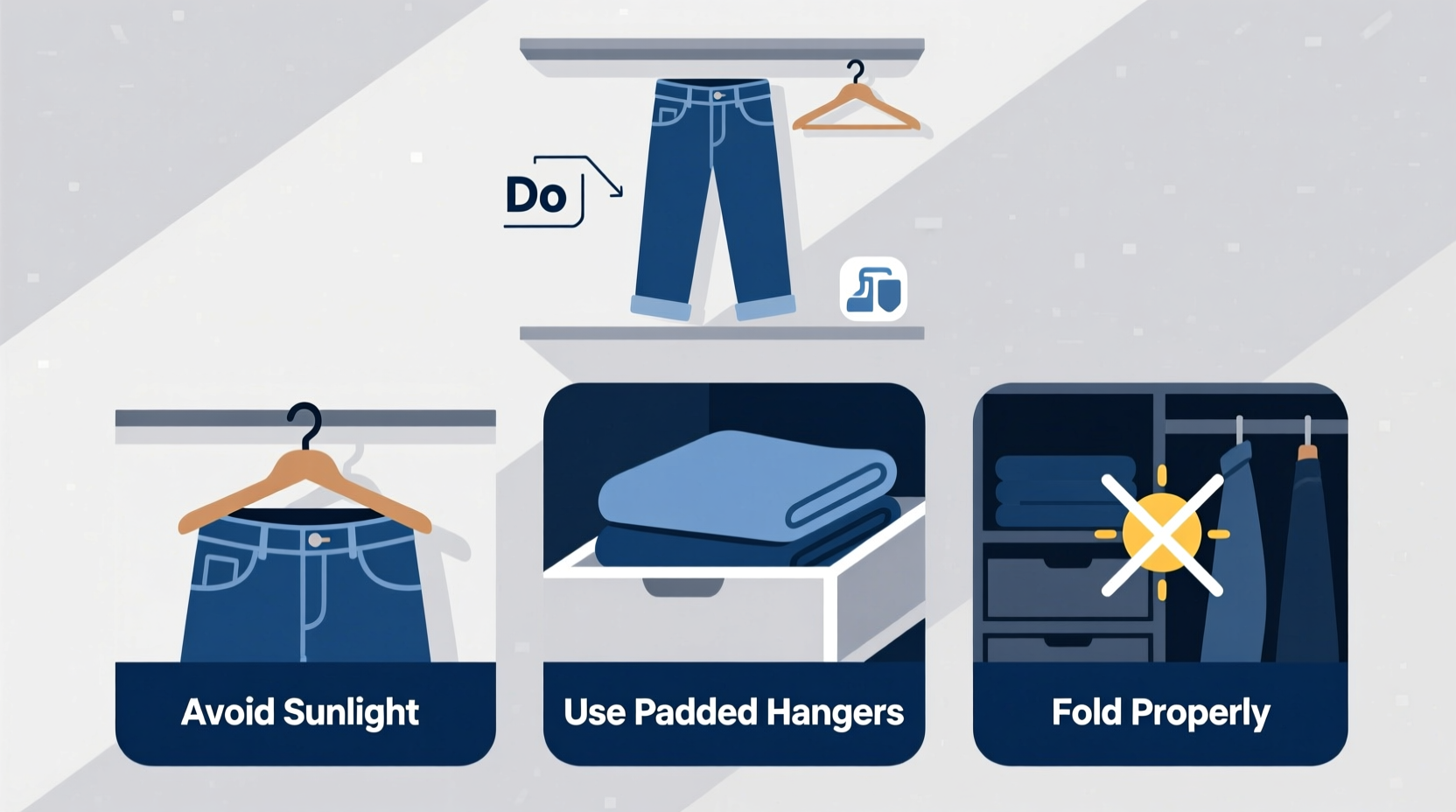
Denim is a tough fabric, but it’s not immune to environmental damage. Cotton fibers, especially when dyed with indigo, are vulnerable to UV radiation and oxidation, both of which cause fading. Meanwhile, the waistband—often blended with spandex or elastane for comfort—can permanently lose elasticity if compressed or hung improperly over time. Most people assume that as long as jeans are clean, any drawer or closet will do. But subtle factors like air circulation, folding technique, and contact with other garments influence wear and tear more than commonly realized.
Storing jeans correctly doesn’t just maintain aesthetics—it preserves fit, reduces the need for frequent replacements, and supports sustainable fashion practices. According to textile conservation experts, up to 60% of visible denim degradation comes from post-wear handling rather than use during wear.
“Denim care doesn’t end at the laundry. How you store your jeans determines whether they age gracefully or deteriorate prematurely.” — Lena Patel, Textile Preservation Specialist, Fashion Institute of Technology
The Science Behind Fading and Waistband Stretch
Fading occurs primarily through two mechanisms: photodegradation and mechanical abrasion. Indigo dye sits on the surface of cotton fibers rather than penetrating deeply, making it prone to washing off or breaking down under sunlight. Even indirect daylight through windows contributes to cumulative fading over weeks and months.
Waistband stretch, on the other hand, results from prolonged stress on elastic components. When jeans are hung by the waistband, gravity pulls downward, stretching the band out of shape. Similarly, stacking heavy items on folded jeans compresses the waistband, leading to permanent deformation. Over time, this results in a loose fit around the hips, requiring constant readjustment and reducing comfort.
A study conducted by the American Association of Textile Chemists found that denim stored folded in dark drawers retained 92% of its original color intensity after six months, while the same jeans hung near a window lost nearly 40% of their vibrancy in the same period.
Key Factors That Accelerate Damage During Storage
- Exposure to sunlight: Triggers photochemical breakdown of dyes.
- Poor ventilation: Traps moisture, encouraging mildew and fiber weakening.
- Overcrowding: Causes friction between fabrics, accelerating pilling and fading.
- Hanging by the waistband: Stretches elastic beyond recovery.
- Plastic bags: Trap humidity and restrict airflow, promoting odor and stiffness.
Step-by-Step Guide to Optimal Jeans Storage
Preserving your jeans starts the moment they come out of the wash—or after being worn. Follow this detailed sequence to ensure maximum protection against fading and waistband distortion.
- Dry completely before storing: Never put damp jeans away. Residual moisture weakens fibers and encourages mold growth. Air-dry flat or hang upside down by the hem (not the waist) to prevent stretching.
- Fold instead of hang: Lay the jeans flat and fold them in half lengthwise, then accordion-fold into thirds. This evenly distributes weight and avoids putting tension on the waistband.
- Use breathable containers: Store folded jeans in cotton garment bags, linen bins, or open shelves. Avoid sealed plastic bins unless used in extremely humid climates—and even then, include silica gel packs.
- Rotate placement: If storing multiple pairs, rotate their positions monthly to prevent consistent pressure on the same folds.
- Keep in a cool, dark drawer or shelf: Ideal conditions are temperatures between 60–70°F (15–21°C), low humidity, and no direct light.
- Limit stacking height: No more than four folded pairs high to prevent bottom layers from becoming misshapen.
Advanced Option: Rolling for Space and Protection
For travelers or those with limited space, rolling jeans tightly from the waist down helps reduce creases and minimizes exposed surface area. Rolled jeans can be stored upright in drawers like files, making them easy to see and access without disturbing others.
Tip: Insert tissue paper between folds if storing for extended periods to absorb moisture and prevent dye transfer.Do’s and Don’ts of Jeans Storage
| Do’s | Don’ts |
|---|---|
| Fold jeans neatly along natural seams | Hang jeans by the waistband |
| Store in a dark, dry place with airflow | Leave jeans crumpled in a gym bag or chair |
| Use cedar blocks to deter moths naturally | Store in vacuum-sealed bags long-term |
| Rotate pairs every few weeks | Stack more than four pairs high |
| Label seasonal storage boxes clearly | Place jeans near radiators or windows |
Real Example: How One Wardrobe Upgrade Reduced Jean Replacement Costs
Sophia M., a graphic designer from Portland, noticed her favorite black skinny jeans were losing color and sagging within three months. She wore them frequently but washed them sparingly and always hung them on a hook behind her bedroom door. After consulting a sustainable fashion blog, she changed her storage method: she began folding her jeans and placing them in a ventilated bamboo drawer organizer, rotating pairs weekly.
After eight months, Sophia compared her oldest pair to a new one. The difference was striking—the properly stored jeans retained deep color, sharp stitching, and a snug waistband. “I didn’t realize hanging them was doing so much damage,” she said. “Now I only hang jeans temporarily after washing. My jeans last almost twice as long, and I’ve cut my denim spending by 70% this year.”
Checklist: Perfect Jeans Storage Routine
Follow this checklist each time you finish wearing or washing a pair of jeans:
- ✅ Ensure jeans are fully dry before storage
- ✅ Fold neatly—avoid bunching or twisting
- ✅ Choose a drawer or shelf away from sunlight
- ✅ Use breathable fabric bins or open shelving
- ✅ Rotate stored pairs monthly
- ✅ Inspect for signs of moisture or pests quarterly
- ✅ Limit stack height to four pairs max
- ✅ Keep away from strong-smelling items (e.g., perfumes, cleaning agents)
Frequently Asked Questions
Can I hang jeans if I use wide, padded hangers?
Even with wide hangers, hanging jeans by the waistband applies continuous downward force on the elastic fibers. Over time, this leads to irreversible stretch. Folding remains the safest option. If you must hang, clip hangers to the bottom hem, not the waist.
How often should I wash my jeans to minimize damage?
Most denim experts recommend washing jeans only every 10–15 wears, or when visibly soiled or odorous. Frequent washing accelerates fading and wears down fibers. For minor refreshes, try airing them out or using a fabric-safe spray sanitizer.
Is it okay to store jeans in vacuum bags during moves or seasonal changes?
Vacuum bags can be useful for short-term protection during travel or relocation, but long-term compression damages cotton structure and degrades elastic threads. If used, unpack jeans within a month and allow them to rest in open air for 24 hours before wearing.
Expert Tips for Long-Term Denim Preservation
For those who collect vintage denim or invest in premium brands, consider these advanced strategies:
- Color-locking sprays: Apply a fabric protectant designed for denim to help bind indigo dye and resist fading.
- Acid-free tissue paper: Place between folds when storing collector’s pieces to neutralize environmental acidity.
- Cotton garment bags: Use drawstring cotton bags for individual pairs to prevent dust buildup and allow breathability.
- Climate monitoring: In humid regions, use a small hygrometer to track closet moisture levels; aim for 40–50% relative humidity.
“Treat your jeans like archival textiles. The care you give them in storage defines how they’ll look and feel years from now.” — Marcus Tran, Denim Archivist at The Museum of Street Style
Conclusion: Make Smart Storage a Habit
The best way to store jeans to avoid fading and waistband stretch isn’t complicated—it’s consistent. Simple actions like folding instead of hanging, choosing the right environment, and rotating your collection make a dramatic difference in how your jeans age. These habits cost nothing but a few extra seconds of effort, yet they pay off in extended wear, better fit, and reduced environmental impact. Denim is meant to develop character over time, not degrade from neglect. By treating your jeans with the respect their craftsmanship deserves, you ensure they remain functional, flattering, and stylish for seasons to come.
💬 Start tonight: Take a look at how your jeans are stored now. Make one small change—fold a hung pair, move them away from the window, or clear space in a drawer. Small steps lead to lasting results. Share your denim care tip in the comments and help others build better habits!








