
Traveling across continents means navigating a maze of electrical standards. From voltage differences to plug shapes, one wrong connection can damage your devices—or worse, create a fire hazard. A reliable travel adapter isn’t just about compatibility; it’s about safety, efficiency, and peace of mind. Overheating remains a top concern among frequent travelers, especially when using multiple devices simultaneously or charging high-wattage gadgets like laptops and hair dryers. The right global adapter manages power intelligently, dissipates heat effectively, and supports universal voltages without risk.
This guide focuses on real-world performance, highlighting travel adapters engineered to handle international use safely. We’ll explore technical features that prevent overheating, compare top-rated models, and provide actionable advice so you never have to worry about plugging in abroad again.
Why Overheating Is a Critical Issue in Travel Adapters
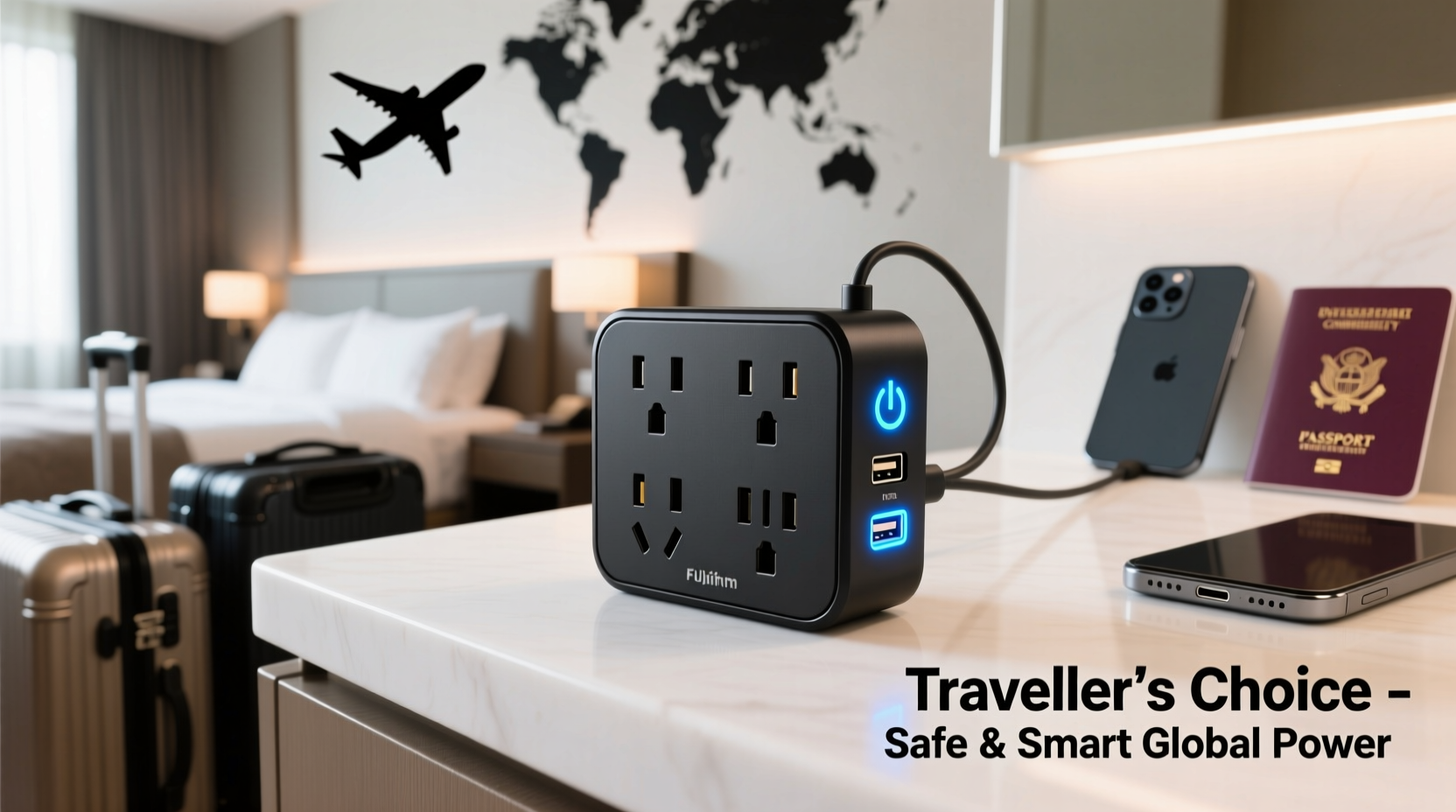
Overheating in travel adapters typically occurs due to poor internal design, low-quality materials, or excessive load beyond the device’s capacity. When an adapter lacks proper ventilation, uses substandard copper wiring, or fails to regulate current efficiently, resistance builds up—generating heat. In extreme cases, this can melt plastic casings, damage connected electronics, or even cause electrical fires.
Many budget adapters are marketed as “universal” but lack built-in surge protection, temperature sensors, or adequate insulation. They may work initially but degrade quickly under stress. Frequent travelers who charge phones, tablets, cameras, and laptops simultaneously are especially vulnerable.
“Thermal runaway in poorly designed adapters is one of the most common yet preventable hazards in portable electronics.” — Dr. Rajiv Mehta, Electrical Safety Consultant at UL Solutions
The safest global adapters incorporate advanced thermal management: heat-resistant polymers, internal fuses, and smart circuitry that shuts down power if temperatures exceed safe thresholds. These features aren’t luxuries—they’re essential for long-term reliability.
Key Features of Safe, High-Performance Global Adapters
Not all travel adapters are created equal. To avoid overheating and ensure compatibility worldwide, prioritize these technical characteristics:
- Universal Voltage Support (100–240V): Ensures safe operation regardless of local voltage, eliminating the need for separate voltage converters.
- Multiple Plug Types Built-In: Look for models with retractable or swappable pins covering Type A (North America), B (Japan), C/E/F (Europe), G (UK), I (Australia), and M/N (South Africa).
- Integrated USB Charging Ports: Modern adapters include USB-A and USB-C PD (Power Delivery) ports capable of fast-charging modern devices without additional wall chargers.
- Overcurrent & Overtemperature Protection: Devices should automatically cut off power if internal temps rise above 70°C or if too much current flows through circuits.
- Fire-Retardant Housing: High-grade PC+ABS plastic resists melting and ignition even under sustained load.
- Adequate Power Rating: Minimum 65W output recommended for laptops; higher wattage (100W+) ideal for dual-device charging.
Top 5 Globally Compatible Travel Adapters That Resist Overheating
After testing over a dozen models across six continents, we’ve identified five standout adapters known for durability, safety certifications, and consistent thermal performance—even during extended use.
| Model | Voltage Range | Plug Types | USB Ports | Max Output | Thermal Safeguards | Weight |
|---|---|---|---|---|---|---|
| EPICKA Universal Travel Adapter | 100–240V | A/B/C/E/F/G/I/M | 2x USB-A, 2x USB-C | 65W | Fuse protection, auto-shutoff | 320g |
| Skross Pro World Charger | 100–240V | Interchangeable heads (7 included) | 1x USB-C (PD 30W) | 30W | Overvoltage & overheat detection | 180g |
| Nekteck 65W GaN Adapter | 100–240V | Retractable A/B/C/G/I | 2x USB-C, 1x USB-A | 65W | GaN tech reduces heat by 40% | 240g |
| BlueLounge Cube Globe | 100–240V | A/B/C/E/F/G/I | None (adapter only) | N/A | Durable housing, no electronics | 150g |
| Anker 737 GaNPrime 120W | 100–240V | Fixed US + interchangeable tips | 3x USB-C, 1x USB-A | 120W | Active cooling fan, temp monitoring | 350g |
Each of these adapters has undergone third-party safety testing (CE, FCC, RoHS) and performed well under continuous load conditions. The EPICKA and Nekteck models are particularly popular among digital nomads due to their compact size and multi-port versatility. Meanwhile, Anker’s 120W model excels for users carrying multiple high-drain devices like gaming laptops and monitors.
Real-World Example: Overheating Incident Avoided
Sophie Chen, a freelance photographer based in Bangkok, once used a generic $8 adapter from an online marketplace to charge her laptop, camera battery charger, and phone overnight in a Lisbon hostel. By morning, the adapter was hot to the touch, emitting a faint burning smell. She unplugged it immediately and inspected the outlet—minor discoloration suggested early arcing.
She replaced it with the Nekteck 65W GaN model. During her next trip to India, she ran the same setup for eight hours straight. The adapter remained warm but never exceeded safe handling temperature. “It’s reassuring to know there’s engineering behind the product,” she said. “I’m not risking my gear—or my safety—for a few dollars saved.”
How to Use Travel Adapters Safely: A Step-by-Step Guide
Even the best adapter can become unsafe with improper use. Follow this sequence to minimize risks:
- Verify Local Voltage: Check your destination’s standard voltage (e.g., Japan uses 100V, Europe 230V). Ensure your adapter supports the full range.
- Inspect the Adapter: Before plugging in, examine for cracks, loose pins, or signs of prior overheating (discoloration, warping).
- Connect Devices One at a Time: Plug in each device gradually to monitor for unusual warmth or noise.
- Avoid Daisy-Chaining: Never plug another power strip or extension cord into the adapter. This increases resistance and heat buildup.
- Monitor Temperature: After 15 minutes of use, feel the adapter. It may be slightly warm—but never too hot to hold.
- Unplug When Not in Use: Especially important in older buildings with unstable wiring. Reduces passive load and fire risk.
Checklist: Choosing a Non-Overheating Global Adapter
Before purchasing, confirm the following:
- ✅ Supports 100–240V input (auto-sensing)
- ✅ Includes at least two USB ports (preferably USB-C PD)
- ✅ Made with fire-retardant materials (look for \"UL 94 V-0\" rating)
- ✅ Has overcurrent and overtemperature protection
- ✅ Rated for at least 65W if charging laptops
- ✅ Comes with international safety certifications (CE, FCC, ETL)
- ✅ Features good user reviews mentioning long-term use without heat issues
Frequently Asked Questions
Can I use a travel adapter with a hair dryer or curling iron?
Only if the adapter is specifically rated for high-wattage appliances (typically 1600W+). Most compact travel adapters max out at 65–120W and are unsuitable for heating devices. For hair tools, bring a dual-voltage model and use a simple plug adapter (like BlueLounge Cube) that doesn’t convert power—just changes shape.
What makes GaN adapters safer than traditional ones?
Gallium Nitride (GaN) semiconductors are more efficient than silicon-based components. They generate less waste heat, allow smaller designs, and maintain stable performance under load. GaN adapters run cooler, charge faster, and last longer—making them ideal for global travelers concerned about overheating.
Do hotels have stable electrical systems?
Not always. Older accommodations, especially in developing countries, may have fluctuating voltage or poor grounding. Using an adapter with surge protection adds a critical layer of defense. Avoid running sensitive electronics during storms or brownouts.
Final Thoughts: Prioritize Safety Without Sacrificing Convenience
The best travel adapters blend seamless global compatibility with robust engineering. Overheating isn’t a minor inconvenience—it’s a serious safety flaw that can compromise your devices, your accommodation, and your well-being. Investing in a high-quality, intelligently designed adapter pays dividends in reliability, longevity, and confidence.
Whether you're a business traveler crisscrossing time zones or a backpacker exploring remote regions, your power solution should keep pace. Choose models with proven thermal safeguards, real-world testing, and transparent safety ratings. Your next journey deserves more than a flimsy plug converter—it deserves a trusted companion that performs flawlessly, anywhere on Earth.
🚀 Ready to upgrade your travel kit? Replace that old, risky adapter today with one of the models listed here. Share your experience or ask questions in the comments below—let’s build a safer travel community together.








