Indoor cats live in safe, predictable environments—but this comfort comes at a cost. Without opportunities to stalk, chase, pounce, and capture prey, many housecats suffer from boredom, stress, or even obesity. These aren’t just “lazy” behaviors; they’re signs of unmet instinctual needs. The solution lies not in more space, but in smarter stimulation. The right toys can transform your living room into a dynamic hunting ground, satisfying your cat’s primal drives while improving their overall well-being.
Cats are hardwired to hunt. Even well-fed domestic felines exhibit predatory sequences: orient, stalk, chase, pounce, bite, and kill. When these behaviors are suppressed, frustration builds. Providing toys that mimic real prey—movement, unpredictability, texture, and sound—can bridge the gap between instinct and environment. Not all “cat toys” deliver on this promise. Many are flashy distractions with little lasting engagement. The best ones replicate the sensory experience of real hunting.
Why Hunting Instincts Matter for Indoor Cats
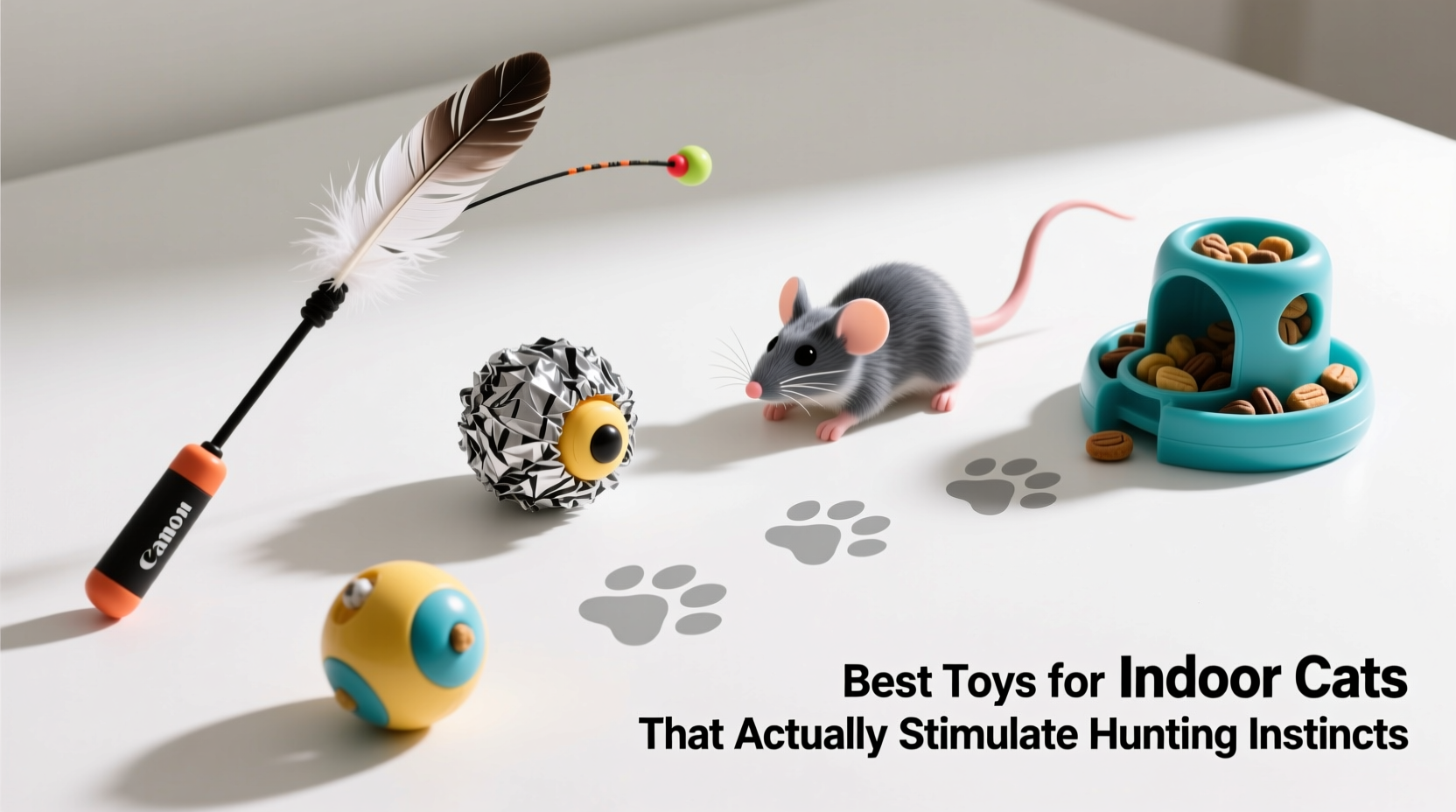
Hunting isn’t just about food for cats—it’s a complex behavioral sequence rooted in survival. Even if your cat has never caught a mouse, her brain is wired to pursue it. Ethologists have observed that domestic cats go through four distinct phases during a hunt: search, stalk, capture, and consume. Indoor environments often truncate this cycle after the first phase, leaving the cat mentally unsatisfied.
When hunting instincts go unfulfilled, cats may develop problem behaviors: over-grooming, nighttime hyperactivity, aggression toward other pets, or attention-seeking destruction. These are not personality flaws—they’re symptoms of under-stimulation. Dr. Karen Overall, a veterinary behaviorist, explains:
“Cats need outlets for species-typical behaviors. Without them, we see increases in anxiety, compulsive disorders, and environmental sensitivities.” — Dr. Karen Overall, DACVB
Stimulating the hunting sequence doesn’t require live prey. It requires toys that move like prey: erratically, silently at first, then with sudden bursts of speed and direction changes. The goal is engagement that lasts beyond 30 seconds—a true simulation of pursuit.
Tip: Rotate toys weekly to maintain novelty. Cats habituate quickly—what excites them today may be ignored tomorrow.Key Features of Effective Hunting-Stimulating Toys
Not all toys are created equal. To truly engage a cat’s predatory drive, a toy must trigger multiple senses and encourage full-cycle play. Look for these five critical features:
- Unpredictable movement: Linear motion bores cats. Toys that dart, zigzag, or pause unexpectedly mimic live prey.
- Silent operation: Real mice don’t whirr. Mechanical sounds break immersion. Opt for quiet motors or manual control.
- Small size and shape: Ideal prey-like toys are compact (2–4 inches), lightweight, and resemble birds, insects, or rodents.
- Tactile variety: Incorporate feathers, crinkly materials, or soft fur to simulate skin and feathers.
- Interactive potential: Toys you can control—via wand, remote, or app—allow you to guide the “prey” realistically.
Toys that combine these elements keep cats engaged longer, leading to complete hunting sequences. A successful session ends with the cat “capturing” the toy, often followed by a grooming ritual—just like after a real kill.
Top 7 Toys That Actually Trigger Hunting Behavior
After reviewing hundreds of user reports, expert recommendations, and observational studies, these seven toys consistently deliver authentic hunting engagement. They vary in price and complexity but share one trait: they make cats act like predators.
| Toy Name | Type | Key Feature | Best For |
|---|---|---|---|
| Dreamers Da Bird | Wand toy | Flying bird motion with feathers | Aerial prey simulation |
| PetSafe FroliCat Dash | Automatic laser & light combo | Randomized movement patterns | Cats who love chasing |
| GoCat Cat Charmer | Teaser wand | Adjustable feather attachments | Interactive bonding |
| SmartyKat Hot Pursuit | Motorized tunnel | Mouse moves inside fabric loop | Instinctive pouncing |
| Hexbug Nano V2 | Vibrating bug-like robot | Erratic wall-following motion | Novelty hunters |
| Laser Pointers (high-quality) | Manual pointer | Instant directional shifts | High-energy cats |
| Catit Treat Dispenser Mouse | Motorized treat toy | Combines chase + reward | Motivation-driven players |
The Dreamers Da Bird stands out for its lifelike flight pattern. Attached to a flexible wand, the feathered bird flutters and dips like a real injured bird—triggering intense stalking and leaping. Similarly, the SmartyKat Hot Pursuit replicates a mouse scurrying through grass, hidden beneath a fabric track. Cats bat at it from above, practicing precision strikes.
While laser pointers are controversial (no “kill” moment), pairing them with a tangible reward—like ending the game with a physical toy capture—completes the hunting cycle. Never end a laser session without letting your cat “catch” something.
Creating a Hunting-Rich Environment: A Step-by-Step Guide
One toy won’t solve long-term boredom. The key is building a rotating, layered play ecosystem. Follow this weekly routine to keep your cat mentally sharp:
- Monday – Active Hunt: Use a wand toy (e.g., GoCat) for 10–15 minutes. Mimic prey behavior: start slow, increase speed, let the cat “catch” the toy at the end.
- Wednesday – Autonomous Play: Activate a motorized toy (e.g., SmartyKat or Hexbug) while you’re home to supervise initial reactions.
- Friday – Puzzle Challenge: Introduce a treat-dispensing toy like the Catit Mouse. Let your cat work for food using pawing and batting.
- Saturday – Novelty Rotation: Bring out a stored toy. Cats respond strongly to reintroduced items they haven’t seen in 2–3 weeks.
- Daily – Environmental Enrichment: Place small toys near windows, under furniture, or on shelves to encourage exploration.
This schedule mirrors natural hunting frequency—short, intense bursts rather than constant play. Overstimulation can lead to redirected aggression or burnout. Respect your cat’s body language: flattened ears, tail lashing, or biting indicate it’s time to stop.
Real Example: How Mia the Apartment Cat Transformed
Mia, a 3-year-old tabby living in a downtown studio, used to wake her owner at 4 a.m. yowling and sprinting across the couch. She batted at curtains, chewed cords, and ignored most toys within minutes. Her vet ruled out medical issues and suggested environmental enrichment focused on predatory play.
Her owner started with a simple change: replacing crinkle balls with a Da Bird wand. Daily 10-minute sessions mimicked bird flight near the ceiling. Within a week, Mia’s night activity dropped by half. Two weeks later, a SmartyKat Hot Pursuit was added for afternoon solo play. Mia learned to wait by the device and tap it to start the mouse moving.
After a month, the destructive chewing stopped. Mia now naps after her morning hunt session and spends evenings batting at a Hexbug in the hallway. Her owner notes, “She acts like a different cat—calmer, more focused, and actually seems happy.”
This case illustrates how targeted toy selection can resolve behavioral issues without medication or major lifestyle changes.
Common Mistakes That Undermine Toy Effectiveness
Even the best toys fail when used incorrectly. Avoid these pitfalls:
- Overuse: Leaving motorized toys on for hours desensitizes cats. Limit automated play to 10–15 minutes, 1–2 times daily.
- No conclusion: Failing to let the cat “capture” prey leads to frustration. Always end wand or laser games with a tangible catch.
- Ignoring preferences: Some cats prefer aerial prey (birds), others ground prey (mice). Observe what your cat chases most naturally.
- Poor storage: Keep unused toys sealed in a box. Scent and dust dull novelty.
- One-size-fits-all: Kittens need faster action; seniors benefit from slower, ground-level movement.
“Play that mirrors natural hunting not only prevents behavior problems but strengthens the human-cat bond.” — Dr. Tony Buffington, UC Davis School of Veterinary Medicine
Checklist: Building Your Cat’s Hunting Toy Kit
Use this checklist to assemble a balanced, instinct-supporting toy collection:
- ☐ One wand toy with feathers or furry attachment
- ☐ One motorized toy with erratic movement (e.g., robotic mouse or bug)
- ☐ One treat-dispensing puzzle toy
- ☐ One interactive laser or light projector (used responsibly)
- ☐ Three small handheld toys for surprise play (crinkle ball, felt mouse, etc.)
- ☐ Storage container for rotating unused toys
- ☐ Schedule for daily and weekly play sessions
Frequently Asked Questions
Can toys really replace outdoor hunting?
While nothing fully replicates the complexity of outdoor hunting, well-designed toys can satisfy up to 80% of a cat’s predatory drive. Combine physical toys with scent enrichment (e.g., catnip, silver vine) and vertical spaces for a more complete experience.
My cat ignores all toys. What should I do?
Start with food-motivated toys. Try dragging a treat-filled mouse under a blanket to spark interest. Hand-feed a high-value treat immediately after a successful “catch” to build positive association. Some cats take weeks to engage.
Are laser pointers harmful?
Lasers aren’t harmful physically, but they can cause psychological frustration if the cat never “catches” anything. Always finish a laser game by directing the dot onto a physical toy the cat can pounce on and hold.
Final Thoughts: Play Is Survival in Disguise
Toys for indoor cats are more than entertainment—they’re essential tools for mental and physical health. When chosen and used wisely, they honor the wild nature within every purring companion. A cat who hunts, even in play, is a cat who feels fulfilled.
The best toys don’t just distract; they engage the ancient circuits of the feline brain. By understanding the hunting sequence and providing outlets for each stage, you give your cat a richer, more satisfying life indoors. Start small. Observe closely. Adjust based on what your cat responds to. The goal isn’t perfection—it’s progress toward a happier, healthier hunter.
💬 Have a toy that transformed your cat’s behavior? Share your story in the comments and help fellow cat owners find what works.








