Runners with flat feet face unique biomechanical challenges. Without a natural arch to absorb shock and guide foot motion, overpronation—where the foot rolls inward excessively during each stride—is common. This can lead to discomfort, inefficiency, and long-term injuries such as plantar fasciitis, shin splints, or knee pain. Choosing the right running shoe is critical, and understanding the distinction between stability and motion control models can make all the difference in comfort, performance, and joint health.
While both types aim to correct overpronation, they do so at different levels of support. The wrong choice may not only fail to help but could worsen alignment issues. This guide breaks down the science behind each category, evaluates top-performing models, and provides practical advice for selecting the ideal shoe based on your gait, weight, and running goals.
Understanding Flat Feet and Overpronation
Flat feet, also known as fallen arches, occur when the entire sole of the foot touches the ground when standing. This condition affects an estimated 20–30% of the population and can be genetic, develop over time due to aging or injury, or stem from weakened posterior tibial tendon function.
When the arch collapses during weight-bearing activity, it triggers excessive inward rolling of the ankle and foot—a motion called overpronation. While some pronation is normal and necessary for shock absorption, overpronation disrupts the kinetic chain, transferring undue stress up through the legs.
“Overpronation isn’t inherently dangerous, but when unmanaged, it becomes a catalyst for repetitive strain injuries in runners.” — Dr. Marcus Lin, Sports Podiatrist
The solution lies in footwear that guides the foot into a more neutral position. But not all corrective shoes are created equal. The level of correction required depends on severity, body weight, and running intensity.
Stability vs. Motion Control: Key Differences
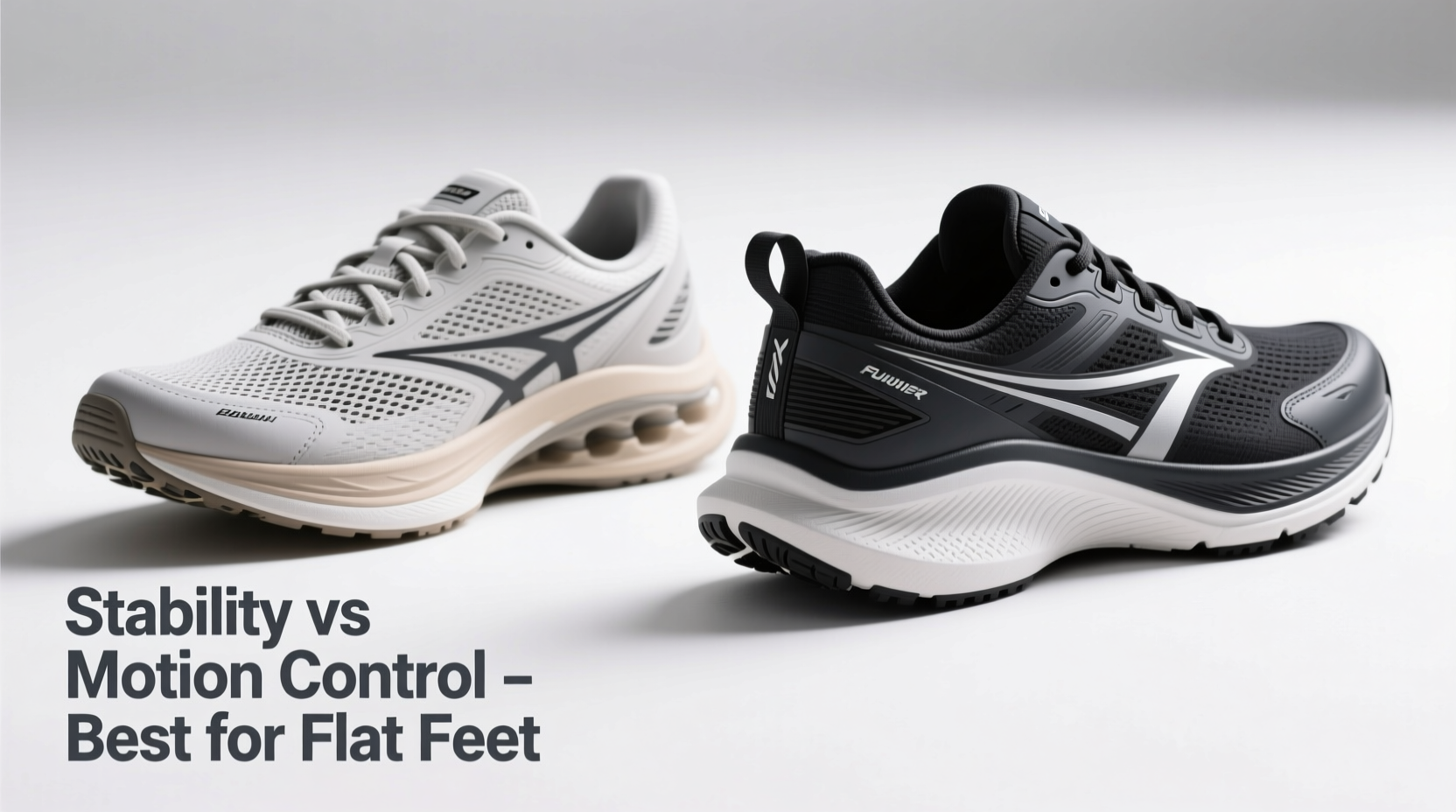
At first glance, stability and motion control shoes appear similar. Both feature reinforced midsoles, dual-density foams, and structured heels. However, their design philosophy and application differ significantly.
| Feature | Stability Shoes | Motion Control Shoes |
|---|---|---|
| Target Runner | Mild to moderate overpronators | Severe overpronators or very flat feet |
| Support Level | Medium correction with flexibility | Maximum rigidity and control |
| Midsole Technology | Dual-density EVA, medial post | Firm foam, extended medial post, dual-bridge systems |
| Weight | Lighter (9–11 oz) | Heavier (11–14 oz) |
| Flexibility | Moderate; allows natural toe-off | Low; limits midfoot twist |
| Best For | Daily training, tempo runs, lighter runners | Long-distance, high-mileage, heavier runners |
Stability shoes strike a balance between cushioning and guidance. They’re engineered to gently correct mild overpronation without sacrificing responsiveness. Motion control shoes, by contrast, are built like architectural supports—rigid, heavy-duty, and designed to override extreme collapse of the arch.
Tip: If you're unsure about your pronation type, perform the \"wet test\": Wet your foot, step onto a brown paper bag, and examine the imprint. A full footprint suggests flat feet and likely overpronation.Top Running Shoes for Flat Feet: Stability & Motion Control Compared
Selecting the right shoe involves matching technology to your biomechanics. Below are five top-rated models across both categories, evaluated for support, durability, comfort, and real-world performance.
1. Brooks Adrenaline GTS 23 (Stability)
A benchmark in stability footwear, the Adrenaline GTS uses GuideRails® support system to keep excess motion in check without over-correcting. Its DNA Loft cushioning offers a balanced ride—soft enough for recovery runs, firm enough for speedwork. Ideal for runners under 180 lbs with moderate overpronation.
2. ASICS Gel-Kayano 30 (Stability)
Combining plush gel cushioning with a Dynamic DuoMax support system, the Kayano excels in long-distance comfort. The updated 30 version features FF BLAST+ Eco foam for improved energy return. Best suited for runners seeking premium support with a smooth heel-to-toe transition.
3. Saucony Guide 17 (Stability)
Lighter than many competitors, the Guide 17 uses PWRRUN foam and a medial TPU frame for targeted stability. It’s a favorite among neutral-feeling stability seekers who dislike the clunkiness of traditional supportive shoes.
4. Brooks Beast 21 (Motion Control)
Built for maximum correction, the Beast 21 features a triple-density midsole, extended medial post, and segmented crash pad. Recommended for runners over 180 lbs with severe overpronation or chronic knee/hip issues. Not designed for speed, but unmatched in protection over high mileage.
5. ASICS GT-2000 12 (Motion Control / Firm Stability)
Sitting at the boundary between firm stability and light motion control, this model suits runners transitioning from stability to higher support. Its LITETRUSS system stabilizes the arch without excessive rigidity, making it versatile across distances.
Tip: Always try shoes later in the day when feet are slightly swollen—this mimics running conditions and prevents buying a pair that’s too tight.How to Choose: A Step-by-Step Decision Framework
Selecting the right shoe shouldn’t be guesswork. Follow this evidence-based process to ensure optimal fit and function.
- Assess Your Arch Type and Gait
Use the wet test or visit a specialty running store for a gait analysis. Video treadmills can reveal how much your foot rolls inward during stance phase. - Consider Your Body Weight
Runners above 180 lbs typically benefit from motion control due to greater ground reaction forces. Lighter runners often do well with stability shoes unless overpronation is severe. - Evaluate Your Running Goals
High-mileage runners need durable, protective shoes. Occasional joggers may prefer lighter stability models. Marathoners with flat feet often rotate between a stability daily trainer and a motion control long-run shoe. - Test for Comfort and Fit
There should be a thumb’s width of space at the toe box. Heel must be locked without slippage. Walk or run in the store if possible. Discomfort on day one rarely improves. - Replace Promptly
Stability and motion control shoes lose structural integrity after 300–500 miles. Monitor creasing in the midsole foam and loss of bounce. Worn-out support increases injury risk.
Mini Case Study: From Shin Splints to Sub-4-Hour Marathon
James R., a 42-year-old recreational runner, struggled with recurring shin splints and fatigue after just five miles. Despite consistent training, he couldn’t progress past half-marathon distance. A gait analysis revealed severe overpronation and early signs of tibialis posterior strain.
After switching from neutral shoes to the Brooks Beast 21, James noticed immediate relief. “It felt clunky at first,” he said, “but by week three, my shins were quiet, and I could finally build mileage.” Within nine months, he completed his first marathon injury-free, crediting proper footwear as the turning point.
Common Mistakes to Avoid
- Choosing motion control when stability suffices: Excessive rigidity can strain tendons and reduce natural propulsion, especially in lighter runners.
- Ignoring weight and terrain: Trail runners with flat feet need stability shoes with aggressive outsoles, not road-focused motion control models.
- Wearing worn-out shoes: Compression of the medial post diminishes support, effectively turning a stability shoe into a neutral one.
- Using orthotics without professional guidance: Custom inserts can enhance support, but improper alignment can counteract shoe engineering.
“Footwear is the foundation of running form. You wouldn’t build a house on sand—don’t train your body in compromised shoes.” — Coach Lena Torres, Elite Distance Running Consultant
FAQ: Your Top Questions Answered
Can I use stability shoes if I have flat feet but don’t overpronate?
Rare, but possible. Some flat-footed individuals have rigid, non-collapsing arches that don’t pronate excessively. In such cases, neutral shoes with good arch contact may be sufficient. A podiatrist or gait specialist can confirm.
Are motion control shoes bad for normal-arched runners?
Yes. Forcing a normally pronating foot into a motion control shoe can restrict natural movement, leading to lateral knee stress or iliotibial band syndrome. These shoes are therapeutic tools, not universal upgrades.
Should I wear orthotics with stability or motion control shoes?
Only if prescribed. Many modern stability shoes include contoured insoles that work synergistically with the midsole. Adding orthotics without assessment may alter the intended biomechanics. Consult a sports medicine professional before combining both.
Final Checklist Before Buying
- ✅ Confirm your arch type and gait pattern
- Use wet test or professional analysis.
- ✅ Match shoe type to body weight and mileage
- Heavy or high-mileage? Lean toward motion control.
- ✅ Prioritize fit over brand loyalty
- Even the best-reviewed shoe won’t help if it doesn’t fit your foot shape.
- ✅ Replace every 300–500 miles
- Track mileage and inspect midsole compression.
- ✅ Rotate shoes when possible
- Alternating pairs extends lifespan and reduces repetitive stress patterns.
Conclusion: Run Stronger, Not Just Longer
The best running shoes for flat feet aren’t defined by brand names or marketing claims—they’re defined by how well they align with your biomechanics. Whether you choose stability or motion control, the goal is the same: to create a stable platform that allows efficient, injury-free running.
Don’t settle for discomfort or repeated setbacks. Invest time in understanding your feet, test multiple models, and prioritize long-term health over short-term trends. With the right shoes, flat feet don’t have to limit your potential—they can simply be part of your running story.
🚀 Ready to find your perfect fit? Visit a specialty running store for a gait analysis, or share your experience below to help others navigate their journey with flat feet.








