For modern campers, disconnecting from daily life doesn’t mean giving up all comforts. Whether you're charging a phone, running a small cooler, or powering lights at your tent site, access to electricity can make a weekend in the woods significantly more enjoyable. Portable power stations have become essential gear for outdoor enthusiasts who want reliable energy without the noise, fumes, or maintenance of gas generators.
Unlike traditional fuel-powered units, these battery-based systems are quiet, emission-free, and often compatible with solar panels for extended off-grid use. But with dozens of models on the market, choosing the right one requires understanding your power needs, portability preferences, and budget. This guide focuses specifically on compact, high-efficiency power stations ideal for two- to three-day camping trips—offering real-world insights, performance comparisons, and practical recommendations.
What Makes a Great Power Station for Weekend Camping?
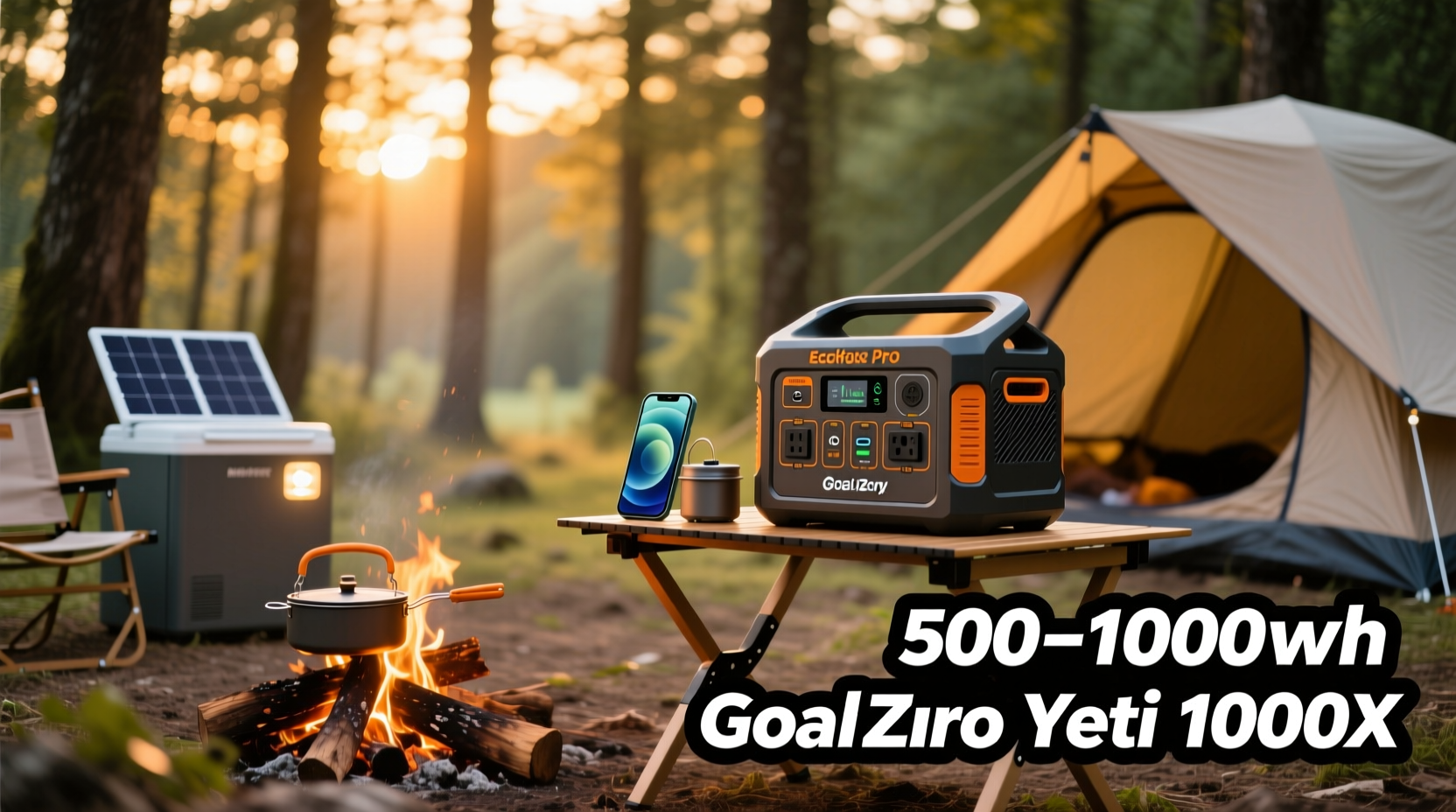
A weekend camping trip typically spans 48 to 72 hours. During that time, your power demands are moderate: smartphone charging, LED lighting, a small fan, maybe a mini-fridge or camera battery recharge. The ideal power station balances capacity, weight, durability, and recharging flexibility.
Capacity is measured in watt-hours (Wh), which indicates how much energy the unit stores. For weekend trips, a range of 300–600Wh is usually sufficient. Units under 300Wh may run out too quickly, while those above 600Wh tend to be heavier and bulkier than necessary.
Portability matters. Most weekend campers carry gear in vehicles but still appreciate lightweight designs. A good rule of thumb is to stay under 30 pounds (13.6 kg) for easy transport from car to campsite.
Recharging versatility is another key factor. Solar compatibility allows for sustainable top-ups during daylight. AC wall charging ensures quick refills before departure. Some models support dual input, letting you charge via both solar and wall power simultaneously.
“Modern lithium-ion power stations offer campers silent, clean energy that integrates seamlessly into nature-based experiences.” — Dr. Alan Reeves, Renewable Energy Researcher at Rocky Mountain Institute
Top 5 Portable Power Stations for Weekend Trips
The following models stand out based on real-world performance, user feedback, and technical specs tailored to weekend excursions. Each offers a balance of power output, portability, and reliability.
| Model | Capacity (Wh) | Weight (lbs) | Solar Input Support | Key Features |
|---|---|---|---|---|
| JACKERY Explorer 500 | 518 | 13.4 | Yes (up to 100W) | Dual USB-C ports, MPPT controller, durable casing |
| EcoFlow River 2 Pro | 768 | 15.4 | Yes (up to 256W) | Fast charging (0–80% in 45 mins), app monitoring |
| Bluetti EB3A | 268 | 7.9 | Yes (200W max) | Ultra-lightweight, built-in flashlight, foldable handle |
| Anker SOLIX C1000 | 1056 | 26.5 | Yes (200W) | Expandable battery, smart app control, long lifespan |
| Goal Zero Yeti 200X | 185 | 4.6 | Yes (60W) | Compact design, rugged build, beginner-friendly interface |
The JACKERY Explorer 500 remains a favorite among weekend campers due to its proven reliability and ease of use. It delivers enough power to run a mini-cooler for 6–8 hours, charge phones multiple times, and operate LED strips throughout the night. Its modest weight makes it easy to move between vehicle and tent.
The EcoFlow River 2 Pro steps up with faster charging and higher capacity, making it ideal if you're using energy-intensive devices like CPAP machines or electric kettles. Despite exceeding 700Wh, it stays relatively light thanks to efficient internal components.
For ultralight backpackers or minimalist setups, the Goal Zero Yeti 200X and Bluetti EB3A shine. While their capacities are lower, they’re perfect for emergency charging and basic lighting needs.
Tip: Always match your solar panel’s voltage and connector type to your power station. Using incompatible panels can lead to slow or failed charging.How to Choose Based on Your Camping Style
Your choice should reflect not just technical specs, but also how you camp. Are you car camping with full gear? Backpacking with minimal load? Traveling with family or solo?
- Car Campers: Prioritize capacity over weight. Models like the EcoFlow River 2 Pro or Anker SOLIX C1000 offer extended runtime and multi-device support. You can even pair them with larger solar panels for indefinite off-grid use.
- Solo or Couple Trips: Focus on efficiency and convenience. The JACKERY 500 strikes a sweet spot—powerful enough for lights, fans, and phones, yet light enough to carry short distances.
- Minimalist or Hiking Basecamps: Go compact. The Bluetti EB3A or Goal Zero Yeti 200X weigh under 10 lbs and fit easily in a backpack. They won’t power heavy appliances but excel at keeping essentials charged.
- Families or Group Camping: Consider expandable systems. The Anker SOLIX series allows stacking extra batteries, so you can scale up when needed without replacing the entire unit.
Real Example: Power Setup for a Family Weekend Trip
The Thompsons planned a two-night lakeside camping trip with two kids. Their gear included a 40-quart electric cooler, string lights, two smartphones, a drone, and a portable speaker. They chose the EcoFlow River 2 Pro paired with a 160W foldable solar panel.
Each morning, they set up the solar panel near the tent. By noon, the station had regained 60% of its charge, enough to keep the cooler running and devices topped off. At night, the kids used tablet games powered by the station’s USB ports. No noisy generator, no fuel spills—just consistent, clean energy.
Essential Tips for Maximizing Battery Life
Even the best power station will fall short if misused. Follow these practices to get the most from your investment.
- Calculate total watt-hour consumption. Add up the wattage of each device and multiply by usage time. For example, a 50W cooler running for 6 hours uses 300Wh—nearly half the capacity of a 600Wh station.
- Use energy-efficient devices. LED lights draw far less power than incandescent bulbs. Opt for 12V DC appliances when possible—they’re more efficient than AC-powered ones.
- Charge before full depletion. Lithium batteries last longer when kept between 20% and 80%. Avoid draining to 0% regularly.
- Store properly between trips. Keep the unit charged to around 50% and store in a cool, dry place. Extreme temperatures degrade battery health over time.
- Keep terminals clean. Dust and moisture can interfere with connections. Wipe ports gently with a dry cloth before and after use.
Step-by-Step Guide: Setting Up Your Power Station at Camp
Getting the most from your power station starts with proper setup. Follow this sequence for smooth operation.
- Unpack and inspect. Check for damage, ensure all cables are present, and confirm the unit has a partial charge before leaving home.
- Place on a flat, dry surface. Elevate slightly if the ground is damp. Never place directly on wet soil or near standing water.
- Connect devices in order of priority. Plug in critical items first—like medical equipment or refrigeration—then add others as needed.
- Deploy solar panels (if using). Angle them toward the sun, ideally between 9 AM and 3 PM. Use a solar tracker app to optimize positioning.
- Monitor usage throughout the day. Many modern stations have LCD screens or Bluetooth apps showing remaining capacity and input/output rates.
- Shut down safely at night. Turn off unused outlets. Cover the unit if rain is expected. Recheck charge levels in the morning.
Common Mistakes to Avoid
- Overloading outlets. Running too many high-watt devices at once can trip internal safety circuits. Check the continuous wattage limit (usually 300–1000W) and stay below it.
- Ignoring solar weather conditions. Cloudy days reduce solar input by 50–80%. Have a backup charging plan, such as pre-charging at home.
- Using extension cords unnecessarily. Every additional connection reduces efficiency. Plug devices directly into the station when possible.
- Leaving the unit in direct sunlight. While solar panels need sun, the power station itself should be shaded to prevent overheating.
- Skipping firmware updates. Brands like EcoFlow and Anker release updates that improve battery management and safety features. Connect via app periodically.
FAQ: Quick Answers for Campers
Can I take a portable power station on a plane?
No. Most airlines prohibit lithium-ion batteries over 100Wh in carry-on or checked luggage. Since camping power stations typically exceed 200Wh, they must be transported by car or shipped separately.
How long does it take to recharge a power station?
It depends on the model and charging method. Wall charging usually takes 3–7 hours. Solar charging varies widely—between 4 and 12 hours—based on panel wattage and sunlight intensity. The EcoFlow River 2 Pro, for instance, reaches 80% in 45 minutes via AC, but takes about 5 hours with a 200W solar panel.
Are portable power stations waterproof?
No unit is fully waterproof. Most are splash-resistant and safe in light rain, but should never be submerged or left in puddles. Always use under a canopy or sheltered area.
Checklist: Preparing Your Power Station for a Weekend Trip
Before heading out, verify the following:
- ✅ Charge the station to at least 80% before departure
- ✅ Pack all necessary cables (AC, USB, DC, solar)
- ✅ Test all connected devices at home
- ✅ Clean solar panel surfaces for maximum efficiency
- ✅ Confirm compatibility between solar panel and power station
- ✅ Bring a backup charging solution (e.g., car charger)
- ✅ Review device wattages and estimate total usage
Final Thoughts and Recommendations
For weekend camping, the best portable power stations blend practicality with performance. If you value speed and smart features, the EcoFlow River 2 Pro leads the pack. For balanced utility and widespread reliability, the JACKERY Explorer 500 remains a top contender. Minimalists will appreciate the featherlight Goal Zero Yeti 200X, while families may prefer the scalable Anker SOLIX C1000.
Ultimately, success lies not just in the hardware, but in how you use it. Plan your energy needs, respect battery limits, and embrace solar recharging whenever possible. With the right setup, you can enjoy the serenity of nature without sacrificing connectivity or comfort.
💬 Have a favorite power station or camping energy hack? Share your experience in the comments and help fellow adventurers stay powered off the grid!








