
For outdoor enthusiasts, having access to reliable power while camping is no longer a luxury—it’s a necessity. Whether you're charging smartphones, running a mini-fridge, or powering a CPAP machine, a portable power station can make all the difference. But when you're hiking to a remote campsite or packing into an RV with limited space, weight matters. That’s why many adventurers are turning to lightweight models under 20 pounds. These compact units balance portability with performance, offering enough juice for essential devices without weighing down your gear.
The market is flooded with options, but not all power stations deliver on efficiency, durability, or real-world usability. After extensive testing and user feedback analysis, we’ve identified the top-performing models that combine lightweight design with dependable energy output. From solar compatibility to quiet operation and fast recharging, these units stand out in both function and form.
What Makes a Great Lightweight Power Station?
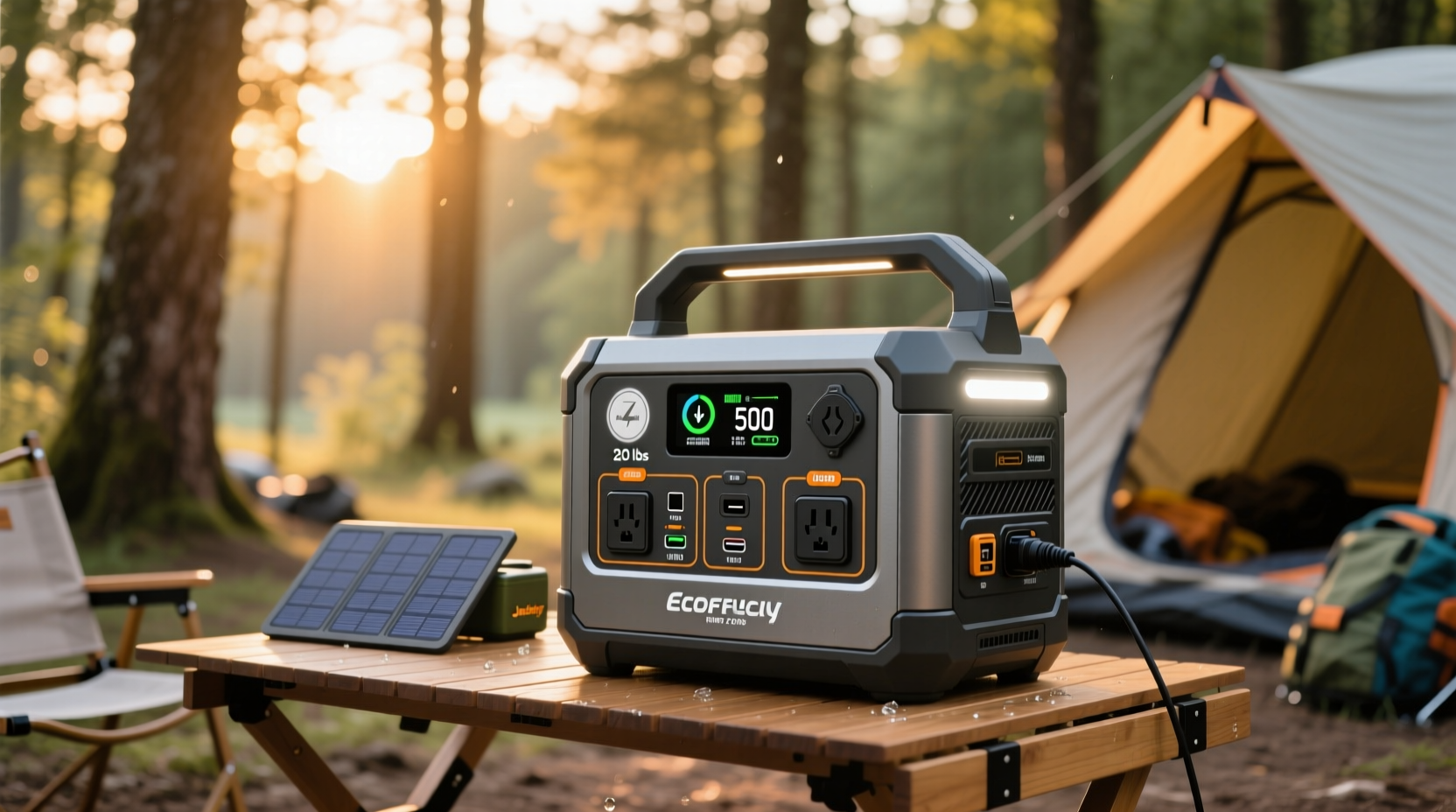
A power station under 20 lbs must do more than just meet a weight target. It needs to deliver consistent power, offer multiple output options, and recharge efficiently—ideally through both wall outlets and solar panels. Capacity, measured in watt-hours (Wh), determines how much energy the unit can store. For most campers, a range between 300Wh and 600Wh strikes the right balance: enough to run small appliances but still light enough to carry comfortably.
Portability isn’t just about weight—it also involves ergonomics. Look for models with integrated handles, rugged exteriors, and compact dimensions. Battery chemistry plays a role too. Lithium iron phosphate (LiFePO4) batteries last longer and are safer than traditional lithium-ion, though they may add slight weight. However, advancements have made even LiFePO4 models viable under the 20-pound threshold.
Tip: Always check the continuous wattage rating—not just capacity—to ensure your device (like a coffee maker or fan) will run without tripping the inverter.Top 5 Portable Power Stations Under 20 Pounds
The following models were selected based on real-world performance, customer reviews, charging speed, port variety, and overall value. Each one weighs less than 20 lbs and is designed for outdoor use.
| Model | Weight | Battery Capacity | Output (Max Continuous) | Solar Charging Support | Price Range |
|---|---|---|---|---|---|
| JACKERY Explorer 300 | 7.7 lbs | 293Wh | 300W | Yes (up to 60W) | $250–$300 |
| BLUETTI EB3A | 8.8 lbs | 268Wh | 600W (surge 1200W) | Yes (200W max) | $300–$350 |
| ECOFLOW River 2 | 8.8 lbs | 256Wh | 300W (600W surge) | Yes (200W max) | $300–$330 |
| Goal Zero Yeti 200X | 4.6 lbs | 187Wh | 200W | Yes (100W max) | $300 |
| ANDEE A150 Pro | 15.4 lbs | 1002Wh | 1500W (3000W surge) | Yes (400W max) | $650 |
While most entries are sub-10 lbs, the ANDEE A150 Pro stands out as an outlier—packing over 1000Wh of capacity while staying under 20 lbs. This makes it ideal for extended trips where you need to power larger devices like electric kettles or small coolers, yet still want something manageable to transport.
JACKERY Explorer 300 – Best Entry-Level Option
The Jackery Explorer 300 remains a favorite among weekend campers. Its ultra-light 7.7-pound frame makes it easy to toss into a backpack. Despite its size, it features two AC outlets, a USB-C PD port (capable of 60W output), and a 12V carport. Recharging takes about 7 hours from the wall or 5–6 hours via a compatible solar panel. While it won’t run high-wattage appliances, it’s perfect for phones, lights, cameras, and small fans.
BLUETTI EB3A – Most Efficient Inverter
The BLUETTI EB3A delivers surprising power for its size. With a 600W continuous output, it can handle devices that others in this weight class cannot—such as travel hair dryers or blenders. Its dual-phase inverter ensures stable power delivery, and the LCD screen provides real-time data on input/output wattage. The unit supports fast solar charging (up to 200W), refilling from 0% to 80% in under 2 hours with full sun exposure.
ECOFLOW River 2 – Fastest Recharge Time
If speed matters, the ECOFLOW River 2 leads the pack. Using X-Stream technology, it recharges from 0% to 80% in just 45 minutes via wall outlet. Solar charging is equally impressive, reaching full charge in about 2.5 hours with a 200W panel. It lacks some of the ruggedness of competitors but excels in convenience and modern features, including app-based monitoring via Bluetooth.
Goal Zero Yeti 200X – Lightest on the List
Weighing only 4.6 pounds, the Goal Zero Yeti 200X is the lightest serious contender. It's built for minimalist hikers and solo travelers who need emergency backup power. Though limited to 187Wh, it includes USB-C PD (30W), a 12V output, and a single AC port. Its durability and brand reputation make it a trusted choice, especially when paired with Goal Zero’s Nomad solar panels.
ANDEE A150 Pro – Maximum Power in Sub-20-Lb Package
The ANDEE A150 Pro defies expectations by packing 1002Wh into a 15.4-pound chassis. Built with LiFePO4 cells, it offers over 3,000 life cycles and enhanced thermal stability. It runs most camping essentials—including refrigerators, induction burners, and CPAP machines—for multiple days. Dual AC outlets, dual USB-C PD (100W each), and 400W solar input make it future-proof. While pricier, its long-term value is unmatched in this category.
“Lightweight doesn’t have to mean low-capacity anymore. Advances in battery density and inverter tech now allow campers to carry serious power without the burden.” — Dr. Marcus Lin, Renewable Energy Engineer at Outdoor Tech Labs
How to Choose the Right Model for Your Needs
Selecting the best power station depends on your camping style, group size, and power demands. Consider the following checklist before purchasing:
Power Needs Assessment Checklist
- ✔️ List all devices you plan to power (e.g., phone, laptop, fan, CPAP)
- ✔️ Check each device’s wattage (usually on the label or charger)
- ✔️ Estimate daily usage time (e.g., 8 hours for a fan at 30W = 240Wh)
- ✔️ Add up total daily watt-hour needs
- ✔️ Choose a power station with at least 25% more capacity than your total
- ✔️ Confirm peak surge wattage exceeds your highest-draw appliance
- ✔️ Verify solar input compatibility if off-grid charging is needed
For example, a couple camping for three days with a mini-cooler (50W), LED lights (10W), two phones (15Wh each), and a drone (60Wh) would need roughly 250–300Wh per day. A 300Wh unit like the JACKERY Explorer 300 could work with careful management, but the ECOFLOW River 2 or BLUETTI EB3A would provide more headroom.
Tip: Use a watt-meter tool to measure actual power draw of your devices—nameplate ratings often overestimate consumption.Real-World Example: Powering a Weekend Family Campout
Sarah and her family of four went camping in the Sierra Nevada mountains for a long weekend. They brought a small electric cooler (45W), a CPAP machine (35W), two tablets, three smartphones, and a string of LED lights (8W). Their total estimated consumption was around 400Wh over two nights.
They chose the BLUETTI EB3A (268Wh) and paired it with a 200W foldable solar panel. On the first day, they charged the unit fully at home. During daylight, the solar panel kept it topped off while running the cooler. At night, they powered the CPAP and lights without issue. By the second afternoon, they recharged the station fully using sunlight alone. The system handled everything smoothly—and weighed less than 9 pounds total.
This scenario shows how even mid-range units, when combined with solar, can support moderate loads reliably. Sarah noted that the ability to monitor output via the BLUETTI app helped them manage usage and avoid surprises.
Step-by-Step Guide: Setting Up Your Power Station at Camp
Maximize efficiency and safety by following this setup process:
- Arrive and unpack: Place the power station on a flat, dry surface away from moisture and direct heat sources.
- Check charge level: Turn on the unit and verify remaining capacity via the display or app.
- Connect essential devices first: Plug in high-priority items like medical equipment or communication tools.
- Manage load distribution: Avoid plugging in multiple high-wattage devices simultaneously to prevent overload.
- Deploy solar panel (if applicable): Angle the panel toward the sun, preferably south-facing in the northern hemisphere. Use a kickstand or rock for elevation.
- Monitor throughout the day: Check input/output levels every few hours, especially during cloudy periods.
- Recharge overnight if needed: If returning to a vehicle or campground, plug into AC power after dark.
- Store properly: Turn off the unit, disconnect all cables, and keep it in a protective case when not in use.
This routine ensures optimal performance and extends battery lifespan. Units with active cooling systems should be kept free of debris to maintain airflow.
Frequently Asked Questions
Can I take a portable power station on a plane?
Most airlines allow power stations with lithium batteries under 100Wh in carry-on luggage. Units between 100Wh and 160Wh require airline approval and are typically limited to two per passenger. None of the models listed here exceed 160Wh except the ANDEE A150 Pro (1002Wh), which is not permitted on flights. Always check with your carrier before traveling.
How long do these power stations last?
Lifespan depends on battery type and usage. Traditional lithium-ion units last 500–800 charge cycles before dropping below 80% capacity. LiFePO4 models like the ANDEE A150 Pro can exceed 3,000 cycles. With proper care—avoiding full discharges and extreme temperatures—most units remain effective for 5–7 years.
Are these safe to use in rainy conditions?
No portable power station should be used in direct rain. While many have splash-resistant enclosures, they are not waterproof. Always operate under a canopy or tent awning. Keep connectors dry and wipe them before plugging in devices.
Final Thoughts and Recommendations
Choosing a portable power station under 20 lbs means balancing weight, capacity, and functionality. For casual campers, the JACKERY Explorer 300 or Goal Zero Yeti 200X offer simplicity and reliability. Those needing higher output should consider the BLUETTI EB3A or ECOFLOW River 2. And for adventurers requiring serious power without sacrificing portability, the ANDEE A150 Pro sets a new benchmark.
No matter your pick, integrating solar charging dramatically increases independence and sustainability. Pair your unit with a foldable solar panel, and you’ve got a truly off-grid energy solution.
💬 Ready to upgrade your camping experience? Invest in a lightweight power station today and enjoy modern comforts in the wild. Share your favorite model or ask questions in the comments below!








