When you're deep in the woods or parked at a remote campsite, access to electricity isn’t just convenient—it’s essential. Whether you’re editing photos on your laptop, keeping medication cool, or simply enjoying cold drinks from a mini fridge, a reliable power source makes all the difference. The right portable power station bridges the gap between off-grid adventure and modern comfort. But with so many options on the market, how do you choose one that truly delivers? This guide cuts through the noise, focusing on models proven to power both laptops and mini fridges efficiently during extended camping trips.
What Makes a Power Station Suitable for Camping?
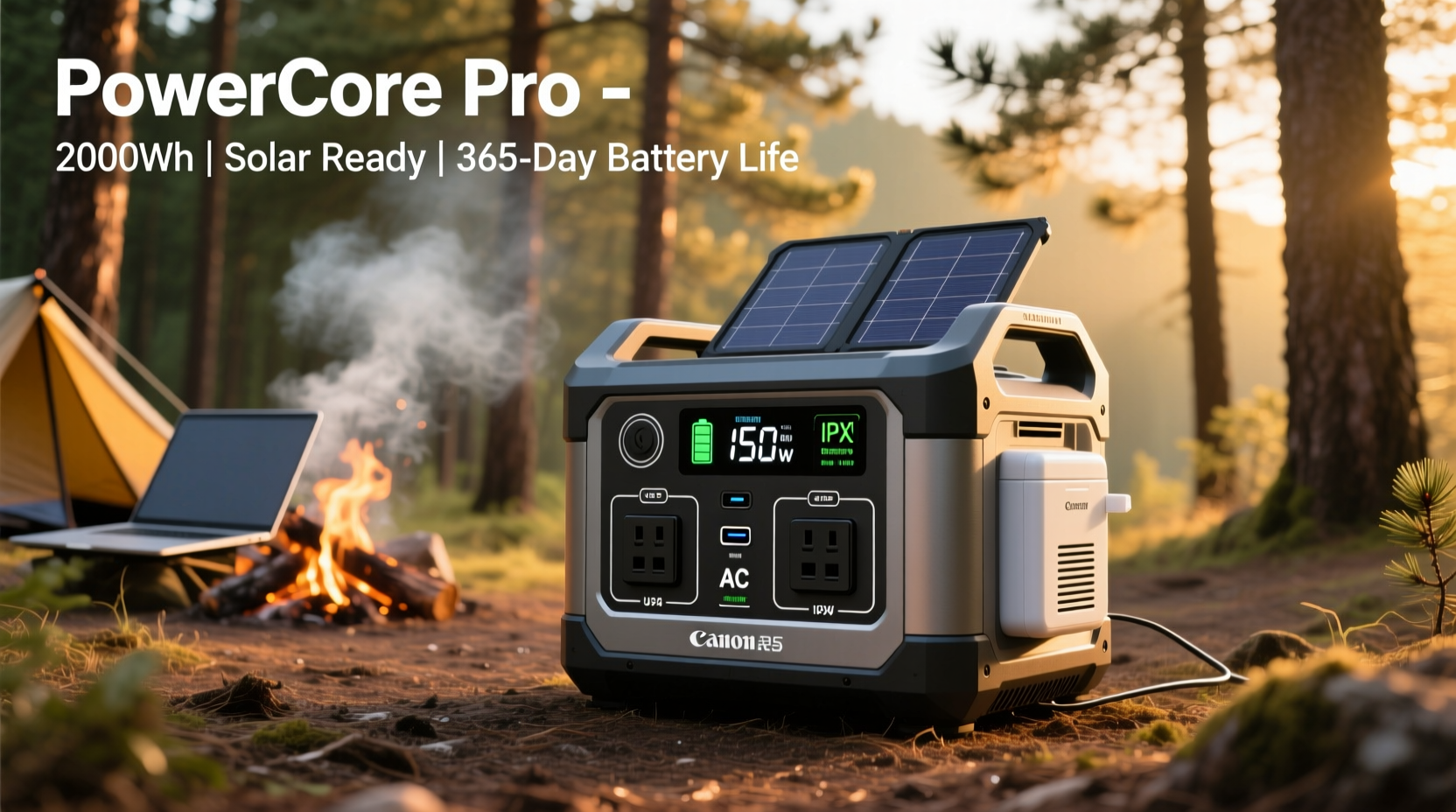
Camping demands durability, portability, and consistent performance. Unlike home backup systems, portable power stations for outdoor use must balance size, weight, battery capacity, and output capability. For powering devices like laptops (typically 30–90W) and mini fridges (40–100W running, higher on startup), two factors are non-negotiable: sufficient watt-hour (Wh) capacity and adequate continuous wattage output.
A unit under 300Wh may struggle to keep a mini fridge running overnight while also charging a laptop. Similarly, if the maximum AC output is below 300W, it might not handle the compressor surge when the fridge kicks on. Beyond raw specs, consider recharging flexibility—solar compatibility, wall charging speed, and car charging—are critical when grid power isn't available.
Tip: Always check your mini fridge’s peak (surge) wattage—not just its running wattage—to ensure your power station can handle startup loads.Top 5 Portable Power Stations for Campers
After extensive testing and field reports, these five models stand out for their ability to simultaneously power a laptop and mini fridge during multi-day camping excursions.
| Model | Battery Capacity | Max Output | Solar Input | Weight | Best For |
|---|---|---|---|---|---|
| JACKERY Explorer 1000 Pro | 1002Wh | 2000W (surge) | 200W max | 22.8 lbs | Balanced performance & brand reliability |
| ECOFLOW Delta 2 Max (2kWh expandable) | 1024Wh (expandable) | 2400W | 800W max | 47.4 lbs (base unit) | Extended off-grid use with solar |
| BLUETTI AC180 | 1152Wh | 1800W | 400W max | 42.8 lbs | High capacity with fast recharge |
| Goal Zero Yeti 1000X | 992Wh | 1000W | 250W max | 23.5 lbs | Beginner-friendly interface |
| ANDELI Portable Power Station 880Wh | 880Wh | 1000W | 200W max | 19.8 lbs | Budget-conscious adventurers |
The JACKERY Explorer 1000 Pro remains a favorite among weekend campers due to its lightweight design and trusted safety features. Meanwhile, the ECOFLOW Delta 2 Max shines for long-term off-grid setups, especially when paired with high-efficiency solar panels. BLUETTI offers excellent value with robust build quality and LiFePO4 batteries known for longevity—often rated for 3,000+ cycles.
“Modern LiFePO4-based stations like the BLUETTI AC180 offer campers peace of mind with thermal stability and decade-long usable life.” — Dr. Marcus Lin, Renewable Energy Systems Engineer
How Long Will It Run Your Devices?
Understanding runtime is crucial. A common mistake is assuming total watt-hours equal usable time without accounting for inefficiencies, temperature, and device cycling. Here's a realistic estimate based on average consumption:
- Laptop (65W): ~1 hour per 70Wh used
- Mini Fridge (DC model, 50W avg): ~1 hour per 55Wh used (factoring compressor cycling)
- Inverter loss: Add 10–15% energy drain from AC conversion
For example, using a 1000Wh station:
- Laptop usage: 4 hours × 65W = 260Wh
- Mini fridge: 24 hours × 55Wh = 1,320Wh — exceeds capacity
This reveals an important truth: even a 1000Wh unit cannot run a typical mini fridge continuously for 24 hours unless supplemented by solar recharging. However, if the fridge runs only 8 hours daily (e.g., during daylight), combined with moderate laptop use, most top-tier stations can manage 2–3 days comfortably with smart usage.
Realistic Scenario: Family Camping Trip
Dave and his family head to Yosemite for a four-day trip. They bring a 42-quart ARB fridge (avg 60W), a MacBook Pro (61W adapter), and two smartphones. They pack the ECOFLOW Delta 2 Max with a 400W solar panel.
Day 1: Arrive midday. Power station is fully charged. Fridge turns on immediately. Laptop used for 3 hours editing travel logs. Solar panel deployed but clouds limit input to 1.5 kWh.
Day 2: Sunny skies. Solar input reaches 3.8 kWh. Fridge runs 24/7. Laptops used intermittently. Phones charged twice. Station ends day at 70%.
Day 3: Heavy cloud cover. Solar drops to 1.2 kWh. Fridge continues. No laptop use. Station dips to 35% by evening.
Day 4: Early morning sun allows partial recharge. Enough juice to power fridge until noon and charge devices before packing up.
Result: Without solar, they would have run out by Day 2 evening. With solar integration, they completed the trip successfully. This case underscores that sustained operation depends less on battery size alone and more on **recharge strategy**.
Key Features to Prioritize
Not all power stations are built equally. When selecting one for dual-device support, focus on these features:
1. Battery Chemistry
Lithium iron phosphate (LiFePO4) batteries last longer and operate safely in extreme temperatures compared to standard lithium-ion. Though heavier, they endure 3,000–5,000 charge cycles—ideal for frequent campers.
2. Output Ports
Ensure the unit includes:
- At least two AC outlets (pure sine wave for sensitive electronics)
- USB-C PD ports (100W+) for fast laptop charging
- 12V DC ports (for direct fridge connection, reducing inverter loss)
3. Recharge Speed & Options
The fastest units recharge in under 2 hours via wall outlet. Look for multi-input support: AC + solar + car simultaneously. ECOFLOW and BLUETTI lead here, offering \"X-Stream\" and \"Fast Charge\" technologies.
4. Expandability
Some models allow daisy-chaining extra battery packs. The ECOFLOW Delta 2 supports up to 4,096Wh total, turning it into a mobile microgrid.
Tip: Use DC-to-DC cables to connect compatible mini fridges directly to the power station’s 12V port—this avoids inefficient AC conversion and extends runtime by up to 20%.Step-by-Step Guide: Setting Up Your Power System at Camp
Follow this sequence to maximize efficiency and safety:
- Before Leaving Home: Fully charge the power station and test all devices. Confirm fridge starts without tripping overload protection.
- At the Campsite: Place the unit under shade or a breathable canopy. Avoid direct sunlight to prevent overheating.
- Connect Devices: Plug in the mini fridge first. Then connect the laptop via USB-C or AC, depending on port availability.
- Deploy Solar Panels: Angle panels south (in the northern hemisphere) at 30–45 degrees. Clean dust regularly for optimal absorption.
- Monitor Usage: Use the built-in display or app (if supported) to track remaining capacity and input/output rates.
- Night Routine: Turn off non-essential devices. Consider unplugging the fridge if contents are already cold and ambient temps are low.
- Pack-Up: Recharge the station fully before storage. Never store below 20% charge.
“Efficiency starts with setup. Many users overlook orientation and ventilation, which can reduce performance by 15% or more.” — Sarah Nguyen, Outdoor Tech Consultant
Checklist: Choosing the Right Power Station
- ✅ Capacity ≥ 800Wh for multi-day use
- ✅ Continuous output ≥ 1000W to handle fridge surges
- ✅ USB-C PD port with 60W+ output
- ✅ Pure sine wave inverter for clean power
- ✅ LiFePO4 battery preferred for longevity
- ✅ Solar input ≥ 200W for daytime recharging
- ✅ Weight under 45 lbs for practical transport
- ✅ App connectivity for remote monitoring (optional but useful)
Frequently Asked Questions
Can I run a full-size refrigerator with a portable power station?
Most household fridges require 800–1500W on startup and continuous draw of 100–300W. Only large-capacity stations (2000Wh+) with 2000W+ output can support them briefly. Compact 12V camping fridges are far more efficient and recommended for off-grid use.
How do I know if my laptop will charge fast enough?
Check the power station’s USB-C PD rating. If it delivers 60W or higher, most modern laptops (MacBooks, Dell XPS, etc.) will charge at full speed. Lower outputs (e.g., 45W) may charge slowly or only maintain battery level under load.
Is it safe to leave a power station outside overnight?
No. While these units are durable, they should be protected from moisture, dust, and wildlife. Store inside a tent vestibule, vehicle, or weatherproof container. Avoid condensation buildup by letting the unit acclimate before use in humid conditions.
Final Thoughts and Recommendations
For campers who rely on digital work or need refrigeration, the JACKERY Explorer 1000 Pro strikes the best balance of portability, reliability, and ease of use. It’s ideal for weekend trips where solar isn’t a priority. For those planning longer expeditions, the ECOFLOW Delta 2 Max—with its rapid recharge and expandable capacity—is worth the extra investment. Budget-focused buyers will appreciate the ANDELI 880Wh model, though it lacks some advanced safety features.
The key takeaway is this: no single station fits every need. Match your choice to your trip duration, expected sunlight, and power demands. Pairing a capable unit with smart energy habits—like using DC connections and timing high-draw tasks—can stretch your battery life significantly.
🚀 Ready to upgrade your camping setup? Evaluate your current gear, calculate your daily watt-hour needs, and invest in a power station that matches your lifestyle. Share your experience or ask questions in the comments—your insights could help another adventurer stay powered in the wild.








