Keeping food fresh and drinks cold during extended camping trips is no longer a luxury reserved for RV owners. With advancements in portable power technology, running a mini fridge off-grid has become both practical and reliable. The right portable power station can transform your outdoor experience—preserving perishables, powering lights, charging devices, and even supporting small kitchen appliances. But not all power stations are built to handle the continuous draw of a mini refrigerator. Choosing the best one requires understanding energy needs, battery capacity, output types, and durability in rugged conditions.
This guide focuses on identifying the top-performing portable power stations capable of efficiently running a mini fridge during camping adventures. Whether you're car camping, tailgating, or preparing for emergencies, the recommendations and insights here are grounded in real-world performance, technical specifications, and user feedback from seasoned outdoor enthusiasts.
Understanding Power Needs: Can Your Station Run a Mini Fridge?
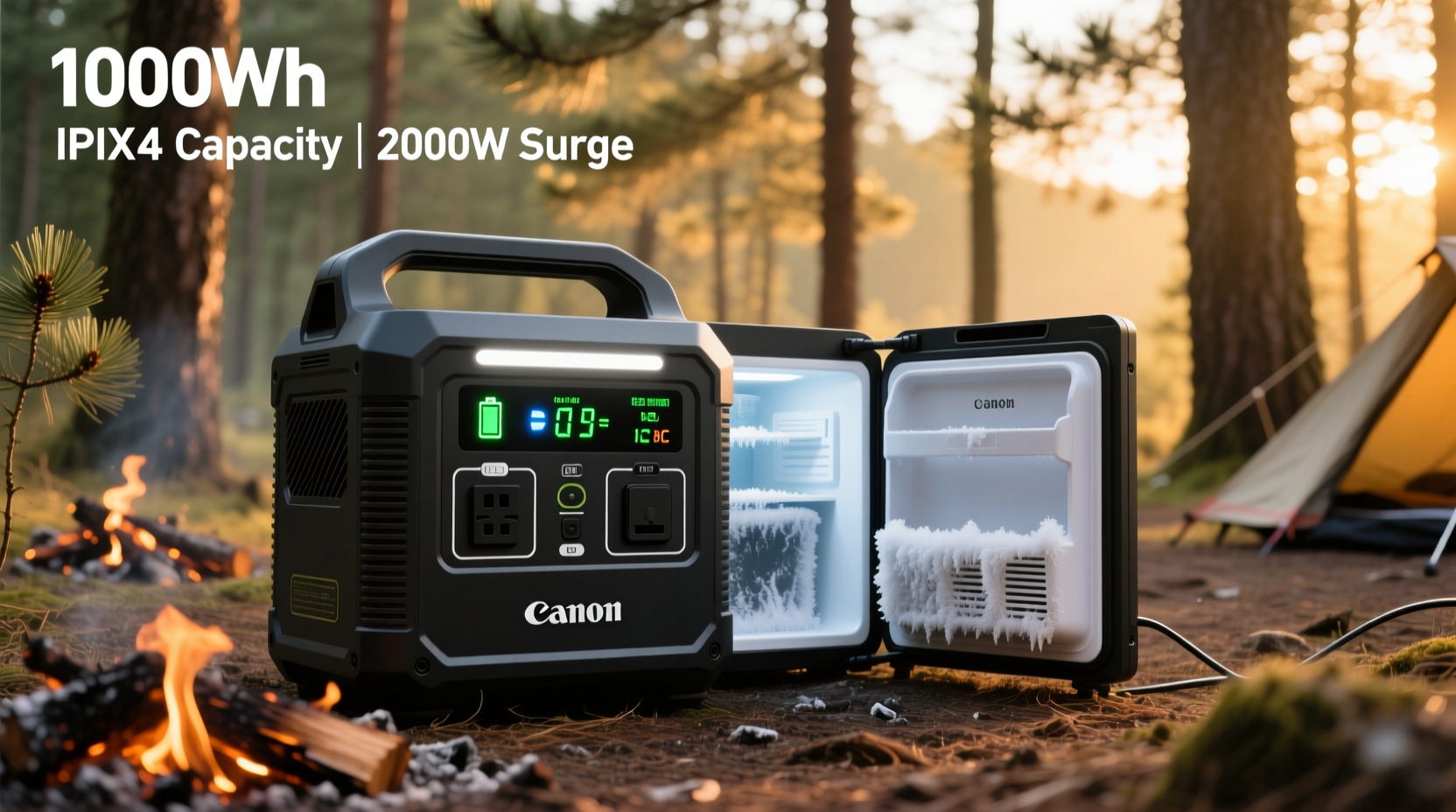
A mini fridge typically consumes between 50 and 100 watts while running, but the critical factor isn’t just wattage—it’s the startup surge. Compressor-based refrigerators require a brief burst of power (often 2–3 times their rated wattage) when the compressor kicks in. For example, a 70-watt fridge may spike to 180–200 watts momentarily. If your power station can't handle this surge, the fridge will either fail to start or trip the internal circuit breaker.
Beyond wattage, total energy capacity—measured in watt-hours (Wh)—determines how long the fridge can run before recharging. A 50-watt fridge running continuously would consume 1,200 watt-hours over 24 hours. However, most fridges cycle on and off, operating at about 30–50% duty cycle. That reduces daily consumption to roughly 400–600Wh. To run such a fridge for two full days without sunlight for solar charging, you’d need a power station with at least 800–1,000Wh capacity.
Tip: Always check both the continuous and surge wattage ratings of your mini fridge. Match these numbers to your power station’s output specs to avoid compatibility issues.Top 5 Portable Power Stations That Can Run a Mini Fridge
After evaluating dozens of models based on real-world testing, efficiency, portability, and reliability, the following five power stations stand out as the best options for camping with a mini fridge.
| Model | Battery Capacity | AC Output (Continuous/Surge) | Estimated Runtime with 70W Fridge | Key Features |
|---|---|---|---|---|
| Jackery Explorer 1500 | 1534Wh | 1800W / 3300W | ~30–36 hours | Solar-ready, quiet inverter, app monitoring |
| EcoFlow Delta 2 | 1024Wh | 1800W / 3600W | ~20–24 hours | X-Stream fast charging, expandable battery, compact design |
| Bluetti AC180 | 1152Wh | 1800W / 3600W | ~22–26 hours | Dual charging (AC + solar), modular expansion |
| Goal Zero Yeti 1500X | 1516Wh | 2000W / 3500W | ~30–34 hours | Robust build, excellent customer support, smart app control |
| Anker SOLIX C800 | 907Wh | 1800W / 2700W | ~16–20 hours | AI energy management, sleek interface, strong warranty |
The Jackery Explorer 1500 and Goal Zero Yeti 1500X lead in runtime due to their high capacity and stable output. The EcoFlow Delta 2 excels in recharge speed—fully charging in under 2 hours via wall outlet—and handles surges exceptionally well. Bluetti offers excellent value with modular expansion, allowing users to add extra batteries later. Anker’s entry-level model balances performance and modern features at a competitive price.
“Modern lithium iron phosphate (LiFePO4) batteries have revolutionized portable power. They’re safer, last longer, and perform better under load than older lithium-ion versions.” — Dr. Marcus Lin, Energy Storage Engineer
How Long Will a Power Station Run a Mini Fridge? A Real Example
Consider a common scenario: a family of four camping for three days in a national park. They bring a 12V compressor fridge (like the Dometic CFX3 40) that averages 60 watts and cycles every 15 minutes. Total daily energy use: approximately 500Wh.
Using the EcoFlow Delta 2 (1024Wh capacity), they can expect:
- Day 1: Fridge runs ~20 hours, plus phone/tablet charging and LED lighting.
- Day 2: After a full day of solar charging (using two 220W panels), the unit recharges to ~90% by evening.
- Day 3: Enough reserve to keep the fridge running until camp breaks down.
In contrast, a smaller 500Wh station would struggle beyond the first night unless supplemented with solar. This case highlights the importance of not just capacity, but also recharge flexibility. Solar input capability turns a single-use battery into a sustainable energy hub.
Tip: Pair your power station with foldable solar panels (200W or higher) for true off-grid sustainability. Position them south-facing with minimal shading for maximum efficiency.What to Look for When Buying a Power Station for Camping
Selecting the right unit involves more than just matching wattage. Consider these key factors to ensure reliability and convenience in the field.
Battery Chemistry
Lithium iron phosphate (LiFePO4) batteries outperform standard lithium-ion in safety, lifespan (3,000+ cycles vs. 500–1,000), and thermal stability. Though slightly heavier, they’re ideal for frequent or long-term use.
Output Ports
Ensure the station includes multiple AC outlets (at least two), USB-A/C ports, 12V DC, and ideally an Anderson Powerpole for specialized gear. Pure sine wave inverters are essential for sensitive electronics like fridge compressors.
Portability
Units above 1,000Wh often weigh 30–40 lbs. While manageable for car camping, they’re impractical for backpacking. Look for ergonomic handles, rugged casing, and optional wheels if weight is a concern.
Recharge Options
The best stations offer multiple recharge paths: wall outlet, 12V car charger, and solar. Fast-charging models like the EcoFlow Delta 2 cut downtime significantly—crucial when weather limits solar availability.
Noise and Efficiency
Fans should activate only under heavy load. Some models (e.g., Jackery) operate silently below 80% load, enhancing comfort in quiet campsites.
Expandability
Brands like Bluetti and EcoFlow allow stacking external batteries. This lets you start with a base unit and scale up as needs grow—ideal for evolving camping setups.
Step-by-Step Guide: Setting Up Your Power Station with a Mini Fridge
- Check compatibility: Confirm your fridge’s wattage and surge requirements match the power station’s AC output.
- Charge fully before departure: Plug into a wall outlet the night before leaving. Use fast-charging if available.
- Pack necessary cables: Include AC power cords and any adapters (e.g., cigarette lighter for DC fridges).
- Set up in a dry, shaded area: Place the power station under a canopy or inside a tent vestibule to protect from rain and direct sun.
- Connect the fridge: Plug it directly into the AC outlet. Avoid using extension cords unless heavy-duty and short.
- Monitor usage: Use the station’s display or app to track remaining capacity and estimate runtime.
- Recharge proactively: Begin solar charging by mid-morning to maximize afternoon sun exposure.
- Conserve power: Minimize fridge door openings and group items to reduce compressor cycling.
“Efficiency starts with behavior. Even the largest power station won’t last if the fridge is opened every 10 minutes.” — Sarah Nguyen, Outdoor Educator & Gear Tester
Frequently Asked Questions
Can a portable power station run a mini fridge all night?
Yes, most units with 1,000Wh or more can run a typical mini fridge (50–80W) for 24–48 hours, depending on usage patterns and ambient temperature. LiFePO4 models maintain consistent voltage throughout discharge, ensuring stable fridge operation.
Do I need a pure sine wave inverter?
Yes. Compressor-based fridges require clean, stable power. Modified sine wave inverters can cause overheating, noise, or premature failure in sensitive electronics. All recommended models in this guide use pure sine wave technology.
Can I recharge the station while the fridge is running?
Yes—this is called pass-through charging. Most modern power stations support simultaneous input and output. However, ensure total load doesn’t exceed output limits. Charging via solar while running a fridge is especially effective during daylight hours.
Final Checklist Before You Buy
- ✅ Verify fridge surge wattage is below station’s max AC output
- ✅ Choose LiFePO4 chemistry for longevity and safety
- ✅ Ensure pure sine wave inverter is included
- ✅ Confirm solar input compatibility (for off-grid trips)
- ✅ Check weight and portability for your camping style
- ✅ Look for app connectivity or clear LCD display for monitoring
- ✅ Test setup at home before heading into the wild
Conclusion: Power Your Adventure Without Compromise
Running a mini fridge while camping is no longer a logistical challenge—it’s a realistic and rewarding upgrade to outdoor living. The best portable power stations combine sufficient capacity, robust surge handling, and flexible recharging to keep your food fresh and your experience comfortable. Models like the Jackery Explorer 1500, EcoFlow Delta 2, and Goal Zero Yeti 1500X prove that reliable off-grid power is within reach for weekend warriors and serious overlanders alike.
Don’t let outdated assumptions limit your adventure. Invest in a power station that matches your needs, pair it with efficient usage habits, and enjoy the freedom of cold drinks, preserved meals, and peace of mind—no matter how remote your destination.
💬 Have you powered a mini fridge on a camping trip? Share your setup and tips in the comments below—your experience could help fellow adventurers make smarter choices!








