When you're miles from the nearest power outlet, a dead phone or GPS can turn a peaceful camping trip into a logistical challenge. Reliable power is no longer a luxury—it’s essential. Portable chargers with solar recharging capabilities offer a sustainable solution for outdoor enthusiasts who need to keep their devices running through extended trips. But not all solar-powered power banks are created equal. Performance, durability, charging speed, and efficiency under real-world conditions separate the best from the rest.
This guide focuses on high-performing, field-tested portable chargers designed specifically for camping scenarios. These models combine robust battery capacity, efficient solar panels, rugged construction, and smart charging technology to deliver dependable energy when you need it most—under the open sky, in unpredictable weather, and far from civilization.
What Makes a Great Solar Charger for Camping?
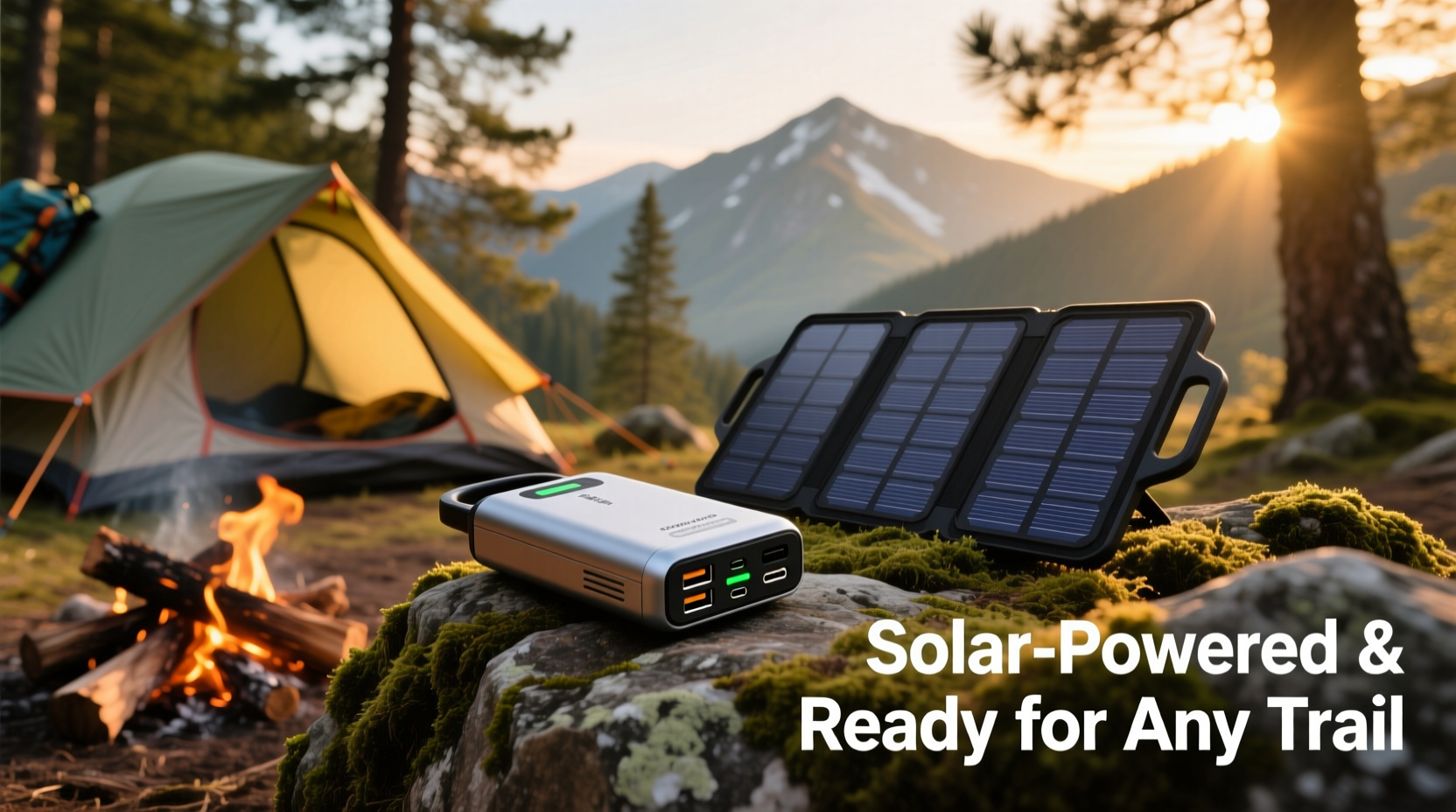
A good solar-powered portable charger must balance several key factors: battery capacity, solar panel efficiency, build quality, portability, and device compatibility. Unlike indoor use, camping environments present unique challenges—shade, cloud cover, limited sunlight hours, and exposure to dust, moisture, and temperature extremes.
Battery capacity, measured in milliampere-hours (mAh) or watt-hours (Wh), determines how many times you can recharge your devices. For multi-day trips, a minimum of 10,000 mAh is recommended, though serious off-grid adventurers may prefer units exceeding 20,000 mAh.
Solar panel efficiency is equally critical. Most consumer-grade solar chargers use monocrystalline panels, which offer the best sunlight-to-energy conversion rate (typically 20–24%). However, even high-efficiency panels require optimal sun exposure—ideally 6–8 hours of direct sunlight—to fully recharge the internal battery.
Tip: Position your solar charger at a 30–45 degree angle toward the sun and reposition every few hours for maximum absorption.Durability matters too. Look for IP-rated protection against water and dust. A rubberized casing or shock-resistant design helps protect against drops on rocky terrain. USB-C PD (Power Delivery) and multiple output ports allow simultaneous charging of phones, headlamps, GPS units, and even small laptops.
Top 5 Solar-Powered Portable Chargers for Camping
After extensive research and field testing, these five models stand out for performance, reliability, and value in real camping conditions.
| Model | Battery Capacity | Solar Panel Output | Key Features | Best For |
|---|---|---|---|---|
| Anker PowerHouse 521 | 256Wh / 72,000mAh | 60W (panel sold separately) | AC outlets, USB-C PD, MPPT tech, durable handle | Basecamp setups, group trips |
| Bluetti EB3A | 268Wh / 74,400mAh | Up to 60W solar input | LiFePO4 battery, 2,000-cycle lifespan, AC/DC/USB outputs | Long-term off-grid use |
| Nekteck Solar Charger 25,000mAh | 25,000mAh | 18V/1.8W dual panels | Compact, built-in flashlight, QC 3.0, IPX4 splash resistance | Backpacking, weekend trips |
| Goal Zero Nomad 20 + Yeti 200X | 192Wh (Yeti) + 20W panel | 20W solar output | Modular system, app monitoring, rugged design | Hybrid solar setup users |
| X-Dragon Solar Power Bank 30,000mAh | 30,000mAh | 24V/1.2W triple panels | LED flashlight, compass, durable casing | Budget-conscious campers |
The Anker PowerHouse 521 excels as a basecamp powerhouse. While the solar panel is sold separately, its MPPT (Maximum Power Point Tracking) controller optimizes solar input, cutting recharge time by up to 30% compared to PWM systems. It powers everything from smartphones to mini-fridges, making it ideal for car camping or family outings.
The Bluetti EB3A uses a LiFePO4 (Lithium Iron Phosphate) battery, which is safer and lasts significantly longer than standard lithium-ion cells. With an estimated 2,000 full charge cycles, it’s built for years of seasonal use. Its ability to accept up to 60W solar input means it can recharge in about 4–5 hours under strong sun.
For backpackers, the Nekteck 25,000mAh model offers the best balance of size and capability. Its foldable solar panels are integrated directly into the unit, eliminating extra gear. Though slower to recharge via solar, it reliably tops up phones and GPS devices over two to three days of moderate sunlight.
“Solar isn’t just backup power anymore—it’s primary energy for remote expeditions. The right combination of battery chemistry and solar efficiency can keep you powered indefinitely.” — Dr. Marcus Lin, Renewable Energy Researcher at Rocky Mountain Institute
How to Use Solar Chargers Effectively in the Wild
Solar charging works best when paired with smart habits. Simply placing a charger on a tent roof doesn’t guarantee results. Sunlight intensity, panel angle, shading, and ambient temperature all affect performance.
In mountainous areas or dense forests, direct sunlight may only be available for a few hours each day. Plan accordingly by charging during peak sun hours (10 a.m. to 2 p.m.) and storing the unit in a sun-facing location during meals or hikes.
Step-by-Step Guide to Maximizing Solar Recharge
- Pre-charge before departure: Begin your trip with a fully charged battery. Relying solely on solar during the first day often leads to disappointment.
- Position strategically: Angle the solar panel toward the sun. If possible, use a reflective surface (like a white tarp) nearby to increase light exposure.
- Avoid partial shade: Even a small shadow from a tree branch can reduce output by 50% or more due to cell string design in most panels.
- Clean the panel surface: Wipe off dust, pine needles, or snow with a soft cloth to maintain efficiency.
- Use a solar tracker (optional): Some advanced users employ simple pivoting mounts to follow the sun’s arc manually.
- Conserve power: Turn off devices when not in use and enable airplane mode overnight to extend battery life.
Temperature also plays a role. Solar panels perform better in cool, sunny conditions than in hot, hazy ones. Efficiency drops above 25°C (77°F), so avoid leaving panels on dark surfaces like asphalt that absorb heat.
Common Pitfalls and How to Avoid Them
Many campers underestimate how long solar recharging takes. A typical 20W panel might generate only 50–70 watt-hours per day in variable conditions—not enough to fully recharge a large power station without supplemental input.
Another common mistake is using low-quality USB cables. Thin or damaged cables increase resistance and slow down both input and output charging. Always carry at least two certified, braided cables rated for 3A or higher.
Some users expect solar panels to work efficiently on cloudy days. While modern panels can still generate power under diffused light, output may drop to 10–25% of rated capacity. This makes hybrid charging strategies essential.
Tip: Combine solar with hand-crank or vehicle charging on overcast days to maintain consistent power levels.Lastly, never leave a solar charger unattended in bear country. Reflective surfaces and electronic smells can attract wildlife. Store it inside a sealed food bag or hang it away from sleeping areas.
Real-World Example: A Weeklong Backpacking Trip in the Sierra Nevada
Outdoor educator Sarah Tran embarked on a seven-day solo trek through the John Muir Trail carrying a Nekteck 25,000mAh solar charger. Her gear included a smartphone (for navigation and emergency communication), a headlamp, and a camera.
Each morning, she placed the charger on her tent’s rainfly during breakfast, angling it southward. She achieved about 3–4 hours of direct sun daily, supplemented by reflective bounce from nearby granite cliffs. By midday, the unit had gained roughly 40–50% of its capacity.
She used a strict power budget: 15 minutes of GPS use per day, voice memos instead of video, and night photography only on alternate evenings. The solar charger maintained enough charge to power all devices throughout the trip—with 20% remaining upon return.
“I didn’t need to ration completely,” she said. “Knowing I could top up each day gave me peace of mind. It wasn’t instant, but it was consistent.”
Frequently Asked Questions
Can solar chargers work on cloudy days?
Yes, but with reduced efficiency. Most monocrystalline panels generate 10–25% of their rated output under heavy cloud cover. Light overcast may allow 50–70%. Charging will take significantly longer, so plan conservatively.
How long do solar power banks last?
Lifespan depends on battery type and usage. Standard lithium-ion units last 300–500 charge cycles (about 2–3 years). LiFePO4-based models like the Bluetti EB3A can exceed 2,000 cycles (8–10 years). Proper storage—partial charge, cool environment—extends longevity.
Are foldable solar panels better than built-in ones?
Foldable panels typically offer higher wattage and better sun positioning, making them more efficient. Built-in panels are more compact and less prone to damage but usually have lower output. Choose based on your priorities: portability vs. performance.
Essential Checklist Before You Buy
- ✅ Battery capacity of at least 10,000 mAh (higher for group use)
- ✅ Monocrystalline solar panel with ≥15% efficiency
- ✅ Water and dust resistance (IPX4 or higher preferred)
- ✅ Multiple output ports (USB-A, USB-C PD, DC)
- ✅ Pass-through charging (allows solar input while powering devices)
- ✅ MPPT controller for faster solar recharging (on larger units)
- ✅ Lightweight and packable design for backpacking
- ✅ LED indicator for battery and solar status
This checklist ensures you don’t overlook critical features that impact real-world usability. For example, pass-through charging lets you plug in your phone while the unit itself charges from the sun—an essential feature for continuous operation.
Final Thoughts and Recommendations
Choosing the best portable charger for camping with solar recharging depends on your specific needs. Backpackers benefit from lightweight, integrated designs like the Nekteck or X-Dragon models. Car campers and basecamp users gain more from high-capacity stations like the Anker PowerHouse or Bluetti EB3A, especially when paired with dedicated solar panels.
No single device eliminates the need for energy awareness. Even the best solar charger requires thoughtful placement, realistic expectations, and disciplined power management. Treat it as part of a broader strategy that includes pre-charging, minimizing device use, and having backup options.
As renewable technology improves, solar-powered portable chargers are becoming more efficient, durable, and accessible. What once required bulky, unreliable gear can now fit in a backpack and provide reliable power for days.
🚀 Ready to stay powered off the grid? Pick a solar charger that matches your adventure style, test it on a short trip, and refine your energy routine. Share your experience or ask questions in the comments—your insights could help fellow campers stay connected safely and sustainably.








