Fluorocarbon’s low visibility and abrasion resistance make it a top choice for leaders in freshwater and saltwater fishing. However, connecting braided mainline to fluorocarbon leader presents a challenge—braid is slick, and fluorocarbon is stiff. A poor knot can fail under pressure, costing you fish. The right knot ensures strength, reliability, and a streamlined profile that slips through guides and water with minimal drag. Not all knots are equal in this application. Some slip, others weaken the line, and many are difficult to tie when wet or cold. This guide identifies the most effective knot for joining braid to fluorocarbon, explains why it works, and provides step-by-step instructions to ensure success every time.
Why Knot Choice Matters in Braid-to-Fluorocarbon Connections
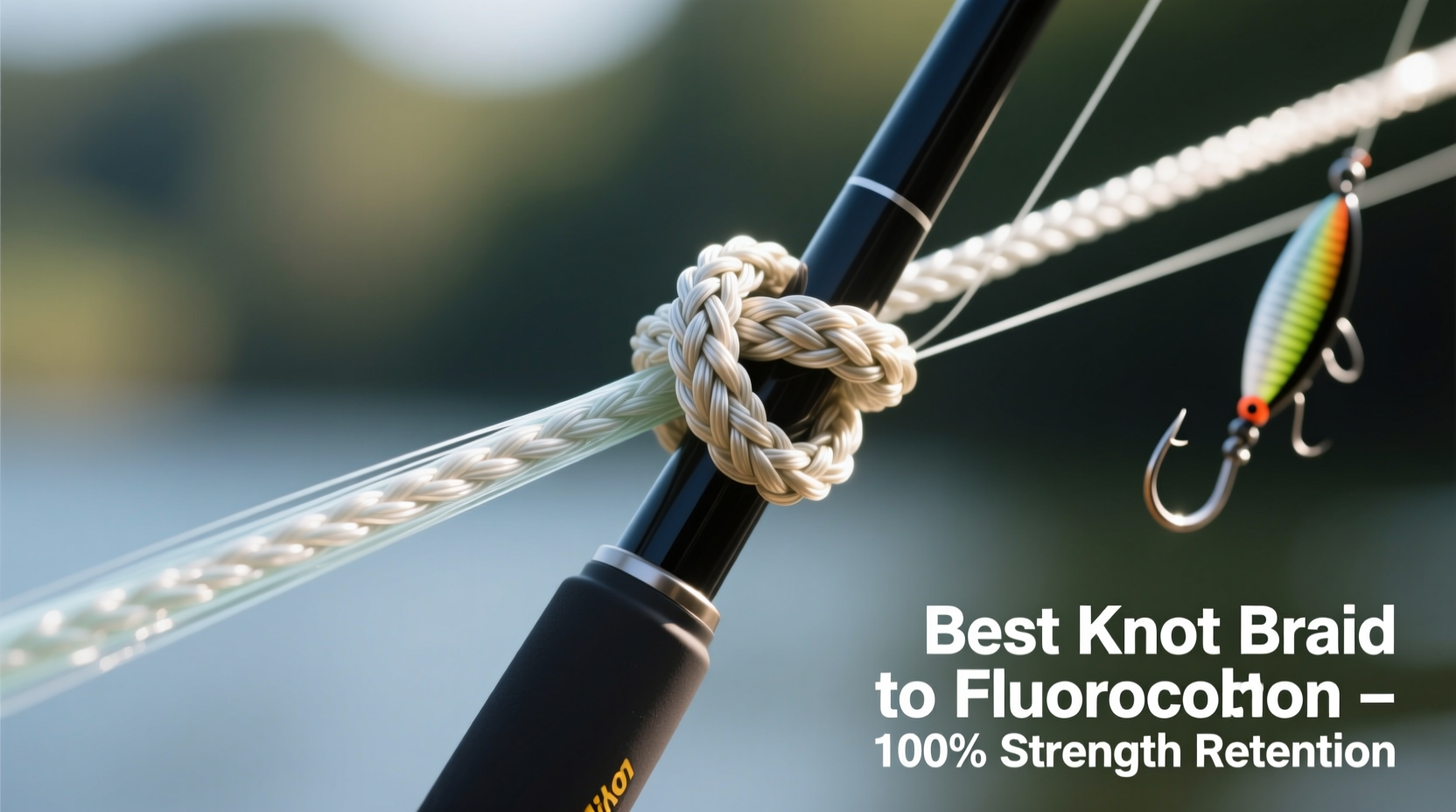
The junction between braided line and fluorocarbon leader is one of the most critical points in a fishing rig. Braid offers high sensitivity and strength but is highly visible underwater. Fluorocarbon counters that with near-invisibility and superior abrasion resistance, making it ideal as a leader. However, the physical differences between the two materials—braid’s suppleness versus fluorocarbon’s stiffness—require a knot that grips both without slipping or weakening either line.
A poorly tied knot reduces overall breaking strength by up to 50%. Worse, some knots create bulky connections that snag in rod guides or disrupt casting accuracy. In fast-paced scenarios like jigging or topwater fishing, a failed knot means losing not just the fish, but potentially your entire terminal setup.
Tip: Always moisten the knot before tightening to reduce friction and prevent heat-induced line damage during cinching.The Uni-to-Uni Knot: The Best All-Around Choice
Among the various options—Blood Knot, Double Surgeon’s Knot, Albright Special, and FG Knot—the **Uni-to-Uni** stands out for its balance of strength, simplicity, and reliability when joining braid to fluorocarbon.
Unlike the Blood Knot, which requires precise alignment and multiple wraps, or the FG Knot, which demands significant practice and finesse, the Uni-to-Uni is accessible to anglers of all skill levels. It maintains approximately 85–90% of the line’s original strength when tied correctly and produces a relatively smooth transition between lines.
“The Uni-to-Uni is the go-to knot for connecting dissimilar lines because it grips consistently on both braid and fluorocarbon.” — Captain Ray Sanders, Offshore Fishing Guide with 25 years of charter experience
Step-by-Step: Tying the Uni-to-Uni Knot
- Lay the ends of the braid and fluorocarbon parallel to each other, overlapping about 12 inches.
- Double back the braid to form a loop, trapping the fluorocarbon inside.
- Wrap the tag end of the braid around both lines (including the loop) 6–8 times, moving toward the overlap point.
- Pass the tag end through the loop near the standing part of the braid.
- Pull the standing braid to tighten the wraps, sliding them down toward the fluorocarbon.
- Repeat the process with the fluorocarbon: double it back, wrap the tag end around both lines 5–6 times, and thread through the new loop.
- Maintain tension on the standing lines while pulling both tag ends to seat the knots.
- Trim the tag ends close, leaving about 1/8 inch to prevent slippage.
The result is two connected Uni knots, each gripping its respective line securely. The final connection should feel firm but not excessively bulky.
Comparison of Common Braid-to-Fluorocarbon Knots
| Knot Type | Strength Retention | Tie Difficulty | Bulk Level | Best For |
|---|---|---|---|---|
| Uni-to-Uni | 85–90% | Easy | Low-Moderate | All-around use, beginners and pros |
| Albright Special | 80–85% | Moderate | Moderate | Heavy braid to heavy fluorocarbon |
| FG Knot | 90–95% | Difficult | Low | Light tackle, long casts |
| Double Surgeon’s Knot | 70–75% | Easy | High | Quick fixes, emergency use |
| Blood Knot | 80% | Moderate | Low | Same-diameter lines only |
While the FG Knot offers slightly higher strength and lower profile, its complexity makes it less practical for rapid reties or cold conditions. The Uni-to-Uni delivers consistent performance across a wide range of line diameters and fishing styles, making it the preferred choice for most anglers.
Real-World Example: Snook Fishing in Murky Water
Doug Martin, an inshore angler from Florida’s Gulf Coast, regularly targets snook around mangrove roots and dock pilings. He uses 30-pound braid with a 20-pound fluorocarbon leader. “I used to lose fish at the boat because my knot would slip,” he says. “Switched to the Uni-to-Uni after a guide showed me how, and now I land nearly every legal fish I hook.”
In low-light conditions, where snook strike hard and dive into structure, the strength and reliability of the knot proved decisive. “It’s not flashy, but it holds. That’s all I need.”
Pro Tips for Maximum Knot Strength
- Wet the knot before tightening—this prevents internal friction from weakening the line.
- Align the tag ends so they exit away from the mainline to avoid interference.
- Check alignment after tying: the two knots should sit snugly against each other without twisting.
- Test the knot with steady pressure before casting—not a jerk—to ensure it seats properly.
- Retie after major stress, such as a hard fight or snag, even if the knot appears intact.
Checklist: Tying a Reliable Braid-to-Fluorocarbon Connection
- Overlap braid and fluorocarbon by at least 12 inches.
- Tie a Uni knot with the braid, wrapping 6–8 times. <3>Tie a second Uni knot with the fluorocarbon, wrapping 5–6 times.
- Moisten both knots before tightening.
- Cinch both knots slowly, maintaining tension.
- Seat the knots together and trim tags to 1/8 inch.
- Inspect for twists, gaps, or loose wraps.
- Test with firm, steady pull before casting.
Frequently Asked Questions
Can I use the same knot for monofilament and fluorocarbon?
Yes, the Uni-to-Uni works well with monofilament too. However, mono stretches more than fluorocarbon, so ensure the knot is fully seated and tightened to prevent delayed slippage.
How often should I retie my braid-to-fluorocarbon connection?
Routine inspection is key. Retie the knot after landing a large fish, experiencing a major snag, or every 4–6 hours of active fishing. UV exposure and abrasion degrade line over time, even if not visibly damaged.
Is the FG Knot really better than the Uni-to-Uni?
The FG Knot can offer marginally higher strength and a lower profile, ideal for long-distance casting with light leaders. However, it takes longer to tie and is harder to master. For most anglers, the Uni-to-Uni provides sufficient strength with far greater ease and consistency.
Final Thoughts: Simplicity Meets Strength
The best knot isn’t always the most complex. When joining braid to fluorocarbon, the Uni-to-Uni delivers a rare combination of strength, simplicity, and dependability. Whether you're targeting bass in stained rivers or tuna offshore, a secure connection means confidence in every cast. You won’t win tournaments based on your knot alone—but you might lose them because of a weak one.
💬 What’s your go-to knot for braid-to-fluorocarbon? Share your experience or ask questions in the comments—let’s help fellow anglers strengthen their rigs!








