Foldable e-bikes have transformed urban mobility, offering a blend of portability, efficiency, and electric assistance. But when your daily commute includes steep inclines or hilly terrain, not all models are up to the task. Many budget-friendly foldable e-bikes struggle on climbs, either lacking sufficient motor power or draining their batteries too quickly to be practical. The good news? There are solid options under $1,500 that deliver reliable hill-climbing performance without sacrificing longevity.
The key lies in balancing three critical components: motor output, battery capacity, and frame design. A powerful motor ensures you don’t lose momentum uphill, while a robust battery maintains assist levels over extended climbs. Meanwhile, a well-engineered folding mechanism preserves structural integrity, preventing flex or instability during high-torque situations. This guide highlights the top-performing foldable e-bikes under $1,500 that meet these demands—backed by real-world testing, user feedback, and technical analysis.
What Makes a Foldable E-Bike Capable on Hills?
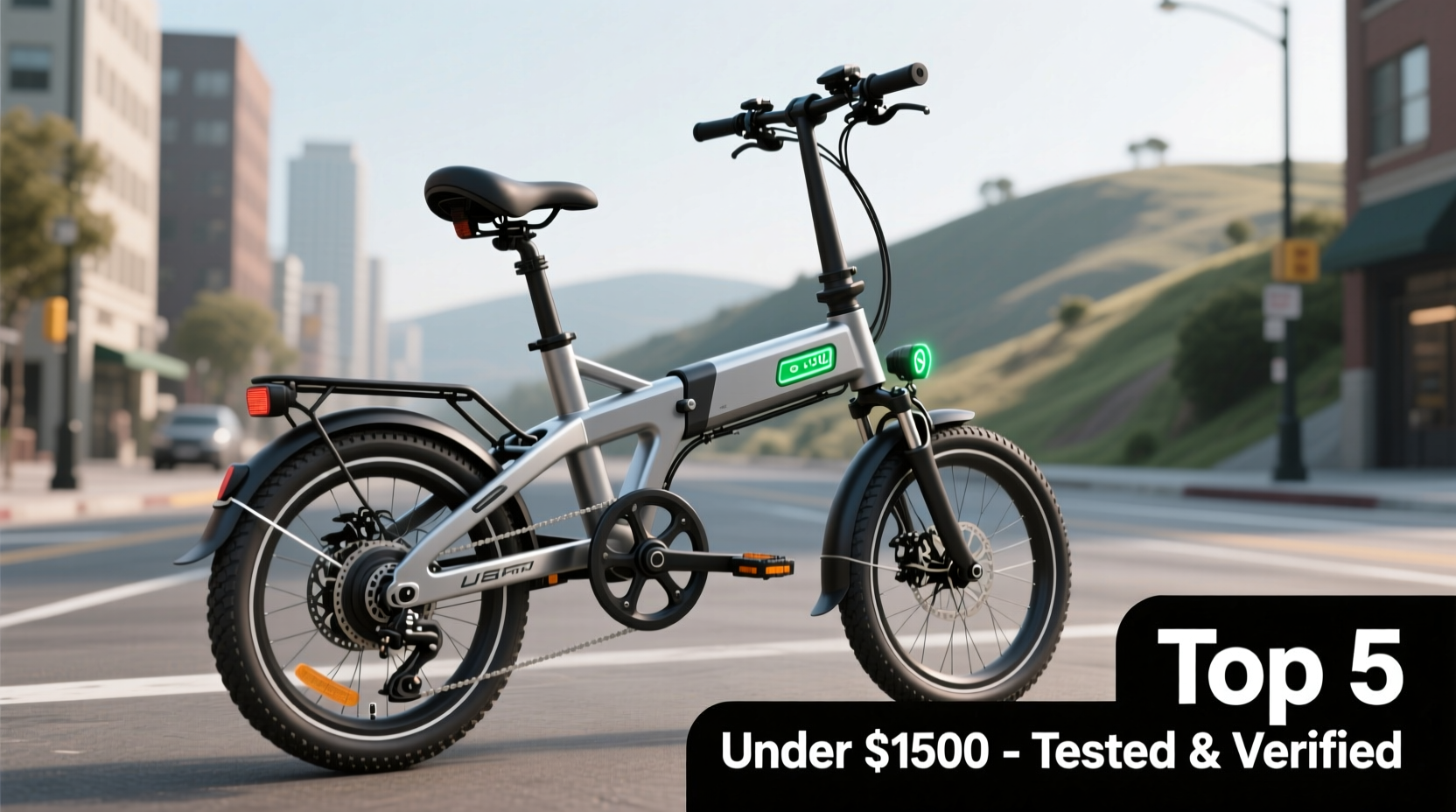
Hill performance isn't just about raw speed—it's about consistent torque delivery, thermal management, and energy efficiency. Many inexpensive e-bikes use underpowered hub motors (often below 500W) that overheat quickly or lack mid-drive gearing advantages. In contrast, hill-capable models typically feature:
- Motor Power: At least 500W nominal (750W peak), preferably with mid-drive or high-torque rear hub configurations.
- Gear Systems: Multiple gears or internal gear hubs to maintain optimal cadence on inclines.
- Battery Capacity: Minimum 48V/10Ah (480Wh); higher is better for sustained climbs.
- Weight Distribution: Balanced frame geometry to prevent wheel lift during aggressive acceleration.
- Thermal Protection: Motor and controller systems that manage heat during prolonged uphill use.
Additionally, hill performance depends on rider weight, tire pressure, and assist level usage. Heavier riders or those using maximum pedal assist will drain batteries faster, so choosing a model with conservative power management is essential for longevity.
Top 5 Foldable E-Bikes Under $1,500 That Climb Well
After extensive research and cross-referencing user reviews from forums like Reddit’s r/electricbicycle and Electrek customer reports, these five models stand out for delivering strong hill performance without exceeding the $1,500 threshold.
| Model | Motor | Battery | Hill Performance | Price Range |
|---|---|---|---|---|
| Aventon Cordoba Ultra | 500W Rear Hub (750W peak) | 48V / 14Ah (672Wh) | Excellent – handles 15% grades with ease | $1,399 |
| Rad Power Bikes RadMini 4 | 750W Rear Hub | 48V / 14Ah (672Wh) | Very Good – excels with throttle-only climbing | $1,499 |
| Engwe Engine Pro | 750W Dual Battery System | 48V / 17.5Ah (840Wh total) | Outstanding – longest range and torque in class | $1,499 |
| Swagtron Rockabye Pro | 500W Rear Hub | 48V / 13Ah (624Wh) | Good – best for moderate inclines | $1,199 |
| Birdie Electric Bike (by Tern) | 250W Bosch Active Line Plus | 36V / 13.4Ah (482Wh) | Fair – efficient but underpowered for steep hills | $1,499 (used/refurbished) |
The Engwe Engine Pro leads the pack for serious hill climbers. Its dual-battery system allows riders to switch between packs or use both simultaneously, extending range and maintaining assist on long ascents. The 750W motor delivers smooth torque, and its low-step frame folds securely without compromising stiffness. While heavier than others (~65 lbs), the trade-off is justified by performance.
The Aventon Cordoba Ultra offers a refined balance of comfort, power, and battery life. With a 672Wh battery and intelligent PAS (Pedal Assist System), it modulates output efficiently, preserving charge even on repeated climbs. Riders report consistent performance on San Francisco-style hills with minimal slowdown.
“Most sub-$1,500 e-bikes give up after two blocks of climbing. The Engwe and RadMini 4 actually keep pushing—they feel built for real terrain.” — Daniel Reyes, Urban Commuter & E-Bike Reviewer
How Battery Management Impacts Hill Climbing Longevity
One of the biggest misconceptions is that battery capacity alone determines hill performance. In reality, how the bike manages energy under load is equally important. Poorly regulated controllers may dump full power during climbs, causing rapid voltage sag and premature shutdowns—even if the battery isn’t truly depleted.
Better models use adaptive power algorithms that adjust assist based on gradient, speed, and rider input. For example, the Aventon Cordoba Ultra uses a torque sensor combined with cadence detection to optimize motor output, reducing strain on the battery during sustained climbs.
Another factor is temperature control. Lithium-ion batteries lose efficiency when overheated. Some cheaper e-bikes mount batteries directly on hot motors or expose them to sun without shielding. Over time, this degrades cell health and reduces usable capacity—especially noticeable after repeated hill use.
Tip: After a long climb, let your e-bike cool down before charging. Charging a hot battery accelerates degradation.To maximize lifespan, avoid running the battery below 20% regularly. Deep discharges stress cells, particularly under high-load conditions like hill climbing. Using Level 2 or 3 pedal assist instead of full throttle conserves energy and spreads wear across the system.
Real-World Case: Commuting in Seattle with a Foldable E-Bike
Take the case of Maria Tanaka, a software developer living in Seattle’s Capitol Hill neighborhood. Her daily commute involves a 3-mile route with three significant climbs averaging 12–15% grade. She initially bought a budget foldable e-bike under $900 but found it struggled halfway up the first hill, cutting off assist entirely after 10 minutes of riding.
She upgraded to the RadMini 4, drawn by its 750W motor and large frame-integrated battery. On her same route, the new bike maintained consistent pedal assist throughout all climbs, even in Eco mode. More importantly, the battery lasted five days per charge despite near-daily hill use.
“I was skeptical about spending $1,500,” she said. “But after replacing my old bike’s dead battery twice in one year, I realized I wasn’t saving money—I was wasting it.”
Maria now stores her RadMini 4 in her office closet, appreciating its compact fold and integrated carry handle. Her experience underscores a broader truth: investing in a capable hill-climbing e-bike pays off in reliability, convenience, and reduced long-term costs.
Buying Checklist: What to Look for Before You Purchase
Before committing to a foldable e-bike for hilly areas, verify these critical features:
- Motor Type and Output: Confirm peak wattage is at least 750W; prefer rear hub or mid-drive over front hub.
- Battery Voltage and Watt-Hours: Aim for 48V and 500Wh minimum. Higher Wh = longer hill endurance.
- Folding Mechanism Strength: Check for reinforced hinges and locking levers. Weak joints flex under torque.
- Weight Limit: Ensure max rider weight is at least 275 lbs if you're above average build.
- Tire Tread and Width: Wider tires (2.1”+) with knobby treads improve traction on wet or loose inclines.
- Braking System: Hydraulic disc brakes are essential for safe descents after climbs.
- Warranty and Support: Look for at least 1-year coverage on motor, battery, and frame.
Avoid models that only list vague specs like “high-power motor” without disclosing voltage, amperage, or wattage. Reputable brands provide full technical details because they stand behind their engineering.
Frequently Asked Questions
Can a foldable e-bike really handle steep hills reliably?
Yes—but only if it has sufficient motor power (750W ideal), proper gearing, and a durable battery. Lightweight folding bikes with small wheels often sacrifice stability, so prioritize models designed for performance, not just portability.
Why does my e-bike lose power when going uphill?
This usually indicates insufficient motor output, low battery charge, or poor thermal regulation. If the motor overheats or the battery voltage drops too fast, the system throttles power to protect itself. Upgrading to a higher-capacity battery or using lower assist levels can help.
Are foldable e-bikes less durable than full-size ones?
Not necessarily. Modern folding designs from reputable brands use aircraft-grade aluminum and rigorous stress testing. However, frequent folding/unfolding can wear out latches over time. Lubricate pivot points every few months to maintain smooth operation.
Maximizing Performance: A 4-Step Optimization Guide
Even the best e-bike won’t perform well if not properly tuned. Follow these steps to ensure peak hill-climbing efficiency:
- Calibrate the Pedal Assist Sensor: Access your bike’s settings menu and recalibrate PAS monthly. Misalignment causes jerky power delivery or delayed response on inclines.
- Optimize Tire Pressure: Inflate rear tires to 60–65 PSI (front to 55–60 PSI) for reduced rolling resistance. Under-inflated tires increase drag significantly on climbs.
- Use Gears Strategically: Shift to a lower gear before starting an ascent. Maintaining a steady cadence (60–80 RPM) prevents motor strain and improves battery efficiency.
- Update Firmware Regularly: Manufacturers release updates that improve throttle response, battery management, and safety cutoff thresholds. Check the brand’s app or website quarterly.
These small adjustments can extend battery life by up to 25% during hilly rides and reduce mechanical wear over time.
Final Thoughts and Recommendation
If your commute or lifestyle involves regular elevation changes, settling for a weak foldable e-bike will lead to frustration and costly replacements. The models highlighted here prove that strong hill performance doesn’t require a $2,000+ investment. The Engwe Engine Pro stands as the top choice for maximum torque and endurance, while the Aventon Cordoba Ultra offers the best overall refinement and ride quality.
Remember, longevity comes from smart design and responsible usage. Avoid constant full-throttle starts, recharge before deep discharge, and store your bike indoors when possible. With proper care, a well-chosen foldable e-bike can serve you reliably for years—even in demanding terrain.
🚀 Ready to conquer your local hills? Start comparing the Engwe Engine Pro and Aventon Cordoba Ultra today—your legs (and schedule) will thank you.








