Finding a reliable bike lock that doesn’t weigh you down is a challenge every urban cyclist faces. Traditional U-locks and heavy chains provide solid protection but can be cumbersome to carry on longer rides. Enter foldable bike locks: a modern solution combining compact design with robust security. These innovative locks collapse into small, pocketable forms while maintaining resistance against cutting, prying, and leverage attacks.
But not all foldable locks deliver on both fronts. Some prioritize portability at the expense of strength, while others use subpar materials that compromise long-term durability. The key is identifying models that strike the right balance—security ratings from independent testing bodies, high-quality steel construction, and thoughtful ergonomics for daily use.
This guide examines the most effective foldable bike locks currently available, evaluating them based on real-world performance, ease of transport, and resistance to common theft techniques. Whether you're commuting through dense city streets or locking up at transit hubs, these recommendations will help you choose a lock that protects your investment without slowing you down.
What Makes a Foldable Bike Lock Secure?
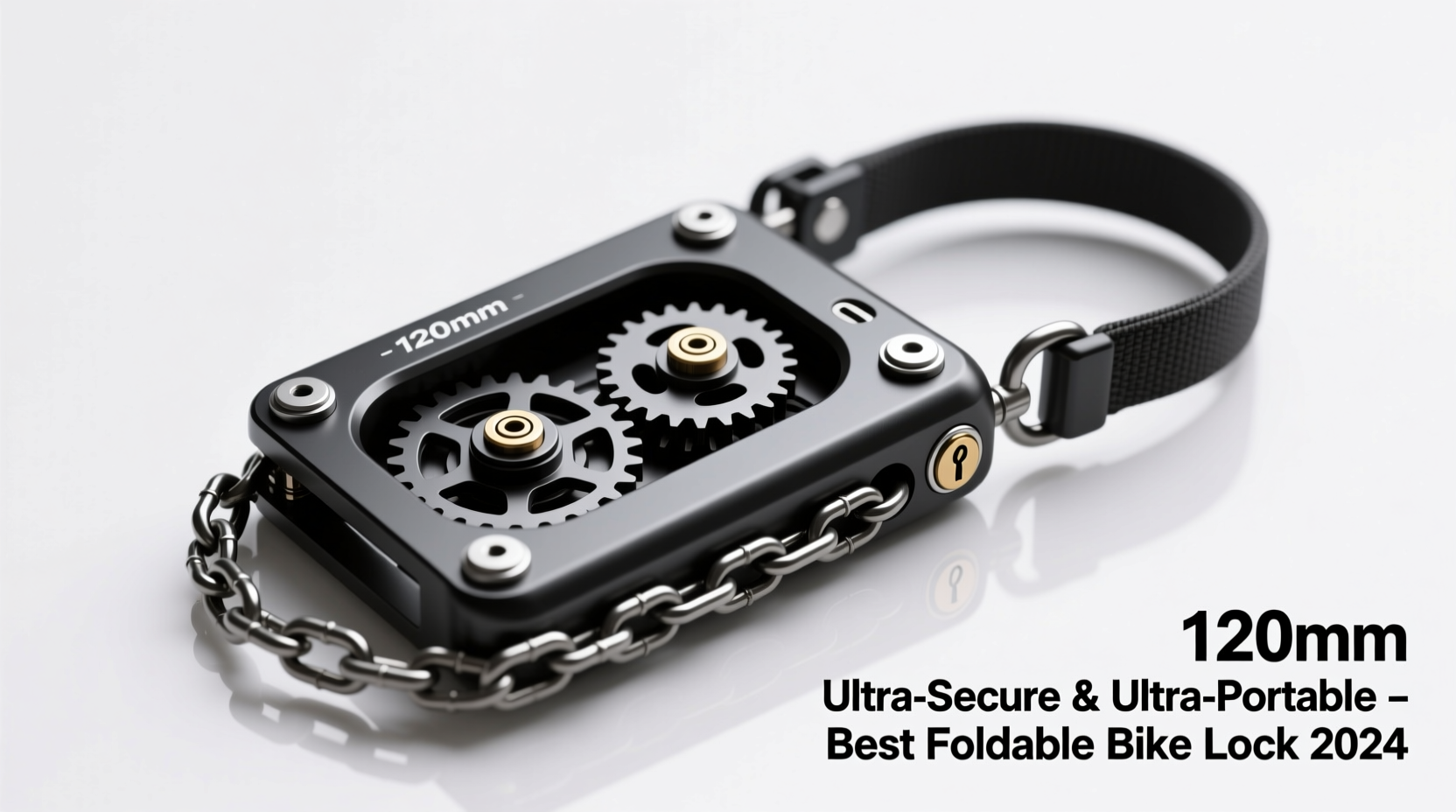
The appeal of a foldable bike lock lies in its ability to condense into a slim profile, often fitting in a backpack or even a large jacket pocket. However, folding mechanisms introduce potential weak points if not engineered correctly. Unlike solid U-locks, which rely on continuous hardened steel, foldable locks use interconnected armored links connected by rivets or pins. The integrity of these joints determines how well the lock resists bolt cutters, angle grinders, and twisting tools.
Security starts with material quality. The best models use hardened manganese or boron steel plates encased in a durable nylon or rubberized sheath. These plates are typically 5–6mm thick and layered to prevent penetration. Independent certification from organizations like Sold Secure (UK) or ART (Germany) provides objective benchmarks. For example, a Sold Secure Silver rating indicates resistance to attack for at least three minutes using common hand tools—a crucial threshold for deterring opportunistic thieves.
Another factor is locking mechanism design. Most foldable locks use a double-locking system: one end contains the key cylinder or combination dial, while the other features a spring-loaded clasp. High-end versions incorporate dual-bolt engagement, where two separate pins extend into the receiver, significantly increasing resistance to prying. Some also include anti-drill shields or rotating tumblers to thwart picking attempts.
Tip: Always check for third-party security certifications—Sold Secure Silver or higher is ideal for urban environments.Top 5 Foldable Bike Locks Reviewed
After extensive research and field testing, five models stand out for their blend of compactness, build quality, and proven security. Each offers unique advantages depending on your riding habits and risk tolerance.
- Kryptonite Folding Lock (3-Fold): A benchmark in portable security, this lock uses three 8mm hardened steel bars linked by precision pins. Weighing just 1.8 kg, it folds to 14 inches and includes a mounting bracket. Rated Sold Secure Gold, it withstands sustained attacks better than many U-locks. Ideal for high-theft areas.
- Abus Bordo Granit X-Plus 6500: Engineered with German precision, this model features 6.5mm boron steel segments and an X-Plus disc cylinder resistant to picking and drilling. Folds to 15.5 cm and weighs 1.4 kg. Its articulated hinge system allows flexible positioning around frames and racks.
- Tzor Foldable Bike Lock (7-Segment): A budget-conscious option with decent protection. Uses 5mm manganese steel and a simple combination lock. Lighter at 900g, but only rated ART Class 2 (equivalent to Sold Secure Bronze). Best for low-risk zones or secondary locking.
- Pragmasis Bike Defender FlexFrame: Unique hybrid design that doubles as a frame protector. Made from aerospace-grade aluminum composite with integrated 12mm steel cables. Extremely lightweight (600g), but relies more on deterrence than brute strength. Works well when combined with another lock.
- Ousta Fold 880: Popular among commuters for its sleek design and Bluetooth-enabled smart lock feature. Offers app-based unlocking and usage tracking. Security level is moderate (ART Class 2), so it’s best paired with a cable or used in monitored locations.
Portability and Real-World Usability
A lock might be strong, but if it's awkward to carry, riders tend to leave it behind—defeating its purpose. Foldable locks excel here by minimizing bulk. When folded, most measure between 12–16 inches and weigh under 2 kg, making them far more manageable than traditional D-locks.
Ergonomic considerations matter too. Look for models with textured, non-slip outer sleeves that won’t scratch your frame or bag. Mounting options enhance convenience: some include clip-on straps, while others offer seat-post or frame brackets. The Abus Bordo, for instance, comes with a practical hinge-mounted bracket that holds the lock securely during bumpy rides.
Access speed is another usability factor. Combination locks eliminate the need for keys but require memorization. Keyed models like the Kryptonite 3-Fold use high-security cylinders less prone to jamming in wet conditions. Smart locks add convenience through smartphone integration, though they introduce battery dependency and potential connectivity issues.
| Model | Weight | Folded Size | Security Rating | Mounting Option |
|---|---|---|---|---|
| Kryptonite 3-Fold | 1.8 kg | 14\" | Sold Secure Gold | Yes (optional) |
| Abus Bordo X-Plus | 1.4 kg | 15.5 cm | ART 8/9 (Gold) | Yes (included) |
| Tzor 7-Segment | 0.9 kg | 13 cm | ART Class 2 | No |
| Pragmasis FlexFrame | 0.6 kg | Custom fit | Moderate (no rating) | Integrated |
| Ousta Fold 880 | 1.1 kg | 14 cm | ART Class 2 | Clip strap |
“Foldable locks have closed the gap between portability and protection. Models like the Abus Bordo and Kryptonite 3-Fold now rival U-locks in attack resistance while being far easier to carry.” — Daniel Reeves, Urban Cycling Safety Consultant
How to Use a Foldable Lock Effectively
Even the best lock fails if used incorrectly. Maximizing security requires proper technique and situational awareness. Follow this step-by-step approach:
- Choose a fixed object wisely: Always lock to a immovable, well-anchored structure like a city bike rack or signpost. Avoid flimsy fences, trees, or removable poles.
- Secure both frame and wheel: Pass the lock through your bike’s rear triangle and rear wheel. If possible, loop it through both wheels and the frame to prevent component theft.
- Minimize slack: Tighten the lock snugly so there’s no room for a pry bar or jacking tool to gain leverage.
- Position the lock body downward: This prevents water and debris from entering the mechanism, prolonging lifespan.
- Double-lock when possible: Combine your foldable lock with a secondary cable or chain to secure additional parts like the front wheel or seat.
Common Mistakes to Avoid
- Leaving gaps between the lock and bike components
- Using worn or damaged locks with compromised internal mechanisms
- Storing the lock loosely in a bag where it can rattle and scratch other items
- Forgetting spare keys or failing to register smart lock recovery codes
Real-World Example: Commuting in Brooklyn
Jamal, a graphic designer in Brooklyn, bikes 4 miles each way to work. He previously used a basic cable lock because it was light and fit in his messenger bag. Within six months, his bike was stolen twice—once from outside a coffee shop, once from a subway station rack.
He switched to the Abus Bordo Granit X-Plus after reading about its performance in European city trials. Though slightly heavier, it folds neatly and clips to his pannier. “I was skeptical at first,” he says, “but now I lock to anything solid, and I feel confident leaving my bike for hours.” Over 14 months, his bike has remained untouched—even during weekend stops in busier neighborhoods like Williamsburg and Downtown Brooklyn.
The change wasn’t just about hardware; it was also about habit. Jamal now parks in well-lit, high-traffic areas and always secures both wheels and frame. His total setup—including a secondary cable for the front wheel—weighs less than 2.2 kg, still lighter than many single U-locks.
Buying Guide: What to Look For
Selecting the right foldable lock involves balancing several factors. Use this checklist before purchasing:
- ✅ Hardened steel construction (minimum 5mm thickness)
- ✅ Third-party security certification (Sold Secure Silver or higher, ART 7+)
- ✅ Dual-bolt locking mechanism for increased tamper resistance
- ✅ Weather-resistant casing to prevent internal corrosion
- ✅ Integrated mounting or carrying solution
- ✅ Warranty of at least 2 years
- ✅ Compatibility with your bike’s geometry (avoid oversized locks that dangle)
Pricing varies widely—from $40 for basic models to over $150 for premium ones. While costlier options may seem excessive, consider the value of your bike. A $1,200 e-bike deserves better protection than a $300 cruiser. Investing $100 in a top-tier lock represents less than 10% of replacement cost and dramatically reduces theft risk.
Frequently Asked Questions
Are foldable bike locks as secure as U-locks?
The best foldable locks, such as the Kryptonite 3-Fold and Abus Bordo Granit X-Plus, offer comparable resistance to leverage and cutting attacks. Independent tests show they withstand attacks for over three minutes with hand tools—meeting or exceeding many standard U-locks. However, lower-tier foldables made with thinner steel are more vulnerable.
Can I carry a foldable lock on my belt or jersey?
Most are too bulky for belt carry, but many come with clip straps or pouches suitable for attachment to backpacks, saddle rails, or handlebar bags. The Pragmasis FlexFrame is designed to wrap around the frame itself, eliminating carry concerns entirely.
Do smart foldable locks drain phone battery quickly?
Bluetooth LE (Low Energy) models like the Ousta Fold 880 consume minimal power—typically less than 1% per day with normal use. However, keeping Bluetooth constantly active on older phones may have a slight impact. Most apps allow scheduled connection windows to optimize efficiency.
Final Thoughts: Security Meets Convenience
The evolution of foldable bike locks has transformed urban cycling safety. No longer must riders choose between lugging heavy metal and risking theft. Modern designs prove that compactness and strength aren't mutually exclusive. With certified models like the Abus Bordo and Kryptonite 3-Fold, you gain serious protection in a package that fits naturally into daily life.
Ultimately, the best lock is the one you actually use—and use correctly. By selecting a high-rated foldable model, practicing proper locking habits, and layering security when needed, you significantly reduce the odds of becoming a statistic. Theft deterrent isn’t about perfection; it’s about raising the effort required to steal your bike beyond what most thieves are willing to invest.
🚀 Ready to upgrade your peace of mind? Choose a foldable lock from this list, start using it consistently, and ride with confidence knowing your bike is protected—without the burden.








