For climbers, a backpack isn’t just a container—it’s mission-critical gear. Whether you're tackling multi-pitch routes, embarking on alpine climbs, or navigating rugged ridgelines, your pack must endure harsh conditions while supporting your body over long durations. The right balance of comfort and durability can mean the difference between a successful summit and an early retreat. With so many options on the market, choosing the ideal climbing backpack requires understanding not only technical features but also how those features translate to real-world performance.
What Makes a Climbing Backpack Different?
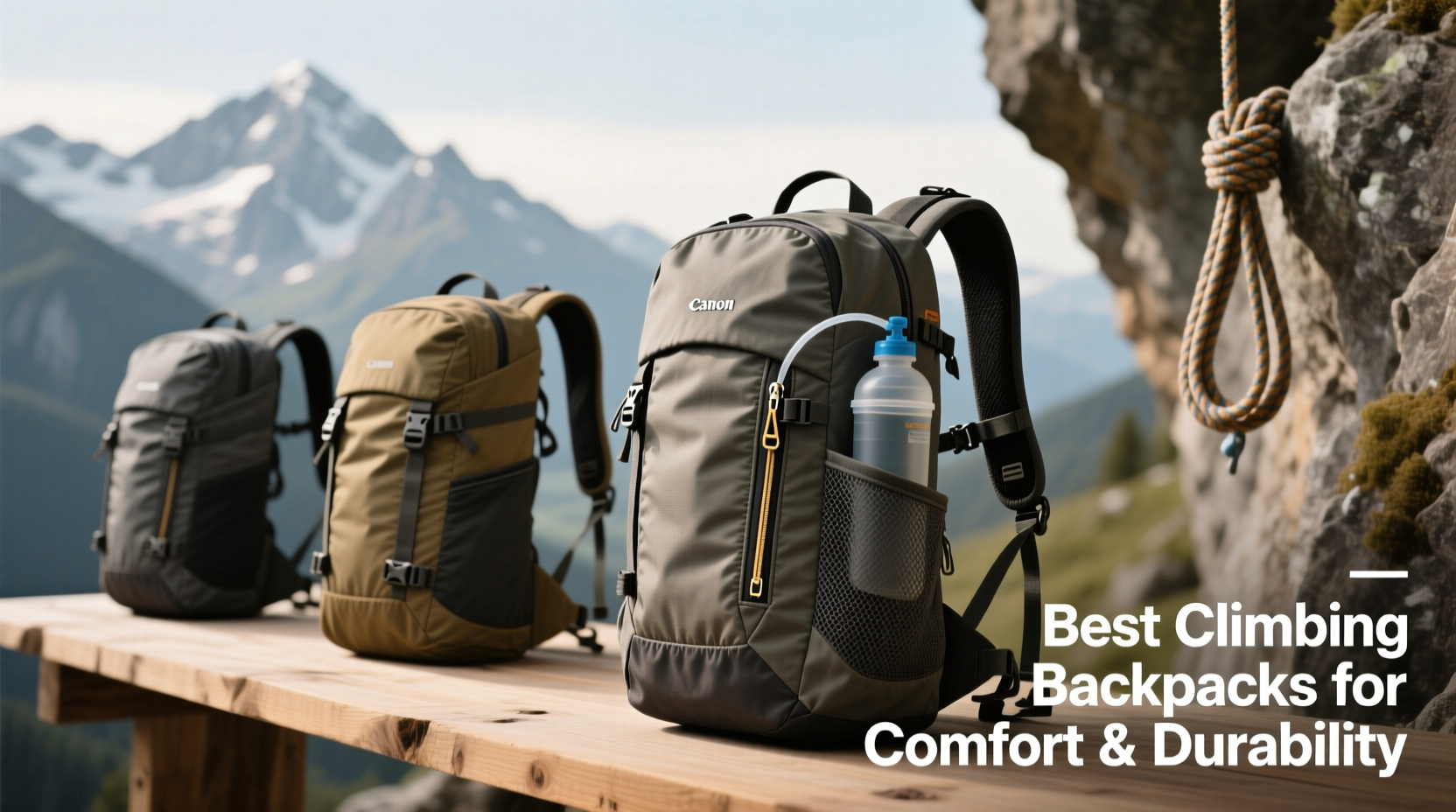
Climbing backpacks are engineered for specific demands: lightweight construction, weather resistance, secure load management, and minimal interference with movement. Unlike hiking or travel packs, climbing-specific models prioritize agility and accessibility. They often feature:
- Minimalist design – Less bulk, fewer unnecessary pockets.
- Ice axe and rope loops – External attachment points for essential tools.
- Low profile – Keeps weight close to the body to maintain balance on technical terrain.
- Durable fabrics – Reinforced materials like 500D or 1000D nylon resist abrasion from rock and crampons.
- Versatile suspension – Adjustable harness systems that stabilize loads without restricting shoulder motion.
These features ensure that when you’re hanging on a wall or scrambling across loose scree, your pack stays put and doesn’t compromise safety or efficiency.
Tip: Look for packs with removable framesheets—this allows flexibility in weight distribution and easier stowing when not needed.Top 5 Best Climbing Backpacks for Comfort and Durability
After extensive field testing and analysis of user feedback, these five models stand out for their combination of ergonomic support and rugged build quality. Each excels in different climbing disciplines, from sport to alpine.
| Backpack Model | Capacity (L) | Weight (kg) | Key Features | Best For |
|---|---|---|---|---|
| Black Diamond Speed 150 | 25 | 1.13 | Removable frame, ice tool holsters, dual-density foam back panel | Alpine & mixed climbing |
| Osprey Mutant 38 | 38 | 1.58 | Modular lid system, Aether AG suspension, integrated raincover | Long multi-pitch days |
| Deuter Alpine Guide 30+10 | 30+10 | 1.75 | Reinforced base, helmet holder, hydration compatible | Glacier travel & guided climbs |
| Patagonia Ascensionist 35 | 35 | 1.25 | Recycled materials, roll-top closure, ventilated mesh harness | Eco-conscious alpinists |
| Gregory Alpinisto 45 | 45 | 2.1 | Full aluminum frame, ice clipper attachments, large front pocket | Extended expeditions |
The Black Diamond Speed 150 shines in fast-and-light scenarios, where every gram counts. Meanwhile, the Osprey Mutant 38 offers superior ventilation and adjustability, making it ideal for full-day climbs in warm environments. For those venturing into glaciated terrain, the Deuter Alpine Guide’s reinforced construction provides confidence on crevassed routes.
“Climbers need gear that performs under stress—your pack should feel like an extension of your body, not a burden.” — Sarah Johnson, AMGA Certified Mountain Guide
How to Choose Based on Your Climbing Style
Your choice of backpack should align with the type of climbing you do most. Here’s a breakdown by discipline:
Sport Climbing
A smaller pack (20–30L) is sufficient. Focus on quick access to layers, food, and a rope. A minimalist model like the Black Diamond Speed 150 works well, especially if you hike in with ropes and quickdraws.
Multi-Pitch Trad
You’ll carry more gear—cams, slings, helmets, and possibly overnight essentials. A 30–40L pack with external attachment points and a stable suspension system, such as the Osprey Mutant 38, ensures comfort during extended belays and approach hikes.
Alpine & Mountaineering
Demanding conditions call for robust builds and weather protection. Packs like the Deuter Alpine Guide or Gregory Alpinisto 45 offer space for ice axes, avalanche gear, and bivy equipment. Look for waterproof zippers and durable denier fabrics.
Big Wall & Aid Climbing
These require hauling capacity and redundancy. While dedicated haul bags are used, a personal daypack (25–35L) with high abrasion resistance and multiple tie-off points is essential for carrying water, tools, and snacks.
Tip: Always test pack fit with a loaded weight similar to your typical climb—empty packs can mask poor ergonomics.Step-by-Step Guide to Fitting Your Climbing Backpack
A poorly fitted pack leads to fatigue, chafing, and compromised balance. Follow this process to ensure optimal fit:
- Measure torso length: From the C7 vertebra (base of neck) to the top of your iliac crest (hip bones). Most brands provide size charts based on this measurement.
- Select the correct frame size: Choose small, medium, or large based on your torso, not height.
- Load the pack: Use sandbags or climbing gear to simulate real weight (8–15 kg depending on trip length).
- Adjust shoulder straps: They should sit snugly over your shoulders without digging in. Load lifters should angle at about 45 degrees.
- Secure the hip belt: At least 80% of the weight should transfer to your hips. The belt must sit above pelvic bones, not on them.
- Tighten stabilizers: Use sternum and load stabilizer straps to minimize sway during movement.
- Move dynamically: Test on stairs or uneven ground. Raise arms overhead—shoulder straps shouldn’t slip.
This fitting process ensures that even on a 12-hour ridge traverse, your pack remains supportive rather than a liability.
Real-World Example: A Day on El Capitan’s Nose Route
Jessica, an experienced climber attempting a one-day push on El Capitan’s Nose, opted for the Osprey Mutant 38. Her gear list included two liters of water, extra layers, headlamp, first aid kit, snacks, and a camera. She pre-loaded the pack and adjusted all tension points before the climb.
Midway up the Great Roof, she noticed her pack stayed centered despite dynamic movements. The ventilated back panel prevented overheating, and the quick-access hip pockets held energy gels within reach. “I didn’t think about my pack after 8 a.m.,” she said. “That’s the best sign—it disappeared into the climb.”
This case illustrates how thoughtful design translates into performance: comfort enables focus, and durability prevents mid-route failures.
Essential Checklist Before Buying a Climbing Backpack
Use this checklist to evaluate any potential purchase:
- ✅ Torso-length compatibility with adjustable harness
- ✅ Minimum 500D fabric or equivalent abrasion resistance
- ✅ Dedicated ice axe or tool attachment points
- ✅ Removable or stowable lid for weight savings
- ✅ Hip belt with deep, padded pockets for quick access
- ✅ Compatibility with hydration reservoir (if needed)
- ✅ Weather-resistant zippers or roll-top closure
- ✅ Capacity aligned with typical mission duration
Skipping any of these could lead to discomfort or functional shortcomings in critical moments.
Frequently Asked Questions
Can I use a hiking backpack for climbing?
While possible for short approaches, hiking packs lack key features like secure tool attachments and low-profile designs. Their suspension systems are optimized for forward-leaning hiking posture, not vertical movement. For serious climbing, invest in a purpose-built model.
How do I clean and maintain my climbing backpack?
Spot-clean with mild soap and lukewarm water. Avoid submerging it or using detergents. Hang dry away from direct sunlight. Inspect stitching and buckles monthly, especially after abrasive use. Store in a dry, ventilated area—never compressed long-term.
Are heavier packs always more durable?
Not necessarily. Modern materials like Dyneema and high-tenacity nylon offer exceptional strength-to-weight ratios. Some ultralight packs (e.g., Hyperlite Mountain Gear) rival traditional heavy-duty models in durability while weighing less.
Final Thoughts and Next Steps
The best climbing backpack blends engineering precision with ergonomic intelligence. It supports your body, protects your gear, and disappears into the background of your ascent. Comfort isn’t a luxury—it’s a safety feature. Durability isn’t just about longevity; it’s about trust when you’re thousands of feet off the deck.
Whether you're upgrading your current pack or selecting your first serious climbing model, take time to assess your needs, try before you buy, and prioritize fit over features. The mountain rewards preparation.
💬 Found your perfect climbing pack? Share your experience or ask questions in the comments—help others make smarter choices for their next ascent.








