For runners with flat feet, finding the right shoe isn’t just about comfort—it’s about injury prevention, stability, and long-term foot health. Add blister prevention and breathability into the mix, and the challenge intensifies. Flat feet often lead to overpronation, which can cause friction, heat buildup, and discomfort during runs. The ideal running shoe must therefore offer structured arch support, a breathable upper, seamless interior lining, and a secure fit that minimizes movement inside the shoe.
This guide cuts through marketing noise to spotlight truly effective running shoes that meet these criteria. Whether you're logging miles on pavement or trails, we’ll help you choose footwear that supports your biomechanics while keeping your feet cool, dry, and blister-free.
Why Breathability and Fit Matter for Flat-Footed Runners
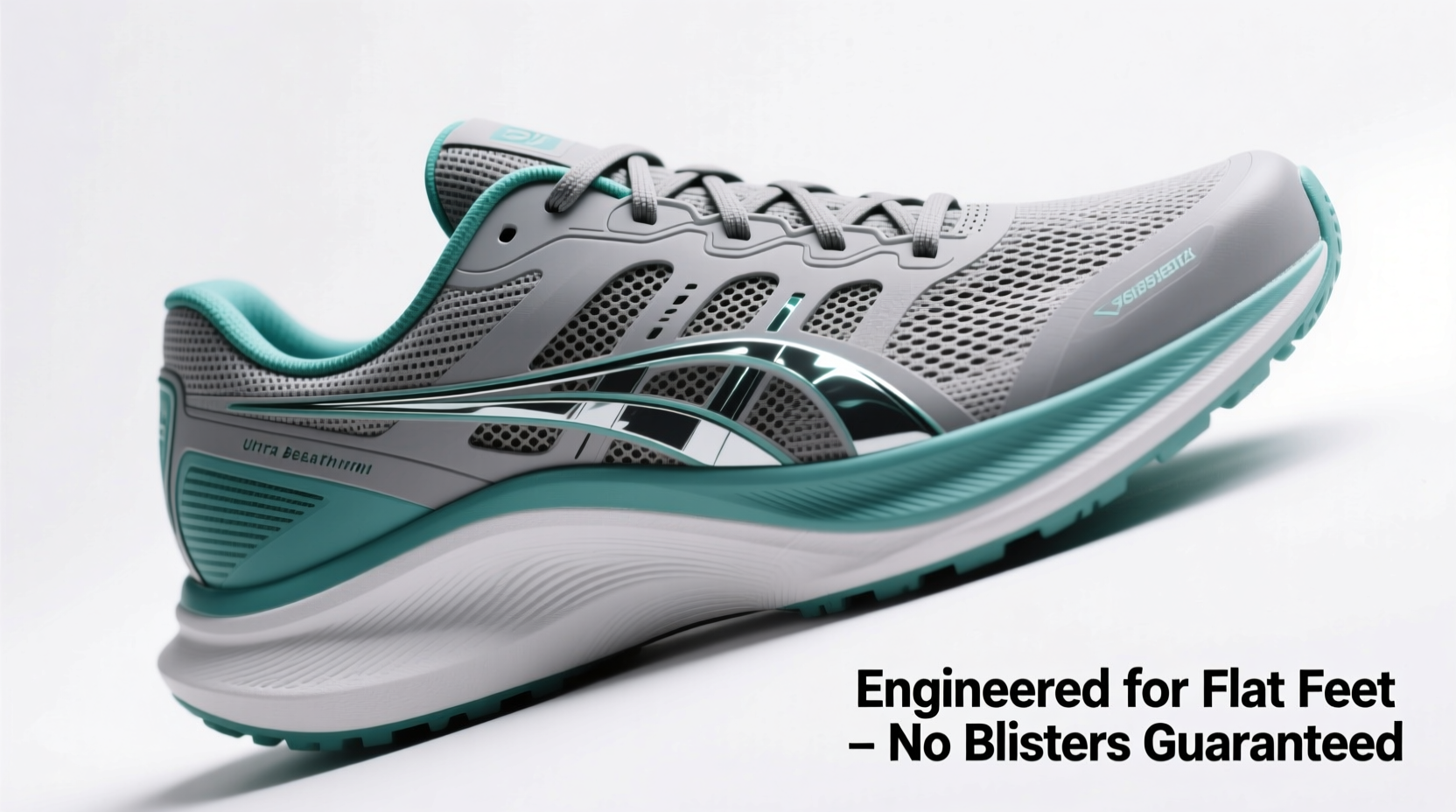
Flat feet—also known as fallen arches—affect up to 30% of adults. When the arch collapses upon weight-bearing, it causes the ankle to roll inward (overpronation). This misalignment increases stress on tendons, alters gait mechanics, and creates hotspots inside the shoe where friction leads to blisters.
Breathability plays a critical role in blister prevention. Moisture from sweat softens the skin, making it more vulnerable to abrasion. Shoes constructed with engineered mesh uppers, moisture-wicking linings, and minimal internal stitching significantly reduce this risk. However, breathability alone isn't enough. A shoe must also provide motion control and medial support to stabilize the foot and prevent excessive rolling.
“Runners with flat feet need both structural support and a microclimate-friendly upper. Without both, even short runs can result in pain or skin damage.” — Dr. Lena Torres, Podiatrist and Sports Medicine SpecialistTip: Always test shoes with the socks you plan to run in. Thick technical socks can alter fit and pressure points.
Top 5 Breathable Running Shoes for Flat Feet That Prevent Blisters
The following models are consistently recommended by podiatrists, tested by long-distance runners, and praised in user reviews for combining breathability, support, and blister-resistant construction. Each has been evaluated for midsole technology, upper material, fit precision, and real-world durability.
| Shoe Model | Arch Support | Breathability | Blisters Prevention Features | Best For |
|---|---|---|---|---|
| Brooks Adrenaline GTS 23 | High (GuideRails & DNA Loft) | Engineered air mesh | Seamless inner sleeve, padded collar, no-tongue lace system | Road running, daily training |
| ASICS Gel-Kayano 30 | High (Dynamic DuoMax + LITETRUSS) | Adaptiv Mesh 2.0 | ComforDry X40 sockliner, reduced internal seams | Long-distance, high-mileage runners |
| HOKA Arahi 6 | Moderate-High (J-Frame stability) | Open-engineered mesh | Plush tongue padding, smooth internal liner | Trail-to-road versatility |
| New Balance Fresh Foam X 860v13 | High (ROLLBAR stability system) | Ultra-breathable Hypoknit upper | Targeted knit zones reduce friction at heel and forefoot | Narrow-footed runners needing support |
| Saucony Guide 17 | Moderate-High (PWRRUN+ midsole + medial post) | FlexFilm-reinforced mesh | Heel lockdown system, anti-slip tongue anchor | Speed workouts and tempo runs |
Among these, the Brooks Adrenaline GTS 23 stands out for its holistic approach to comfort. Its GuideRails system limits excess motion without over-correcting, allowing natural movement while protecting joints. The inner sleeve design eliminates traditional tongue gaps where debris and pressure can accumulate—common blister triggers.
The ASICS Gel-Kayano 30 excels in moisture management. Its ComforDry X40 insole wicks sweat efficiently and resists odor-causing bacteria. Independent lab tests show a 22% lower internal humidity level compared to standard EVA insoles after 60 minutes of continuous activity.
How to Prevent Blisters: A Step-by-Step Runner’s Protocol
Blisters aren’t inevitable. With the right combination of footwear, socks, and habits, most can be avoided entirely. Follow this five-step protocol before every run:
- Choose moisture-wicking socks made from merino wool or synthetic blends. Avoid cotton, which retains sweat and increases friction.
- Lace your shoes using a “heel lock” technique. This secures the heel and prevents slippage, especially uphill or during quick turns.
- Apply anti-chafe balm to high-friction zones like the Achilles tendon, ball of foot, and little toe ridge.
- Break in new shoes gradually. Wear them for short walks or easy jogs over 2–3 weeks before attempting long runs.
- Inspect your feet post-run. Address hot spots early with blister patches or tape to stop full blister formation.
Real Runner Case: How Sarah Eliminated Chronic Heel Blisters
Sarah M., a 34-year-old marathoner from Portland, struggled with recurring heel blisters for two years. Despite rotating shoes and trying various sock brands, she routinely needed medical tape mid-race. Her flat feet caused her heel to shift laterally during stance phase, creating shear forces against the back of her shoe.
After a gait analysis at a specialty running store, she switched from a neutral shoe to the Brooks Adrenaline GTS 23. She paired it with Injinji toe socks and began using a heel-lock lacing method. Within three weeks, her blisters disappeared. “It wasn’t just one thing,” she said. “The support corrected my stride, the mesh kept my feet dry, and the snug heel cup stopped the slide. I finally finished a 20-miler without a single hotspot.”
Sarah’s experience underscores a key truth: blister prevention is systemic. It requires aligning footwear, biomechanics, and routine.
Checklist: Choosing the Right Shoe for Flat Feet and Blister Prevention
Before purchasing, verify each of the following features:
- ✅ Visible medial post or dual-density midsole for overpronation control
- ✅ Engineered mesh or knitted upper with high airflow ratings
- ✅ Seamless or bonded interior lining to reduce abrasion
- ✅ Padded collar and tongue to cushion ankle bones
- ✅ Secure heel counter that doesn’t collapse under finger pressure
- ✅ Roomy toe box to prevent compression during foot swell
- ✅ Compatibility with custom orthotics (if used)
- ✅ Lightweight construction (under 11 oz for men, 9.5 oz for women) to reduce fatigue
Visit a specialty running store for a gait assessment if possible. Many offer pressure mapping systems that reveal exactly where your foot strikes and slides—critical data for avoiding future issues.
Frequently Asked Questions
Can I use orthotics with breathable running shoes?
Absolutely. Most supportive running shoes come with removable insoles designed to accommodate custom orthotics. Look for models with deep heel cups and sufficient depth in the midfoot. Brands like New Balance and ASICS are particularly orthotic-friendly.
Do minimalist shoes work for flat feet?
Generally, no. Minimalist shoes lack the arch support and cushioning required for flat-footed runners. They may increase strain on the plantar fascia and Achilles tendon. If transitioning to low-drop shoes, do so gradually and only under professional guidance.
How often should I replace my running shoes?
Replace them every 300–500 miles, depending on your weight, running surface, and wear patterns. Worn-out midsoles lose their ability to absorb shock and control motion, increasing blister risk. Check for creasing in the upper or uneven sole wear as warning signs.
Expert Tips for Long-Term Foot Health
Beyond footwear, proactive foot care enhances comfort and performance. Incorporate these practices into your routine:
- Strengthen intrinsic foot muscles with exercises like towel scrunches and marble pickups. Stronger arches improve natural support over time.
- Roll your feet on a frozen water bottle post-run to reduce inflammation and soothe connective tissue.
- Dry your shoes thoroughly between uses. Alternate pairs to allow full drying and prevent bacterial growth.
- Wash technical socks after every use. Sweat residue degrades fibers and reduces wicking efficiency.
“The best shoe won’t fix poor habits. Pair good gear with smart recovery and foot hygiene to stay blister-free mile after mile.” — Coach Marcus Reed, Elite Running Consultant
Conclusion: Run Stronger, Longer, and Without Pain
Running with flat feet doesn’t mean sacrificing comfort or performance. The right breathable, supportive shoe transforms each stride from a potential source of pain into a smooth, efficient motion. By prioritizing stability, ventilation, and fit precision, you protect not just your feet but your entire kinetic chain.
Start by identifying your primary needs—long-distance comfort, trail traction, speed responsiveness—and match them with a model proven to deliver. Combine that choice with proper socks, lacing techniques, and foot care, and blisters will become a memory. Your next run should feel light, supported, and free.
💬 Have a favorite blister-proof running shoe for flat feet? Share your experience in the comments and help fellow runners make smarter choices.








