Carrying your gear—whether it's a basketball, shoes, clothes, or electronics—requires more than just convenience. How you carry weight directly affects your posture, spinal alignment, and long-term musculoskeletal health. For athletes, students, commuters, and weekend players alike, choosing between a basketball backpack and a messenger bag isn’t just about style or capacity; it’s about minimizing strain on your body. Back pain from improper load carriage is common, but often preventable with the right bag and usage habits.
This article breaks down the biomechanical realities of both options, compares their impact on spinal health, and provides evidence-based guidance to help you choose the option that supports your back—not sabotages it.
Ergonomic Design: How Weight Distribution Affects Your Spine
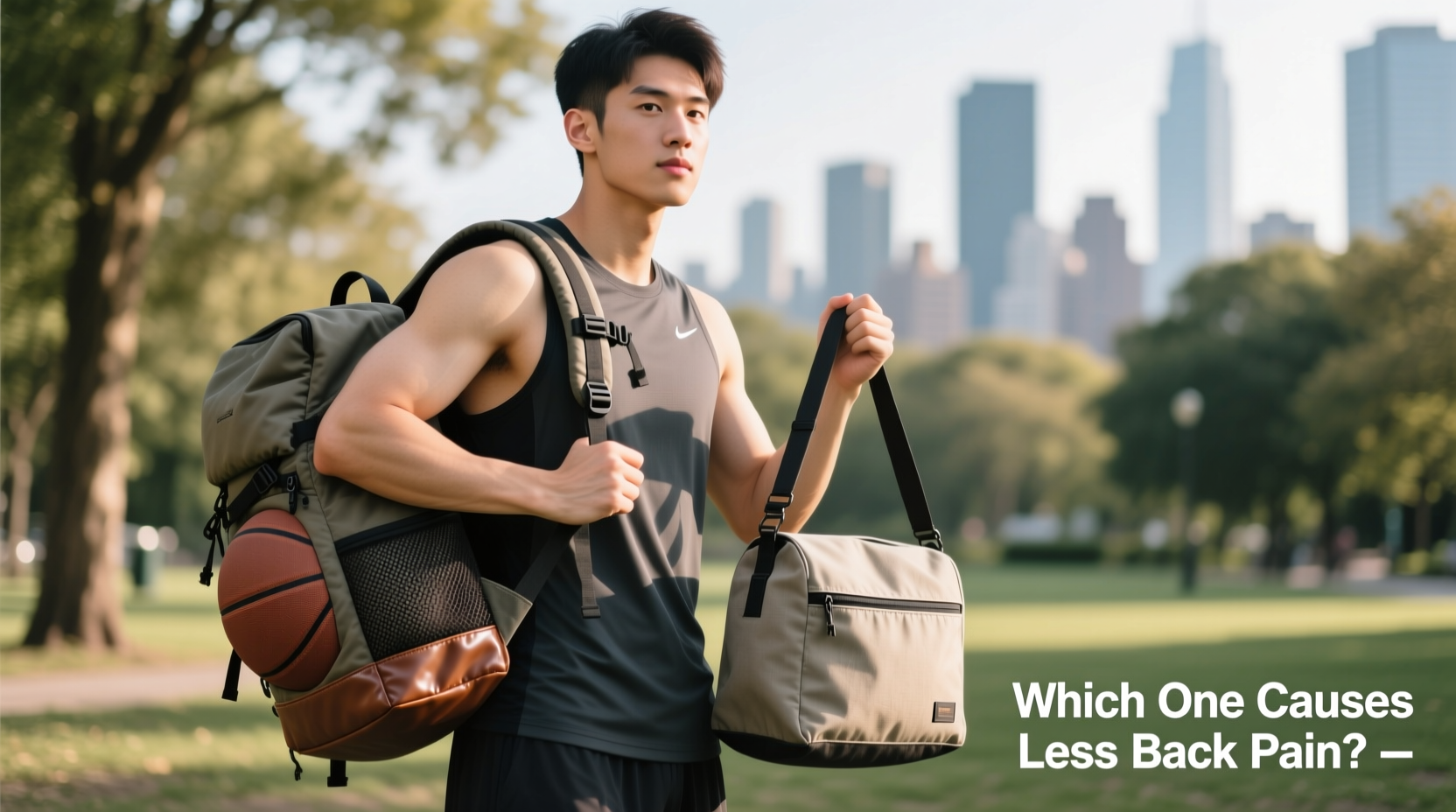
The human spine functions best when loads are balanced symmetrically. Asymmetrical or poorly distributed weight forces muscles on one side of the body to overcompensate, leading to muscle imbalances, postural deviations, and chronic discomfort. This is where the fundamental difference between backpacks and messenger bags becomes critical.
A well-designed **basketball backpack** typically features two padded shoulder straps, a sternum strap, and sometimes a waist belt. These elements allow weight to be shared across both shoulders and anchored closer to the body’s center of mass. When worn correctly, the load sits vertically aligned with the spine, reducing forward lean and rotational stress.
In contrast, a **messenger bag** rests on one shoulder and crosses the body diagonally. While this offers quick access and a sleek profile, it creates uneven loading. The shoulder bearing the bag elevates, the pelvis tilts toward that side, and the spine curves laterally—a posture known as “lateral flexion.” Over time, this can irritate spinal joints, compress nerves, and lead to myofascial pain.
Tip: If you must use a messenger bag, switch shoulders every 15–20 minutes to reduce cumulative strain.Weight Capacity and Load Management
Basketball players often carry heavy loads: a ball (1.5–2 lbs), shoes (2–3 lbs per pair), clothes, water bottles, towels, and possibly electronics. A typical load can easily exceed 10–15 pounds. How each bag handles this weight matters significantly.
Backpacks are engineered for higher load tolerance. Most athletic backpacks have structured back panels, load-lifting hip belts, and compression straps that stabilize contents and keep them close to the torso. This minimizes sway and reduces dynamic forces during movement.
Messenger bags, while convenient, lack structural support for heavier items. Their single strap concentrates force on one trapezius muscle group, increasing fatigue. Additionally, the bag tends to swing outward when walking, creating a lever effect that amplifies strain on the shoulder and upper back.
“Carrying more than 10% of your body weight asymmetrically—like in a messenger bag—significantly increases risk of neuromuscular imbalance and spinal asymmetry.” — Dr. Lena Torres, Physical Therapist and Ergonomics Consultant
Comparison Table: Backpack vs Messenger Bag
| Feature | Basketball Backpack | Messenger Bag |
|---|---|---|
| Weight Distribution | Symmetrical, two-shoulder support | Asymmetrical, single-shoulder load |
| Max Recommended Load | Up to 20% of body weight (with proper fit) | No more than 10% of body weight |
| Postural Impact | Minimal spinal deviation when worn correctly | Promotes lateral bending and shoulder hiking |
| Ventilation & Comfort | Padded, breathable back panel reduces sweat and pressure | Single strap may dig into shoulder; limited airflow |
| Durability & Storage | Multiple compartments, reinforced stitching, ball pockets | Limited space, fewer specialized features |
| Ease of Access | Good, though may require removal to reach deep items | Excellent; front-facing flap allows quick retrieval |
Real-World Scenario: A College Player’s Experience
James, a 20-year-old college basketball player, used a messenger bag for his first semester to carry his gear between classes and practice. Within six weeks, he began experiencing persistent dull pain in his right shoulder and upper back. His physical therapist noted a visible elevation of his right shoulder and tightness in the trapezius and levator scapulae muscles.
After switching to a basketball-specific backpack with padded straps and wearing it properly (both straps, snug fit), his symptoms improved within three weeks. He also incorporated stretching and corrective exercises. James now keeps his total load under 12 pounds and reports no recurrence of pain.
His case illustrates how seemingly minor daily habits—like bag choice—can accumulate into significant musculoskeletal issues.
Actionable Checklist: Choosing the Healthier Option
- ✅ Assess your typical load: if it exceeds 10 lbs, prioritize a backpack.
- ✅ Look for backpacks with padded shoulder straps, a chest strap, and an adjustable fit.
- ✅ Choose a backpack with a ventilated back panel to reduce sweating and discomfort.
- ✅ If using a messenger bag, limit use to light loads and short durations (under 30 minutes).
- ✅ Always wear both straps of a backpack—never dangle it over one shoulder.
- ✅ Pack heavier items closest to your back to maintain balance.
- ✅ Adjust straps so the bottom of the bag sits at or just below waist level.
When a Messenger Bag Might Be Acceptable
There are situations where a messenger bag makes sense—short commutes, carrying only a laptop and notebook, or when frequent access is essential. However, even in these cases, mitigating risk is key. Use a wide, padded strap to distribute pressure, keep the bag low across the hip (not high on the shoulder), and avoid overloading.
Some modern hybrid designs offer messenger-style access with backpack-level support—such as convertible bags with dual straps that can be worn crossbody or as a traditional backpack. These provide flexibility without sacrificing ergonomics.
Frequently Asked Questions
Can a lightweight messenger bag still cause back pain?
Yes. Even light loads can cause pain over time due to asymmetrical strain. The issue isn’t just weight—it’s posture. Carrying any bag on one shoulder alters spinal alignment, potentially leading to muscle imbalances and joint irritation, especially with prolonged use.
What features should I look for in a back-friendly basketball backpack?
Prioritize adjustable, padded shoulder straps, a contoured back panel, and a stabilizing chest strap. Extra features like a ventilated back, compression straps, and dedicated compartments help maintain balance and reduce shifting. Look for models designed specifically for athletes—they’re built for durability and ergonomic performance.
Is it worse to carry a heavy backpack incorrectly or a lighter messenger bag?
A heavy backpack worn improperly (e.g., one strap, loose fit) is extremely harmful, but a lightly loaded messenger bag used occasionally poses lower overall risk. However, chronic use of a messenger bag—even with light contents—can lead to cumulative postural damage. For regular, daily use with moderate to heavy loads, a properly worn backpack is consistently safer.
Final Recommendation: Prioritize Symmetry and Support
When it comes to minimizing back pain, the basketball backpack is the clear winner—provided it’s used correctly. Its symmetrical design, superior weight distribution, and ergonomic features align with how the human body is meant to carry load. Messenger bags, while stylish and accessible, introduce biomechanical risks that outweigh their convenience for regular or heavy use.
If you're serious about your game—or simply want to avoid nagging pain—the investment in a quality basketball backpack isn’t just practical; it’s preventive healthcare for your spine.
💬 Have you switched from a messenger bag to a backpack? Share your experience or tips in the comments—your insight could help others avoid back pain.








