In the ongoing debate between America’s favorite pastimes—football and baseball—one often overshadows the other in popularity and media coverage. Football, particularly the NFL, dominates fall Sundays with massive ratings and national attention. Yet beneath the surface, baseball offers a depth of tradition, strategic nuance, and inclusivity that makes a compelling case for it being the superior sport. While both have their merits, a closer look reveals that baseball may not only rival football but surpass it in key areas that matter to fans, athletes, and communities alike.
The Strategic Depth of Baseball
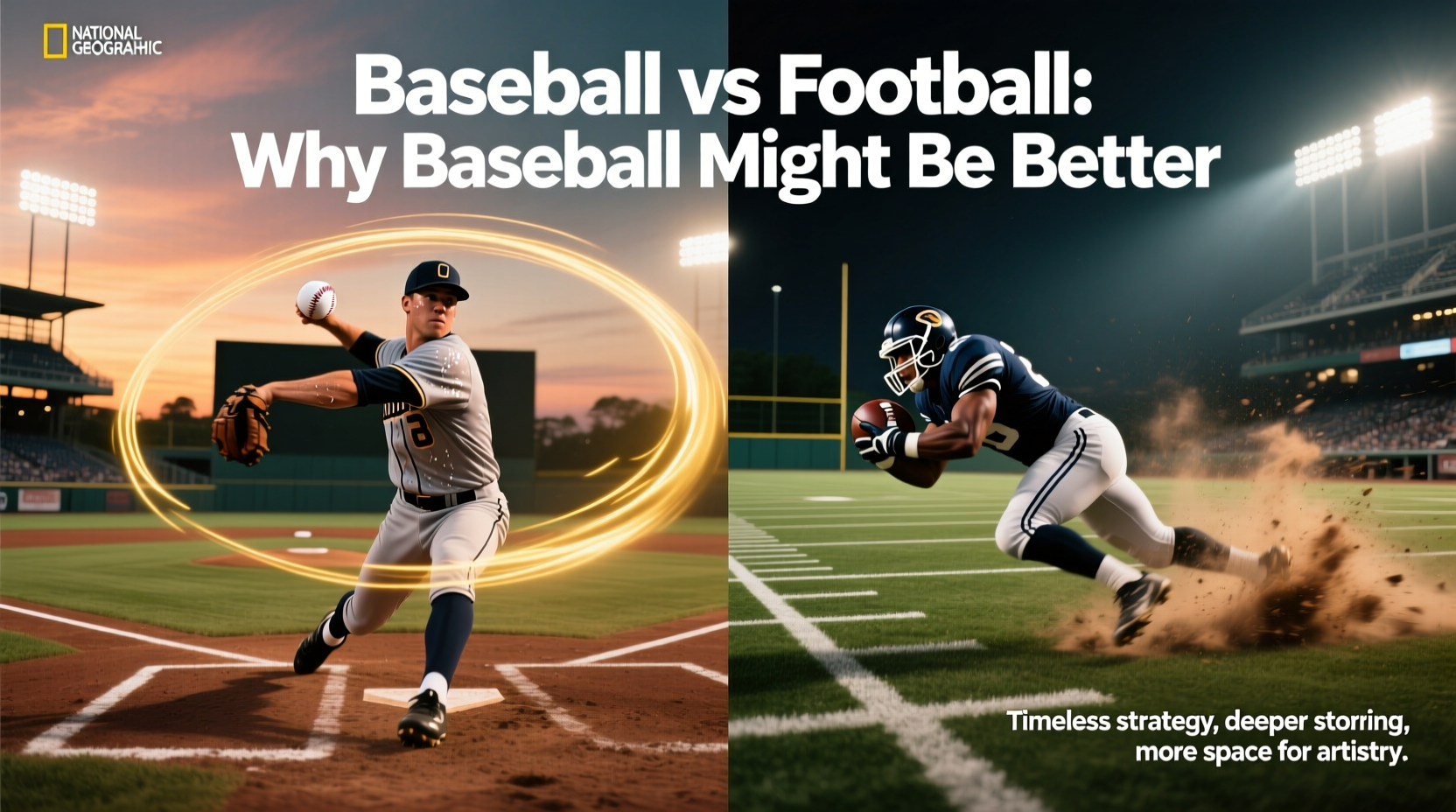
At first glance, baseball might appear slower than football, but its pace belies an intricate web of decision-making. Every pitch is a tactical duel between pitcher and batter, influenced by count, game situation, player tendencies, and field positioning. Unlike football, where plays are pre-designed and executed in bursts, baseball unfolds in real-time micro-decisions. A manager’s choice to bunt, steal, or shift the defense can alter the outcome of a game without a single explosive play.
Consider the intentional walk—a move that sacrifices a base to set up a potential double play or avoid a dangerous hitter. Or the suicide squeeze, a high-risk play requiring perfect timing between runner and batter. These moments aren’t scripted; they emerge from reading the flow of the game. As legendary manager Tony La Russa once said:
“The beauty of baseball is that every out matters equally, and every pitch carries consequence.” — Tony La Russa, 3x World Series Champion Manager
This constant layering of risk and reward creates a chess match played over nine innings, rewarding patience, preparation, and psychological endurance.
Pace and Accessibility for All Ages
Football’s intensity comes at a cost: physical toll and limited accessibility. The sport demands peak athleticism, specialized equipment, and structured teams to play safely. In contrast, baseball can be enjoyed by children, seniors, and casual players with minimal gear. A glove, bat, and ball are enough to start a pickup game in a backyard or park.
Moreover, baseball’s slower pace allows fans to engage more fully. You can arrive late, leave early, or step away during a lull without missing a critical moment. This flexibility makes it uniquely family-friendly. Parents can bring young children to games without worrying about loud collisions or abrupt interruptions. The rhythm of baseball—three outs per inning, no game clock—creates a relaxed atmosphere ideal for socializing and multi-generational bonding.
Tip: Introduce kids to baseball through T-ball or coach-pitch leagues—they build hand-eye coordination and teamwork without pressure.Safety and Long-Term Health
One of the most pressing concerns in modern sports is athlete safety. Football has faced growing scrutiny due to the prevalence of concussions and chronic traumatic encephalopathy (CTE). Repeated high-impact collisions pose long-term risks even for non-professional players. Youth leagues across the country are seeing declining participation as parents grow wary of head injuries.
Baseball, while not injury-free, presents far fewer risks of traumatic brain injury. Pitchers may face arm strain, and baserunners can suffer sprains, but these are typically recoverable with proper care. The absence of full-contact tackling makes baseball a safer option for lifelong participation. Schools and recreational programs can promote baseball with greater confidence in student well-being.
A Cultural Legacy Rooted in Equality and Resilience
Baseball holds a unique place in American history—not just as entertainment, but as a catalyst for social change. Jackie Robinson breaking the color barrier in 1947 wasn’t merely a milestone for sports; it was a pivotal moment in the civil rights movement. His courage paved the way for integration across institutions, demonstrating how baseball could reflect and shape national values.
Unlike football, which remained segregated in many college programs well into the 1960s, Major League Baseball led the charge toward inclusion. Today, the sport continues to welcome international talent—from Japan to the Dominican Republic—creating a truly global stage. Over 30% of MLB players are born outside the U.S., reflecting a diversity that enriches the game’s fabric.
Football, while increasingly international in reach, still centers on a narrow pipeline of American collegiate athletes, often tied to physically demanding scholarship systems. Baseball’s open tryout culture and minor league development system offer more pathways for underrepresented communities to succeed.
Comparative Overview: Baseball vs Football
| Factor | Baseball | Football |
|---|---|---|
| Game Duration | ~3 hours (no clock) | ~3 hours (with stoppages) |
| Physical Contact | Minimal | High (full contact) |
| Youth Injury Risk | Low to moderate | High (especially head trauma) |
| Global Player Representation | Over 30 countries | Largely U.S.-based |
| Strategy Complexity | Continuous, adaptive | Play-by-play, scripted |
| Accessibility for Casual Play | Very high | Low (requires pads, field, team) |
Real-World Example: The Sandlot Effect
Consider the town of Marfa, Texas, population just over 2,000. With no football stadium or cheer squad, the local Little League field becomes the heart of summer. Kids organize teams based on neighborhood blocks, older siblings mentor younger ones, and grandparents bring folding chairs to watch Friday twilight games. There’s no scoreboard pressure, no scouts—just play.
This isn’t nostalgia; it’s sustainability. In communities like Marfa, baseball thrives because it doesn’t demand perfection. A dropped fly ball isn’t catastrophic. A strikeout isn’t the end of the world. The game teaches resilience quietly, over time. Compare this to youth football, where one missed tackle can lead to a long touchdown and a discouraged child quitting by season’s end. Baseball’s forgiving nature fosters longer engagement and emotional growth.
Frequently Asked Questions
Isn’t baseball too slow compared to football?
While baseball moves at a deliberate pace, that slowness allows for deeper observation and anticipation. Fans learn to appreciate subtle shifts—the angle of a pitcher’s grip, a runner’s lead off first base. For many, this reflective rhythm is part of the appeal, offering a mental escape from fast-paced digital life.
Doesn’t football require more strategy than baseball?
Football features complex playbooks, but those strategies are finite and rehearsed. Baseball strategy is fluid and reactive. A manager might change signals mid-at-bat, adjust defensive positioning based on a single swing, or pull a pitcher after one bad pitch. The decisions are continuous, not segmented.
Can baseball really compete with football’s popularity?
In raw viewership, the Super Bowl will likely always draw bigger numbers. But baseball’s season-long narrative—162 games building toward October drama—creates sustained investment. Fans don’t just watch one game; they follow arcs, rivalries, and comebacks over months. That depth cultivates loyalty that transcends a single event.
How to Get More Out of Baseball as a Fan or Player
- Learn the stats beyond batting average. Dive into on-base percentage (OBP), fielding independent pitching (FIP), and WAR (Wins Above Replacement) to understand true player value.
- Attend minor league games. They’re affordable, family-oriented, and often more engaging than major league events.
- Join a recreational league. Softball or amateur baseball leagues exist in most cities and offer fitness and social connection.
- Watch classic games. Films like “The Sandlot” or documentaries on Hank Aaron or Sandy Koufax deepen appreciation for the sport’s soul.
- Teach a child the basics. Catching, throwing, and hitting form foundational motor skills applicable to many areas of life.
Conclusion
Football excels in spectacle and adrenaline, but baseball offers something rarer: a timeless blend of strategy, safety, and inclusivity. It invites participation across ages and skill levels, honors history while embracing global talent, and rewards patience over brute force. In a world increasingly defined by speed and shock value, baseball stands as a quiet testament to endurance, thoughtfulness, and community.
💬 What does baseball mean to you? Whether it’s a childhood memory, a favorite player, or a reason to question the hype around football—share your story and help keep the conversation alive.








