When the mercury climbs and humidity clings to your skin, what you wear can make a real difference in comfort. For casual outings, workouts, or weekend baseball games, two popular options dominate summer wardrobes: the baseball tee and the tank top. Both promise breathability and ease, but which one actually keeps you cooler under intense summer heat? The answer isn’t as straightforward as it seems—it depends on fabric, cut, activity level, and even environmental conditions.
Let’s dissect these two staples of warm-weather fashion to determine not just which feels cooler, but why—and when each might be the better choice.
The Anatomy of Summer Heat and Clothing Performance
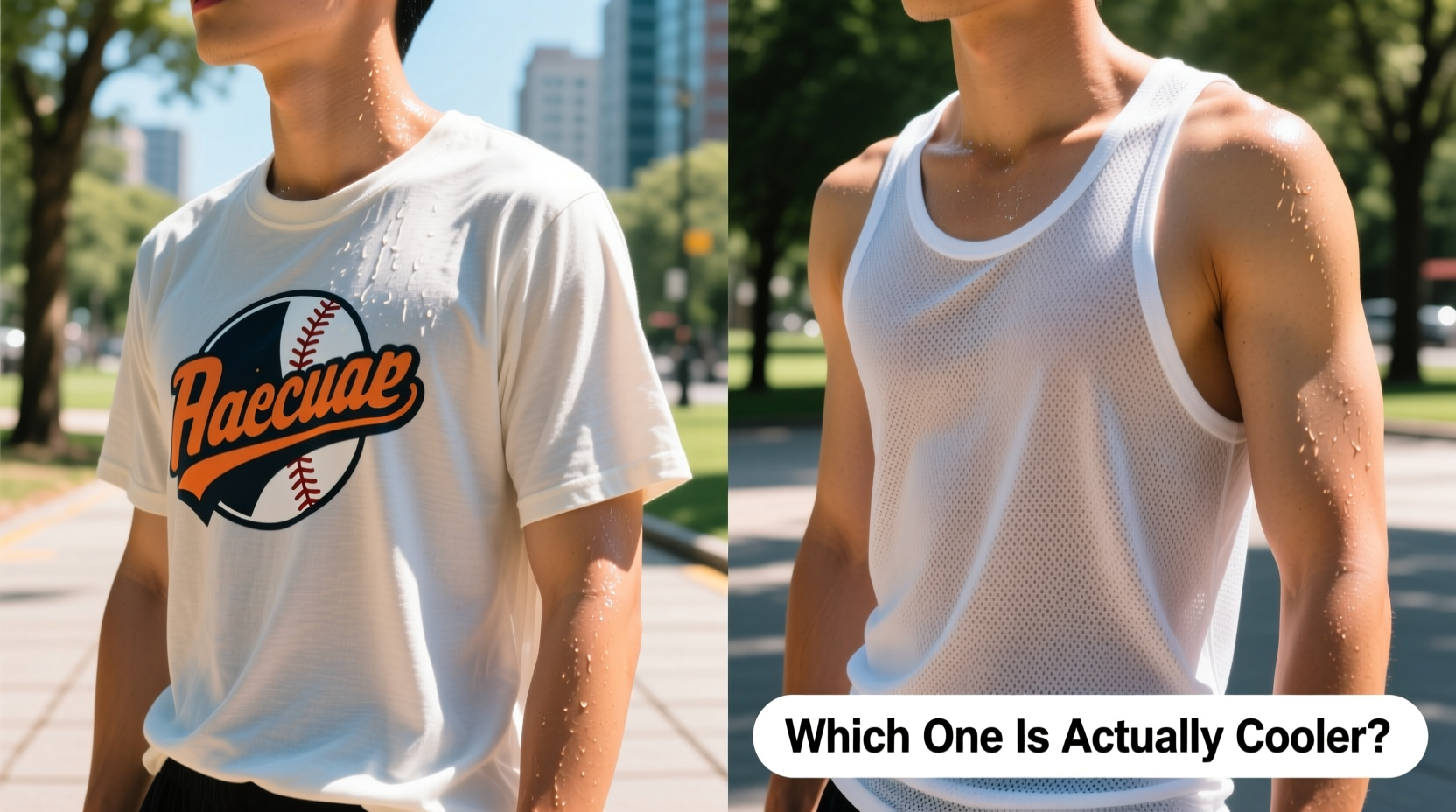
Heat stress occurs when your body struggles to dissipate excess heat through sweat evaporation. Clothing affects this process by either facilitating airflow and moisture transfer or trapping heat and dampness against the skin. The ideal summer garment promotes ventilation, wicks moisture, and minimizes direct sun exposure without restricting movement.
Cooling isn’t just about how much skin is exposed. It's about thermoregulation—how effectively your clothing helps your body maintain a stable internal temperature. This means evaluating:
- Airflow: Can air circulate freely around the body?
- Moisture Wicking: Does the fabric pull sweat away from the skin?
- UV Protection: Are arms and shoulders shielded from direct sun?
- Fit and Coverage: Is there enough room for air to move, but not so much that fabric sticks when wet?
Both baseball tees and tank tops vary widely in these areas, depending on design and material. Understanding their construction is key to making the right choice for your summer activities.
What Is a Baseball Tee?
A baseball tee—also known as a raglan tee—features a distinctive color contrast between the body and sleeves, typically with white fronts and colored sleeves (often navy or red). Its defining characteristic is the raglan sleeve, which extends diagonally from underarm to collar, eliminating the shoulder seam. Most are made from cotton or cotton-polyester blends and have a looser, athletic fit.
Originally designed for baseball players, the style has evolved into a casual summer favorite due to its relaxed look and breathable nature. However, despite its sporty roots, not all baseball tees are optimized for high heat.
Tank Tops: Simplicity Meets Exposure
Tank tops, often called \"sleeveless shirts\" or \"athletic vests,\" remove sleeves entirely. They come in various cuts—racerback, loose-fit, fitted, or muscle tanks—and are commonly worn during exercise or leisure in hot climates. Made from cotton, polyester, or performance blends, they maximize skin exposure and airflow.
Their minimal coverage suggests they’d be cooler, but that doesn’t always translate to better thermal regulation—especially in direct sunlight or humid environments where sweat doesn’t evaporate quickly.
Comparative Breakdown: Baseball Tee vs Tank Top
| Feature | Baseball Tee | Tank Top |
|---|---|---|
| Sleeve Coverage | Raglan sleeves (partial arm coverage) | No sleeves (full arm exposure) |
| Typical Fabric | Cotton or cotton-blend | Cotton, polyester, or moisture-wicking synthetics |
| Airflow | Moderate (open neckline, some sleeve mobility) | High (maximum skin exposure) |
| Sun Protection | Partial (covers shoulders and upper arms) | Low (exposes shoulders and arms) |
| Sweat Evaporation Efficiency | Good (if loose-fitting and breathable) | Excellent (if moisture-wicking) |
| Chafing Risk | Low (fabric reduces friction) | Moderate (strap rubbing common during activity) |
| Best Use Case | Casual outings, light sports, sun protection needed | Gym sessions, running, extreme heat |
Real-World Scenarios: Who Wins When?
“People assume less clothing equals cooler, but solar radiation can raise skin temperature significantly. A lightweight long-sleeve shirt may outperform a tank in midday sun.” — Dr. Lena Torres, Environmental Physiologist, University of Arizona
The environment plays a decisive role. Consider these three scenarios:
Scenario 1: Midday Hike Under Direct Sun
A tank top exposes shoulders and arms to UV rays, increasing skin temperature. Even though airflow is high, radiant heat from the sun overwhelms cooling benefits. A baseball tee with loose, breathable fabric provides modest sun shielding and still allows ventilation. In this case, the baseball tee may feel cooler overall due to reduced heat gain.
Scenario 2: Evening Walk in High Humidity
Humid air slows sweat evaporation. A tank top made from moisture-wicking material (like polyester-spandex) will dry faster and prevent clinging. A heavy cotton baseball tee may absorb sweat but dry slowly, leading to discomfort. Here, the tank wins if performance fabric is used.
Scenario 3: Outdoor Workout at the Gym
During dynamic movement, unrestricted airflow matters most. A racerback tank allows full range of motion and maximizes ventilation across the back and chest. Unless the baseball tee is made from technical fabric, it will likely trap more heat. For intense activity, the tank is superior.
Expert Tips for Maximizing Coolness
Regardless of style, how you choose and wear your top affects its cooling ability. Follow these guidelines to stay comfortable:
Tip: Light-colored clothing reflects sunlight, while dark colors absorb it. Choose white or pastel baseball tees and tanks to reduce heat retention.- Prioritize fabric over style: Look for 100% cotton, bamboo, linen, or performance blends labeled “moisture-wicking.” Avoid 100% polyester unless it’s engineered for breathability.
- Favor loose fits: Tight garments restrict airflow and increase skin friction. A slightly oversized tank or baseball tee promotes convection cooling.
- Check the weave: Loosely knitted fabrics breathe better. Hold the shirt up to light—if you see small gaps between fibers, it’s likely breathable.
- Consider UPF ratings: Some activewear includes UPF (Ultraviolet Protection Factor). A UPF 30+ baseball tee offers sun protection without sacrificing comfort.
- Avoid cotton in prolonged sweating: While soft and breathable initially, cotton holds moisture. For extended activity, opt for synthetic blends designed to dry fast.
Mini Case Study: Weekend Baseball Tournament
During a regional amateur tournament in Phoenix, AZ, two teams adopted different uniform strategies. Team A wore traditional cotton baseball tees; Team B opted for moisture-wicking sleeveless jerseys. Over three consecutive games in 105°F (40°C) heat, player feedback was telling.
Team A reported initial comfort but increasing stickiness as sweat soaked through fabric. Several players experienced chafing under the arms by the third game. Team B, while hotter under direct sun on shoulders, stayed drier due to rapid sweat evaporation. Coaches noted lower perceived exertion scores among Team B, despite higher ambient exposure.
The takeaway? Activity duration and fabric technology outweigh coverage alone. For stop-and-go sports like baseball, a hybrid approach—such as a performance-based baseball tee with moisture management—might offer the best balance.
FAQ: Common Questions About Summer Tops
Does wearing a tank top always make you cooler?
Not necessarily. While increased airflow helps, exposed skin absorbs more solar radiation. In direct sun, a lightweight sleeved shirt can keep core temperature lower by reducing radiant heat gain.
Can a baseball tee be as breathable as a tank?
Yes—if it’s made from breathable fabric like pima cotton, bamboo, or a performance blend. Loose weaves and underarm gussets enhance ventilation. However, it will never match the airflow of a well-designed tank.
Are there hybrid options that combine benefits of both?
Absolutely. Some brands now offer “raglan performance tees” with short sleeves, moisture-wicking fabric, and strategic mesh panels underarms. These merge sun protection, breathability, and modern aesthetics.
Final Verdict: Which One Is Actually Cooler?
The answer depends on context. If you're active in shade or evening hours, a moisture-wicking tank top generally provides superior cooling due to maximum airflow and sweat management. But in direct sunlight—especially during prolonged outdoor exposure—a breathable baseball tee with light fabric and partial arm coverage can reduce heat buildup and protect against UV damage, making it feel cooler in practice.
Ultimately, **the coolest shirt isn’t the one with the least fabric, but the one that best supports your body’s natural cooling system**—evaporative cooling through sweat, aided by airflow, moisture transfer, and minimized radiant heat absorption.
💬 Ready to beat the heat smarter? Reevaluate your summer wardrobe based on fabric, not just style. Try a performance-grade baseball tee or ventilated tank on your next hot day—and notice the difference. Share your experience or tips in the comments below!








