
When stepping onto the diamond, every detail counts—from cleat traction to glove fit. But one often-overlooked factor that impacts both performance and comfort is what you wear underneath or in place of traditional uniforms: the choice between a baseball tee and a long sleeve shirt. While both are staples in modern baseball wardrobes, determining which is genuinely more comfortable during gameplay isn't as simple as personal preference. It involves understanding fabric behavior, environmental conditions, movement demands, and even injury prevention.
Players at all levels—from youth leagues to professional circuits—are increasingly opting for performance base layers over standard cotton tees. Yet confusion remains: Is the snug fit of a long sleeve worth the extra coverage? Or does the breathability of a lightweight baseball tee win out when the sun beats down during a doubleheader? Let’s dissect the realities behind each option.
The Role of Base Layers in Baseball Performance
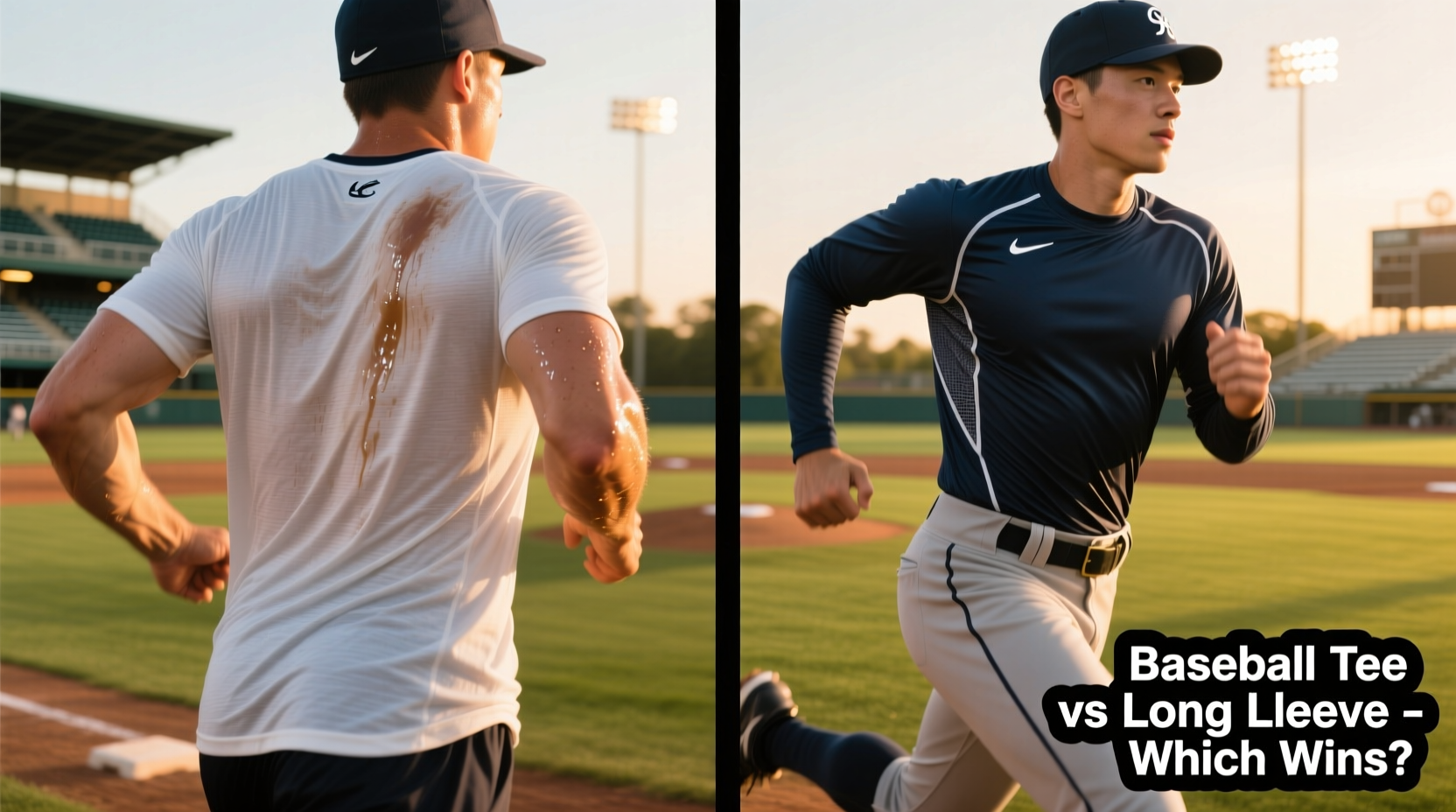
In recent years, the evolution of athletic apparel has transformed how players approach on-field clothing. Gone are the days of loose-fitting cotton shirts that soak up sweat and restrict motion. Today’s base layers—whether short-sleeve tees or full-length compression sleeves—are engineered with moisture-wicking fabrics like polyester-spandex blends, designed to regulate body temperature and support dynamic movement.
A baseball tee, typically a fitted short-sleeve shirt made from performance material, offers minimal coverage while maximizing airflow. In contrast, a long sleeve base layer extends to the wrists, providing UV protection, muscle support, and consistent skin coverage during slides or dives. The difference may seem subtle, but it directly affects comfort under real-game stressors such as heat, friction, and repetitive throwing motions.
Tip: Always check the garment label for moisture-wicking and anti-odor properties—these features significantly enhance comfort during extended play.Comfort Breakdown: Key Factors Compared
Comfort isn’t just about softness; it’s a combination of thermal regulation, freedom of movement, durability, and sensory feedback. Below is a side-by-side analysis of how baseball tees and long sleeves perform across critical categories.
| Factor | Baseball Tee | Long Sleeve |
|---|---|---|
| Breathability | High – exposed arms allow maximum air circulation | Moderate – fabric coverage can trap heat unless highly ventilated |
| Motion Flexibility | Excellent – unrestricted shoulder and arm rotation | Good – modern stretch fabrics maintain range of motion |
| Sun & Abrasion Protection | Low – arms fully exposed to UV rays and turf burn | High – full coverage reduces risk of sun damage and scrapes |
| Temperature Regulation | Better in hot climates – less insulation | Better in cooler or variable conditions – retains warmth without bulk |
| Sweat Management | Effective – wicking fabric on torso, arms dry quickly | Superior – continuous wicking surface, prevents localized dampness |
The data shows no outright winner. Instead, the optimal choice depends heavily on context—particularly climate, position played, and individual sensitivity to heat or irritation.
Real-World Scenarios: Who Wears What and Why
Consider Jake Rivera, a high school outfielder in central Texas. During spring season games that start at 4 PM, temperatures regularly exceed 90°F (32°C) with high humidity. Jake initially wore a long sleeve base layer because his travel team promoted it for “arm support.” However, he began experiencing overheating by the fifth inning, leading to fatigue and reduced focus. After switching to a breathable baseball tee with SPF 30+ sunscreen on his arms, his stamina improved noticeably.
Conversely, Mia Thompson, a collegiate catcher in the Pacific Northwest, plays in frequent overcast and cool conditions. She wears a long sleeve base layer year-round. “My shoulders used to get stiff early in games,” she explains. “Now, the compression helps maintain warmth and stability behind the plate, where I’m constantly squatting and standing.”
These examples highlight a crucial truth: comfort is not universal. It must be tailored to environment and role.
“Thermal comfort and mechanical efficiency go hand-in-hand in baseball. A player shouldn’t feel restricted or overheated—that distracts from mechanics and reaction time.” — Dr. Alan Zhou, Sports Biomechanist at Midwest Athletic Institute
Step-by-Step Guide: Choosing Your Ideal On-Field Top
Selecting between a baseball tee and long sleeve doesn’t need to be guesswork. Follow this decision framework based on measurable factors:
- Evaluate your climate: If average game-time temperatures are above 85°F (29°C), lean toward a baseball tee. Below 70°F (21°C), consider long sleeves for thermal retention.
- Assess your position: Pitchers and catchers benefit from the slight compression and joint warmth of long sleeves. Outfielders and basestealers may prefer the cooling effect of short sleeves.
- Check uniform regulations: Some leagues require specific colors or prohibit certain sleeve lengths. Ensure compliance before investing in multiple pieces.
- Test fabric weight: Look for garments labeled “ultra-light” or “performance mesh.” These offer the benefits of coverage without added heat.
- Try both in practice: Wear each option during simulated game conditions. Note any chafing, overheating, or restriction during throws, swings, or sprints.
Common Myths About Baseball Tops Debunked
- Myth: Long sleeves slow you down. Modern athletic knits are designed for four-way stretch and weigh ounces. Unless poorly fitted, they don’t hinder speed.
- Myth: Baseball tees are just undershirts. Today’s performance tees are engineered as standalone base layers with flat seams, antimicrobial treatment, and strategic ventilation zones.
- Myth: Compression improves strength. While long sleeves provide mild muscular support and proprioceptive feedback, they don’t increase power. Their main benefit is reducing vibration fatigue during repeated throws.
Frequently Asked Questions
Can I wear a baseball tee under a long sleeve jersey?
Yes, but only if the jersey is loose-fitting. Otherwise, layering may cause overheating and restrict movement. Most players opt for one or the other, depending on weather.
Do long sleeves help prevent arm injuries?
Not directly. There’s no clinical evidence that wearing long sleeves reduces UCL or rotator cuff injuries. However, maintaining muscle warmth may improve elasticity and reduce strain during sudden exertion.
Are there hybrid options available?
Absolutely. Many brands now offer “¾ sleeve” or “raglan sleeve” performance tops that balance coverage and breathability. These are ideal for moderate climates or players who want partial protection without full coverage.
Final Verdict: Comfort Is Contextual
There is no single answer to whether a baseball tee or long sleeve is more comfortable. Each serves distinct purposes and excels under different conditions. For hot, sunny afternoons and high-intensity base running, the baseball tee wins for its breathability and low thermal load. In cooler weather, early-season games, or positions requiring repetitive upper-body strain, the long sleeve provides meaningful advantages in muscle support and environmental protection.
The most important factor isn’t the garment itself—it’s intentionality. Choosing the right top based on science, not habit, ensures you stay focused on the game, not your discomfort.
💬 What’s your go-to on-field top and why? Share your experience in the comments—your insight could help a young player make a smarter, more comfortable choice.








