Choosing the right shirt for daily wear isn’t just about comfort—it’s a subtle signal of how you present yourself to the world. Two popular options often debated in casual men’s fashion are the baseball tee and the polo shirt. Both offer comfort and breathability, but they differ significantly in structure, formality, and overall impression. For someone aiming to look polished without overdoing it, the choice between a baseball tee and a polo can define whether an outfit feels intentional or merely thrown on.
The answer depends on context: your lifestyle, personal aesthetic, and where you’re headed during the day. But when evaluating “put-togetherness,” certain design elements—collars, fabric weight, fit, and detailing—tip the scale in one direction. Let’s break down these two staples to determine which delivers a sharper, more cohesive everyday look.
Understanding the Baseball Tee
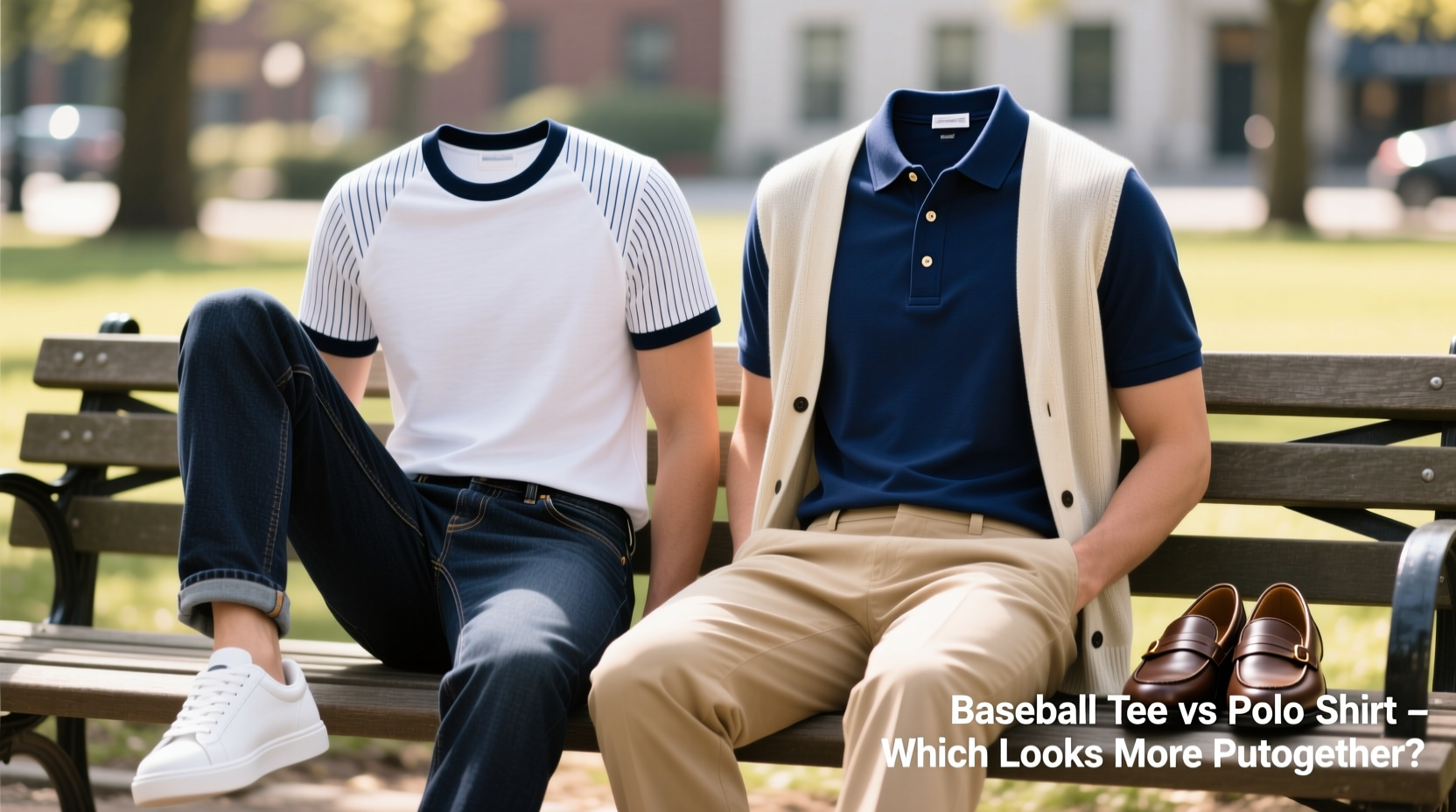
A baseball tee, sometimes called a raglan tee, is characterized by its contrasting three-quarter-length sleeves—typically white body with navy or red sleeves—and a looser, athletic cut. It originated from early 20th-century baseball uniforms, hence the name. Today, it’s embraced as a retro-casual staple, especially popular in streetwear, weekend outings, and sports-themed events.
While undeniably comfortable and nostalgic, the baseball tee leans heavily into informality. Its slub cotton or lightweight jersey fabric, dropped shoulders, and lack of collar give it a relaxed, almost unstructured silhouette. This makes it ideal for lounging, running errands, or casual meetups—but less suited for environments where a refined appearance matters.
Tip: Pair a well-fitted baseball tee with dark chinos and clean sneakers to elevate it slightly beyond basic casual.The Structure and Sophistication of the Polo Shirt
In contrast, the polo shirt—popularized by René Lacoste in the 1920s—was designed to bridge sport and style. It features a soft collar, a few front buttons (usually two or three), and a structured knit fabric like piqué cotton. These details immediately add visual order to an outfit. The collar frames the face, the placket provides symmetry, and the tailored hem supports tucking or neat untucking.
Polo shirts sit comfortably in the “smart casual” category. They’re acceptable in office environments with relaxed dress codes, dinner dates, and social gatherings where looking tidy matters. Unlike the baseball tee, the polo maintains shape after washing and resists sagging throughout the day. Its fabric holds drape better, and its design inherently suggests effort.
“Clothing with defined structure—like collars and seams—subconsciously signals intentionality. A polo shirt reads as ‘I dressed today,’ while a baseball tee says ‘I put something on.’” — Marcus Reed, Menswear Stylist & Consultant
Comparative Breakdown: Key Differences
| Feature | Baseball Tee | Polo Shirt |
|---|---|---|
| Collar | No collar | Soft collar with button placket |
| Fabric | Lightweight jersey, often slub cotton | Denser piqué or interlock knit |
| Fit | Loose, athletic cut | Tailored, semi-fitted |
| Versatility | Casual settings only | Casual to semi-formal |
| Style Impression | Laid-back, nostalgic, sporty | Pulled-together, classic, composed |
| Maintenance | Prone to stretching and fading | Holds shape well; resists wrinkles |
When Each Shirt Shines: Real-Life Scenarios
To understand which shirt looks more put together, consider real-world situations.
Scenario: Weekend Brunch with Friends
You’re meeting friends at a trendy café. You want to look relaxed but not sloppy. A navy baseball tee might work if paired with slim jeans and leather sneakers, but it still reads as ultra-informal. A light gray polo in cotton piqué, however, instantly elevates the look—even without changing the rest of the outfit. The collar adds polish, and the fabric reflects attention to detail.
Scenario: Casual Office Day
Your workplace allows smart casual attire on Fridays. A baseball tee would likely cross the line into too casual, especially if worn untucked with shorts. A polo, in contrast, is widely accepted in such environments. In solid colors like burgundy, olive, or heather gray, it complements chinos or dark denim perfectly and aligns with professional expectations.
Mini Case Study: Alex’s Style Upgrade
Alex, a 32-year-old project manager, noticed his colleagues received more positive feedback during client-facing meetings. He realized his go-to outfits—a rotation of graphic tees and baseball tees—made him appear less serious. On stylist advice, he replaced them with polos in neutral tones. Within weeks, he was invited to lead more presentations. His manager later commented, “You seem more prepared lately.” The change wasn’t drastic, but the perception shift was real.
How to Wear Each Shirt with Intention
Even within their categories, how you style each shirt affects the final impression.
For the Baseball Tee: Minimize Slouchiness
- Choose a fitted version—avoid oversized or boxy cuts.
- Stick to solid or tonal color blocking (e.g., white body with charcoal sleeves).
- Avoid graphics or logos that amplify the casual vibe.
- Pair with tailored shorts or roll-up chinos to balance proportions.
For the Polo: Maximize Polished Appeal
- Select a trim fit that skims the body without clinging.
- Opt for breathable natural fibers like cotton or cotton blends.
- Keep the collar crisp—wash inside out and air dry to prevent curling.
- Tuck it into linen trousers for summer events or leave untucked over dark jeans.
Checklist: Choosing Your Everyday Staple
- Assess your daily environments: Do you need to look presentable for work, clients, or social events?
- Evaluate your wardrobe foundation: Do you have enough elevated pieces to pair with a baseball tee?
- Consider maintenance: Are you willing to replace stretched tees frequently?
- Test the fit: Try both styles on—does the polo flatter your frame better?
- Ask: Does it look intentional? Snap a photo. If it looks like you tried, you’re on the right track.
Frequently Asked Questions
Can a baseball tee ever look stylish and put together?
Yes, but only under specific conditions. A well-fitted, minimal-design baseball tee in high-quality fabric can work in fashion-forward streetwear contexts. Pair it with tailored pants, layered jewelry, and premium footwear. However, this requires advanced styling awareness and is not universally appropriate.
Are polos outdated or too preppy?
Not anymore. Modern polos come in updated fits—slimmer silhouettes, shorter sleeves, and fashion-forward colors. Brands like Uniqlo, Arket, and Everlane offer minimalist polos that avoid traditional “golf dad” vibes. Worn with confidence and modern bottoms, they project quiet sophistication.
Can I wear a polo every day?
Absolutely. Polos are durable, wash well, and transition easily from day to evening. Having 3–5 in neutral and seasonal colors creates a versatile, low-effort capsule wardrobe. Just rotate them to preserve fabric integrity.
Final Verdict: Which Shirt Looks More Put Together?
The polo shirt wins decisively when the goal is appearing polished in everyday situations. Its structural advantages—the collar, placket, and tailored knit—are purpose-built to convey order and care. While the baseball tee has charm and nostalgia, it lacks the visual cues that signal intentionality.
That doesn’t mean banishing the baseball tee entirely. It has its place: backyard barbecues, sporting events, or creative industries with loose dress codes. But for consistent, reliable everyday wear that projects competence and self-awareness, the polo is the smarter, more versatile choice.
Style isn’t about complexity—it’s about coherence. And when coherence meets comfort, you’ve found a wardrobe winner.
🚀 Ready to refine your everyday look? Swap one baseball tee for a well-fitted polo this week and notice how people respond. Small changes create lasting impressions—start building yours today.








