
When stepping into bright sunlight—whether for a morning jog, afternoon golf game, or hiking adventure—the right headwear can make a significant difference in comfort and UV protection. Two of the most common choices are the baseball cap and the visor. Both offer shade, but they differ fundamentally in design, coverage, and effectiveness. Understanding these differences helps you choose not just based on style, but on real-world performance under the sun.
The core purpose of sun-blocking headwear is to shield sensitive areas—face, eyes, neck, and scalp—from harmful ultraviolet (UV) radiation. Prolonged exposure increases the risk of skin damage, premature aging, and even skin cancer. While both caps and visors serve this function, their structural design leads to distinct advantages and limitations.
Design Differences: Cap vs. Visor
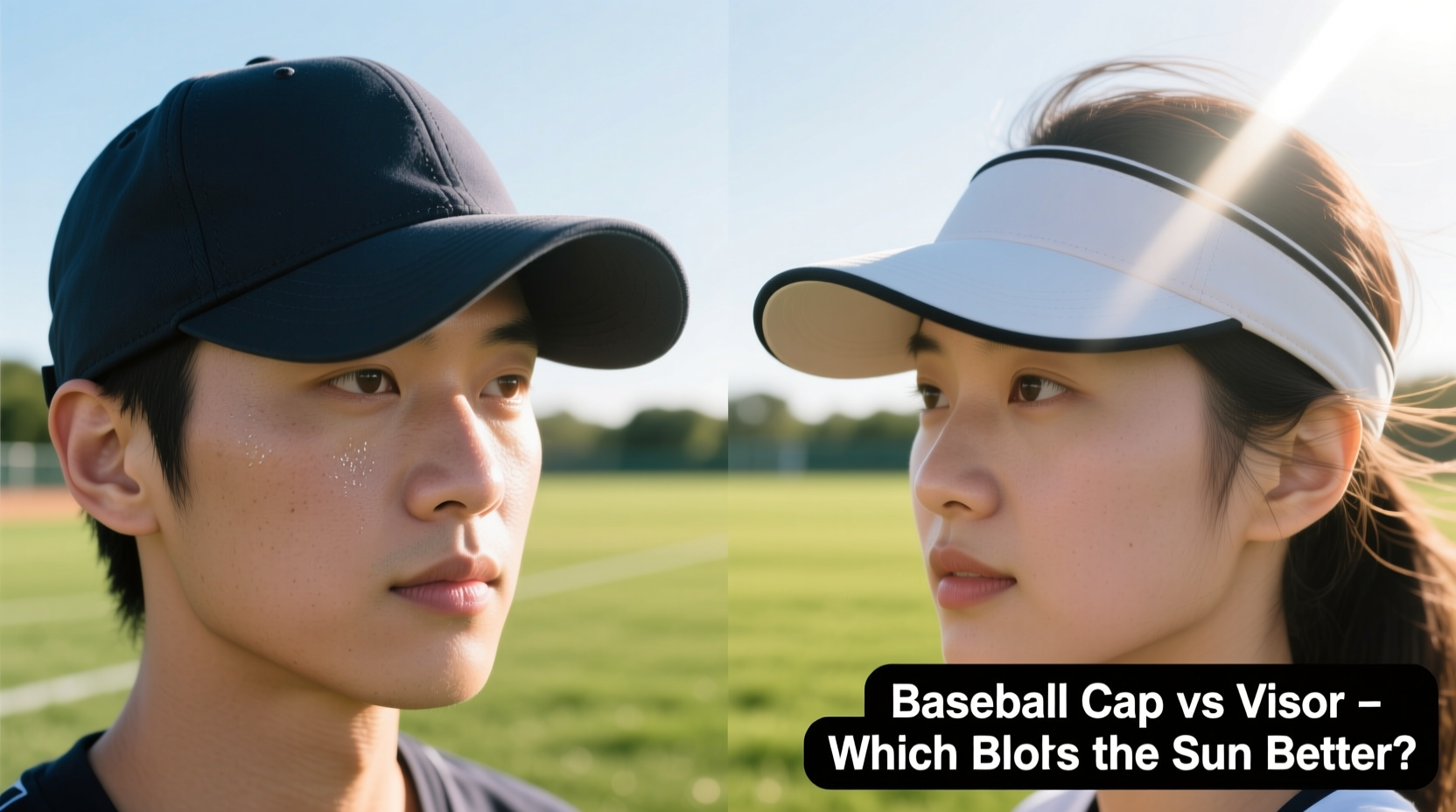
A traditional baseball cap features a rounded crown that fully covers the top of the head, with a stiff brim extending forward. It typically has a curved or flat peak, depending on style, and often includes an adjustable strap or fitted back. In contrast, a visor consists only of a brim attached to a headband, leaving the crown of the head completely exposed.
This fundamental distinction affects more than just appearance—it directly impacts sun protection, heat retention, and ventilation. The full crown of a baseball cap provides continuous coverage over the scalp, while the open-top design of a visor allows air circulation but sacrifices overhead UV defense.
Tip: If you're spending extended time outdoors between 10 a.m. and 4 p.m., when UV rays are strongest, opt for headwear that covers the entire head.Sun Protection Coverage Compared
To assess which item blocks the sun more effectively, consider three key zones: forehead and nose, ears and sides of the face, and the top of the scalp.
- Forehead and Nose: Both cap and visor perform equally well here, as the brim length is usually similar (typically 2.5 to 3 inches). This front shading protects the eyes and prevents squinting.
- Ears and Sides of Face: Baseball caps often extend slightly down the back and sides, offering modest protection to the ears and upper neck—especially models with longer backs. Visors provide no lateral shielding unless worn with additional accessories like sunglasses or sunscreen.
- Top of Scalp: This is where the gap becomes most apparent. A baseball cap’s crown acts as a physical barrier against direct overhead sun. A visor offers zero protection here, making it less effective during midday exposure when the sun is high.
“Headwear that covers the scalp significantly reduces UV exposure to one of the most vulnerable—and often overlooked—areas of the body.” — Dr. Lena Torres, Dermatologist & Skin Cancer Prevention Advocate
Performance in Different Conditions
The environment and activity level influence how well each option performs. Here's how they stack up across scenarios:
| Scenario | Baseball Cap Performance | Visor Performance |
|---|---|---|
| Golfing on a sunny day | Excellent front and scalp coverage; may feel warm | Good visibility and airflow; neck and scalp remain exposed |
| Running or intense cardio | Protective but traps heat; sweat buildup possible | Better ventilation; cooler, but increased scalp UV risk |
| Hiking at high elevation | Superior overall protection at altitude with stronger UV | Inadequate for prolonged exposure; requires extra sunscreen |
| Casual outdoor dining | Slightly bulky; effective for short durations | Stylish and comfortable; sufficient for low-intensity settings |
In high-exposure environments—such as beaches, mountains, or open fields—full coverage becomes critical. The American Academy of Dermatology recommends wearing broad-spectrum sunscreen along with protective clothing, including hats with at least 3-inch brims and full crowns for maximum benefit.
Comfort, Ventilation, and Practical Trade-offs
While protection is paramount, comfort plays a major role in consistent usage. Many people prefer visors during exercise because the open top allows heat to escape, reducing overheating and sweat accumulation. This makes them popular among tennis players and cyclists who prioritize breathability.
However, this advantage comes at a cost. Studies show that the scalp receives some of the highest UV doses during outdoor activities due to direct exposure and reflection from surfaces like sand, water, and concrete. Without a crown, visors leave this area unprotected, increasing long-term risk—even if the wearer feels cooler.
Modern baseball caps address ventilation concerns with mesh panels on the sides and back, moisture-wicking sweatbands, and lightweight fabrics. These innovations maintain protection while improving airflow, narrowing the comfort gap between the two styles.
Real-World Example: Weekend Hiker’s Experience
Mark, an avid hiker from Colorado, used to wear a visor on trails, believing it kept him cooler. After several summer hikes above 9,000 feet, he noticed persistent redness and peeling on the top of his head. His dermatologist pointed out that alpine environments amplify UV radiation by up to 25% per 1,000 meters of elevation. Switching to a wide-brimmed baseball-style hat with UPF-rated fabric reduced his symptoms within weeks. “I didn’t realize how much sun my scalp was getting until I switched,” he said. “Now I never hike without full coverage.”
Actionable Tips for Choosing the Right Option
Selecting between a baseball cap and a visor shouldn't be arbitrary. Consider your activity, duration of sun exposure, and personal health factors. Below is a checklist to guide your decision:
📋 **Sun Protection Headwear Checklist**- Will you be outside for more than 30 minutes between 10 a.m. and 4 p.m.? → Choose a cap.
- Are you engaging in high-intensity exercise where cooling matters? → A vented cap or visor with sunscreen may work.
- Do you have a history of sunburns or skin sensitivity? → Prioritize full-coverage hats.
- Is your hair thinning or do you have bald spots? → Avoid visors; scalp needs protection.
- Are you near reflective surfaces (water, snow, sand)? → Opt for maximum coverage and UV-blocking materials.
Frequently Asked Questions
Can a visor provide enough sun protection for daily use?
For brief errands or low-exposure situations, yes. But for extended outdoor time, especially midday, a visor alone is insufficient. It leaves the scalp and ears vulnerable, requiring diligent sunscreen application to compensate.
Are there hats that combine the benefits of both?
Yes. Some athletic brands offer hybrid designs—structured brims with breathable, partial crowns or extended mesh backs. Others produce \"visor-caps\" with removable crowns, allowing adaptability based on conditions.
Does color affect sun protection?
Generally, darker colors absorb more UV radiation, offering slightly better protection than light ones. However, dark hats also absorb more heat. For optimal balance, choose a hat with a light interior (to reflect heat) and a dark exterior (to block UV), ideally made from tightly woven, UPF-rated fabric.
Final Recommendation: When to Choose What
If your priority is **maximum sun protection**, the baseball cap—especially one with a dark, wide brim and full crown—is the superior choice. It shields the face, eyes, ears, neck, and scalp, aligning with dermatological guidelines for preventing UV damage.
If you value **cooling and mobility** during short-duration or indoor-outdoor transitions—like a quick walk, driving, or social event—a visor can be practical and stylish. But it should never replace proper sun safety measures in intense sunlight.
Ultimately, the best headwear is one that you’ll consistently wear—but it must also do its job. Don’t let fashion override function when it comes to protecting your skin and eyes.
🚀 Take Action Today: Audit your current sun protection habits. Replace old, faded hats (which lose UV resistance over time), apply sunscreen to exposed areas—even under hats—and consider upgrading to a UPF-rated baseball cap for any activity lasting more than 20 minutes in direct sun. Your future self will thank you.








