When stepping into the sun—whether hiking, gardening, or strolling through a summer festival—most people reach for a hat. But not all hats offer equal protection. Two of the most common choices are the baseball cap and the straw hat. Both are stylish, widely available, and breathable, but when it comes to shielding your skin from harmful UV rays, one clearly outperforms the other. Understanding the differences in design, material, and coverage can make a significant impact on your long-term skin health.
Understanding UV Exposure and Skin Risk
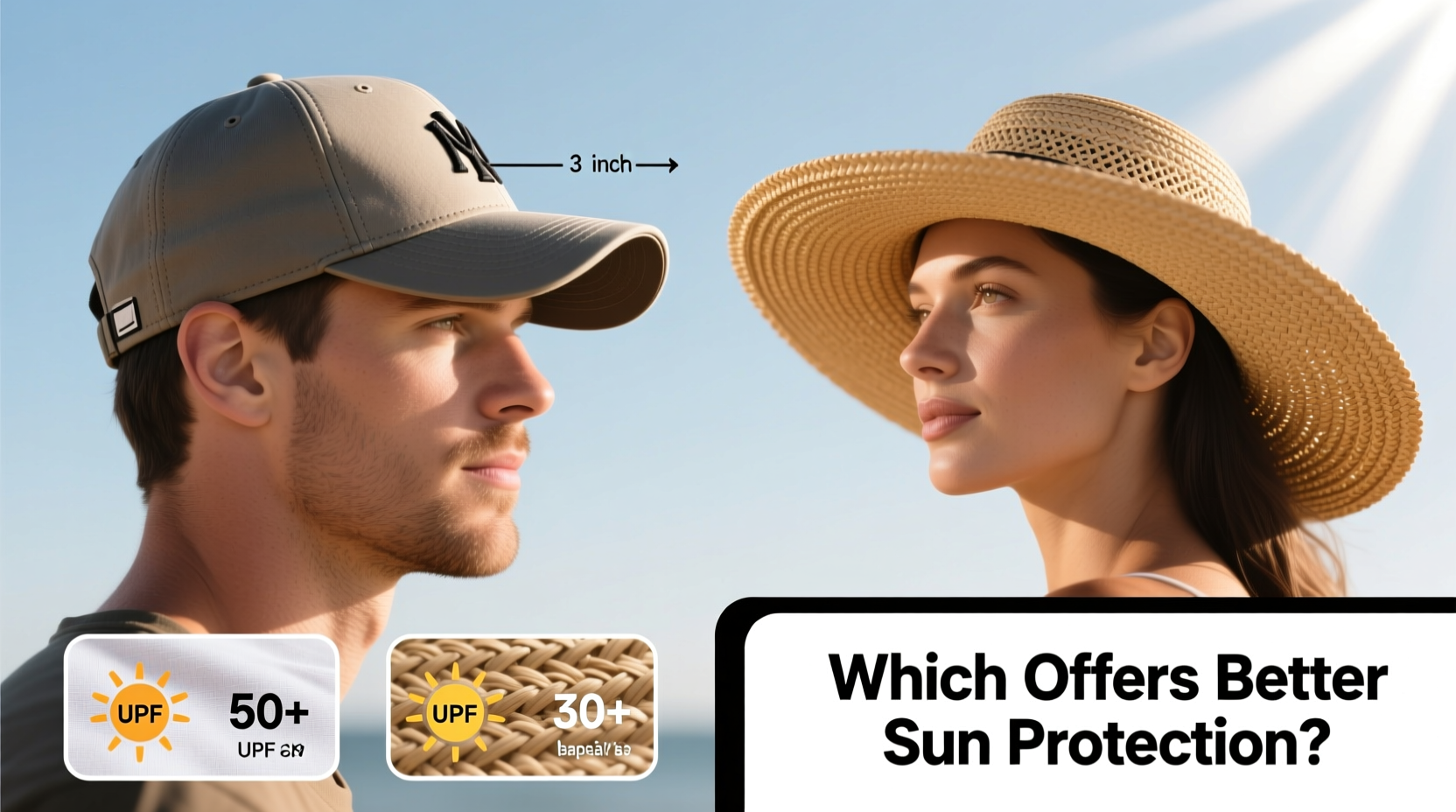
Sun damage isn’t just about sunburns. Cumulative exposure to ultraviolet (UV) radiation increases the risk of premature aging, hyperpigmentation, and skin cancer. The face, ears, neck, and scalp are particularly vulnerable because they’re often left exposed. A hat can block up to 50% of UV radiation, but only if it’s designed with adequate coverage and fabric integrity.
The American Academy of Dermatology recommends wearing wide-brimmed hats that provide shade to the face, ears, and back of the neck. Yet many still default to the familiar baseball cap—a habit rooted more in fashion and sports culture than in dermatological science.
“Many patients come in with sun damage on their necks and ears, areas a baseball cap leaves completely unprotected. That’s a red flag.” — Dr. Lena Torres, Board-Certified Dermatologist
Design & Coverage: Baseball Cap vs. Straw Hat
The key difference lies in coverage area. A standard baseball cap features a stiff front brim (typically 2.5–3 inches) and no protection for the sides or back of the head. In contrast, a traditional straw hat—like a Panama, boater, or wide-brimmed sun hat—often has a 3- to 4-inch brim that encircles the entire head.
This full coverage matters. The ears and the nape of the neck receive intense sun exposure during midday hours, especially when walking or engaging in outdoor activities. A baseball cap does nothing to shield these zones, while a straw hat creates consistent shade around the head.
Tip: For optimal protection, choose a hat with at least a 3-inch brim all around. The wider the brim, the better the coverage.Material Matters: Weaving, Density, and UPF Rating
Not all straw hats are created equal. While both caps and straw hats are often made from lightweight, breathable materials, their ability to block UV light depends on weave tightness and fiber composition.
Many modern baseball caps use tightly woven cotton, polyester, or performance fabrics with UPF (Ultraviolet Protection Factor) ratings. Some even advertise UPF 50+, meaning they block over 98% of UV radiation. However, this protection is limited strictly to where the fabric covers.
Straw hats, on the other hand, vary widely. Tightly woven Panama hats (made from toquilla straw) can offer UPF 30–50 if the weave is fine enough. Loosely woven raffia or jute hats may have large gaps between fibers, allowing UV rays to pass through. This phenomenon, known as the “shadow test,” helps determine effectiveness: hold the hat up to sunlight. If you see multiple points of light filtering through, UV rays are getting in too.
| Feature | Baseball Cap | Straw Hat |
|---|---|---|
| Brim Width (Front) | 2.5–3 inches | 3–4+ inches |
| Sides/Back Coverage | None | Full 360° |
| Typical Material | Cotton, polyester, nylon | Straw (toquilla, raffia, paper braid) |
| UPF Potential | Up to 50+ (if rated) | UPF 15–50 (depends on weave) |
| Ventilation | Moderate (mesh back) | High (natural breathability) |
| Durability in Rain | Poor (absorbs water) | Poor to moderate (varies by type) |
Real-World Performance: A Case Study
Consider Sarah, a landscape photographer who spends 6–8 hours outdoors weekly. For years, she wore a baseball cap under the assumption it was sufficient. Over time, she noticed dark spots forming along her hairline and the tops of her ears—areas consistently exposed despite wearing the cap.
After a precancerous lesion was removed from her left ear, her dermatologist recommended switching to a wide-brimmed hat. Sarah began using a tightly woven Panama-style straw hat with a 3.5-inch brim. Within a year, new sunspots stopped appearing, and she reported feeling cooler due to better airflow and reduced direct sun exposure.
Her experience reflects a broader trend: functional sun protection requires more than just a token brim. Real defense means covering all high-risk zones.
Practical Tips for Choosing the Right Sun Hat
Whether you lean toward tradition, comfort, or style, making an informed choice enhances both safety and satisfaction. Use the following checklist to guide your decision:
Checklist: Choosing a Sun-Smart Hat- ✅ Look for a brim that extends at least 3 inches all around
- ✅ Perform the shadow test: minimal light should pass through the fabric
- ✅ Check for a UPF rating label (UPF 30+ is ideal)
- ✅ Ensure the crown allows ventilation to prevent overheating
- ✅ Confirm secure fit—even in wind or movement
- ✅ Consider packability if traveling or storing frequently
When a Baseball Cap Might Still Be Useful
Despite its limitations, the baseball cap has situational value. It’s ideal for:
- Indoor-outdoor transitions where full coverage feels excessive
- Active sports like running or cycling, where aerodynamics and sweat management matter
- Wearing under helmets (e.g., biking, construction) for added comfort and minor UV reduction
- Styling purposes when paired with additional protection (e.g., sunscreen on ears and neck)
In such cases, the cap should never be the sole method of sun defense. Always supplement with broad-spectrum SPF 30+ sunscreen on exposed areas, especially the back of the neck, ears, and shoulders.
“You can wear a baseball cap, but never rely on it alone. Think of it like seatbelts—you need more than just one safety layer.” — Dr. Marcus Lin, Preventive Health Specialist
Step-by-Step Guide to Maximizing Sun Protection with Hats
- Evaluate your daily sun exposure: Are you outdoors before 10 a.m. or after 4 p.m.? Or do you spend peak hours (10 a.m.–4 p.m.) in direct sunlight?
- Assess your current hat: Does it cover your ears and neck? Is the fabric tightly woven?
- Upgrade if needed: Choose a wide-brimmed straw, canvas, or technical sun hat with UPF 30+.
- Combine with sunscreen: Apply SPF to any skin not covered by the hat, reapplying every two hours.
- Store properly: Keep hats in a cool, dry place to maintain shape and material integrity.
- Replace when worn: Frayed weaves, stretched bands, or faded fabric reduce effectiveness.
Frequently Asked Questions
Can I get sunburned through a straw hat?
Yes, if the weave is loose. Straw is not inherently UV-blocking—the density of the material determines protection. Always check for visible light passing through the crown or brim.
Are there UPF-rated baseball caps?
Absolutely. Many outdoor brands now produce performance caps with UPF 50+ ratings using tightly woven, moisture-wicking fabrics. These are better than standard cotton caps but still lack side and rear coverage.
Do darker hats protect better than lighter ones?
Generally, yes. Darker colors absorb more UV radiation rather than allowing it to pass through. However, a tightly woven light-colored hat with a UPF rating can still offer excellent protection without trapping excessive heat.
Final Verdict: Which Hat Wins for Sun Protection?
The evidence is clear: a well-constructed straw hat with a wide, encircling brim offers superior sun protection compared to a baseball cap. It shields the face, ears, neck, and shoulders—areas the baseball cap ignores. When crafted from tightly woven materials and used alongside sunscreen, it becomes a cornerstone of smart sun safety.
That said, the best hat is the one you’ll actually wear. If you’re active and find wide-brimmed styles impractical, opt for a high-UPF performance cap and commit to diligent sunscreen application. But for extended outdoor exposure—beach days, gardening, festivals, or travel—a quality straw hat is the smarter, safer choice.
🚀 Protect your skin like you mean it. Swap your baseball cap for a wide-brimmed straw hat on your next sunny outing—or at least pair it with sunscreen. Your future self will thank you.








