
In classrooms across the globe, a quiet revolution is unfolding. The familiar click of a retractable ballpoint is being replaced by the soft tap of a stylus on glass. Once standard issue—dog-eared notebooks, ink-stained fingers, and last-minute exam scribbles—are giving way to sleek tablets, digital note-taking apps, and cloud-synced annotations. The year 2024 marks a tipping point: more students than ever are choosing styluses over ballpoints, not as a trend, but as a practical response to how learning has evolved.
This shift isn’t about abandoning handwriting or nostalgia. It’s driven by real changes in curriculum delivery, accessibility needs, and technological integration. From interactive textbooks to AI-powered study assistants, today’s academic environment rewards adaptability—and digital pens deliver it.
The Digital Transformation of Learning
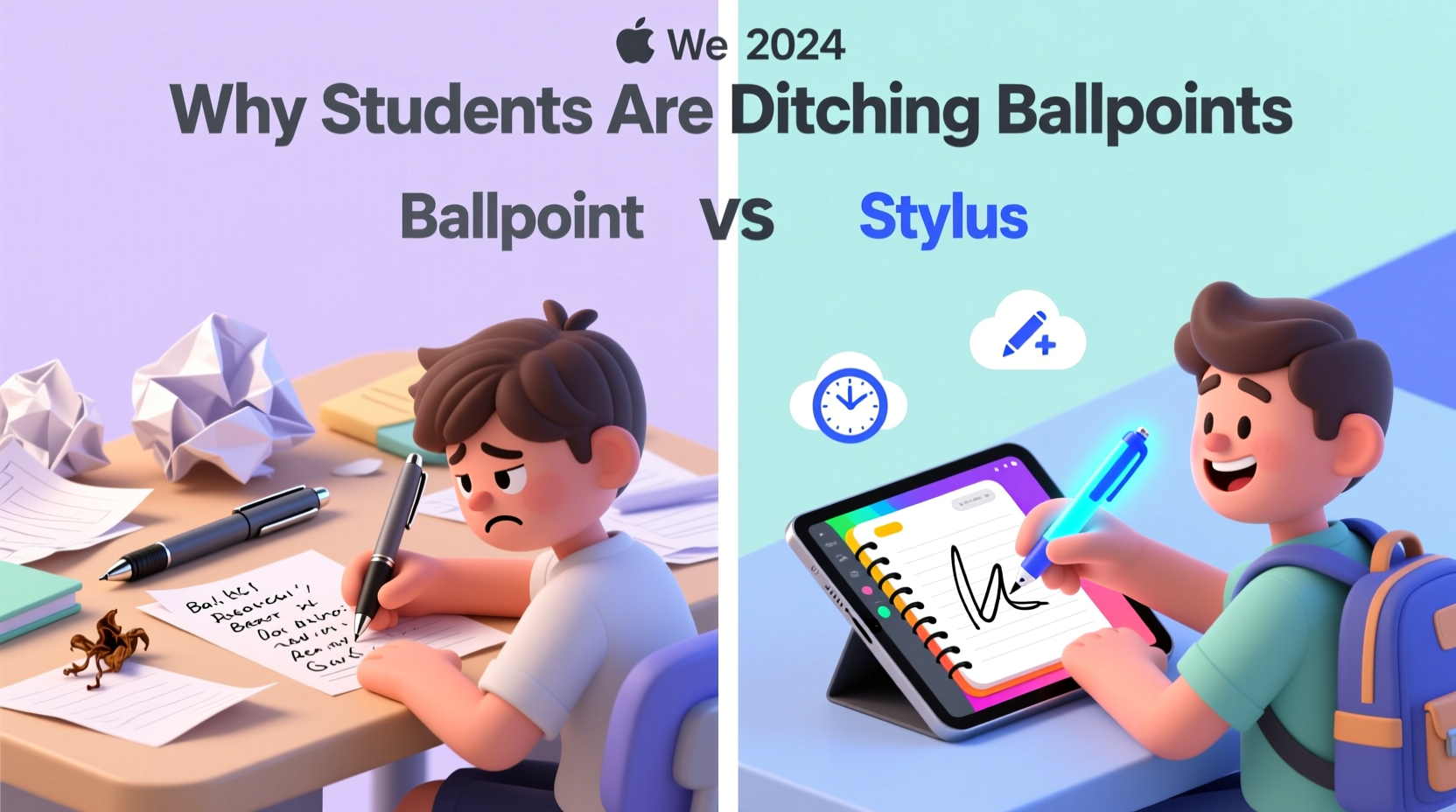
Education in 2024 is no longer confined to paper and chalkboards. Schools and universities have embedded technology into their core infrastructure. One-to-one device programs—where every student receives a tablet or laptop—are now common in both K–12 and higher education institutions. According to a 2023 EDUCAUSE report, over 78% of college students use a touchscreen device daily for academic purposes.
With this shift comes new tools. Styluses, once niche accessories, have become essential peripherals. Unlike ballpoint pens, which serve one primary function (writing), styluses integrate with software ecosystems that support annotation, voice recording, instant search, multimedia embedding, and collaborative editing. For example, a student can underline a passage in a PDF, record a lecturer’s explanation simultaneously, and later search their notes using keywords—all without lifting the stylus.
“Digital inking isn’t just about replicating pen-on-paper. It’s about augmenting cognition through interactivity.” — Dr. Lena Patel, Cognitive Science Researcher, MIT Education Lab
Functional Advantages: Why Styluses Outperform Ballpoints Today
While ballpoint pens remain reliable, they lack the versatility demanded by modern academic workflows. A stylus offers precision comparable to traditional writing while unlocking features impossible with analog tools.
- Searchable handwriting: Apps like Microsoft OneNote and Nebo convert handwritten notes into searchable text using AI.
- Instant organization: Notes sync across devices and auto-backup to the cloud, eliminating lost notebooks.
- Integration with study tools: Highlighted passages can be exported directly into flashcard apps like Anki or Quizlet.
- Eco-efficiency: Reduces paper consumption and eliminates disposable plastic pens.
- Accessibility: Supports dyslexic learners through audio syncing, font conversion, and text-to-speech functions.
Ballpoint vs Stylus: A Practical Comparison
| Feature | Ballpoint Pen | Stylus Pen |
|---|---|---|
| Durability | High – mechanical, no battery | Moderate – requires charging, sensitive to drops |
| Note Retrieval | Manual scanning or physical search | Instant keyword search across all notes |
| Portability | Extremely portable, fits anywhere | Requires compatible device; may need case |
| Cost Over Time | Low per unit, but recurring | Higher upfront, but long-term savings on supplies |
| Collaboration | Limited to sharing physical copies | Real-time co-editing and sharing via cloud |
| Environmental Impact | Plastic waste, non-recyclable components | Reusable, lower material footprint over time |
A Day in the Life: How Students Use Styluses Now
Meet Sofia, a second-year biology major at the University of Oregon. Her routine reflects the new normal. She attends lectures with an iPad Pro and Apple Pencil. As her professor discusses cellular mitosis, she annotates a diagram in GoodNotes, records audio, and highlights key terms. After class, she uses the app’s AI feature to summarize her notes into bullet points. That evening, she shares annotated slides with her study group via shared notebook links.
When preparing for exams, Sofia converts her handwritten flashcards into digital quizzes using integrated tools. She reviews them on her phone during commutes—something impossible with paper-based notes. “I used to lose half my notes by midterms,” she says. “Now everything’s searchable, backed up, and organized by subject.”
Sofia still owns ballpoints—she keeps one in her bag “just in case”—but hasn’t used it for classwork in months. “It’s not that I dislike writing on paper,” she explains. “It’s that the stylus does more, faster, and helps me learn better.”
Overcoming the Transition Challenges
Switching from ballpoint to stylus isn’t seamless for everyone. Some students struggle with the learning curve, battery anxiety, or discomfort with digital writing surfaces. Others miss the tactile feedback of paper.
To ease the transition, experts recommend a phased approach:
- Start hybrid: Use both tools side-by-side. Write math equations digitally but journal on paper.
- Invest in quality: Choose a stylus with low latency and textured nibs for realistic feel.
- Practice digital organization: Create folders, tags, and naming conventions early.
- Back up manually at first: Get comfortable with syncing before relying on it fully.
- Use templates: Download lecture or Cornell note templates to structure digital pages.
Checklist: Is a Stylus Right for Your Study Routine?
- ✅ Do you use a tablet or touchscreen laptop regularly?
- ✅ Are you enrolled in courses with heavy visual content (diagrams, equations, sketches)?
- ✅ Do you collaborate frequently with peers on projects or notes?
- ✅ Do you struggle with organizing or finding past notes?
- ✅ Are you looking to reduce paper usage or carry fewer materials?
- ✅ Do you use digital textbooks or PDF-based readings?
If you answered yes to three or more, a stylus could significantly enhance your academic efficiency.
Frequently Asked Questions
Can a stylus really replace handwriting for learning retention?
Research shows that handwriting aids memory, but only when it's active engagement—not passive copying. Digital inking preserves the cognitive benefits of handwriting while adding layers of interaction. A 2023 University of California study found that students using styluses with active annotation scored 12% higher on recall tests than those using typing alone—and matched the performance of pen-and-paper users.
Are styluses expensive compared to ballpoints?
Entry-level styluses start around $30 (e.g., basic capacitive pens), while premium models (like Apple Pencil or Samsung S Pen) range from $99–$129. However, when factoring in the cost of notebooks, highlighters, erasers, and replacement pens over a semester, the long-term investment often balances out—especially with multi-year device use.
What if my school doesn’t provide devices?
Many institutions now offer technology lending programs. Additionally, budget-friendly options like refurbished iPads or Android tablets paired with affordable styluses make digital note-taking accessible. Public libraries and learning centers also increasingly offer loaner kits for students in need.
Conclusion: Writing the Future, One Tap at a Time
The move from ballpoint to stylus isn't a rejection of tradition—it's an evolution of practice. Students aren't discarding handwriting; they're enhancing it. They’re choosing tools that align with how knowledge is accessed, shared, and applied in 2024. The stylus represents more than convenience; it symbolizes agency, adaptability, and a demand for smarter learning systems.
For educators and learners alike, the message is clear: the future of note-taking is digital, dynamic, and deeply personal. Whether you're drafting an essay, solving calculus problems, or sketching a lab diagram, the right tool should amplify your thinking—not limit it.
🚀 Ready to upgrade your study toolkit? Try a stylus for one week. Track your time, note retrieval speed, and stress levels. You might never reach for a ballpoint again.








