As fashion trends cycle through decades, ballet flats have made a strong comeback in 2024—gracing city sidewalks, office floors, and even casual work-from-home setups. Their sleek design, lightweight feel, and timeless elegance make them a favorite among style-conscious wearers. But while they win points for aesthetics, the question remains: when it comes to foot health, do ballet flats hold up against the tried-and-true functionality of running shoes?
The answer isn’t just about comfort—it’s about biomechanics, long-term joint impact, and how footwear choices influence posture and mobility. As podiatrists and orthopedic specialists continue to emphasize preventive care, understanding the structural differences between these two types of shoes is more important than ever.
Understanding the Anatomy of Ballet Flats
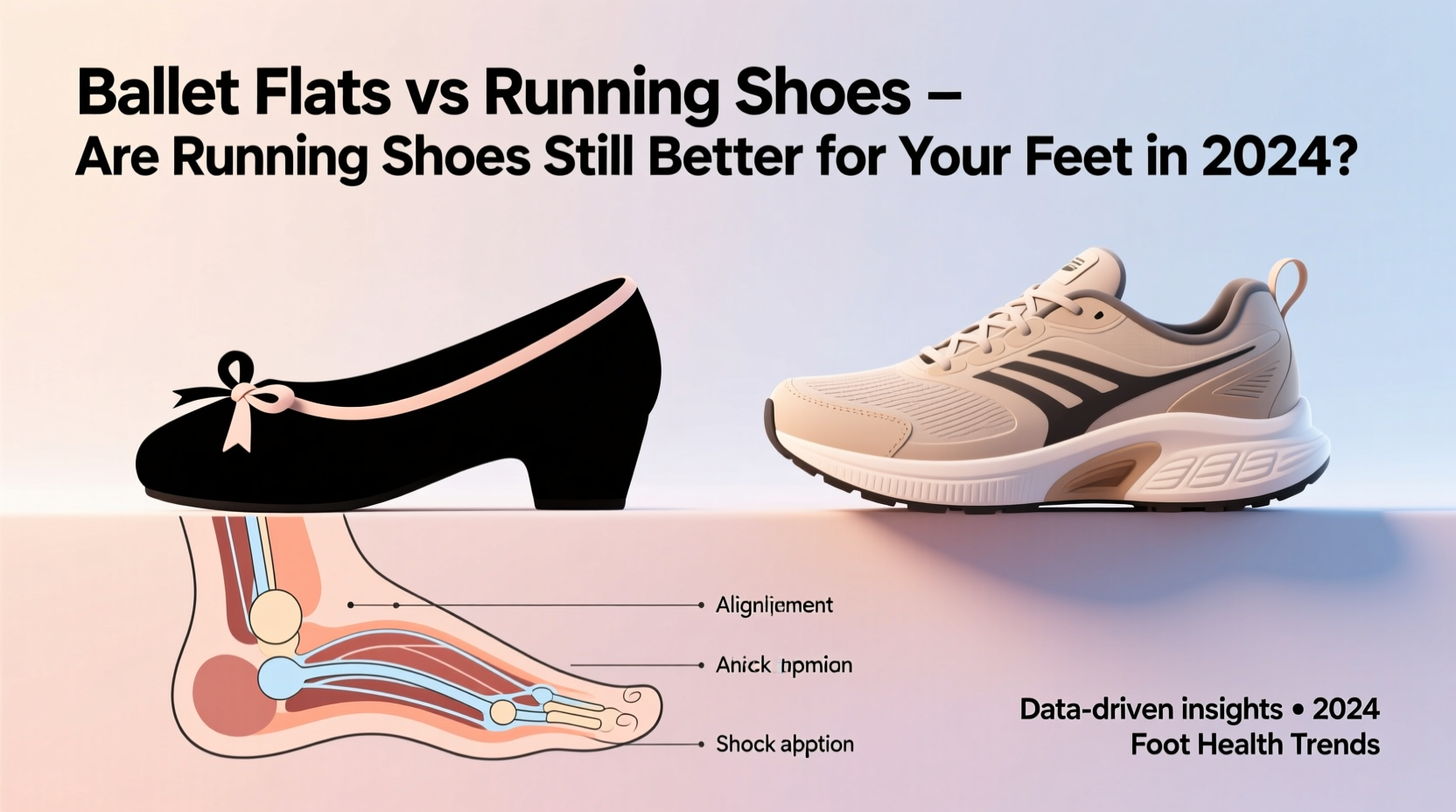
Ballet flats are characterized by their thin soles, minimal heel-to-toe drop, and flexible construction. Inspired by dance footwear, they offer little to no arch support or cushioning. Most modern versions prioritize style over function, using synthetic materials that lack breathability and structure.
While suitable for short durations—such as commuting from car to office or attending a brief meeting—they fall short during prolonged standing or walking. The absence of shock absorption places increased stress on the plantar fascia, metatarsal heads, and Achilles tendon, especially on hard surfaces like concrete or tile.
Tip: If you must wear ballet flats, choose styles with padded insoles and a slight heel (3–5mm) to reduce strain on the forefoot.Why Running Shoes Excel in Foot Support
Running shoes are engineered with biomechanical precision. They feature multi-layered midsoles designed to absorb impact, guide foot motion, and distribute pressure evenly across the foot. In 2024, advancements in foam technology—like nitrogen-infused EVA and adaptive lattices—have further improved energy return and durability.
Key structural advantages include:
- Cushioning: Reduces ground reaction forces during each step.
- Arch Support: Helps maintain proper foot alignment, especially for flat-footed or overpronating individuals.
- Heel Counter: Stabilizes the rearfoot and prevents excessive rolling.
- Toe Box Space: Allows natural splay of toes, reducing risk of neuromas and bunions.
“Even non-runners benefit from wearing supportive athletic shoes daily. The cumulative effect of poor footwear can lead to chronic issues like plantar fasciitis or knee osteoarthritis.” — Dr. Lena Torres, Podiatrist & Gait Specialist
Comparative Breakdown: Ballet Flats vs Running Shoes
| Feature | Ballet Flats | Running Shoes |
|---|---|---|
| Shock Absorption | Poor – thin rubber or leather soles | Excellent – advanced foam compounds |
| Arch Support | Limited or none | Integrated, often customizable |
| Motion Control | No guidance for overpronation | Structured design for stability |
| Durability | Low – wear out quickly under regular use | High – built for 300–500 miles of use |
| Fashion Flexibility | High – pairs well with dresses, jeans, skirts | Moderate – limited formal compatibility |
| Foot Health Impact (Long-Term) | Risk of strain, inflammation, deformities | Protective, preventive benefits |
Real-World Scenario: Office Worker vs Urban Commuter
Consider Sarah, a graphic designer who works remotely but commutes twice weekly to client meetings. On commute days, she wears ballet flats because they slip easily into her tote and look polished with her tailored pants. However, after walking 1.5 miles total between subway stations and offices, she frequently experiences sharp heel pain by evening.
After consulting a podiatrist, Sarah learns she’s developed early-stage plantar fasciitis—likely due to repeated microtrauma from unsupported steps on urban pavement. Switching to lightweight running shoes on commute days significantly reduces her discomfort within three weeks. She now keeps a pair at her desk and uses stylish sneakers that mimic the clean lines of flats without sacrificing support.
This case illustrates a growing trend: professionals seeking solutions that balance appearance with ergonomics. The rise of “athleisure” and performance-inspired footwear reflects this shift toward functional fashion.
When Ballet Flats Might Be Acceptable (With Caveats)
It’s not necessary to eliminate ballet flats entirely. For some, they remain essential for professional dress codes or aesthetic preferences. However, strategic usage and smart modifications can reduce risks:
- Limited duration: Wear only for events or settings involving minimal walking.
- Add orthotic inserts: Custom or over-the-counter insoles can improve arch support.
- Choose structured designs: Look for brands offering molded footbeds and rubber outsoles instead of flimsy leather bottoms.
- Avoid completely flat profiles: A 5–8mm heel gradient helps align the foot naturally.
Step-by-Step Guide to Choosing Footwear for Daily Use
Follow this practical timeline to evaluate your footwear needs and make informed decisions:
- Assess Your Daily Activity Level (Week 1): Track how many hours you spend standing or walking. Note any foot or leg discomfort.
- Evaluate Current Shoe Collection (Week 2): Identify which shoes provide actual support versus those worn purely for style.
- Consult a Professional (Optional but Recommended): Visit a podiatrist or gait lab for personalized advice, especially if experiencing pain.
- Invest in Two Key Pairs (Week 3): One supportive everyday shoe (e.g., running or walking shoe), and one low-risk formal option with moderate heel and padding.
- Implement a Rotation System (Ongoing): Avoid relying on a single pair daily to extend lifespan and reduce biomechanical fatigue.
Expert-Backed Checklist for Healthy Footwear Choices
- ✅ Test flexibility: The shoe should bend at the toe, not the midfoot.
- ✅ Press the heel counter: It should feel firm, not wobbly.
- ✅ Check sole thickness: At least 1 cm under the heel for basic cushioning.
- ✅ Perform the twist test: A quality running shoe resists twisting; ballet flats typically fail this but shouldn't be overly floppy.
- ✅ Ensure thumb’s width at the toe box: Prevents crowding and calluses.
- ✅ Replace every 300–500 miles or 6–12 months with regular use.
Frequently Asked Questions
Can I wear ballet flats if I have flat feet?
No, ballet flats are generally unsuitable for flat feet due to lack of arch support. Without correction, they may worsen overpronation and lead to shin splints or back pain. Opt for supportive shoes or add custom orthotics if wearing flats occasionally.
Are there running shoes that look professional enough for work?
Yes. Brands like Allbirds, Adidas Stan Smith, Skechers Go Walk, and ECCO offer minimalist, low-profile athletic shoes in neutral colors suitable for business-casual environments. Some even mimic the silhouette of oxfords or loafers.
Do running shoes wear out faster if worn daily for walking?
All shoes degrade with use, but running shoes are built to handle high mileage. Daily walking extends wear time compared to running. With proper rotation, a pair can last 9–12 months in an office setting.
Final Verdict: Yes, Running Shoes Are Still Better for Your Feet in 2024
Fashion evolves, but human anatomy does not. Despite the resurgence of ballet flats in mainstream wardrobes, their fundamental design remains incompatible with sustained foot health. Running shoes, enhanced by years of research and innovation, continue to offer superior protection, alignment, and comfort for everyday use.
This doesn’t mean abandoning style altogether. Instead, embrace a hybrid approach: reserve ballet flats for short-duration wear and invest in supportive footwear for active parts of your day. Your feet—and your future self—will thank you.
💬 What’s your go-to shoe for balancing style and comfort? Share your favorites in the comments and help others find smarter footwear solutions!








