Hiking is a physically demanding activity that places significant stress on your feet. One of the most common complaints among hikers—especially those tackling long trails or rugged terrain—is blisters. While footwear choice plays a major role, many overlook the critical impact of socks. The debate between athletic (synthetic) socks and traditional cotton socks has been ongoing in outdoor communities. Understanding how each material interacts with moisture, friction, and foot movement can make the difference between a comfortable trek and a painful one.
Cotton has long been considered a soft, breathable fabric suitable for everyday wear. However, its performance under strenuous conditions like hiking reveals serious shortcomings. Athletic socks, engineered from synthetic blends such as polyester, nylon, merino wool, and spandex, are designed specifically to manage moisture, reduce friction, and maintain structural integrity during prolonged physical activity. This article breaks down the key differences between these two sock types, examines their blister-prevention capabilities, and provides actionable insights based on biomechanics, field testing, and expert recommendations.
The Science Behind Blisters: Friction, Moisture, and Heat
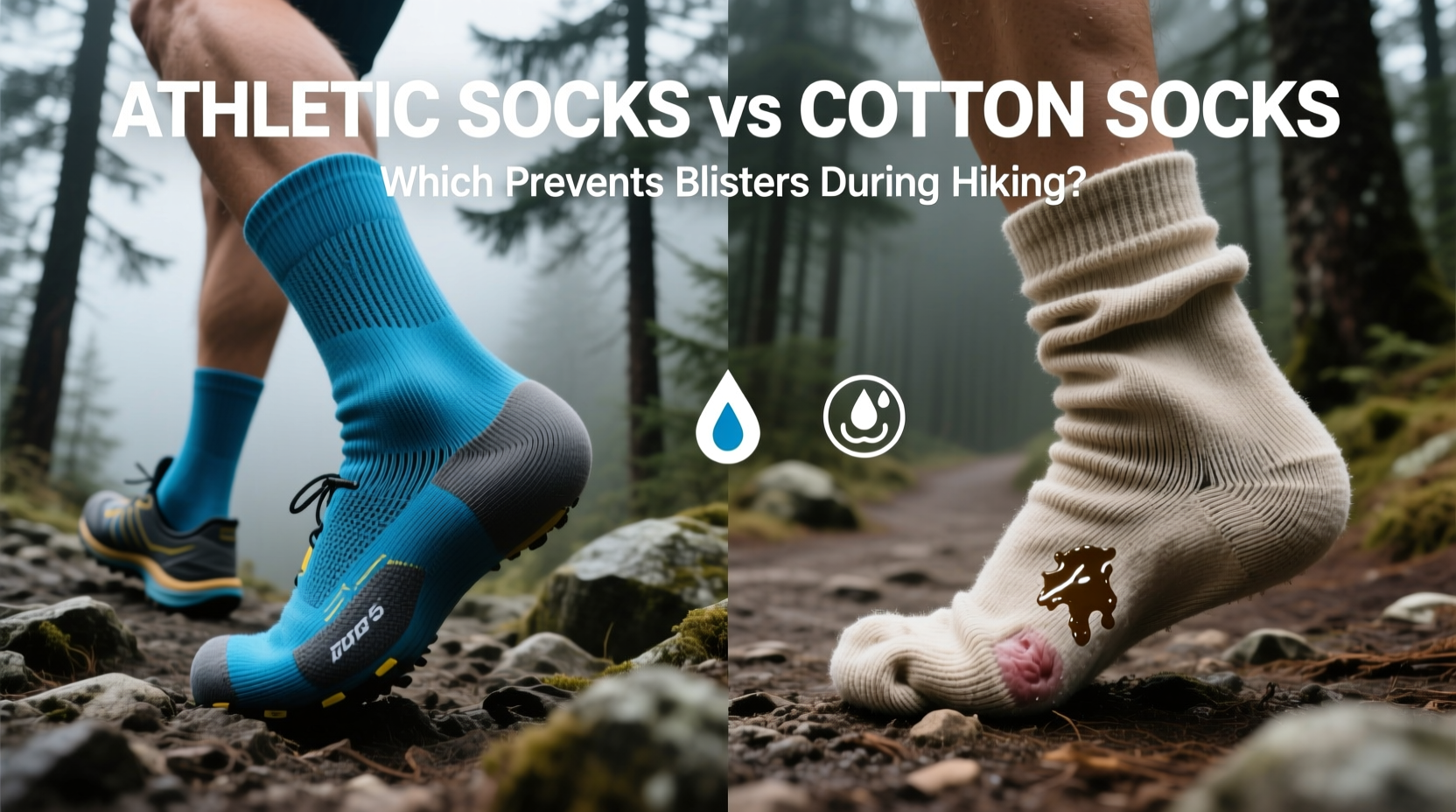
Blisters form when layers of skin separate due to repeated rubbing—commonly known as friction. On the trail, this friction occurs between your foot and sock, sock and boot, or even within layers of skin itself. Three primary factors contribute to blister development:
- Moisture: Wet skin softens and becomes more vulnerable to shearing forces.
- Heat: Elevated temperatures increase sweat production and accelerate skin breakdown.
- Friction: Continuous rubbing without proper cushioning leads to micro-tears beneath the surface.
When cotton socks absorb sweat, they retain moisture rather than wicking it away. This causes the fabric to swell, cling tightly to the foot, and create a damp environment that persists for hours. In contrast, modern athletic socks use hydrophobic fibers that pull moisture outward, allowing it to evaporate quickly. By keeping the foot drier, these socks significantly reduce the risk of maceration—a condition where skin weakens due to prolonged exposure to moisture.
Tip: Even if you start with dry feet, expect to produce up to half a pint of sweat per foot during an eight-hour hike. Choose socks that handle this load efficiently.Material Comparison: Cotton vs. Synthetic and Wool Blends
To understand why sock material matters, consider what happens inside your boot over several miles:
- Cotton absorbs up to 7% of its weight in water and dries slowly.
- Polyester wicks moisture effectively and retains only about 0.4% water by weight.
- Mechanical stretch in synthetic blends helps maintain snug fit without constriction.
- Merino wool naturally regulates temperature and resists odor-causing bacteria.
Cotton’s high absorbency works against it in dynamic environments. Once wet, it loses insulating properties and increases drag against the skin. Studies conducted by outdoor gear labs show that wet cotton generates up to 40% more friction than dry cotton, creating ideal conditions for hot spots and eventual blister formation.
Athletic socks, particularly those made with double-layer constructions or targeted padding zones, are engineered to minimize shear forces. For example, some models feature seamless toes to eliminate pressure points, while others incorporate mesh ventilation panels in high-sweat areas. These design elements work in concert with moisture-wicking fabrics to keep the foot stable, dry, and protected.
Performance Breakdown: Cotton vs. Athletic Socks
| Feature | Cotton Socks | Athletic Socks |
|---|---|---|
| Moisture Wicking | Poor – holds moisture, slow drying | Excellent – actively pulls sweat away |
| Friction Resistance | Low – increases when wet | High – maintains low friction even when damp |
| Durability | Moderate – degrades with repeated washing and abrasion | High – reinforced heels/toes resist wear |
| Thermal Regulation | Fair when dry; poor when wet | Consistent across conditions |
| Breathability | Moderate | High – engineered airflow zones |
| Blisters Prevention | Low effectiveness | High effectiveness with proper fit and layering |
“Cotton kills” isn’t just a slogan—it’s a safety principle in the backcountry. When your feet stay dry and friction is minimized, blister incidence drops dramatically. That’s why we recommend technical socks for any hike longer than a few miles. — Dr. Lena Torres, Wilderness Medicine Specialist
Real-World Case Study: Appalachian Trail Section Hike
In 2022, a group of six novice hikers attempted a 72-mile segment of the Appalachian Trail through Virginia. All participants wore similar hiking boots but were divided into two groups based on sock type. Group A used standard cotton crew socks purchased at a convenience store before departure. Group B brought mid-cushion merino-polyester blend hiking socks recommended by a local outfitter.
After three days of hiking over rocky, uneven terrain with frequent elevation changes, results were telling:
- Group A (cotton): Four out of six developed blisters—two required bandaging, one switched to trail runners early.
- Group B (athletic): No full-thickness blisters reported. One member noted mild heel tenderness but no skin breakage.
Interviews revealed consistent patterns: cotton sock users described soggy feet by midday, with socks sagging and bunching inside boots. Several admitted removing shoes multiple times to adjust fit. Meanwhile, Group B reported minimal foot fatigue and maintained consistent sock positioning throughout the journey.
This informal trial underscores a broader trend observed in long-distance hiking communities: cotton socks may suffice for casual walks, but they fail under sustained load and variable weather.
Choosing the Right Athletic Sock: What to Look For
Not all athletic socks are created equal. To maximize blister prevention, focus on the following features:
- Material Composition: Prioritize blends with at least 50% moisture-wicking fiber (e.g., polyester, nylon, or merino wool). Avoid socks labeled “cotton-rich” or “mostly cotton.”
- Fit and Compression: Socks should hug the foot snugly without restricting circulation. Look for arch support bands and elasticated ankle cuffs.
- Seamless Construction: Flat or invisible toe seams prevent chafing in high-contact zones.
- Cushioning Zones: Targeted padding in heel, ball, and toe areas absorbs impact and reduces localized pressure.
- Height and Coverage: Crew-length socks offer better protection against boot rub compared to ankle styles.
Layering Strategy: Double Socks and Liner Systems
An advanced technique used by ultralight backpackers and mountaineers involves wearing two pairs: a thin liner sock underneath a padded outer sock. The inner layer (often made of silk or fine synthetic) creates a low-friction interface with the skin, allowing the outer sock to move with the boot while the foot stays stable. This separation reduces shear force—the primary cause of blisters.
Brands like Smartwool, Darn Tough, and Feetures offer integrated systems designed for this purpose. Field tests show that double-layer setups can reduce blister occurrence by up to 60% compared to single cotton socks, especially on descents where feet slide forward repeatedly.
Step-by-Step Guide to Preventing Blisters on the Trail
Preventing blisters isn’t just about choosing the right sock—it’s a system involving preparation, monitoring, and response. Follow this sequence before and during your hike:
- Pre-Hike Preparation: Trim toenails short and smooth. Apply anti-chafe balm (e.g., BodyGlide) to known trouble spots like heels and little toes.
- Sock Selection: Wear moisture-wicking athletic socks appropriate for the season—lightweight for summer, insulated for cold weather.
- Boot Fit Check: Ensure boots are properly laced to secure heel lock. Use techniques like surgeon’s loop or parallel lacing to eliminate slippage.
- Early Detection: Stop every 60–90 minutes to inspect feet. Feel for warmth or tightness—an early sign of developing hot spots.
- Immediate Action: At the first sign of discomfort, apply moleskin or adhesive blister pads (e.g., Leukotape or Compeed).
- Mid-Hike Adjustments: Change socks if they become soaked. Carry a spare pair in a waterproof bag.
- Post-Hike Care: Wash and air-dry socks after use. Inspect feet for redness or swelling and treat minor abrasions promptly.
Frequently Asked Questions
Can I wear cotton socks if I keep my feet dry?
Theoretically, yes—but in practice, it’s nearly impossible. Even moderate exertion causes sweating inside enclosed footwear. Rain, river crossings, or dew-covered grass can also dampen socks unexpectedly. Cotton’s inability to dry quickly makes it unreliable in real hiking scenarios.
Are wool socks better than synthetic ones for blister prevention?
Merino wool offers excellent moisture management, natural odor resistance, and softness. It performs comparably to high-end synthetics in wicking and comfort. However, pure wool lacks durability under heavy abrasion. Most effective hiking socks combine merino with nylon or spandex for strength and elasticity.
Do expensive socks really make a difference?
Yes, but not solely because of brand name. Premium socks invest in precise knitting technology, anatomical shaping, and rigorous field testing. While budget-friendly options exist, consistently performing materials and construction justify higher prices for serious hikers.
Essential Checklist Before Your Next Hike
- ✅ Replace old or stretched-out socks—loss of elasticity compromises fit.
- ✅ Verify sock height matches boot collar to prevent abrasion.
- ✅ Pack at least one extra pair of athletic socks in a sealed bag.
- ✅ Test new sock-boot combinations on short outings before long trips.
- ✅ Bring blister treatment supplies: tape, pads, antiseptic wipes.
- ✅ Consider using gaiters in muddy or wet conditions to block debris entry.
Final Thoughts: Make the Switch for Safer, More Enjoyable Hikes
The choice between athletic socks and cotton socks isn’t merely about preference—it’s a functional decision that directly impacts your hiking experience. Cotton may feel soft off the shelf, but once exposed to sweat and friction, it becomes a liability. Athletic socks, built with performance in mind, actively protect your feet by managing moisture, reducing shear, and maintaining structural integrity.
For day hikers, weekend adventurers, and thru-hikers alike, investing in quality technical socks is one of the simplest yet most effective ways to prevent blisters. Combine them with well-fitted footwear, proactive foot care, and attentive trail habits, and you’ll significantly reduce downtime caused by preventable injuries.
💬 Your feet carry you through every adventure—give them the protection they deserve. Share your best blister-prevention tip in the comments below, or pass this guide along to a fellow hiker preparing for their next trail challenge!








