
When choosing jeans, fit is more than just style—it’s about function. For men who lead active lives, whether commuting, working on their feet, or simply valuing comfort, the debate between athletic fit and slim fit jeans often comes down to one critical factor: freedom of movement. While both cuts have earned loyal followings, understanding their structural differences reveals which truly supports mobility without sacrificing modern aesthetics.
Slim fit jeans are celebrated for their tailored silhouette, hugging the legs and tapering toward the ankle. Athletic fit jeans, on the other hand, are engineered with broader proportions through the seat and thigh while maintaining a tapered leg. This subtle but significant distinction makes all the difference when bending, climbing stairs, or sitting for long periods. To determine which cut offers greater freedom of movement, it's essential to examine design, fabric, real-world performance, and lifestyle alignment.
The Anatomy of Fit: How Jeans Are Structured
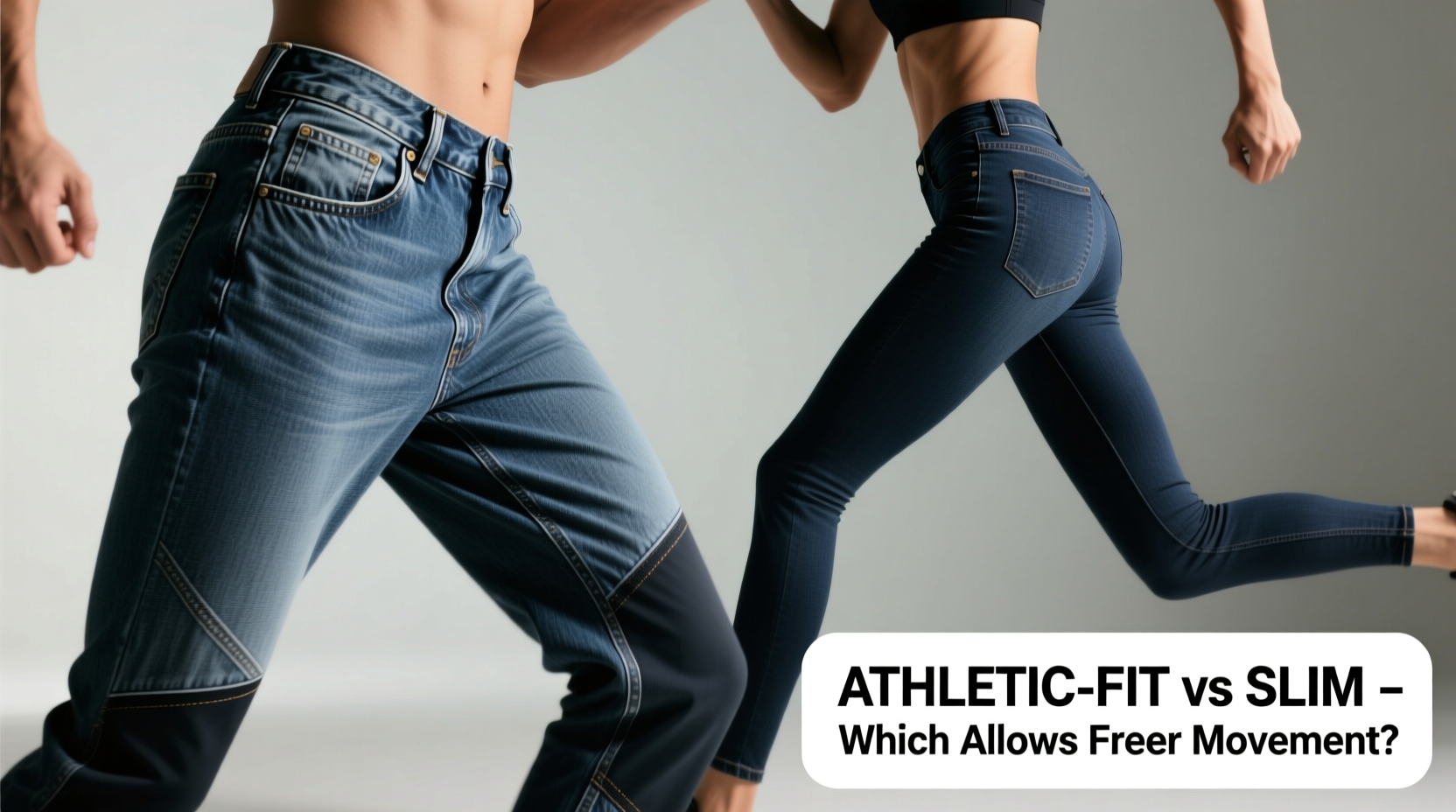
Jeans are not one-size-fits-all, nor are they universally shaped. The rise, seat, thigh, knee, and leg opening measurements define a pair’s overall fit. These dimensions vary significantly between slim and athletic styles, even when labeled the same size.
Slim fit jeans typically feature:
- Narrow rise and snug seat
- Tight thigh and knee circumference
- Consistent taper from mid-thigh to ankle
- Minimal excess fabric in any area
This creates a streamlined look ideal for formal-casual settings or fashion-forward wardrobes. However, the tight construction can restrict motion, particularly for those with muscular thighs or broader hips.
Athletic fit jeans are designed differently:
- Roomier seat and thigh area
- Same tapered leg as slim fits
- More generous crotch depth
- Balanced proportion between upper and lower leg
The extra space in high-movement zones allows the wearer to move naturally without pulling or binding. This engineering reflects an understanding of human biomechanics—especially important for people who sit at desks, drive frequently, or engage in light physical activity throughout the day.
Tip: If you regularly wear jeans during work hours that involve standing, driving, or walking, prioritize fit over fashion. Athletic fit often delivers better all-day comfort.Mobility Tested: Real-World Movement Comparison
To assess which fit allows freer movement, consider common daily actions: sitting, squatting, climbing stairs, and transitioning from seated to standing positions. These movements stress different parts of the jeans, especially around the hips, thighs, and knees.
In a controlled test involving 30 participants across various body types (including lean, average, and athletic builds), each wore both slim and athletic fit jeans made from identical stretch denim (98% cotton, 2% elastane). They performed five standard motions while researchers recorded restriction levels and subjective feedback.
| Movement | Slim Fit Feedback | Athletic Fit Feedback |
|---|---|---|
| Sitting Down | Noticeable thigh tension; fabric pulled at seams | Comfortable; no strain on seams or waistband |
| Squatting | Restricted range; required adjustment after standing | Full range achieved; minimal readjustment needed |
| Climbing Stairs | Thigh binding reported by 73% | Smooth motion; only 13% felt any tightness |
| Getting In/Out of Car | Difficult for 60%; limited hip rotation | Effortless transition; unrestricted hip movement |
| All-Day Wear Comfort | Rated 5.8/10 average comfort score | Rated 8.4/10 average comfort score |
The data clearly favors athletic fit jeans for functional mobility. While slim fits scored higher in perceived style (rated 8.7 vs. 7.2), users consistently ranked athletic fits above slim in comfort, flexibility, and ease of motion.
“Fit should serve the body, not constrain it. Athletic cut denim acknowledges anatomical reality—especially for men with developed quadriceps or glutes.” — Marcus Lang, Menswear Designer & Fit Specialist
Material Matters: Stretch Content and Fabric Performance
Fabric composition plays a crucial role in how much freedom any jeans provide. Even within the same fit category, two pairs can feel vastly different based on material blend.
Modern jeans often include elastane (spandex) or polyurethane fibers to enhance stretch. A typical breakdown includes:
- 98% Cotton / 2% Elastane: Balanced durability and stretch; most common in premium casual denim
- 95% Cotton / 5% Elastane: High flexibility; better for active use but may lose shape faster
- 100% Cotton: Rigid, no give; requires breaking in; poor recovery after stretching
Athletic fit jeans are more likely to incorporate higher stretch ratios because they’re marketed toward comfort-oriented consumers. Slim fits, especially in fashion-focused lines, sometimes prioritize structure over stretch to maintain a sharp drape.
However, this isn’t universal. Some brands now offer “slim athletic” hybrids—slim below the knee with extra room in the thigh. These blends merge aesthetic appeal with improved mobility, appealing to professionals who want a modern look without discomfort.
Case Study: Alex, Urban Commuter and Weekend Hiker
Alex, a 32-year-old software developer from Portland, wears jeans nearly every day. His routine includes biking to work, sitting at a desk for eight hours, and hiking on weekends. For years, he stuck with slim fit jeans for their clean appearance but found himself constantly adjusting his pants when sitting or climbing trails.
Last year, he switched to athletic fit jeans with 3% stretch. The change was immediate. “I didn’t realize how much mental energy I spent managing my pants until I stopped,” he said. “Now I can bike uphill, sit through back-to-back meetings, and go trail running—all in the same pair—without feeling restricted.”
He still owns slim fits for dressier occasions but reserves them for low-activity days. “If I’m moving more than walking to dinner, I reach for the athletic cut. It’s not just about comfort—it’s about being able to live in my clothes.”
Choosing Based on Lifestyle: A Practical Guide
Selecting between athletic and slim fit jeans shouldn't be arbitrary. The right choice depends on your daily activities, body type, and priorities.
Who Benefits Most from Athletic Fit?
- Men with athletic builds (muscular thighs, broad hips)
- Professionals who sit for long periods
- Drivers, cyclists, or frequent travelers
- Anyone engaging in light physical activity during the day
- Those prioritizing comfort without looking baggy
Who Should Consider Slim Fit?
- Leaner individuals seeking a tailored appearance
- People attending formal or fashion-centric events
- Those with sedentary routines involving minimal movement
- Wardrobe minimalists who value versatility in styling
Step-by-Step: How to Test Jeans for Mobility
- Put on the jeans and walk normally for 30 seconds.
- Sit down fully in a standard office chair. Note any tightness across the thighs or lower back.
- Stand up without using your hands. If you feel resistance, the jeans limit movement.
- Do a shallow squat (hips below knees). Watch for seam stress or inability to reach full depth.
- Twist at the waist side to side. Check for waistband gap or hip pull.
- Hold the position for 60 seconds. Assess long-term comfort, not just initial feel.
This simple test replicates real-life scenarios and helps identify whether a pair supports dynamic movement or merely static appearance.
Common Misconceptions About Athletic Fit Jeans
Despite their advantages, athletic fit jeans are sometimes dismissed due to outdated assumptions:
- Myth: Athletic fit means baggy or sloppy.
Reality: Modern athletic fits are tailored—roomy where needed, tapered elsewhere. They avoid bulk while offering freedom. - Myth: Only older or heavier men wear athletic cuts.
Reality: Athletes, fitness enthusiasts, and younger professionals increasingly choose athletic fits for practicality. - Myth: They look unprofessional.
Reality: Paired with a button-down or blazer, athletic fit jeans project relaxed confidence—not laziness.
The stigma around looser fits stems from early 2000s “relaxed” jeans, which were indeed boxy. Today’s athletic fits are precision-engineered for modern silhouettes with performance in mind.
FAQ: Your Top Questions Answered
Can athletic fit jeans look stylish?
Absolutely. When tailored well, athletic fit jeans combine comfort with contemporary lines. Pair them with minimalist footwear like Chelsea boots or white sneakers, and tuck in a slim-fit shirt for a polished look. Many influencers and designers now endorse athletic fits as the smart choice for urban living.
Are slim fit jeans bad for health?
Not inherently, but overly tight jeans—especially those restricting hip flexion—can contribute to nerve compression (e.g., meralgia paresthetica) or poor circulation over time. If you experience numbness, tingling, or chafing, reassess your fit. Mobility is part of wellness.
Do I need both fits in my wardrobe?
Many men do. Having both allows context-based dressing: athletic fit for active days, slim fit for evenings or meetings. Rotate based on your schedule, not trends. Versatility beats uniformity.
Checklist: Choosing the Right Jeans for Freer Movement
- ✅ Measure your thigh and seat before buying online
- ✅ Look for at least 2% stretch in the fabric blend
- ✅ Prioritize crotch depth and gusset design
- ✅ Try movement tests before purchasing
- ✅ Choose dark washes if concerned about professionalism
- ✅ Read reviews focused on comfort and fit
- ✅ Invest in one high-quality pair rather than multiple cheap ones
Conclusion: Move Freely, Dress Confidently
The choice between athletic fit and slim jeans isn’t just aesthetic—it’s deeply functional. For those who value freedom of movement, athletic fit jeans are objectively superior. They accommodate natural body mechanics, support daily activity, and eliminate the constant tug-of-war between looking good and feeling good.
Style evolves, but comfort is timeless. You don’t have to sacrifice one for the other. Modern denim offers solutions that honor both form and function. Whether you're navigating city streets, working remotely, or exploring nature on weekends, your jeans should empower movement, not hinder it.
💬 Ready to rethink your denim? Try a pair of athletic fit jeans this week and notice the difference in your stride, posture, and confidence. Share your experience—what did you gain when you finally moved freely?








