When it comes to workout attire, comfort and functionality are just as important as style. Two popular choices—athletic crop tops and bralettes—are often worn interchangeably in fitness settings, but they serve different purposes. While both may look similar at a glance, their structural design, support level, and suitability for physical activity vary significantly. Understanding these differences is crucial, especially if you're engaging in moderate to high-intensity exercise where breast support directly impacts comfort, posture, and even long-term tissue health.
For many women, choosing between an athletic crop top and a bralette isn’t just about aesthetics—it’s about performance, confidence, and minimizing discomfort. This guide breaks down the functional distinctions, examines real-world use cases, and helps you determine which option truly supports your movement.
Understanding the Structural Differences
The first step in evaluating support is understanding how each garment is constructed. Structure dictates function, and in activewear, that means everything from fabric tension to seam placement plays a role in stability.
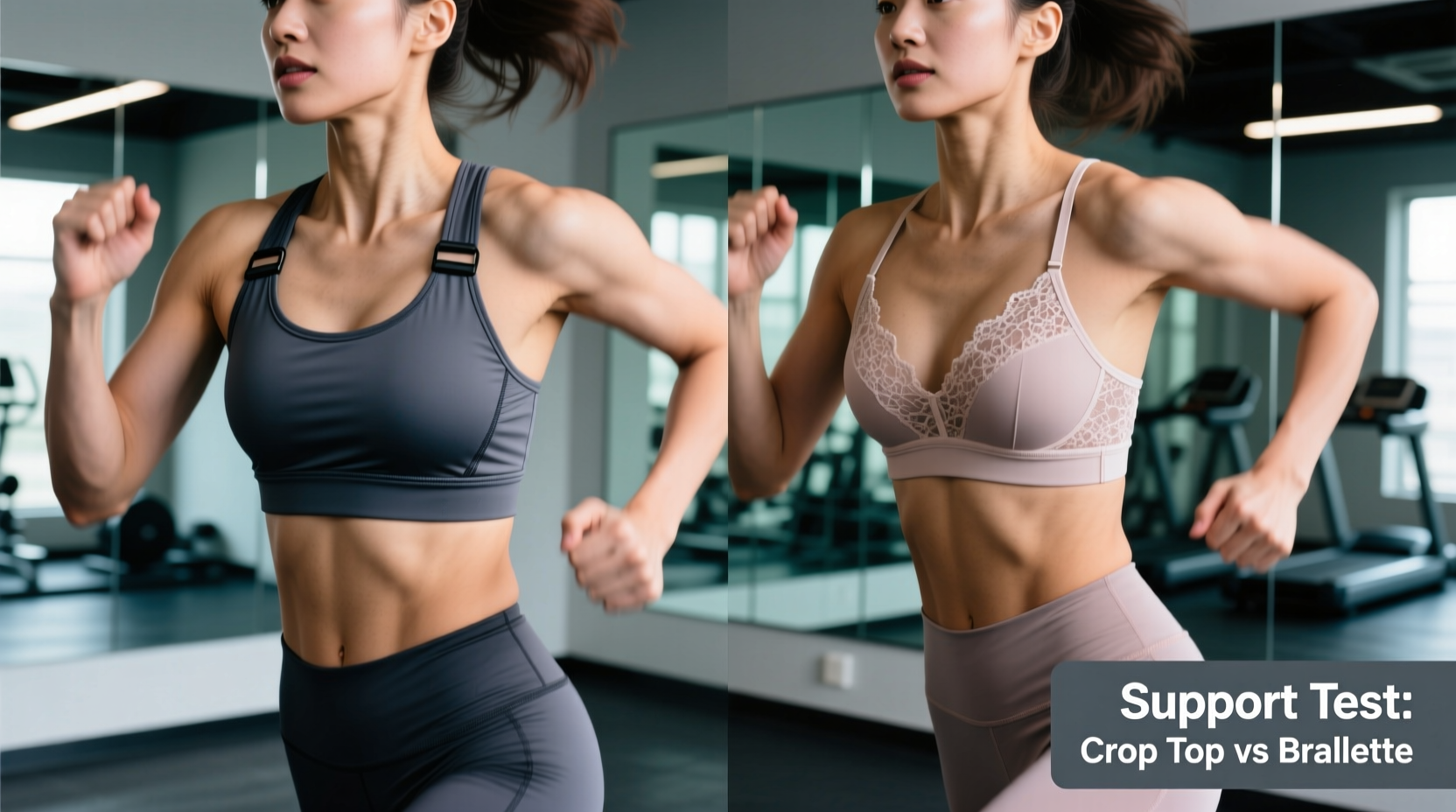
Athletic crop tops are engineered with performance in mind. They typically feature:
- Compression or encapsulation support systems
- Built-in moisture-wicking, stretchable technical fabrics (like nylon-spandex blends)
- Reinforced seams and wide, non-slip straps
- Enclosed elastic bands under the bust or around the ribcage for added hold
- Some models include removable soft cups or structured padding
In contrast, bralettes are generally derived from lingerie design. Even when marketed as “sporty,” most retain fashion-forward elements such as:
- Lightweight, lace-trimmed or sheer fabrics
- Narrow, delicate straps that can dig or slip
- No underwire or significant under-bust support
- Minimal to no compression
- Open back designs or adjustable ties that compromise stability during motion
These construction differences mean that while some high-performance bralettes blur the line, the majority lack the biomechanical support needed for dynamic movement.
Tip: Always check the label for terms like \"high-impact,\" \"compression,\" or \"racerback\"—these indicate better support features regardless of whether the item is labeled a crop top or bralette.Support Levels by Activity Type
Not all workouts demand the same level of support. Your choice should align with the intensity and type of movement involved. Here's how athletic crop tops and bralettes perform across common exercise categories:
| Workout Type | Athletic Crop Top | Bralette |
|---|---|---|
| Running, HIIT, Jump Rope | ✅ Excellent support; reduces bounce and strain | ❌ Minimal control; may cause discomfort or tissue stress |
| Weight Training, Pilates | ✅ Moderate to high support; stable during compound movements | 🟡 Light support; acceptable for low-motion lifts if properly fitted |
| Yoga, Stretching, Barre | 🟡 Functional but potentially over-supportive for gentle flows | ✅ Suitable due to flexibility and soft feel |
| Dance Fitness, Zumba | ✅ Ideal for multidirectional motion | ❌ Likely to shift or fail mid-routine |
As shown, athletic crop tops consistently outperform bralettes in high-motion environments. The key factor is dynamic stability—how well the garment maintains position and minimizes vertical and lateral movement during jumps, squats, and sprints.
“During high-impact activities, unsupported breast movement can exceed 8 inches in multiple directions. Without proper containment, this increases risk of ligament strain and chronic discomfort.” — Dr. Lena Torres, Sports Physiotherapist & Women’s Health Specialist
Real-World Example: A Week in the Life of Two Athletes
To illustrate the practical implications, consider two women with similar routines but different gear choices.
Sophia, 29, uses a seamless athletic crop top rated for high-impact training. Her weekly schedule includes spinning classes, strength circuits, and weekend trail runs. She reports consistent comfort, no chafing, and confidence in her range of motion. After six months of daily use, the top retains its shape and elasticity thanks to durable fabric and reinforced stitching.
Jamie, 26, prefers lace-trimmed bralettes for their aesthetic appeal and soft texture. She wears one to a vinyasa yoga class and feels fine—but tries the same piece during a bootcamp session. Within minutes, the straps slip, the band rides up, and she experiences noticeable bounce. By the end of the week, she develops mild shoulder irritation and decides to stop using bralettes for anything beyond stretching.
This scenario reflects a common pattern: bralettes work well in controlled, low-impact settings but fall short when demands increase. Athletic crop tops, designed specifically for durability and motion management, adapt seamlessly across intensities.
How to Choose Based on Fit and Body Type
Support isn’t one-size-fits-all. Your body shape, cup size, and personal preferences influence what works best.
For smaller busts (A–B cups): Bralettes may offer adequate light support for low-intensity workouts. However, if you're active in jumping or twisting motions, even smaller chests benefit from the secure hold of a cropped sports bra design.
For larger busts (C+ cups): Compression and encapsulation become critical. Most bralettes lack the infrastructure to manage weight distribution, leading to strain on shoulders and back. Athletic crop tops with wide bands, racerback straps, and multi-directional support deliver far superior comfort and protection.
Finding the right fit also matters. A poorly sized crop top—even a high-support model—can roll, pinch, or restrict breathing. Conversely, a well-fitted bralette might feel secure at rest but fail under kinetic stress.
Tip: To test support, jump in place for 30 seconds in front of a mirror. If the garment shifts excessively or you feel uncontained movement, it’s not suitable for intense workouts.Expert-Backed Checklist: Is Your Top Workout-Ready?
Before lacing up, ask yourself the following questions to assess whether your upper layer meets performance standards:
- Does it have wide, non-slip shoulder straps?
- Is there a firm, elasticized band beneath the bust or around the ribs?
- Does the fabric resist stretching out after repeated wear?
- Can you move freely without feeling constrained—or overly loose?
- Is it made from sweat-wicking, breathable material?
- Have you tested it during actual movement, not just at rest?
- Does it maintain coverage during overhead reaches and forward folds?
If you answered “no” to more than two of these, reconsider your choice—especially for cardio or strength training.
When a Bralette Can Work (And When It Can't)
Bralettes aren’t inherently bad—they’re just misused. There’s a time and place for their lightweight design.
Suitable scenarios:
- Restorative yoga or meditation
- Walking or light cycling
- Post-workout lounging
- Low-resistance resistance band exercises
Unsuitable scenarios:
- Running or jogging
- Plyometrics or box jumps
- CrossFit or circuit training
- Dance-based cardio
Some brands now produce “performance bralettes” with upgraded materials and structural reinforcements. These hybrid models may bridge the gap, but always verify through independent reviews or lab testing data before assuming they match true athletic support.
Frequently Asked Questions
Can I wear a bralette to the gym?
You can, but only if your workout is low-impact and the bralette fits snugly without shifting. For any activity involving jumping, lifting, or rapid movement, opt for an athletic crop top with proven support.
Do athletic crop tops cause back sweat?
Some models cover more surface area, but modern versions use advanced moisture-wicking fabrics that pull sweat away from the skin. Look for mesh ventilation panels and breathable linings to stay cool and dry.
Are bralettes bad for breast health?
Not inherently—but wearing them during high-impact exercise without adequate support may contribute to Cooper’s ligament strain over time. This can accelerate sagging and lead to discomfort. Supportive activewear helps preserve tissue integrity.
Final Verdict: Prioritize Function Over Fashion
While bralettes win on style and softness, athletic crop tops are the clear winner when it comes to workout support. Their engineering addresses the biomechanical realities of movement, offering compression, stability, and durability that fashion-first designs simply can’t match.
That doesn’t mean you need to give up on aesthetics. Many athletic crop tops now blend sleek silhouettes with performance fabrics, giving you the best of both worlds. Brands like Lululemon, Girlfriend Collective, and Fabletics offer styles that look like elevated bralettes but perform like serious sports bras.
The bottom line? Let your activity dictate your attire. Reserve delicate bralettes for calm, static practices. When you're pushing your limits, trust a purpose-built athletic crop top to keep you supported, comfortable, and focused on your goals.
💬 What’s your go-to workout top? Share your favorite supportive styles or lessons learned from ill-fitting gear in the comments below—your experience could help others make smarter choices!








