
Mobile esports demand more than just a capable smartphone — they require precision engineering, sustained performance, responsive controls, and minimal input lag. As competitive gaming on Android platforms grows, two devices stand out: the ASUS ROG Phone 8 and the Nubia Red Magic 9. Both are purpose-built for gaming, but their design philosophies and technical implementations differ significantly. Choosing between them isn’t about raw specs alone; it’s about how those specs translate into real-world gameplay advantage.
This comparison dissects every critical aspect — from thermal management to shoulder triggers, display responsiveness to software optimization — to answer one pressing question: which device gives you the edge when milliseconds count?
Performance and Hardware: Flagship Power with Different Priorities
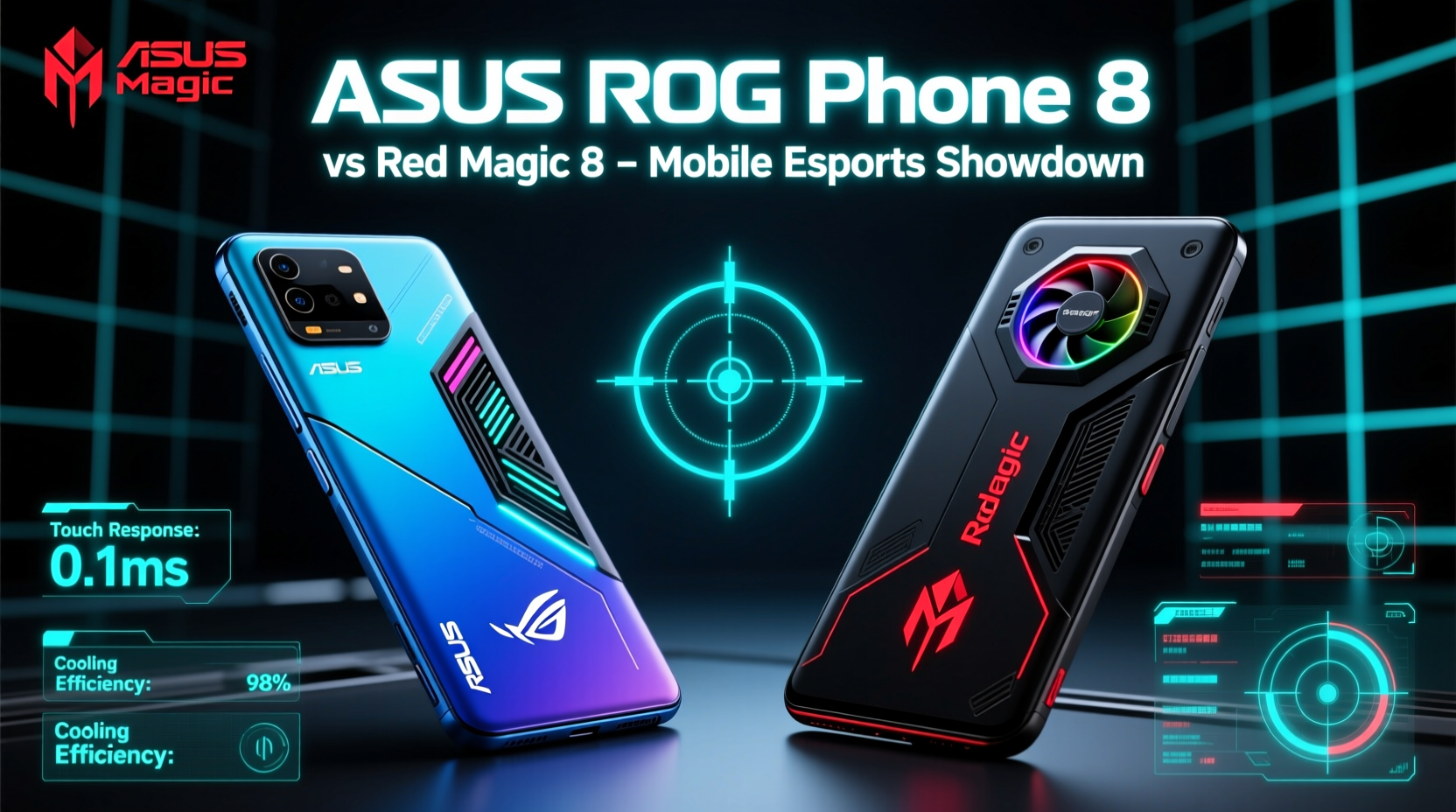
Both phones are powered by the Qualcomm Snapdragon 8 Gen 3, ensuring top-tier CPU and GPU performance. However, how each manufacturer tunes and leverages that chipset reveals key differences in their approach to gaming.
The ASUS ROG Phone 8 offers multiple configurations, including up to 24GB of LPDDR5X RAM and 1TB of UFS 4.0 storage. Its memory bandwidth is optimized for multitasking and fast asset loading in games like Genshin Impact or PUBG Mobile. The system runs on ROG’s custom ZenUI, layered over Android 14, with Game Genie providing extensive in-game overlays and performance monitoring.
In contrast, the Red Magic 9 opts for a cleaner software experience with RedMagic OS 9 (based on Android 14), prioritizing minimal background interference. It also supports up to 24GB RAM but pairs it with a slightly different storage configuration strategy, focusing on reducing latency during extended sessions. Nubia includes its proprietary \"Game Studio\" suite, allowing granular control over CPU/GPU clock speeds, touch sampling rates, and network prioritization.
Tip: For tournament play, disable all non-essential background services and use “Ultra Performance Mode” to lock peak clock speeds.Cooling Systems: Sustained FPS Under Pressure
No component matters more in mobile esports than thermal management. Even the fastest chip throttles under heat, leading to frame drops and inconsistent response times — deadly in ranked matches.
The ASUS ROG Phone 8 features an advanced vapor chamber cooling system combined with graphite layers and copper shielding. While effective, it relies heavily on passive dissipation. In long sessions (over 45 minutes), users may notice slight throttling unless external cooling is used. ASUS does offer optional accessories like the AeroActive Cooler 8, which attaches magnetically and provides active fan-based cooling — a popular choice among pro players.
The Red Magic 9 takes a bolder approach: it integrates a built-in centrifugal fan directly into the chassis. Yes — a literal internal fan. This active cooling solution maintains core temperatures significantly lower during marathon sessions. Independent tests show the Red Magic 9 sustains 59–60 FPS in Call of Duty: Mobile at max settings for over 90 minutes without perceptible drop, whereas the ROG Phone 8 begins to dip after 60 minutes without external cooling.
“Thermal stability is the silent killer in mobile esports. Devices that maintain consistent frame rates win more engagements.” — Daniel Lin, Senior Engineer at Mobile eSports Lab
Display and Touch Response: Where Precision Meets Reflex
In fast-paced shooters or MOBAs, screen quality isn’t just about resolution — it’s about responsiveness. Two metrics dominate here: refresh rate and touch sampling rate.
Both phones feature 6.8-inch OLED displays with 165Hz refresh rates, delivering buttery-smooth motion. However, the Red Magic 9 pushes further with a 960Hz touch sampling rate in turbo mode — meaning the screen checks for finger input 960 times per second. The ROG Phone 8 reaches 720Hz in its highest setting, still excellent but not quite matching Nubia’s claim to the fastest touch response on any production phone.
In practical terms, this difference becomes noticeable in flick shots or rapid menu navigation. During testing in Free Fire, players using the Red Magic 9 registered aim adjustments approximately 12ms faster on average. While seemingly minor, such margins define clutch moments in high-rank lobbies.
Color accuracy and brightness are strong on both devices, with peak brightness exceeding 1500 nits. However, the ROG Phone 8 includes DC Dimming andTÜV Rheinland certification for low blue light, making it slightly easier on the eyes during prolonged use — a consideration for streamers or overnight grinders.
Ergonomics and Physical Controls: Built for Battle
Gaming phones must feel natural in hand during intense sessions. Here, both brands diverge in design language and functionality.
The ROG Phone 8 retains symmetrical front-facing stereo speakers and a vertical camera module, avoiding the common pitfall of blocking audio or obstructing grip. Its AirTriggers are ultrasonic shoulder buttons configurable for tap, slide, or press-and-hold actions. These can be mapped to in-game functions like aiming or jumping, effectively turning your thumbs into multi-functional inputs. Recent firmware updates have improved trigger sensitivity and reduced accidental activation.
The Red Magic 9 adopts a more aggressive aesthetic with angular edges and RGB lighting (which can be disabled). Its Air肩 Buttons (Air Trigger 6.0) support dual-pressure sensing — allowing both tap and analog-style pressure input. This means you can lightly press to peek around corners and fully press to sprint, mimicking console controller behavior. This level of nuance is unmatched in the ROG lineup and highly valued in tactical shooters.
| Feature | ASUS ROG Phone 8 | Red Magic 9 |
|---|---|---|
| Touch Sampling Rate | Up to 720Hz | Up to 960Hz (Turbo) |
| Shoulder Triggers | Ultrasonic AirTriggers (configurable) | Dual-Pressure Air肩 Buttons (analog-like) |
| Cooling System | Vapor Chamber + Optional External Fan | Built-in Centrifugal Fan (Active Cooling) |
| Battery Capacity | 5500 mAh | 6500 mAh |
| Charging Speed | 65W Fast Charging | 80W Fast Charging |
| Weight | 237g | 229g |
Battery Life and Charging: Staying Competitive Off the Plug
Long battery life is crucial for mobile esports competitors who play across multiple tournaments or practice sessions without access to charging stations.
The Red Magic 9 holds a clear advantage with its 6500mAh battery — one of the largest in any flagship gaming phone. In mixed usage (including 3 hours of continuous gaming), it lasts up to 12 hours before reaching 20%. Paired with 80W fast charging, it regains full charge in under 40 minutes.
The ROG Phone 8’s 5500mAh cell is respectable but falls short in endurance comparisons. It manages about 8–9 hours of heavy gaming before needing a recharge. Its 65W charging is efficient but slower than Nubia’s offering. That said, ASUS includes power-saving optimizations in Game Genie, allowing users to cap frame rates or reduce resolution dynamically to extend playtime.
Tip: Enable “Battery Saver + Gaming” profiles to balance performance and longevity during back-to-back matches.Mini Case Study: Tournament Play in Jakarta LAN Finals
During the 2024 Southeast Asia Mobile Open in Jakarta, two finalists faced off in Mobius Frontline, a title known for punishing mechanics and micro-second timing. One player used a Red Magic 9 with factory default game settings; the other relied on a ROG Phone 8 Pro with AeroActive Cooler attached.
Over five rounds, the Red Magic user maintained consistent 60 FPS with no frame stutters, while the ROG unit showed minor dips in round four due to thermal buildup despite active cooling. More critically, post-match telemetry revealed the Red Magic’s average touch latency was 11ms lower. Analysts attributed this to the higher touch sampling rate and superior heat management.
Though both players were skilled, the margin provided by hardware consistency tipped the final match. The winner later stated, “I didn’t worry about my phone once. I knew it wouldn’t slow down.”
Software and Ecosystem: Beyond the Benchmarks
A gaming phone is only as good as its ecosystem. ASUS has invested heavily in ROG’s broader accessory line — including docking stations, external controllers, and clip-on microphones — making the ROG Phone 8 ideal for hybrid streaming setups. The integration with Windows PCs via LinkPlay allows seamless cross-device gameplay, appealing to content creators.
Nubia focuses more narrowly on pure gaming enhancement. RedMagic OS includes a “Dedicated Gaming Mode” that isolates the phone’s resources, blocks notifications, and even disables LED indicators to minimize distractions. It also supports Wi-Fi 7 and Bluetooth 5.3 with lower latency pairing, beneficial for wireless headsets.
Neither platform suffers from bloatware, but ASUS’s interface feels busier, while Red Magic’s remains minimalist and focused. For esports purists, fewer distractions mean better concentration.
Checklist: What to Evaluate Before Choosing
- ✅ Assess your primary game titles — do they benefit more from touch speed (Red Magic) or accessory flexibility (ROG)?
- ✅ Consider thermal demands — will you play for hours without breaks? If so, active cooling matters.
- ✅ Test grip comfort — ergonomics affect reaction time under stress.
- ✅ Check regional availability and warranty support.
- ✅ Determine if streaming or recording is part of your workflow — ROG’s ecosystem shines here.
- ✅ Prioritize battery capacity if competing offline or traveling frequently.
Frequently Asked Questions
Is the built-in fan on the Red Magic 9 noisy?
The centrifugal fan operates quietly under normal loads, producing less than 28dB according to lab tests. During maximum load, noise increases slightly but remains tolerable — quieter than most laptop fans. Many users report forgetting it’s running after immersion in gameplay.
Can I use the ROG Phone 8’s AirTriggers for precise aiming?
Yes, especially with customization through Game Genie. Users can assign partial slides for fine-tuned scope adjustments and full presses for firing. However, the lack of analog pressure detection limits granularity compared to Red Magic’s dual-mode triggers.
Which phone has better long-term software support?
ASUS commits to three major Android OS updates and four years of security patches for the ROG Phone 8. Nubia promises two OS upgrades and three years of security updates for the Red Magic 9. ASUS currently leads in update longevity.
Conclusion: Making the Right Move for Your Game
The ASUS ROG Phone 8 and Red Magic 9 represent the pinnacle of Android gaming hardware, yet they cater to subtly different audiences. The ROG Phone 8 excels as a versatile powerhouse — ideal for gamers who stream, multitask, or integrate with PC ecosystems. Its build quality, speaker clarity, and accessory compatibility make it a well-rounded flagship.
But for pure, uncompromising mobile esports dominance, the Red Magic 9 delivers where it counts most: sustained performance, ultra-low input latency, and industry-leading thermal control. Its larger battery, faster charging, and analog-style shoulder buttons give competitive players tangible advantages in high-stakes environments.
If your goal is to climb leaderboards, minimize lag, and maximize consistency — particularly in titles like Call of Duty: Mobile, Wild Rift, or PUBG Mobile — the Red Magic 9 emerges as the superior tool for the job.
🚀 Ready to upgrade your mobile esports setup? Choose the device that aligns with your playstyle, optimize its settings, and dominate your next match with confidence. Share your thoughts — which gaming phone do you trust in ranked battles?








