
For hikers relying on GPS devices, smartphones, or satellite messengers, maintaining battery life is critical. Solar-powered chargers have become a popular solution for extending device runtime in the backcountry. But what happens when cloud cover lingers, tree canopy blocks the sun, or you're trekking through shaded valleys? The central question remains: are solar powered chargers reliable for hiking trips with limited sunlight?
The short answer is nuanced—yes, they can be useful, but not as a standalone power source under low-light conditions. Their reliability depends on several factors: panel efficiency, weather patterns, usage habits, and backup planning. Understanding these variables helps backpackers make informed decisions about integrating solar into their gear strategy.
How Solar Chargers Work in Real-World Hiking Conditions
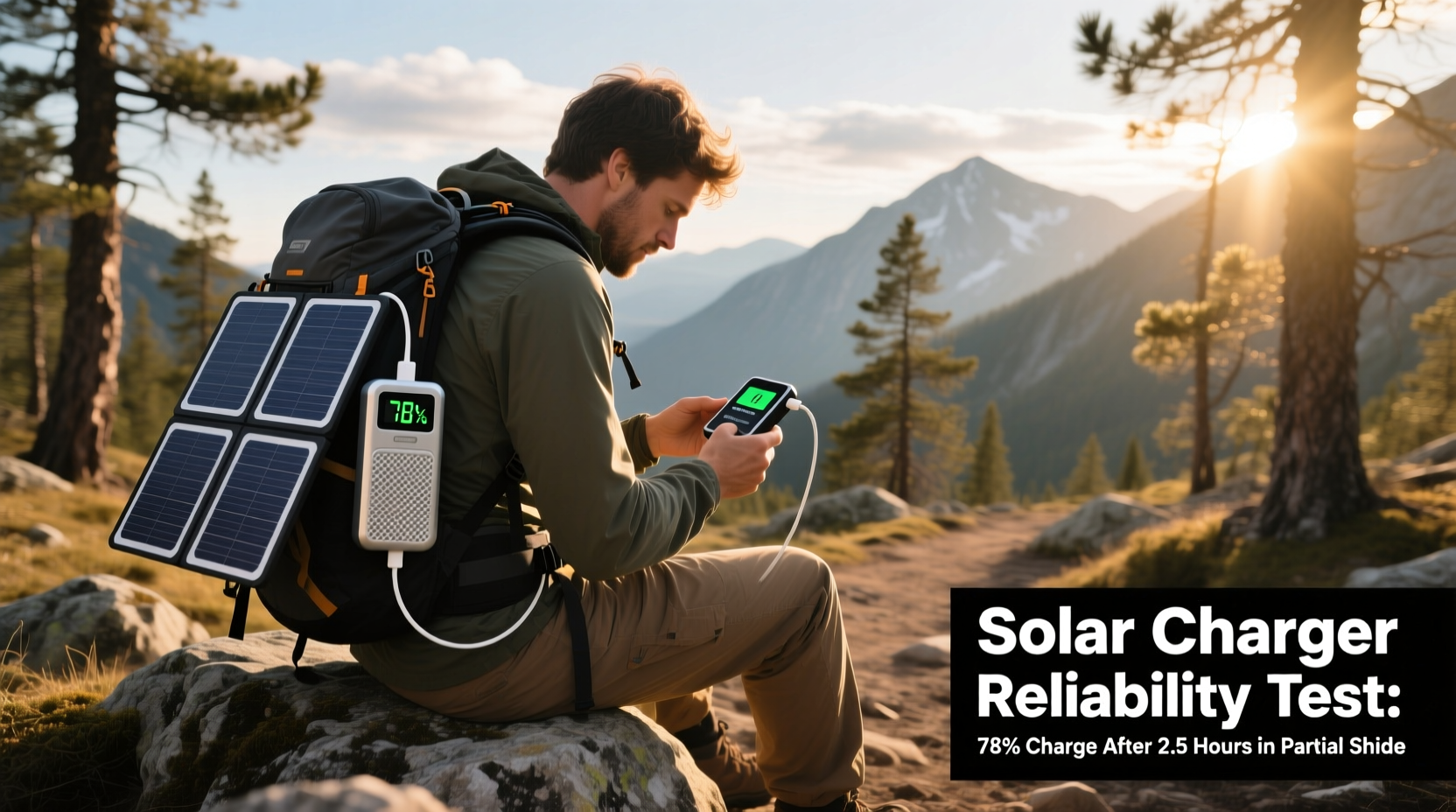
Solar chargers convert sunlight into electricity using photovoltaic (PV) cells. Most portable models range from 5 to 20 watts and connect directly to USB-powered devices. However, their output is highly dependent on direct exposure to sunlight. In ideal conditions—clear skies, midday sun, and optimal panel angle—a 15-watt charger might deliver close to its rated capacity. But hiking rarely offers such ideal scenarios.
In forested areas, alpine gorges, or during overcast days, light intensity drops significantly. Diffuse light still generates some power, but at a fraction of peak output. A panel producing 12 volts in full sun may only generate 3–5 volts under heavy cloud cover. This means charging times increase dramatically, sometimes to the point of being impractical.
Additionally, solar panels must remain stationary during charging to maintain sun alignment. Unlike plugging into a wall outlet, you can’t simply set up a solar charger and walk away while hiking. Many users drape panels over backpacks, but movement, shifting angles, and intermittent shade reduce efficiency by up to 60%, according to field tests conducted by Backpacker Magazine.
“Solar is a supplement, not a substitute. It’s best used to top off batteries between hikes, not expected to fully recharge devices on demand.” — Ryan Jordan, founder of BackpackingLight.com
Factors That Impact Solar Charger Reliability
Several environmental and technical elements influence whether a solar charger will perform adequately on a hike with limited sunlight:
- Weather and Cloud Cover: Overcast conditions reduce solar irradiance by 70–90%. Even thin clouds can cut output substantially.
- Time of Day: Early morning and late afternoon sunlight hits panels at an oblique angle, reducing efficiency.
- Shading from Terrain: Deep valleys, dense forests, and canyon walls block direct sunlight for much of the day.
- Panel Quality: Monocrystalline panels are more efficient in low light than polycrystalline or amorphous types.
- Battery Buffer: Chargers with built-in batteries can store energy collected slowly throughout the day for later use.
- Device Power Draw: Charging a smartphone uses less energy than powering a satellite communicator or headlamp continuously.
Do’s and Don’ts of Using Solar Chargers on Low-Light Hikes
| Do | Don't |
|---|---|
| Use monocrystalline panels—they perform better in diffuse light | Rely solely on solar without backup power sources |
| Position the panel flat and facing south (in the Northern Hemisphere) during breaks | Assume your backpack-mounted panel is charging efficiently while moving |
| Pair your solar panel with a power bank to store collected energy | Leave the panel exposed to rain without checking water resistance ratings |
| Wipe the surface clean regularly—dust and debris reduce efficiency | Expect fast charging in anything less than partial sun |
| Monitor weather forecasts to anticipate solar viability | Overload the system with multiple high-drain devices simultaneously |
A Realistic Field Scenario: Hiking the Enchantments, Washington
Consider a three-day backpacking trip through The Enchantments, a high-alpine region known for unpredictable weather. A hiker brings a 10-watt solar charger with a 10,000mAh built-in battery, intending to keep their phone and Garmin InReach charged.
Day one begins sunny. The hiker sets the panel on a rock during lunch and gains 40% charge on the internal battery. By evening, they’ve topped off their phone. On day two, however, thick clouds roll in. Despite having the panel outside the tent during a long break, it collects only enough energy to add 15% to the internal battery. No meaningful device charging occurs.
On day three, the hiker reaches a ridge with brief sunbreaks. They position the panel carefully and manage to charge the InReach just enough to send a check-in message. Without the stored energy from day one and the buffer battery, this would not have been possible.
This scenario illustrates that solar can contribute meaningfully—but inconsistently—under suboptimal conditions. Success hinges on preparation, patience, and supplemental power storage.
Step-by-Step Guide to Maximizing Solar Efficiency on Shade-Heavy Trails
- Pre-Trip: Select the Right Equipment
Select a solar charger with at least 10 watts of output and a built-in 5,000mAh+ power bank. Prioritize monocrystalline panels for better low-light response. - Before You Leave: Fully Charge All Components
Begin your hike with both your devices and the solar unit’s internal battery at 100%. This creates a reserve for cloudy days. - Daily Routine: Use Breaks Strategically
During lunch or rest stops, lay the panel flat on a sun-exposed surface. Angle it toward the sun if adjustable. Avoid placing it on heat-absorbing surfaces like dark rocks. - Monitor Output and Adjust
Check the charge indicator every hour. If no progress is made after 90 minutes, reposition or conclude that conditions are too poor. - Evening Practice: Transfer Stored Energy
At camp, use the accumulated power in the solar unit’s battery to charge devices. Never leave devices connected during the day unless necessary. - Contingency Planning: Know Your Limits
If forecasts predict prolonged overcast, plan to conserve device usage or carry extra battery packs instead of relying on solar gain.
Alternatives and Complements to Solar Charging
While solar has its place, it shouldn’t be the only method of power generation on extended or uncertain-weather trips. Consider combining it with other solutions:
- High-Capacity Power Banks: Lightweight lithium-ion batteries (e.g., Anker, Goal Zero) offer predictable, instant power. A 20,000mAh unit can recharge a smartphone 4–6 times.
- Hand-Crank Generators: Useful in emergencies, though labor-intensive. Most produce only 10–20 minutes of talk time per 2 minutes of cranking.
- Fuel Cell or Disposable Batteries: Emerging options like hydrogen fuel cells (e.g., Brunton Hydrogen Reactor) provide silent, weather-independent power but come at higher cost and weight.
- Hybrid Systems: Some hikers use small solar panels to trickle-charge a large power bank during the day, then draw from the bank at night—this hybrid approach maximizes flexibility.
For trips lasting more than four days or in regions with frequent cloud cover (Pacific Northwest, Scottish Highlands, Patagonia), prioritizing stored energy over solar collection is often more practical.
Expert Insight: What Industry Leaders Say
“We design our solar products with the understanding that most users won’t get perfect sun. That’s why integration with power banks isn’t optional—it’s essential. The future of portable solar is buffering, not brute force.” — Sarah Chen, Product Engineer at Goal Zero
This reflects a broader shift in outdoor tech: solar is increasingly viewed as a component of a larger energy ecosystem rather than a primary source. Manufacturers now focus on improving low-light efficiency and energy retention, acknowledging that reliability in marginal conditions defines real-world usability.
Checklist: Preparing Your Solar Setup for Low-Sunlight Hikes
- ✅ Choose a solar charger with a built-in battery (minimum 5,000mAh)
- ✅ Verify water and dust resistance (IP67 rating preferred)
- ✅ Test the system at home under cloudy indoor lighting to gauge baseline performance
- ✅ Pack a secondary charging method (power bank or spare batteries)
- ✅ Learn how to read your panel’s charge indicators and USB output specs
- ✅ Bring a lightweight carabiner or paracord to secure the panel during stationary charging
- ✅ Download offline maps and enable airplane mode to reduce device power consumption
Frequently Asked Questions
Can solar chargers work on cloudy days?
Yes, but at greatly reduced efficiency. Most panels generate 10–25% of their rated output under overcast skies. Performance improves slightly with bright overcast (diffuse light) versus dark storm clouds. Panels with built-in batteries can accumulate this trickle charge over hours for later use.
Should I rely on a solar charger for emergency communication?
Not exclusively. While solar can help maintain charge on a satellite messenger, it should never be the only power source for safety-critical devices. Always carry a charged backup battery for emergency gear.
What size solar panel do I need for a week-long hike?
For a seven-day trip with moderate sunlight, a 10–15 watt panel paired with a 10,000mAh power bank is sufficient for phones and GPS units. In low-light environments, increase the power bank capacity rather than panel size, since sunlight availability—not wattage—is the limiting factor.
Conclusion: Smart Use Beats Blind Reliance
Solar-powered chargers can enhance self-sufficiency on hiking trips, but their reliability diminishes sharply when sunlight is limited. They function best as part of a layered power strategy—topping off reserves during breaks, extending battery life, and providing psychological reassurance rather than guaranteed energy production.
Success comes not from the technology alone, but from how it’s used. A well-prepared hiker doesn’t ask whether solar works in the shade, but how to extract every usable joule from fleeting sunbeams. By pairing quality equipment with disciplined habits and realistic expectations, solar can play a valuable supporting role—even when the sky stays gray.
🚀 Ready to optimize your backcountry power setup? Review your current gear, run a weekend test in overcast conditions, and share your findings with the hiking community. Knowledge shared is safety strengthened.








