
For hikers relying on GPS devices, headlamps, satellite messengers, and smartphones in remote terrain, keeping electronics charged is not a convenience—it’s a safety necessity. As battery-powered gear becomes more essential, many outdoor enthusiasts turn to solar chargers as a sustainable, off-grid solution. But are they truly dependable, or do they fall short when the weather turns or sunlight fades? The answer isn’t black and white. Solar chargers can be reliable under the right conditions, but their performance hinges on design, environment, and user expectations. Understanding their strengths and limitations is key to making an informed decision before heading into the backcountry.
How Solar Chargers Work: The Basics
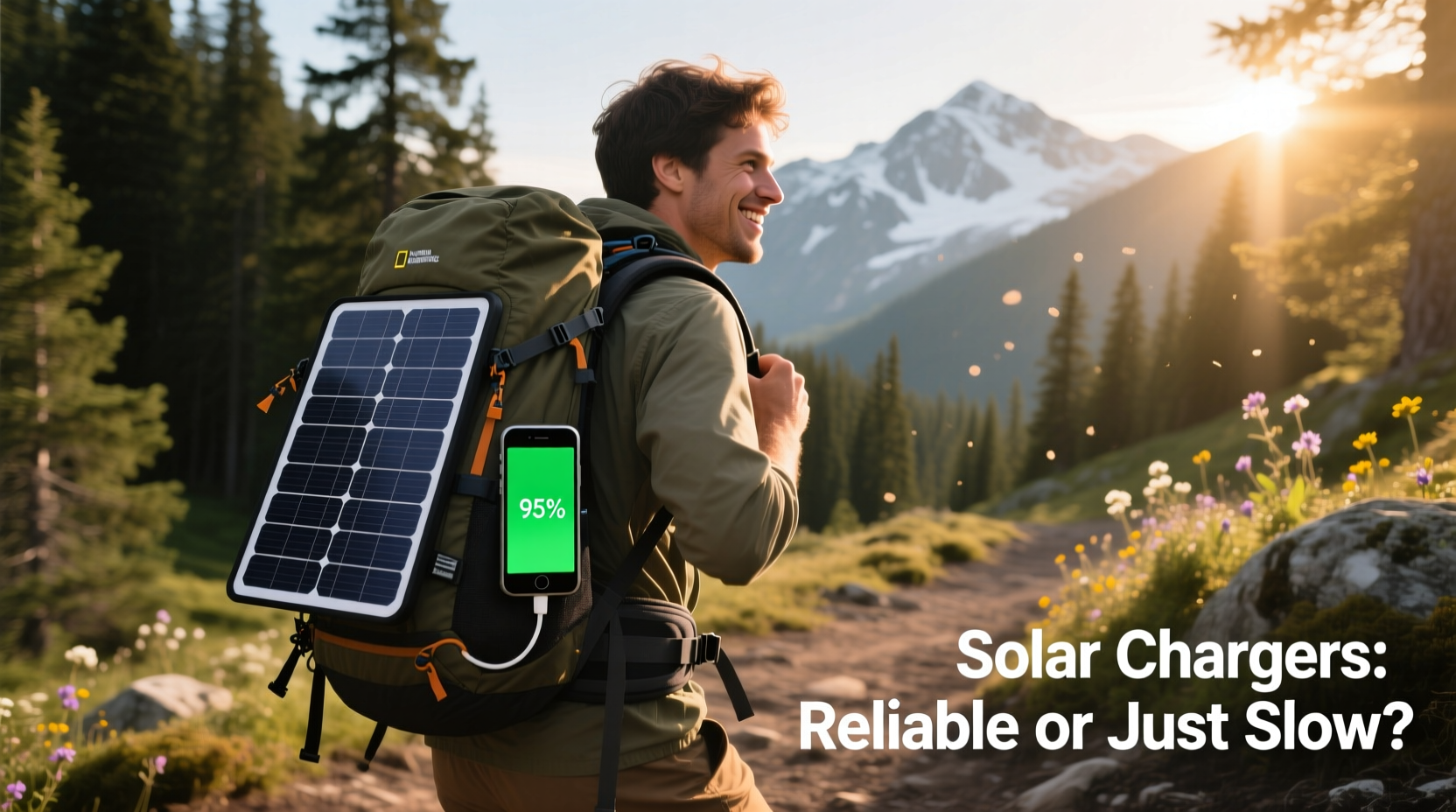
Solar chargers convert sunlight into electrical energy using photovoltaic (PV) cells, typically made from monocrystalline or polycrystalline silicon. Monocrystalline panels are more efficient and perform better in low-light conditions, making them ideal for hiking applications. Once sunlight hits the panel, direct current (DC) electricity is generated and regulated by a built-in charge controller to safely charge USB-compatible devices or external power banks.
Most portable solar chargers designed for hiking are foldable, lightweight, and come with integrated USB ports. They don’t store energy themselves—instead, they act as a power source that feeds into a separate battery pack. This distinction is crucial: a solar charger doesn’t replace a power bank; it supplements it.
“Solar charging works best as part of a hybrid system—pairing panels with high-capacity batteries ensures you’re never left powerless.” — Dr. Lena Torres, Renewable Energy Researcher at MountainTech Labs
The Reality of Reliability: When Solar Works and When It Doesn’t
Reliability depends on three primary factors: sunlight intensity, duration of exposure, and environmental conditions. On a clear day at midday near the equator, a 10-watt solar panel might deliver close to its rated output. But shift that scenario to early morning in a dense forest during late autumn, and output may drop to less than 1 watt—barely enough to offset device drain.
Cloud cover, tree canopy, dust accumulation, and improper panel angle all reduce efficiency. Even slight shadows across a single cell can significantly cut power production due to how PV cells are wired in series. Additionally, solar panels lose efficiency as temperatures rise—a paradoxical issue since strong sun often means heat buildup.
Tip: Position your solar panel at a 30–45 degree angle toward the sun and reposition every hour or two for optimal absorption.Performance Comparison: Ideal vs. Real-World Conditions
| Condition | Sunlight Intensity | Estimated Output (10W Panel) | Charging Feasibility |
|---|---|---|---|
| Clear sky, midday, open terrain | 100% (peak) | 8–10W | Effective for phones, slow for power banks |
| Light clouds, midday | 60–70% | 5–7W | Marginal; suitable for trickle charging |
| Dappled shade (forest trail) | 30–40% | 2–4W | Limited; may only offset device usage |
| Heavy overcast, rainy day | 10–15% | 0.5–1.5W | Ineffective; unlikely to charge |
| Indirect light (backpack surface) | 15–20% | 1–2W | Poor; minimal gain over time |
The data shows that while solar chargers function under suboptimal conditions, their ability to deliver meaningful power diminishes rapidly without direct, unobstructed sunlight.
Common Misconceptions About Solar Charging on Trails
Many hikers assume that simply attaching a solar panel to their backpack guarantees continuous charging throughout the day. This belief leads to disappointment. In reality, movement through shaded areas, changing sun angles, and physical obstructions make consistent charging nearly impossible. Another misconception is that higher wattage automatically means faster charging. While a 20W panel produces more power than a 5W one, size and weight increase accordingly, and gains are lost if the panel isn’t properly oriented.
Additionally, not all devices charge efficiently from variable solar input. Smartphones and GPS units expect stable voltage, and fluctuating power can cause devices to cycle on and off, wasting energy rather than storing it.
Mini Case Study: A Weeklong Trek Through the Sierra Nevada
Alex Rivera, an experienced long-distance hiker, carried a 12W foldable solar charger during a seven-day trek along the John Muir Trail. His goal was to keep his phone and Garmin inReach charged without carrying extra lithium batteries.
Days 1–3 were sunny with minimal cloud cover. He laid the panel on a rock during lunch breaks and propped it against his tent each afternoon. Over those days, he gained about 60–70% phone charge daily and fully replenished his 10,000mAh power bank by evening.
On Day 4, heavy clouds rolled in. Despite leaving the panel out for six hours, total energy harvested was less than 15%. By Day 5, rain forced him to pack the charger away entirely. He relied solely on stored power from earlier gains.
Verdict: The solar charger extended his off-grid capability but wasn’t sufficient alone. Without prior charging days, he would have run out of power by Day 5.
Best Practices for Maximizing Solar Efficiency While Hiking
To get the most from a solar charger, treat it as a supplement—not a primary power source. Combine smart habits with realistic expectations.
- Use a high-capacity power bank: Charge the battery pack during peak sun hours, then use it to charge devices at night or in shade.
- Choose monocrystalline panels: They offer 20–25% better efficiency than polycrystalline, especially in diffuse light.
- Carry a backup option: Bring one or two lithium disposables (e.g., Anker PowerCore Mini) for emergencies.
- Maximize exposure time: Set up the panel during breaks, camp setup, or while filtering water—don’t rely on passive charging while walking.
- Keep surfaces clean: Wipe dust and debris regularly with a microfiber cloth to maintain transparency.
- Avoid overheating: If the panel feels hot, provide airflow or shade part of it—efficiency drops above 77°F (25°C).
Checklist: Preparing Your Solar Setup for the Trail
- ✅ Test your solar panel and power bank together before departure
- ✅ Confirm USB output compatibility with your devices
- ✅ Pack a lightweight carabiner or paracord for securing the panel
- ✅ Include a protective case or dry bag for wet conditions
- ✅ Calculate daily power needs (e.g., phone: 10Wh, GPS: 5Wh, headlamp: 2Wh)
- ✅ Plan recharging windows based on expected daylight and terrain
When Solar Chargers Fall Short: Limitations You Can’t Ignore
Solar chargers struggle in high-latitude regions, during shoulder seasons, and in heavily forested or mountainous areas where sunlight is intermittent. Winter hikes present particular challenges—shorter days, lower sun angles, and frequent snow cover severely limit viable charging time.
Weight-to-output ratio is another concern. A 15W rigid panel may weigh 1.5 pounds—equivalent to three AA batteries—but delivers far less usable energy unless used extensively. For fast-moving ultralight backpackers, this trade-off rarely makes sense.
Battery chemistry also affects outcomes. Lithium-ion power banks degrade over time, losing 20% capacity after 500 cycles. Pairing an aging battery with an inefficient solar panel results in diminishing returns.
Do’s and Don’ts of Hiking with Solar Chargers
| Action | Recommended? | Reason |
|---|---|---|
| Attach panel to backpack while hiking | Don’t | Shading, movement, and poor angle reduce efficiency to near zero |
| Lay panel flat on ground during lunch | Do | Stable position with full sun exposure maximizes input |
| Charge phone directly from solar | Don’t | Unstable voltage causes interruptions; charge a power bank instead |
| Use reflective surfaces to boost light | Do (cautiously) | Mirrors or foil can increase intensity but risk overheating cells |
| Leave panel exposed overnight | Don’t | Dew, frost, or rain can damage electronics over time |
Frequently Asked Questions
Can I charge my phone directly from a solar panel while hiking?
Technically yes, but it’s inefficient. Movement, shading, and inconsistent sunlight cause frequent disconnects. The phone may consume more power waking up between attempts than it gains. It’s far more effective to charge a power bank during rest stops and use that to charge your phone later.
How long does it take to charge a power bank with a solar panel?
It depends on conditions. Under ideal sunlight, a 10W panel can charge a 10,000mAh power bank in 6–8 hours. In partial shade or cloudy weather, it could take 12–24 hours or fail entirely. Always assume half the rated output in real-world hiking scenarios.
Are foldable solar panels durable enough for backpacking?
High-quality models with reinforced corners, waterproof coatings, and rugged stitching hold up well. Cheaper versions may crack at hinge points or delaminate after repeated folding. Look for brands with field-tested durability like Goal Zero, BioLite, or BigBlue, and inspect seams regularly.
Conclusion: Strategic Use Beats Blind Dependence
Solar chargers aren’t universally reliable, nor are they inherently flawed. Their value lies in strategic deployment. For multi-day hikes in sunny, open environments, they can meaningfully extend your power supply and reduce reliance on disposable batteries. However, expecting them to perform consistently in all conditions sets you up for failure.
The most effective approach combines a quality solar panel with a robust power bank, disciplined charging routines, and contingency planning. Treat solar as a tool in your kit—not the foundation of it. When used wisely, it enhances self-sufficiency. When overestimated, it creates false confidence.
🚀 Ready to optimize your off-grid power strategy? Test your solar setup on a weekend trip, track actual charging times, and refine your system before your next big adventure. Share your experience in the comments to help others find balance between innovation and reliability.








