As outdoor enthusiasts increasingly rely on smartphones, GPS devices, headlamps, and cameras during backcountry adventures, the need for dependable off-grid charging has never been greater. Solar chargers have surged in popularity as a lightweight, eco-friendly solution. But how well do they perform when it counts—on a rainy mountain pass or deep in a forest with limited sunlight? The answer isn’t straightforward. While solar chargers can be effective tools in the right conditions, their reliability hinges on preparation, expectations, and gear selection.
This article examines the practical realities of using solar chargers while camping, evaluates their strengths and weaknesses, and offers guidance on whether they should serve as your primary power source—or remain safely tucked in your pack as an emergency backup.
How Solar Chargers Work: A Quick Overview
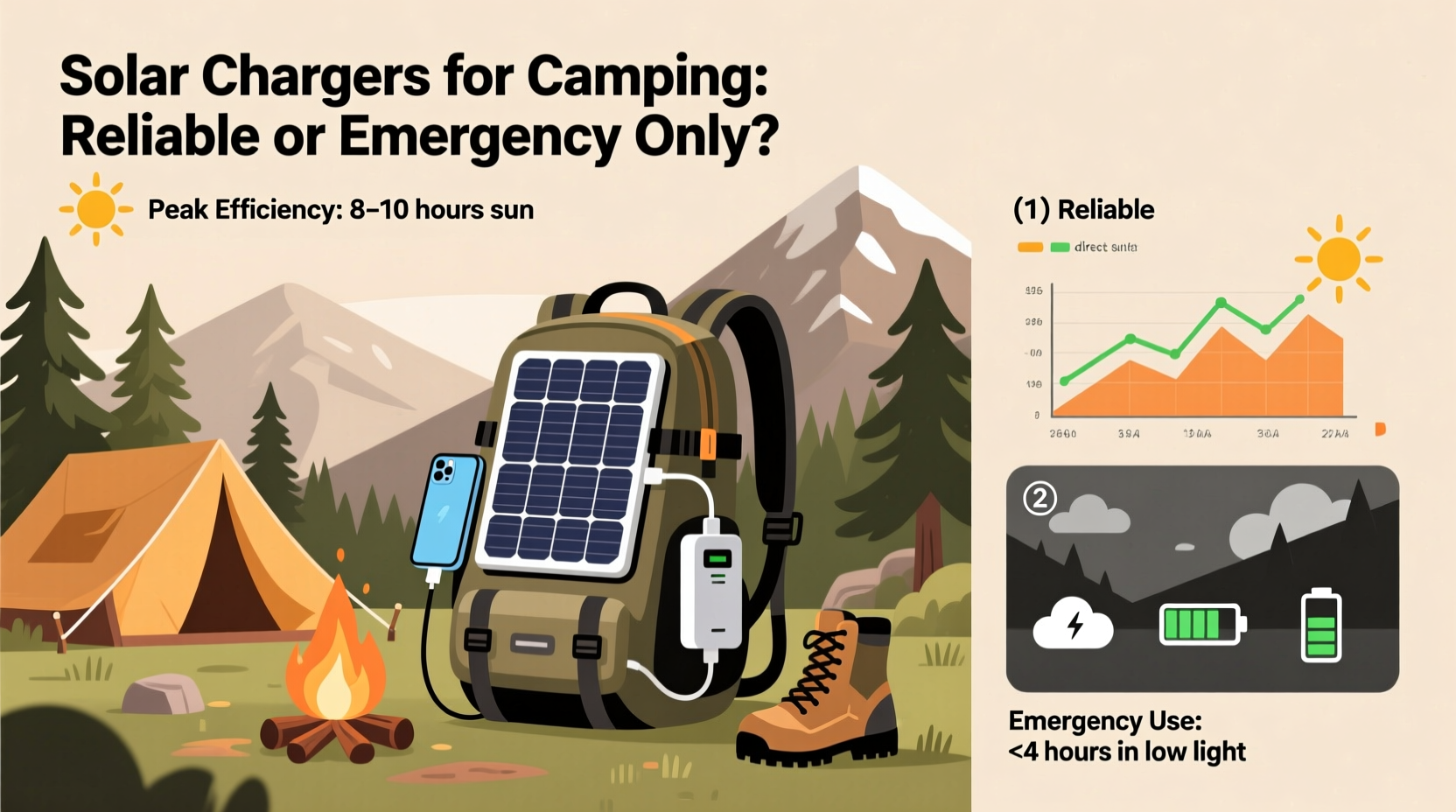
Solar chargers convert sunlight into electrical energy using photovoltaic (PV) cells. Most portable models designed for camping are foldable, lightweight panels that connect directly to USB-powered devices or charge an external battery pack. They typically range from 5 to 20 watts in output, with higher wattage translating to faster charging times under ideal conditions.
However, real-world performance rarely matches lab-tested peak output. Factors such as cloud cover, angle to the sun, temperature, shading, and time of day all influence efficiency. For instance, a 10-watt panel may only deliver 3–4 watts on a partly cloudy afternoon. This variability is central to the debate over reliability.
“Solar is fantastic for extending device life in the backcountry, but it’s not a magic plug-in replacement. You must plan around the sun, not your schedule.” — Dr. Lena Patel, Renewable Energy Researcher at Mountain View Institute
When Solar Chargers Shine: Ideal Conditions for Success
Solar chargers are most effective in environments with consistent, unobstructed sunlight. Think high-altitude alpine zones, desert trails, or open coastal areas where shadows from trees or terrain are minimal. In these settings, a well-positioned 15-watt panel can fully charge a smartphone in 2–3 hours and replenish a power bank by midday.
Backpackers on multi-day treks through sunny regions often report success integrating solar into their routine. By hanging panels on backpacks during hikes or laying them flat on tent vestibules in the morning, they accumulate enough power to keep essential devices running.
Tip: Angle your solar panel toward the sun every few hours to maximize exposure. Even a 30-degree shift can increase efficiency by up to 40%.Additionally, newer models feature built-in batteries, USB-C PD (Power Delivery), and intelligent voltage regulation, improving compatibility with modern electronics. These advancements make today’s solar chargers more user-friendly than ever before.
The Limitations: Why Solar Isn’t Always Reliable
Despite improvements, solar chargers face inherent challenges in unpredictable outdoor environments. Cloudy weather, rain, dense forest canopy, and short winter days drastically reduce or eliminate power generation. In Pacific Northwest rainforests or during early spring trips in the Rockies, continuous overcast skies can render solar panels useless for two or three days straight.
Another common issue is inconsistent use. Many campers assume their panel will charge devices while packed on a hike, but movement, changing angles, and intermittent shade prevent steady energy capture. Studies show that backpack-mounted panels generate only 15–30% of their rated output during motion.
Battery storage capacity also plays a critical role. Panels without integrated batteries require direct sunlight to charge devices—meaning you can’t charge at night or indoors. Relying solely on solar without a buffer battery increases vulnerability if conditions turn unfavorable.
Case Study: A Failed Attempt in the Smoky Mountains
Daniel, an experienced hiker planning a five-day solo trek in Great Smoky Mountains National Park, decided to go “fully solar” to reduce pack weight. He brought a 10-watt foldable panel and no backup battery. His goal was to keep his GPS and phone charged for navigation and emergency communication.
The first day started clear, and he managed to charge his phone to 70%. But by day two, thick fog rolled in, followed by light rain. Over the next 60 hours, his panel generated less than 5% total charge. By day four, both devices were dead. Though Daniel completed the hike safely using trail markers, he admitted the lack of reliable power created unnecessary stress.
His takeaway: “I underestimated how quickly weather could shut down solar production. Next time, I’ll bring a lithium power bank as my main source and use solar only to top up.”
Best Practices for Maximizing Reliability
To get the most out of a solar charger—and determine whether it can be trusted beyond emergencies—follow these proven strategies:
- Pair solar with a power bank: Use the panel to recharge a high-capacity battery pack during the day, then charge devices from the bank at night. This decouples energy collection from usage.
- Choose the right wattage: For one or two devices, a 10–15W panel is sufficient. For multiple gadgets or faster charging, consider 20W+ models.
- Optimize placement: Set up panels on rocks, logs, or tent lines facing south (in the Northern Hemisphere) at a 30–45 degree angle when possible.
- Avoid shaded areas: Even partial shading on one cell can cut output across the entire panel due to series wiring.
- Monitor weather forecasts: Plan charging windows around expected sunlight. If storms are predicted, conserve device battery early.
Solar Charger Comparison: Features vs. Real-World Performance
| Model | Wattage | Integrated Battery? | Weight | Best Use Case | Limitation |
|---|---|---|---|---|---|
| Anker PowerPort Solar 15 | 15W | No | 1.2 lbs | Sunny climates, moderate device load | Requires external battery; poor low-light performance |
| Bear Grylls Survival Solar Charger | 5W | No | 0.4 lbs | Ultralight emergency use | Too slow for modern smartphones |
| Goal Zero Nomad 20 Plus | 20W | No | 2.0 lbs | Reliable output, rugged build | Heavy; bulky for small packs |
| X-Dragon Solar Charger with 20000mAh Battery | 10W | Yes | 1.5 lbs | All-in-one convenience | Battery degrades over time; slower recharge |
| Nekteck 21W Dual Panel | 21W | No | 1.3 lbs | Faster charging, dual USB ports | Less durable hinge design |
Emergency Backup vs. Primary Power: Making the Call
So, should you depend on a solar charger as your main power source while camping?
In most scenarios, solar is best treated as a supplemental or emergency tool—not a primary power strategy. It excels at extending battery life, topping up devices, and providing peace of mind when outlets are miles away. But because its output depends on variables outside your control, relying on it exclusively introduces risk.
For weekend car campers or those near established trails, solar can play a bigger role. But for remote backpackers, thru-hikers, or adventurers in variable climates, a hybrid approach delivers the greatest reliability: start with a fully charged lithium power bank (e.g., 10,000–20,000mAh), then use solar to recharge the bank during daylight hours.
This method balances weight, safety, and functionality. It ensures you have immediate power when needed and leverages solar to stretch capacity over longer trips without gambling on the weather.
Checklist: Using Solar Chargers Effectively on Camping Trips
- ✅ Start with fully charged devices and a backup battery
- ✅ Choose a solar panel with at least 10W output
- ✅ Position the panel in direct sunlight every 3–4 hours
- ✅ Avoid charging devices directly—charge a power bank instead
- ✅ Pack a lightweight cord to hang or stake the panel
- ✅ Monitor device battery levels daily
- ✅ Have a non-solar backup plan (extra battery or shortened usage)
Frequently Asked Questions
Can solar chargers work on cloudy days?
Yes, but with significantly reduced efficiency—typically 10% to 30% of their rated output. Modern panels perform better in diffuse light than older models, but don’t expect fast charging under overcast skies.
Do solar chargers damage phones?
High-quality solar chargers with regulated USB outputs are safe for smartphones. However, cheap, unregulated models may deliver unstable voltage, risking overheating or circuit damage. Stick to reputable brands with built-in protection circuits.
How long do portable solar panels last?
Most durable models last 5–10 years with proper care. Efficiency gradually declines over time—typically 10–20% after 5 years. Folding panels are prone to wear at hinge points, so handle them gently and avoid creasing the cells.
Final Verdict: A Valuable Tool, Not a Guarantee
Solar chargers are not inherently unreliable—they’re conditionally reliable. Their performance aligns closely with environmental factors rather than technical flaws. In bright, open environments with disciplined use, they can sustainably power essential electronics. But in shaded, wet, or unpredictable conditions, they falter.
Treating them as emergency backups doesn’t diminish their value—it reflects smart risk management. Like a fire starter, first-aid kit, or map and compass, a solar charger is part of a layered preparedness strategy. It shouldn’t replace core resources but enhance them.
The most reliable off-grid power system combines foresight, redundancy, and adaptability. Begin with stored energy (charged batteries), augment it with solar when possible, and manage consumption wisely. That way, whether you're summiting a ridge at dawn or waiting out a storm in your tent, your devices stay alive—and so does your confidence.
🚀 Ready to upgrade your off-grid power strategy? Test your solar setup on a backyard overnighter before your next big trip. Share your experience, tips, or questions in the comments below—let’s build smarter, more resilient ways to stay powered in the wild.








