For weekend campers who value comfort, convenience, and a touch of modern living in the wilderness, the question isn't just whether you can bring electricity—it's whether you should. Portable power stations have surged in popularity over the past few years, offering clean, quiet energy without the noise and fumes of gas generators. But for weekend trips where total power needs rarely exceed 1000 watts, is investing in one truly worthwhile? The answer depends on your habits, gear, and expectations.
Unlike extended off-grid expeditions or RV travelers with high-energy demands, weekend campers typically pack light and return home within 48–72 hours. This makes efficiency, portability, and cost-effectiveness critical factors. A sub-1000-watt setup covers everything from phone charging to running a small fridge, CPAP machine, or even a coffee maker—without the bulk or complexity of larger systems. Let’s break down when these compact power stations deliver real value—and when they might be overkill.
Understanding Power Needs: What Can 1000 Watts Actually Run?
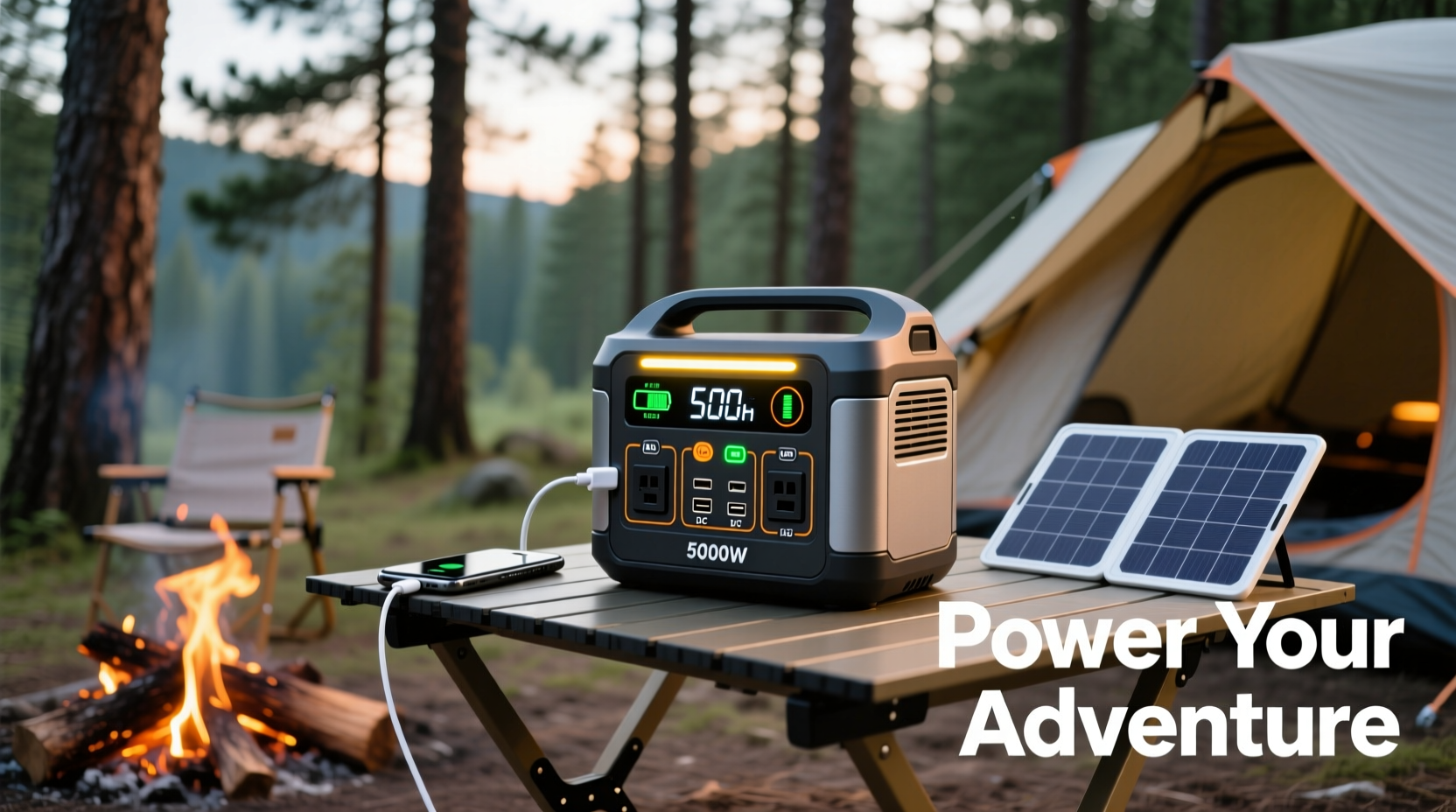
Before evaluating worth, it helps to understand what 1000 watts means in practical terms. While peak surge capacity may briefly exceed this limit, sustained output usually stays below 1000W for most portable models in this category. Here’s a realistic breakdown of common camping appliances and their typical wattage:
| Device | Average Wattage | Runtime on 500Wh Station (approx.) |
|---|---|---|
| Smartphone (full charge) | 10W | 50 charges |
| Laptop (charging) | 60W | 8+ hours |
| LED Camping Lights (set) | 15W | 30+ hours |
| Mini Fridge (12V/cooling) | 50–80W (cycling) | 6–10 hours |
| Electric Kettle (1L) | 800–1000W | ~15 minutes per boil |
| CPAP Machine (with humidifier) | 50–80W | 6–10 nights (depending on battery size) |
| Blender or Coffee Maker | 600–900W | 5–10 uses |
As shown, many essential devices fall well below the 1000-watt threshold. However, high-draw appliances like electric kettles or griddles require careful timing due to rapid battery depletion. Most mid-tier power stations in this range offer between 300Wh and 800Wh of capacity, meaning they can support moderate use across multiple days if managed wisely.
Tip: Always check both continuous and surge wattage ratings. Some devices (like blenders) draw more at startup than during operation.When a Portable Power Station Makes Sense
Not every camper needs one—but for certain profiles, a portable station becomes indispensable. Consider these scenarios where under-1000W units shine:
- Families with young children: Powering bottle warmers, night lights, or tablets for entertainment during bad weather.
- Campers using medical devices: CPAP users rely on consistent power; a 500Wh unit can last several nights with proper settings.
- Glamping setups: If you're bringing string lights, a mini-fridge, or a projector for movie nights, a silent power source beats a noisy generator.
- Digital creators: Photographers, vloggers, or remote workers often need to recharge cameras, drones, laptops, and mics while off-grid.
- Cold-weather camping: Running heated blankets or insulated sleeping pads occasionally requires reliable AC or DC output.
In each case, the value isn’t just about convenience—it’s about enabling experiences that would otherwise be impossible or impractical. As outdoor enthusiast and gear reviewer Marcus Lin stated:
“Modern camping isn’t about suffering—it’s about smart adaptation. A good power station gives you control over your environment without sacrificing the spirit of adventure.” — Marcus Lin, Outdoor Tech Analyst
Cost vs. Benefit: Is It Worth the Investment?
Pricing for quality portable power stations under 1000W ranges from $300 to $900, depending on capacity, brand, and features like solar charging compatibility or app integration. To assess worth, consider frequency of use, alternative solutions, and long-term savings.
Compare that to renting a gas generator weekly ($50–$100 per trip), dealing with fuel storage, noise complaints from neighbors, and environmental concerns. Over three to four trips per year, ownership pays for itself. Plus, lithium-ion batteries last 500–1000 charge cycles, translating to years of service with proper care.
Another overlooked benefit is versatility beyond camping. These units double as emergency backup during power outages, tailgating power sources, or mobile workstations for contractors and event staff. That multi-use potential increases ROI significantly.
Real Example: Sarah’s Family Weekend Trip
Sarah, a nurse and mother of two, camps monthly with her family in national forests around Oregon. She initially dismissed power stations as unnecessary until her youngest developed allergies requiring nighttime air filtration. Her solution? A 750W unit with 600Wh capacity.
She runs a HEPA air purifier (45W), charges phones and tablets, powers LED lights, and occasionally boils water for tea. “It takes 2.5 hours to fully recharge via wall outlet,” she says, “but we plug it in before leaving home. On sunny days, I add a 100W solar panel and top it up by afternoon.”
After 18 months and over 20 trips, she calls it her “most used piece of gear.” No more dead batteries, no reliance on crowded visitor center outlets, and peace of mind knowing her kids breathe clean air—even in dusty campsites.
Choosing the Right Model: Key Features to Prioritize
With dozens of brands flooding the market—from Jackery and EcoFlow to Bluetti and Anker—selecting the right model requires attention to detail. For weekend trips under 1000W, focus on these five essentials:
- Battery Capacity (Wh): Match it to your total daily usage. A 300Wh unit suits minimalists; 500–700Wh offers flexibility.
- Output Ports: Look for at least 2 AC outlets, 3+ USB ports (including USB-C PD), 12V DC, and ideally an Anderson connector for car fridges.
- Recharge Options: Wall charging is standard, but solar input (12–24V MPPT compatible) adds sustainability and off-grid longevity.
- Weight & Portability: Units under 30 lbs are manageable for most adults. Consider handles, form factor, and whether you’ll carry it far from vehicle.
- Safety & Certifications: UL certification, overheat protection, short-circuit prevention, and BMS (Battery Management System) are non-negotiable.
Comparison Table: Top Models Under 1000W (2024)
| Model | Capacity (Wh) | Max Output (W) | Weight | Solar Input | Price Range |
|---|---|---|---|---|---|
| Jackery Explorer 550 | 518Wh | 600W | 13.8 lbs | 100W max | $599 |
| EcoFlow River 2 Pro | 768Wh | 800W | 18.7 lbs | 200W max | $749 |
| Anker Solix C300 | 256Wh | 300W | 7.9 lbs | 200W max | $399 |
| Bluetti EB3A | 268Wh | 600W (surge) | 7.7 lbs | 200W max | $449 |
| Goal Zero Yeti 500X | 505Wh | 500W | 13.7 lbs | 125W max | $699 |
Note: While some models list higher surge capacities, sustained output determines real-world usability. The EcoFlow River 2 Pro stands out for its fast recharge (0–80% in 35 mins) and high solar input, making it ideal for frequent users.
Practical Tips for Maximizing Efficiency
To get the most from your investment, follow these proven strategies:
- Pre-charge fully at home—don’t rely solely on solar unless you have full sun exposure.
- Use low-power modes on devices (e.g., CPAP ramp mode, eco-light settings).
- Group high-draw tasks together (e.g., boil water, run blender) early in the day when battery is full.
- Insulate refrigerators and coolers to reduce compressor cycling.
- Bring a foldable solar panel (100–200W) if staying longer than 48 hours.
Step-by-Step: Preparing Your Power Station for a Weekend Trip
- One Week Before: Check battery health via app or display. Ensure firmware is updated.
- Two Days Before: Fully charge the unit using AC wall outlet.
- The Night Before: Pack all cords, adapters, and solar panels (if using). Label cables for quick identification.
- Morning of Departure: Turn on and verify voltage levels. Connect one device briefly to confirm output.
- At Campsite: Place in shaded, dry area. Avoid direct sun to prevent overheating. Orient solar panel south (in Northern Hemisphere) at optimal angle (~45°).
- During Use: Monitor remaining capacity. Prioritize essential devices. Recharge during daylight if possible.
- After Trip: Recharge to 50–80% before storage. Never store fully drained or fully charged.
Frequently Asked Questions
Can I run a small air conditioner with a 1000W station?
No. Even compact personal AC units typically require 1000–1500W at startup, exceeding the safe limit of most portable stations. Stick to fans or evaporative coolers instead.
How long does it take to recharge a power station?
Wall charging: 3–8 hours depending on model. Solar: 4–12 hours with a 100–200W panel under ideal conditions. Newer models with X-Stream tech (like EcoFlow) can recharge in under an hour.
Are these safe to use in rainy conditions?
While most units are splash-resistant, they are not waterproof. Always operate under cover and avoid direct rain exposure. Never touch ports with wet hands.
Final Verdict: Are They Worth It?
For weekend campers who prioritize comfort, safety, and digital connectivity, a portable power station under 1000W is not just worth it—it’s transformative. It eliminates the stress of dwindling phone batteries, enables life-improving devices like CPAP machines, and elevates the overall experience without disrupting the natural ambiance of the outdoors.
However, if your idea of camping involves only a tent, headlamp, and campfire, and you intentionally unplug from technology, then a power station may add unnecessary weight and expense. But for those walking the line between rustic charm and modern convenience, these compact energy hubs strike a near-perfect balance.
The key is matching capacity to actual needs, choosing reputable brands, and planning recharging logistics ahead of time. With thoughtful use, a single unit can serve reliably for years across countless adventures.
💬 Have a favorite power station or camping hack? Share your experience in the comments—your insight could help others make smarter choices for their next trip!








