
For decades, gas-powered generators have been the go-to solution for off-grid electricity during camping trips. They offer high output, long runtime, and fuel-based reliability. But a new contender has emerged—portable power stations—and it’s rapidly changing how outdoor enthusiasts power their adventures. Quiet, clean, and increasingly powerful, these battery-based units are challenging the dominance of traditional generators. The question is no longer whether they can compete, but whether they’re actually replacing gas models in real-world camping scenarios.
This shift isn’t just about convenience or novelty. It reflects broader trends in energy technology, environmental awareness, and consumer expectations. As lithium-ion batteries improve and solar charging becomes more efficient, portable power stations are becoming viable alternatives—even for extended trips. But like any transition, it comes with trade-offs. Understanding when and why these devices are overtaking gas generators requires a close look at performance, cost, usability, and sustainability.
How Portable Power Stations Work
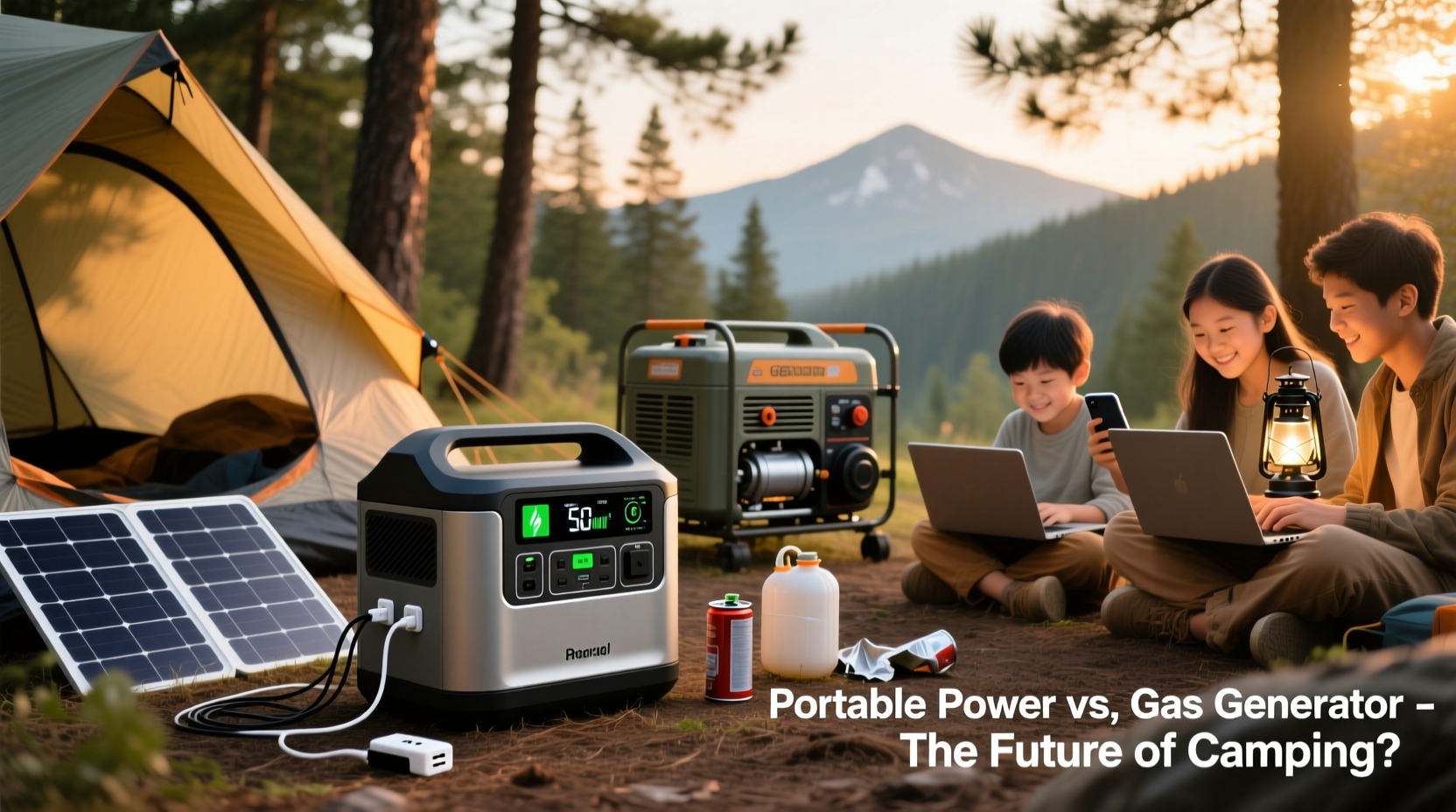
Portable power stations are essentially large-capacity rechargeable batteries with built-in inverters that convert stored DC power into AC electricity. They can be charged via wall outlets, car chargers, or solar panels. Once charged, they power everything from smartphones and laptops to mini-fridges, CPAP machines, and electric kettles.
Unlike gas generators, which burn fuel to generate electricity through an internal combustion engine, power stations operate silently and emit zero emissions. Their simplicity makes them ideal for campers who value quiet nights, minimal setup, and low maintenance.
Modern units range from compact 300-watt-hour (Wh) models suitable for weekend backpacking to robust 3,000Wh systems capable of powering multiple appliances over several days. Many include USB-A, USB-C, AC outlets, 12V car ports, and even wireless charging pads. Some integrate MPPT solar charge controllers for faster solar recharging, enhancing their off-grid viability.
Tip: Always check the total watt-hour capacity and maximum output (watts) before purchasing—your device needs will dictate the right size.Key Advantages Over Gas Generators
The appeal of portable power stations lies in their user-friendly design and operational benefits. Here’s where they consistently outperform traditional gas generators:
- No Noise Pollution: Most operate near silence (under 40 dB), preserving the natural ambiance of the outdoors.
- No Emissions: Zero exhaust fumes make them safe for indoor use (e.g., inside tents or RVs) and environmentally responsible.
- Minimal Maintenance: No oil changes, spark plug replacements, or carburetor cleanings required.
- Easier Setup: Turn on with a button; no pull-starts, priming, or fuel mixing needed.
- Safer Fuel Source: Lithium iron phosphate (LiFePO4) batteries are stable and less prone to thermal runaway than older lithium-ion types.
- Solar Compatibility: Can be recharged indefinitely using solar panels, enabling true energy independence.
These features resonate strongly with modern campers who prioritize comfort, safety, and sustainability. Families with children, pet owners, and those using medical devices like CPAP machines often find power stations far more practical than noisy, smelly generators.
“Portable power stations represent a fundamental shift—from temporary energy fixes to integrated, sustainable power ecosystems.” — Dr. Alan Zhou, Renewable Energy Researcher at Rocky Mountain Institute
Performance Comparison: Power Stations vs. Gas Generators
To understand if one truly replaces the other, a direct comparison is essential. Below is a side-by-side analysis of key metrics based on typical mid-range models used in recreational camping.
| Feature | Portable Power Station (e.g., Jackery 1500) | Gas Generator (e.g., Honda EU2200i) |
|---|---|---|
| Capacity / Runtime | 1,534Wh (~10–15 hours at 100W load) | ~1.1 gallons fuel (~8–10 hours at 1/4 load) |
| Noise Level | 0–40 dB (silent operation) | 48–57 dB (noticeable hum) |
| Fuel/Energy Source | Electricity + Solar | Gasoline |
| Refueling/Recharging | Wall outlet (6–8 hrs), Solar (6–12 hrs) | Gas refill (seconds), must carry spare fuel |
| CO₂ Emissions | Zero at point of use | ~400g CO₂/kWh (burns fossil fuel) |
| Maintenance Needs | None beyond battery care | Oil changes, air filters, winterization |
| Indoor Use Safety | Safe (no fumes) | Dangerous (carbon monoxide risk) |
| Lifespan (Cycles/Years) | LiFePO4: 3,000+ cycles (~10 years) | Engine wear: 5–10 years with upkeep |
| Initial Cost | $1,200–$1,800 | $1,000–$1,300 |
While gas generators still hold an edge in runtime flexibility and refueling speed, power stations excel in safety, longevity, and environmental impact. For most car campers and RV travelers, the trade-off in refueling time is acceptable given the gains in usability and peace of mind.
Real-World Example: A Family Camping Trip in Colorado
The Thompson family planned a week-long summer trip to Rocky Mountain National Park. They wanted to run a small fridge, charge camera batteries, power LED lights, and operate a CPAP machine each night. In past years, they relied on a Honda EU2200i generator, but found its noise disruptive and were concerned about storing gasoline near their kids.
This year, they invested in a 1,500Wh LiFePO4 power station paired with a 200W foldable solar panel. Each morning, they set up the panel outside their tent while having breakfast. By noon, the unit was typically 60–80% recharged, depending on sun exposure. With careful load management—running the fridge intermittently and avoiding high-draw appliances—they maintained consistent power throughout the week.
They reported sleeping better without engine noise, appreciated the ability to keep the unit inside their RV, and felt proud of using renewable energy. While they carried a backup car charger, they never needed it. “It just worked,” said Mark Thompson. “We didn’t miss the generator at all.”
When Gas Generators Still Make Sense
Despite the advantages of portable power stations, gas generators remain relevant in certain situations. They are not obsolete—just less suited to casual or eco-conscious camping.
Scenarios where gas generators still dominate include:
- Extended Off-Grid Expeditions: Trips lasting two weeks or more without access to sunlight or grid charging.
- High-Power Demands: Running air conditioners, large microwaves, or power tools simultaneously.
- Emergency Preparedness: When rapid refueling and proven reliability under stress are critical.
- Remote Locations with Limited Sun: Dense forests, mountain valleys, or rainy seasons reduce solar efficiency.
In these cases, the ability to refuel quickly and generate continuous power gives gas units a decisive advantage. However, hybrid approaches—using a small generator to charge a power station—are gaining popularity as a balanced compromise.
Tip: Combine technologies—use a gas generator early in the morning to top off your power station, then switch to silent mode for the rest of the day.Step-by-Step Guide: Choosing the Right Option for Your Trip
Selecting between a portable power station and a gas generator depends on your specific needs. Follow this decision framework:
- Assess Your Power Needs: List all devices you plan to run and their wattage. Multiply by hours of daily use to get watt-hours (Wh). Example: A 50W fridge running 8 hours = 400Wh/day.
- Determine Trip Duration: Weekend trips favor power stations; multi-week expeditions may require gas or hybrid setups.
- Evaluate Recharging Options: Will you have access to solar, car charging, or shore power? If not, gas is more reliable.
- Consider Noise and Safety: Are you camping in close quarters? Do you have children or medical equipment? Silence and safety favor power stations.
- Budget for Long-Term Use: While power stations cost more upfront, lower operating costs and longer lifespans often make them cheaper over 5+ years.
- Plan for Redundancy: Bring extra batteries, solar panels, or a secondary power source regardless of choice.
This structured approach helps avoid underpowered setups or unnecessary bulk. Many experienced campers now maintain both options—a compact power station for routine use and a small generator for emergencies.
Checklist: Preparing Your Power System for Camping
- ✔ Calculate total daily power consumption (in Wh)
- ✔ Choose a power station with 25–50% more capacity than needed
- ✔ Pack compatible solar panels if relying on sun
- ✔ Test all devices before departure
- ✔ Bring necessary cables and adapters
- ✔ For gas generators: Check oil, fuel freshness, and spark plugs
- ✔ Store fuel safely away from living areas (if applicable)
- ✔ Review campground rules on generator use and quiet hours
Frequently Asked Questions
Can a portable power station run a rooftop air conditioner?
Most rooftop AC units require 1,000–1,500 watts to start and 600–800 watts to run. Few portable power stations can handle this surge unless specifically designed for RVs (e.g., EcoFlow SkyPort + Delta Pro). Even then, runtime will be limited. For regular AC use, a gas generator or hardwired solar system is more practical.
How long do portable power stations last on a single charge?
It depends on the load. A 1,000Wh station can run a 50W mini-fridge for about 15 hours (factoring inefficiencies), a laptop (60W) for 12 hours, or a 100W light for 8 hours. Heavy loads drain batteries quickly. Always derate capacity by 20–30% for real-world conditions.
Are power stations waterproof?
No. Most are water-resistant to light splashes but should never be exposed to rain or submerged. Always place them under a canopy or inside a dry compartment. Gas generators also require cover, but some models are slightly more rugged in wet conditions.
Conclusion: The Future Is Quietly Charging Ahead
The data and experiences are clear: portable power stations are not just an alternative—they are actively replacing gas generators for the majority of camping applications. Advances in battery chemistry, solar integration, and power electronics have closed the gap in capability while opening a wide lead in user experience and environmental responsibility.
For weekend warriors, van lifers, and eco-minded adventurers, the silent, clean, and increasingly capable power station is now the default choice. Gas generators haven’t disappeared, but their role is narrowing to niche, high-demand, or emergency scenarios. As solar efficiency improves and battery costs decline, the trend will only accelerate.
🚀 Ready to upgrade your camping power setup? Start by calculating your daily watt-hour needs and explore LiFePO4 models with solar compatibility. Make your next trip quieter, cleaner, and smarter—one charge at a time.








