In an increasingly noisy world, noise cancelling earbuds have become a go-to solution for focus, relaxation, and immersive audio experiences. Whether commuting through crowded subways, working in open offices, or simply escaping daily distractions, these compact devices offer a sanctuary of silence. But as their popularity grows—so does concern: are they safe for everyday use? While the technology delivers undeniable benefits, understanding its potential risks is essential for long-term hearing health and overall well-being.
This article explores the science behind active noise cancellation (ANC), evaluates both the advantages and drawbacks of regular use, and provides practical guidance for using earbuds responsibly. From auditory fatigue to situational awareness, we’ll break down what you need to know to make informed decisions about your listening habits.
How Noise Cancelling Earbuds Work
Noise cancelling earbuds rely on a combination of hardware and software to reduce unwanted ambient sounds. There are two primary types: passive and active noise cancellation.
- Passive Noise Cancellation depends on physical design—such as snug-fitting ear tips—to block external sound waves mechanically. This method works well for higher-frequency noises like chatter or clinking dishes.
- Active Noise Cancellation (ANC) uses built-in microphones to detect incoming sound waves and generate “anti-noise” signals—sound waves that are identical in frequency but opposite in phase. When combined, they cancel each other out through destructive interference, particularly effective against low-frequency hums like airplane engines or traffic rumble.
Modern ANC earbuds often combine both methods for broader noise reduction. However, this advanced functionality comes with trade-offs, especially when used for extended periods.
Tip: Choose over-ear or in-ear models with adjustable ANC levels so you can tailor noise suppression to your environment instead of always using maximum cancellation.Benefits of Daily Use
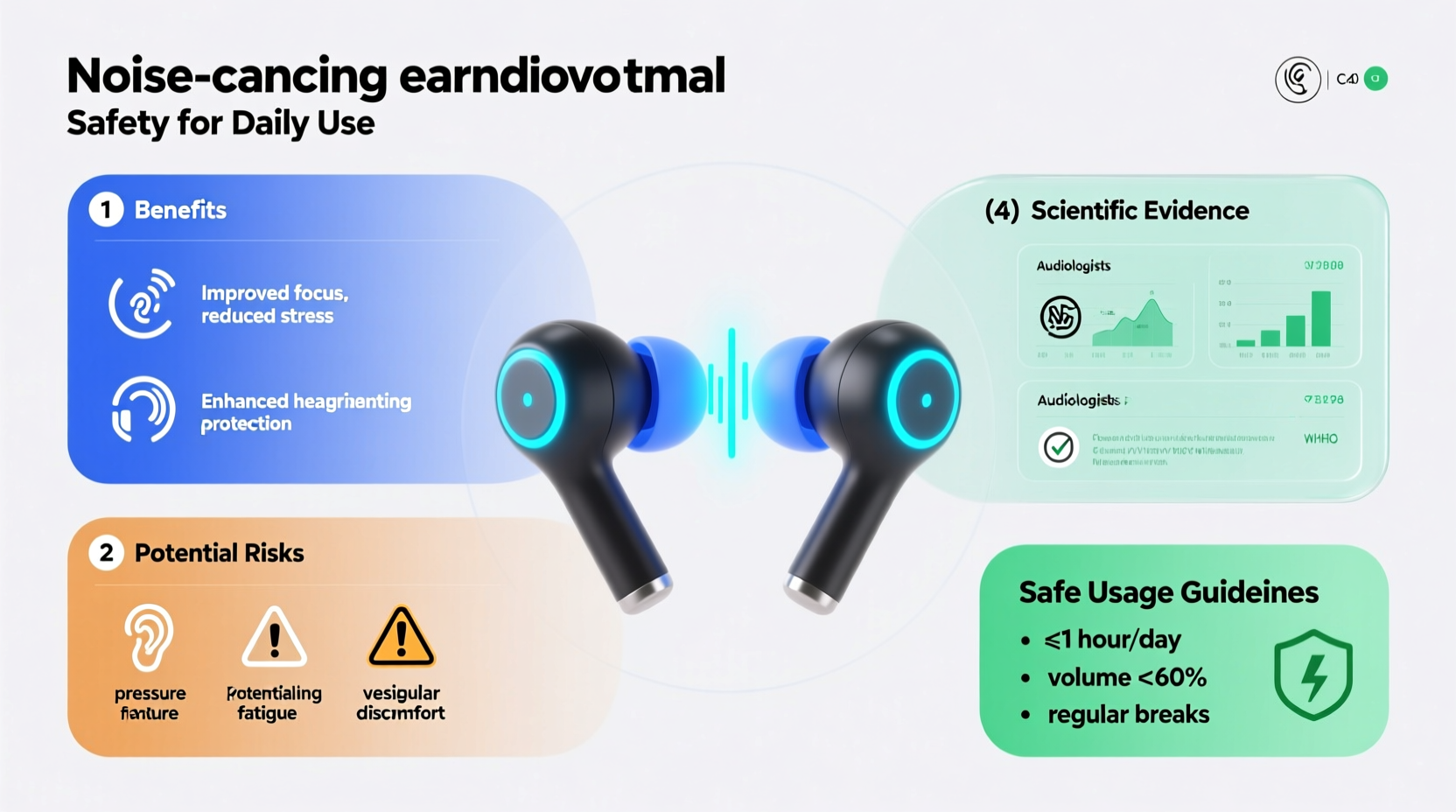
When used mindfully, noise cancelling earbuds offer several tangible advantages that enhance productivity, mental clarity, and even sleep quality.
Improved Focus and Concentration
By minimizing background distractions, ANC earbuds help users concentrate during work, study, or creative tasks. A 2022 study published in the Journal of Environmental Psychology found that participants exposed to consistent low-level office noise showed improved cognitive performance when using noise-cancelling headphones.
Reduced Stress and Mental Fatigue
Constant exposure to urban noise has been linked to elevated cortisol levels and increased stress. ANC earbuds act as a buffer, offering auditory relief in high-stimulus environments. Commuters, remote workers, and city dwellers often report feeling calmer and more in control after integrating noise-cancelling tech into their routines.
Better Sleep During Travel
Frequent travelers benefit from ANC’s ability to suppress engine drone and cabin announcements. Many users find they fall asleep faster and experience deeper rest when wearing earbuds with ANC enabled during flights or train rides.
Potential Hearing Protection
Counterintuitively, ANC can protect hearing by reducing the need to raise volume levels in loud settings. Without ANC, listeners often increase playback volume to overcome background noise—a major contributor to noise-induced hearing loss (NIHL). By quieting the environment, ANC allows for safer listening at lower decibel levels.
“Properly used, noise-cancelling technology can be a protective tool—especially in loud public spaces where people tend to turn up their music to dangerous levels.” — Dr. Lena Torres, Audiologist and Hearing Health Researcher
Potential Risks of Long-Term, Daily Use
Despite their benefits, prolonged or improper use of noise cancelling earbuds may pose health concerns ranging from auditory strain to physical discomfort.
Ear Fatigue and Pressure Sensation
Many users report a sensation of “ear pressure” or fullness when using ANC for extended durations. This phenomenon, sometimes called “listener fatigue,” occurs because the brain interprets the sudden absence of ambient sound as unnatural. The inner ear adjusts to constant sound input; removing it abruptly can create a vacuum-like feeling similar to ascending in an airplane.
While not harmful, persistent discomfort may lead to headaches or dizziness in sensitive individuals. Taking regular breaks helps reset auditory perception and reduces strain.
Hearing Damage from High Volume
The convenience of noise isolation can encourage unsafe listening behaviors. Because ANC masks external noise, users may not realize how loud their audio content actually is. The World Health Organization (WHO) warns that exposure to sounds above 85 dB for more than 40 hours per week increases the risk of permanent hearing loss.
Earbuds capable of reaching 100+ dB output—even briefly—can cause irreversible damage if used at high volumes over time. This risk is amplified when combined with long listening sessions.
Reduced Situational Awareness
One of the most significant safety concerns with ANC is diminished environmental awareness. Blocking out traffic sounds, alarms, or human voices while walking, cycling, or driving can lead to accidents. In extreme cases, complete auditory isolation may prevent users from reacting to urgent situations.
Increased Risk of Ear Infections
Daily insertion of earbuds introduces bacteria into the ear canal, especially if devices aren’t cleaned regularly. Combined with moisture buildup from prolonged wear, this creates an ideal environment for otitis externa (“swimmer’s ear”). Users who wear earbuds for several hours a day without cleaning them are at higher risk.
Dependency and Social Isolation
Chronic reliance on noise cancellation may lead to psychological dependence—some individuals feel anxious or overwhelmed in noisy environments without their earbuds. Over time, this avoidance behavior can contribute to social withdrawal, particularly in workplaces or public spaces where interaction is expected.
Tip: Limit continuous ANC use to 90 minutes at a time and take 10–15 minute breaks to allow your ears to reacclimate to natural sound.Best Practices for Safe, Daily Use
You don’t have to give up your noise cancelling earbuds to protect your health. With mindful usage and proper habits, you can enjoy their benefits while minimizing risks.
Follow the 60/60 Rule
A widely recommended guideline from audiologists: listen at no more than 60% of maximum volume for no longer than 60 minutes at a time. After each hour, remove the earbuds and give your ears a rest.
Use Transparency or Ambient Mode
Most modern ANC earbuds include a transparency mode that amplifies surrounding sounds. Use this feature when walking outdoors, crossing streets, or engaging in conversations. It maintains protection from loud noises while preserving awareness of critical auditory cues.
Keep Devices Clean
Wipe ear tips daily with a dry or slightly damp cloth. Replace silicone tips every 1–2 months, and avoid sharing earbuds to reduce bacterial transfer. For deep cleaning, use alcohol-free wipes designed for electronics.
Choose Ergonomic Designs
Poorly fitting earbuds can cause ear pain, wax impaction, or even eardrum irritation. Opt for models with multiple ear tip sizes and consider custom-molded options if you use them extensively. Lightweight designs also reduce pressure on the outer ear.
Monitor Listening Time
Some smartphones and earbud apps track daily usage. Set limits or enable notifications when you exceed safe thresholds. Apple’s Headphone Audio Notifications and Android’s Digital Wellbeing tools can help maintain healthy habits.
Select Models with Built-In Safety Features
Look for earbuds that include automatic volume limiting, real-time sound level monitoring, or adaptive ANC that adjusts based on environment. Brands like Bose, Sony, and Apple now offer models with integrated hearing health feedback.
📋 **Checklist: Safe Daily Use of Noise Cancelling Earbuds**- Limit continuous use to 60–90 minutes with breaks in between
- Keep volume below 60% of maximum
- Clean ear tips at least once a week
- Use transparency mode in public or outdoor settings
- Avoid sleeping with ANC enabled unless specifically designed for it
- Replace worn-out ear tips promptly
- Get annual hearing checkups if using earbuds daily
Risks vs. Benefits: A Comparative Overview
| Aspect | Benefits | Risks |
|---|---|---|
| Hearing Health | Reduces need for high volume in noisy areas | High volume + long duration = hearing damage |
| Mental Focus | Enhances concentration and reduces distraction | Potential over-reliance leading to anxiety in noisy settings |
| Physical Comfort | Blocks disruptive noise during travel or work | Ear pressure, fatigue, or pain with prolonged use |
| Safety | Improves sleep quality during transit | Reduced awareness of surroundings increases accident risk |
| Hygiene | Encourages personal audio space without disturbing others | Unclean earbuds can lead to infections |
Real-World Example: The Remote Worker’s Dilemma
Jamal, a software developer living in a bustling Brooklyn apartment, started using noise cancelling earbuds full-time after transitioning to remote work. Initially, he praised the boost in productivity—his code reviews improved, and meetings became easier to focus on. But after three months of wearing them 6–8 hours a day, he began experiencing dull earaches and occasional vertigo.
After visiting an audiologist, Jamal learned he was exceeding safe listening durations and had developed mild ear canal irritation from unclean ear tips. He adjusted his routine: switching to over-ear ANC headphones for part of the day, taking hourly breaks, and enabling transparency mode during lunch walks. Within weeks, his symptoms resolved, and he maintained productivity without compromising comfort.
His case illustrates how even beneficial technology requires boundaries to remain sustainable.
Frequently Asked Questions
Can noise cancelling earbuds cause permanent hearing loss?
ANC itself does not damage hearing. However, listening at high volumes for extended periods—especially above 85 dB—can lead to noise-induced hearing loss over time. The risk lies in user behavior, not the ANC technology.
Is it safe to wear noise cancelling earbuds while sleeping?
It depends on the model and individual sensitivity. Some people use ANC earbuds to block snoring or city noise and sleep better. However, lying on one side may press the earbud into the ear canal, causing discomfort or injury. Specialized sleep earbuds with flat designs exist for this purpose and are safer than standard models.
Do noise cancelling earbuds affect balance?
While rare, some users report dizziness or imbalance due to the pressure-like sensation created by ANC. This typically resolves when the earbuds are removed. People with pre-existing vestibular disorders should consult a doctor before regular use.
Conclusion: Balancing Innovation with Responsibility
Noise cancelling earbuds are not inherently unsafe—but their daily use demands awareness and moderation. They offer powerful tools for focus, stress reduction, and hearing protection when used wisely. Yet, unchecked usage can lead to physical discomfort, hearing damage, and reduced environmental awareness.
The key is intentionality. Treat your ears with the same care you’d give any vital organ: limit exposure, maintain hygiene, and respect natural auditory rhythms. By integrating best practices into your routine, you can enjoy the benefits of silence without sacrificing long-term health.
💬 How do you manage your daily earbud use? Share your tips or concerns in the comments—your experience could help others find a healthier balance.








