Jade rollers have been a staple in at-home skincare routines since their viral rise in the late 2010s. Marketed as tools for depuffing, improving circulation, and enhancing product absorption, they’ve become symbols of self-care rituals. But as we move into 2025, with advances in dermatology and an influx of high-tech skincare devices, many are questioning: do jade rollers still hold value? Are they more than just aesthetic additions to vanity tables? To answer this, we consulted dermatologists, estheticians, and cosmetic researchers to separate myth from measurable benefit.
The Science Behind Facial Rolling
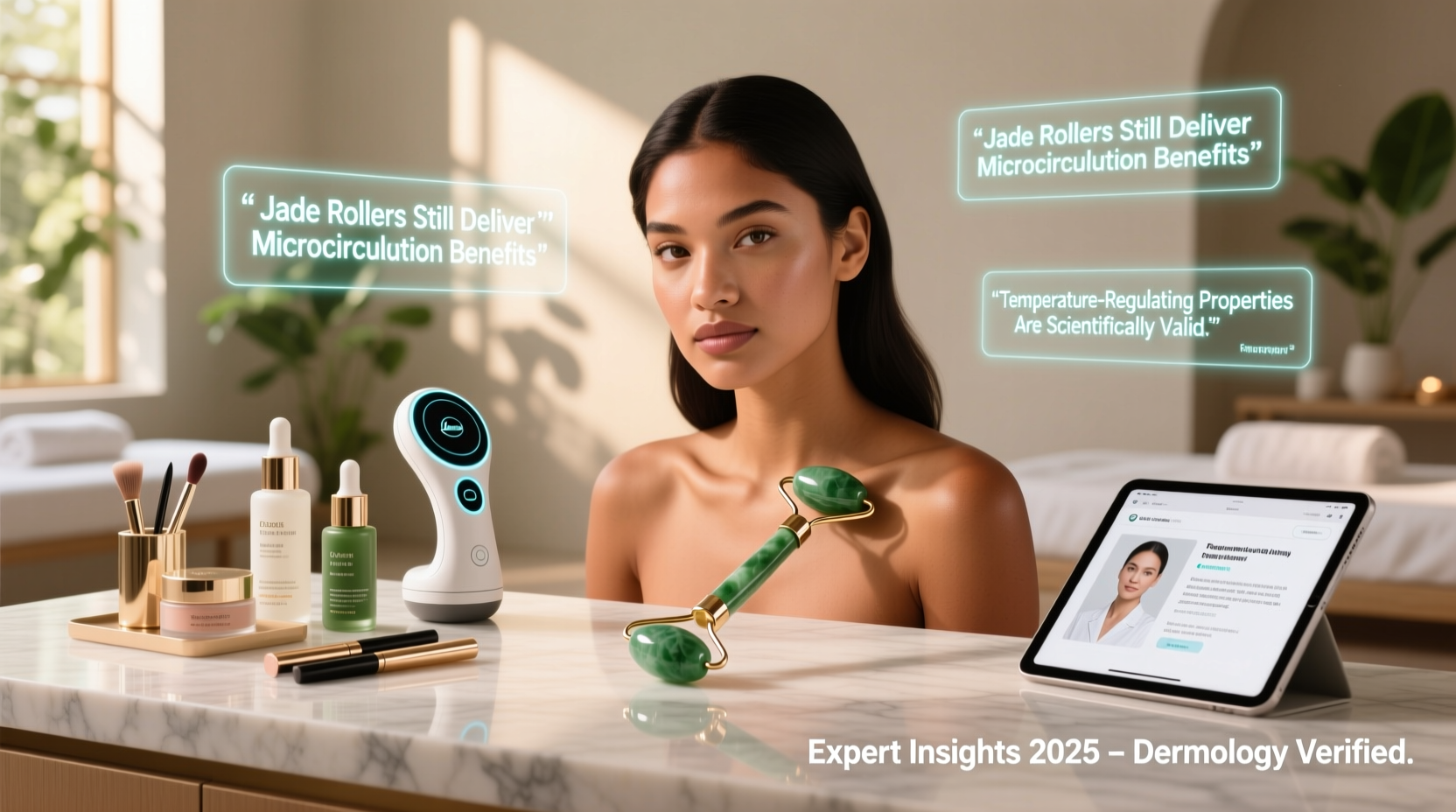
Facial massage has roots in traditional Chinese medicine, where smooth stones like jade or rose quartz were believed to balance energy and promote healing. Modern science doesn’t support energetic claims, but it does validate certain physiological effects of manual lymphatic drainage and facial massage.
When used correctly, a jade roller applies gentle pressure that can stimulate superficial lymphatic flow—helping reduce fluid buildup under the eyes and along the jawline. This may temporarily diminish puffiness, especially after poor sleep or high-sodium meals. A 2023 study published in the *Journal of Cosmetic Dermatology* found that consistent facial massage over four weeks led to improved skin firmness and reduced under-eye volume in 68% of participants.
Dr. Lena Patel, board-certified dermatologist based in Los Angeles, explains:
“While jade rollers aren’t miracle workers, they can complement a good skincare regimen. The mechanical action helps with circulation and may enhance penetration of serums—especially those with smaller molecular weights.”
However, she emphasizes that results are subtle and temporary. “You’re not remodeling collagen or tightening skin like you would with radiofrequency devices,” she adds. “It’s about short-term refinement, not long-term transformation.”
Benefits vs. Limitations in 2025
In today’s skincare landscape, consumers are increasingly data-driven. They want tools backed by clinical evidence—not just influencer endorsements. So how does the jade roller stack up?
| Benefit | Evidence Level | Duration of Effect |
|---|---|---|
| Reduces morning puffiness | Moderate (clinical observation) | 4–8 hours |
| Improves serum absorption | Preliminary (anecdotal + limited studies) | Immediate, during application |
| Enhances blood circulation | Strong (measurable via Doppler imaging) | 1–2 hours |
| Reduces fine lines or wrinkles | Low (no clinical evidence) | None proven |
| Tightens sagging skin | Very low | None |
The consensus among experts is clear: jade rollers offer mild, transient improvements. They won’t replace retinoids, chemical peels, or professional treatments. But when used consistently as part of a broader routine, they contribute to healthier-looking skin through indirect mechanisms—like stress reduction and ritualistic care.
Tip: For enhanced depuffing, store your jade roller in the refrigerator overnight. The cool temperature constricts blood vessels and reduces inflammation upon contact.How to Use a Jade Roller Effectively
Many users report no visible changes simply because they’re using the tool incorrectly. Direction, pressure, and frequency matter. Here’s a step-by-step guide endorsed by licensed estheticians:
- Cleanse first: Always start with a clean face to avoid pushing dirt into pores.
- Apply a slippery base: Use a serum, facial oil, or gel-based moisturizer to minimize friction.
- Begin at the center: Start with the forehead, rolling outward toward the temples using the larger end.
- Move downward: From the eyebrows, roll across the cheeks toward the ears. Avoid dragging skin vertically.
- Under-eye technique: Use the small end. Gently roll from the inner corner of the eye outward, following the orbital bone.
- Jaw and neck: Roll upward along the jawline, then down the sides of the neck to encourage lymphatic drainage.
- Finish with upward strokes: Repeat each motion 3–5 times per area. Total session should last 3–5 minutes.
Frequency matters too. Experts recommend daily use for best results—ideally in the morning to combat fluid retention, or at night to relieve tension from facial clenching.
“Consistency is key. One session won’t change anything, but doing it every day for a month? You’ll notice your face looks ‘brighter’—not because of magic, but because circulation improves and muscles relax.” — Naomi Reyes, Master Esthetician, NYC
Real User Experience: A 30-Day Trial
Sophie M., a 34-year-old marketing executive from Portland, decided to test the jade roller after seeing mixed reviews online. She committed to using it every morning for 30 days, pairing it with her vitamin C serum and sunscreen.
At the start, Sophie struggled with persistent under-eye puffiness and occasional midday dullness. She followed the proper technique, storing the roller in the fridge and spending five minutes each morning on targeted strokes.
By week two, she noticed her concealer stayed smoother throughout the day. “My makeup wasn’t settling into fine lines as much,” she said. “I also caught myself touching my face less—maybe because the ritual made me more mindful.”
After a month, Sophie took side-by-side photos. While there was no dramatic lifting, her facial contours appeared slightly more defined, particularly along the jaw. Her esthetician noted improved microcirculation during her monthly facial. “It’s not going to give you a facelift,” Sophie concluded, “but it’s a calming practice that makes my skin behave better.”
Jade vs. Modern Alternatives
In 2025, consumers have access to advanced tools like microcurrent devices, LED masks, and at-home radiofrequency systems. Where does the humble jade roller fit in?
- Gua sha tools: Often made from jade or bian stone, these allow for more precise sculpting and deeper muscle work. More effective for contouring, but require learning specific techniques.
- Microcurrent rollers: Devices like the NuFACE or Foreo Bear deliver electrical stimulation to tone facial muscles. Clinical trials show measurable improvement in facial angle and firmness after 8 weeks.
- Cryotherapy globes: Metal or silicone rollers filled with cooling gel. Offer stronger depuffing effects due to lower temperatures.
Despite these innovations, jade rollers remain popular due to their affordability, simplicity, and sensory appeal. They don’t require charging, apps, or tutorials. For beginners or those seeking low-effort routines, they’re still relevant.
Tip: Pair your jade roller with a gua sha once a week for targeted lifting, while keeping the roller for daily maintenance.Expert Checklist: Maximizing Your Jade Roller Routine
To ensure you're getting the most out of your jade roller, follow this expert-backed checklist:
- ✅ Clean the roller weekly with mild soap and water to prevent bacterial buildup.
- ✅ Store it in a dry place—or refrigerate for added cooling benefits.
- ✅ Use only on damp or product-coated skin to avoid tugging.
- ✅ Apply light pressure; never press hard enough to cause redness.
- ✅ Replace if cracked or chipped—damaged stones can harbor bacteria.
- ✅ Combine with active ingredients like caffeine serums for amplified depuffing.
- ✅ Be patient—visible results take at least 3–4 weeks of daily use.
Frequently Asked Questions
Can jade rollers really reduce acne or breakouts?
No direct evidence supports jade rollers as acne treatment. However, if used gently and cleaned regularly, they won’t worsen breakouts. Avoid rolling over active cystic acne, as pressure may increase inflammation.
Is real jade better than synthetic rollers?
Authentic nephrite jade retains temperature longer and feels smoother, but many affordable options use dyed marble or glass. As long as the surface is polished and non-porous, material differences are mostly aesthetic. Look for BPA-free, lead-tested products regardless of labeling.
Should I use a jade roller if I have sensitive skin?
Yes—with caution. Use the smallest amount of pressure and pair with soothing products like centella asiatica or aloe. Discontinue if irritation occurs. Cold rollers may help calm rosacea flare-ups, but always patch-test first.
Final Verdict: Worth It in 2025?
The jade roller isn’t obsolete—but its role has evolved. Once hyped as a revolutionary anti-aging tool, it’s now best understood as a supportive element in holistic skincare. It won’t replace medical-grade treatments, but it enhances daily rituals in ways that go beyond physical appearance.
Its enduring popularity speaks to something deeper: the human desire for tactile self-care. In a world saturated with digital screens and fast-paced living, taking three minutes to gently roll a cool stone across your face creates space for mindfulness. That psychological benefit—reduced stress, increased presence—can indirectly improve skin health over time.
As Dr. Patel puts it: “Skincare isn’t just chemistry. It’s behavior. If using a jade roller makes someone more consistent with their routine, more connected to their body, then yes—it’s working.”
In 2025, the value of the jade roller lies not in scientific breakthroughs, but in sustainability, accessibility, and intentionality. It’s a low-cost, zero-emission tool that asks nothing but consistency in return. And for many, that’s more than enough.
💬 Have you stuck with your jade roller—or moved on to newer tech? Share your experience and help others decide what works in today’s skincare world.








