In recent years, facial sculpting tools have become staples in modern skincare rituals. Once seen as niche accessories rooted in traditional Chinese medicine, tools like the jade roller and gua sha have surged into mainstream beauty culture. But as trends evolve, a growing question emerges: are jade rollers still relevant, or has gua sha quietly taken over? The answer isn’t simply about popularity—it’s about function, results, and how well each tool aligns with today’s holistic skincare philosophy.
This shift reflects deeper changes in consumer preferences—away from quick fixes and toward mindful, intentional self-care. To understand where these tools stand now, it's essential to examine their origins, benefits, user experiences, and how they fit into evolving skincare regimens.
The Rise and Resurgence of Facial Tools
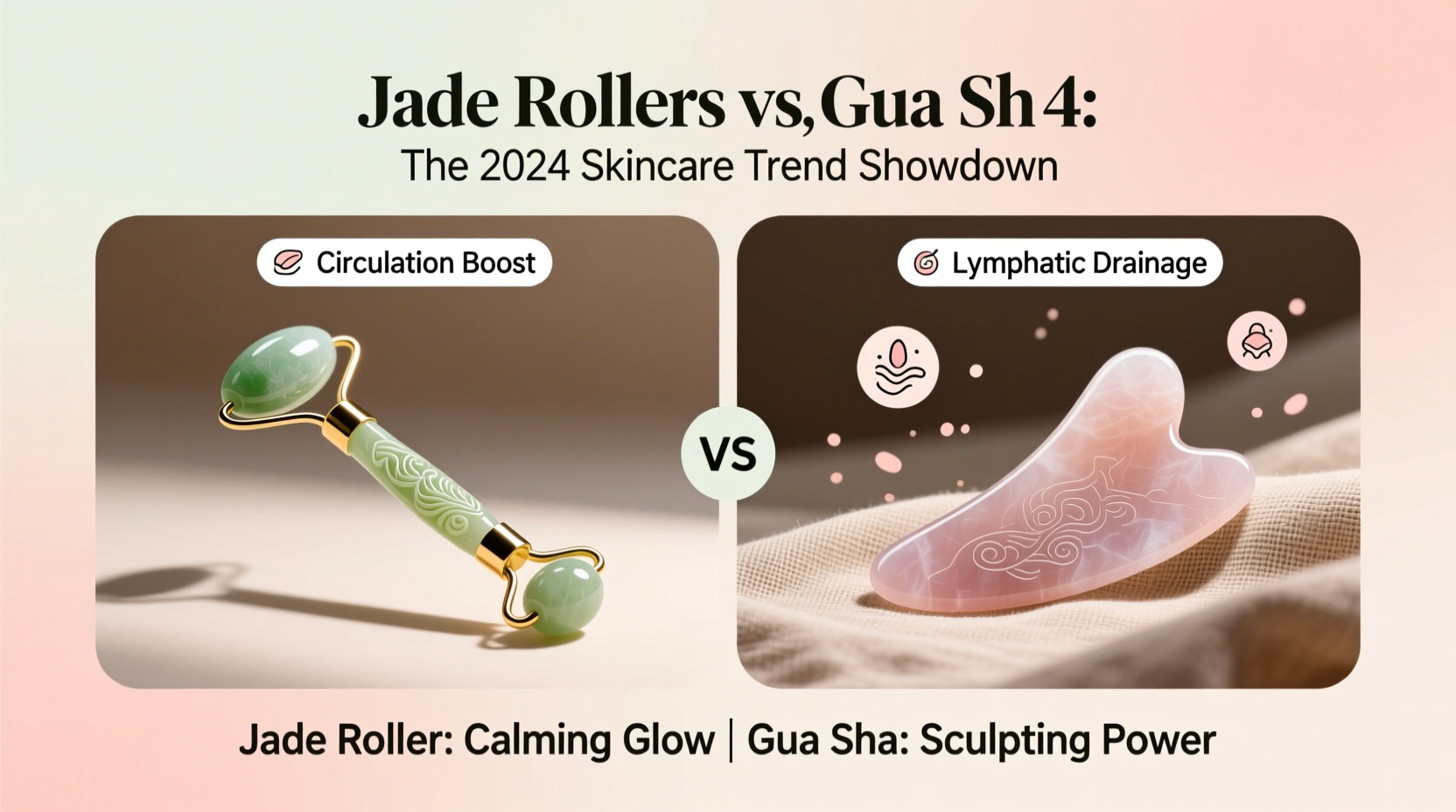
Facial massage tools aren't new. Their roots trace back thousands of years to ancient China, where smooth stones were used to promote circulation, balance energy (qi), and support overall wellness. The jade roller gained international attention in the early 2010s, popularized by celebrities and influencers who praised its ability to depuff and cool the skin after applying serums or face oils.
Gua sha, meaning “scraping” in Chinese, involves using a flat, contoured stone—often jade or bian stone—to gently press and glide across the skin. While both tools use similar materials, their techniques and outcomes differ significantly. Gua sha requires more precision and knowledge of facial anatomy but offers deeper lymphatic drainage and muscle relaxation.
As consumers became more educated about skincare science and holistic wellness, gua sha began gaining favor for its targeted approach. Unlike the rolling motion of a jade roller, which is largely superficial, gua sha follows specific meridians and contours of the face, engaging deeper tissue layers.
Tip: Always use facial tools on clean skin with a facial oil or serum to reduce friction and enhance glide.How Jade Rollers Work—and Why They’re Still Around
Jade rollers typically feature two ends—a larger roller for cheeks and forehead, and a smaller one for under-eyes and nose. Made from natural stone, they retain cool temperatures, making them ideal for reducing puffiness and calming inflammation.
The primary mechanism behind their effectiveness lies in gentle mechanical stimulation. Rolling promotes surface-level blood flow and can temporarily improve product absorption. When stored in the fridge, the cooling effect constricts blood vessels, helping to minimize morning puffiness around the eyes.
Despite being labeled by some as “Instagram-era relics,” jade rollers haven’t disappeared. They remain accessible, affordable, and beginner-friendly. For those new to facial massage or looking for a soothing step in their nighttime routine, the jade roller offers simplicity without a steep learning curve.
However, critics argue that their effects are mostly short-term. While they may provide an instant glow or de-puffing benefit, they don’t address deeper concerns like jaw tension, sagging, or long-term tone improvement. That’s where gua sha begins to pull ahead in terms of functional depth.
Why Gua Sha Has Become the New Gold Standard
Gua sha has experienced a renaissance not just because of aesthetics, but due to its integration into evidence-informed skincare practices. Licensed estheticians and dermatologists increasingly recommend it—not as a miracle cure, but as a complementary technique that supports lymphatic health and facial muscle toning.
Unlike the repetitive back-and-forth motion of a jade roller, gua sha follows directional strokes along lymph pathways—typically moving upward and outward from the center of the face. This method helps move excess fluid away from areas prone to congestion, such as under the eyes and along the jawline.
“Gua sha isn��t just about beauty—it’s about physiology. When done correctly, it activates the parasympathetic nervous system, reduces cortisol-induced tension, and improves microcirculation.” — Dr. Lin Mei, Integrative Dermatology Specialist
Studies on manual lymphatic drainage show measurable reductions in facial edema and improved skin clarity over time. While formal clinical trials on gua sha are limited, anecdotal reports and practitioner observations consistently highlight visible improvements in contour definition and reduced appearance of double chins or jowls after regular use.
Moreover, gua sha encourages mindfulness. Each stroke requires presence and intention, turning skincare into a meditative ritual rather than a rushed task. This emotional component resonates strongly with today’s consumers, who value mental wellness as much as physical results.
Comparing Benefits: A Practical Breakdown
| Feature | Jade Roller | Gua Sha |
|---|---|---|
| Primary Benefit | Cooling, depuffing | Lymphatic drainage, muscle release |
| Learning Curve | Low – intuitive use | Moderate – requires technique |
| Time Per Session | 2–5 minutes | 5–10 minutes |
| Skin Tightening Effect | Minimal, temporary | Noticeable with consistent use |
| Bone Contour Emphasis | Low | High – targets jawline, cheekbones |
| Mindfulness Integration | Low to moderate | High – ritualistic application |
| Average Price Range | $15–$30 | $25–$60+ |
The data shows that while both tools offer value, gua sha delivers broader functional advantages. Its ability to influence deeper structures—such as the platysma muscle and submandibular glands—makes it more effective for long-term facial sculpting. Meanwhile, jade rollers excel in immediate sensory relief but lack the anatomical precision of gua sha.
Real-World Example: From Skeptic to Advocate
Sophia, a 34-year-old marketing executive based in Portland, started using a jade roller during lockdown. She enjoyed the cool sensation and found it relaxing after long screen-filled days. But after six months, she noticed no lasting change in her facial definition or persistent puffiness.
On a friend’s recommendation, she purchased a heart-shaped rose quartz gua sha and watched tutorial videos to learn proper technique. Within three weeks of daily five-minute sessions, she observed sharper jawline definition and less tension in her temples. “It felt like my face was ‘waking up,’” she said. “I didn’t realize how much tension I held in my masseters until I started releasing it.”
Today, Sophia uses her jade roller only occasionally—for quick cooling in the mornings—while her gua sha remains a non-negotiable part of her evening wind-down. Her experience mirrors a broader trend: users often begin with jade rollers but transition to gua sha once they seek more noticeable, lasting results.
Step-by-Step Guide: How to Use Gua Sha Effectively
To get the most out of gua sha, follow this proven sequence. Perform it 3–5 times per week for best results.
- Cleanse your face and apply a facial oil or serum to create slip.
- Warm the tool slightly in your hands or rinse with warm water if targeting muscle tension.
- Neck and décolletage: Start here to open lymph pathways. Use downward-to-upward strokes from collarbone to jaw, repeating 3–5 times per side.
- Under the chin: Place the curved edge under the chin and sweep outward toward the lymph nodes below the ears. Repeat 5 times.
- Jawline: Angle the tool against the jaw and glide backward along the bone, applying light pressure. Repeat 5 times per side.
- Lower cheek: Begin at the corner of the mouth and sweep diagonally upward toward the ear. Repeat 5 times. <7> Mid-face: Start beside the nose and move up toward the temple, following the cheekbone. Avoid pulling eyelid skin.
- Forehead: Use the top edge to sweep horizontally from the center outward, then vertically from brows to hairline.
- Eyes (optional): Use the smaller notch to gently trace under the orbital bone, moving outward from the inner corner.
- Finish with palm pressing: Lightly press palms over the entire face to help absorb any remaining product and signal relaxation.
Common Mistakes to Avoid
- Using too much pressure: Gua sha works through sustained, gentle contact—not force.
- Skipping the neck: Lymphatic flow starts here; neglecting it limits overall effectiveness.
- Incorrect angle: Hold the tool at a 15–30 degree angle to the skin for optimal contact.
- Going too fast: Slow, deliberate movements allow the tissue to respond and release.
- Using on broken or inflamed skin: Avoid active acne, rosacea flare-ups, or sunburned areas.
FAQ: Your Top Questions Answered
Can I use a jade roller and gua sha together?
Yes. Many people use the jade roller first for cooling and initial depuffing, followed by gua sha for deeper sculpting. Alternatively, reserve the jade roller for mornings and gua sha for evenings when you have more time for a thorough session.
Do I need a special oil for facial tools?
Not necessarily, but lightweight facial oils rich in fatty acids—like squalane, jojoba, or rosehip—work best. Avoid heavy petroleum-based products that can clog pores or resist gliding.
How long before I see results from gua sha?
Immediate effects—like reduced puffiness and increased radiance—can appear after one session. Visible contour changes typically emerge within 4–6 weeks of consistent use (3–5 times weekly). Patience and correct technique are key.
Checklist: Choosing the Right Tool for You
- ✅ Assess your goals: Do you want quick cooling (jade roller) or long-term toning (gua sha)?
- ✅ Consider your lifestyle: Can you commit 10 minutes daily, or do you prefer a 2-minute refresh?
- ✅ Evaluate sensitivity: If you have rosacea or fragile capillaries, start with lighter pressure and monitor reactions.
- ✅ Learn proper technique: Watch certified esthetician tutorials before beginning.
- ✅ Choose authentic materials: Look for genuine jade, quartz, or bian stone—not resin imitations.
- ✅ Clean regularly: Wash your tool weekly with mild soap and water; disinfect occasionally with rubbing alcohol.
Conclusion: Trends Fade, But Function Endures
Jade rollers haven’t vanished—they’ve evolved into entry-level tools for sensory pleasure and basic care. But gua sha has undeniably taken center stage in advanced skincare routines, offering measurable benefits grounded in anatomy and tradition. It’s not merely a trend; it’s a practice that combines ancient wisdom with modern understanding of facial physiology.
The real takeaway isn’t choosing one over the other, but understanding what each offers. For beginners, a jade roller can be a gateway. For those seeking transformation, gua sha provides the depth and discipline needed to see real change. Ultimately, the most effective tool is the one you’ll use consistently—with intention, care, and respect for your body’s natural rhythms.
💬 Ready to elevate your routine? Try a 2-week gua sha challenge: use it 4 times a week and document subtle shifts in tone and tension. Share your journey—or your favorite tip—in the comments below.








