Jade rollers have become a staple in modern skincare routines, often seen perched beside serums and moisturizers on bathroom vanities. Marketed as tools for depuffing, enhancing circulation, and delivering a cooling sensation, their popularity has surged—especially with influencers touting them as essential for achieving “glass skin.” But beneath the aesthetic appeal and wellness branding lies a practical question: Are jade rollers truly cooling, or is their effect mostly psychological?
To answer this, we need to examine the material properties of jade, the physiology of skin response, and the scientific evidence—or lack thereof—behind their claimed benefits. This article dives deep into whether the cooling sensation is real, temporary, or simply a well-crafted placebo.
The Science Behind the Sensation
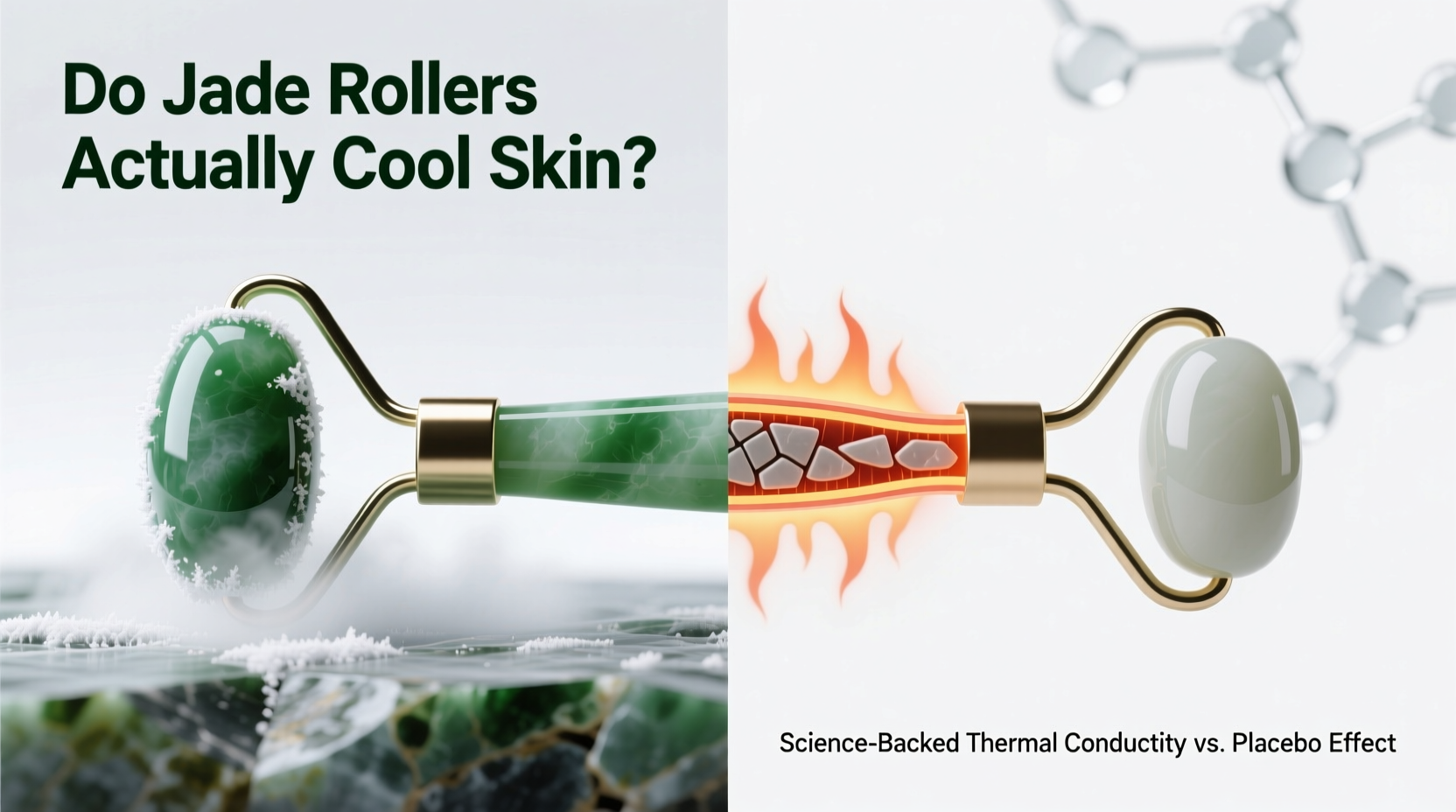
Jade, typically referring to nephrite or jadeite, is a dense mineral with high thermal conductivity relative to organic materials like wood or plastic. When stored at room temperature or chilled, it conducts heat away from the skin upon contact. This physical property explains the immediate cool feeling users report when rolling across the face.
However, the key distinction lies between thermal transfer and active cooling. A jade roller does not generate cold; it only redistributes existing temperature. If kept at room temperature, the cooling effect is minimal. But if refrigerated—even briefly—the stone retains lower temperatures longer than metal or plastic due to its density, prolonging the sensation.
Dermatologist Dr. Lena Park explains:
“Cold objects applied to the skin cause vasoconstriction—narrowing of blood vessels—which can temporarily reduce puffiness and inflammation. The effect is real, but short-lived. Jade isn’t unique here; a chilled spoon works similarly.”
This means the cooling is not a myth—it’s measurable and physiologically grounded—but it depends entirely on how the tool is stored, not the material itself being inherently “cool.”
Placebo vs. Performance: What Studies Say
There is limited peer-reviewed research specifically on jade rollers. Most claims stem from anecdotal reports or small-scale consumer trials funded by beauty brands. However, broader studies on facial massage and cryotherapy (cold therapy) offer useful context.
- Facial Massage: Regular massage may improve lymphatic drainage, reducing under-eye puffiness and fluid retention. A 2019 study published in *Journal of Cosmetic Dermatology* found that manual facial massage led to measurable reductions in edema over four weeks.
- Cold Therapy: Applying cold surfaces to inflamed skin reduces redness and swelling. Ice packs are commonly used post-procedure in dermatology clinics for this reason.
- Perceived Benefits: A 2021 placebo-controlled trial noted that participants using non-functional “dummy” rollers reported similar improvements in skin tightness and glow, suggesting psychological factors play a role.
In essence, while the mechanical action of rolling and the temperature of the tool contribute to tangible effects, the ritualistic use—gentle pressure, slow movements, focused attention—also enhances user perception of efficacy.
Tip: For maximum cooling effect, store your jade roller in the refrigerator for 15–20 minutes before use. Avoid freezing, as extreme cold can irritate sensitive skin.Do’s and Don’ts of Using a Jade Roller
Even if the cooling effect is partly dependent on preparation, proper usage amplifies benefits and prevents harm. Below is a quick-reference table outlining best practices.
| Do’s | Don’ts |
|---|---|
| Store in the fridge for enhanced cooling | Leave in direct sunlight or hot environments |
| Use with a serum or facial oil to reduce friction | Apply excessive pressure—let the weight of the roller do the work |
| Clean after each use with mild soap and water | Share with others without sanitizing (risk of bacterial transfer) |
| Roll upward and outward following lymphatic flow | Roll downward aggressively—it may stretch delicate skin |
| Use for 3–5 minutes daily for consistent results | Expect overnight changes—results are subtle and cumulative |
Real-World Example: A Week With a Chilled Jade Roller
Sophia, a 34-year-old graphic designer from Portland, struggled with morning facial puffiness due to allergies and inconsistent sleep. Skeptical but curious, she incorporated a jade roller into her routine for seven days. Each morning, she stored the roller in the fridge overnight and used it after applying a hydrating serum.
By day three, she noticed reduced under-eye swelling. By day six, her skin appeared more contoured along the jawline. While she couldn’t isolate whether the improvement came from the cold, the massage, or both, she concluded: “It feels like a mini facial, and I look less puffy. Even if part of it is in my head, I’ll take it.”
Her experience mirrors common feedback: subjective improvement, modest but noticeable, and highly tied to consistency and ritual.
Step-by-Step Guide to Maximizing Cooling Benefits
To ensure you’re getting the most out of your jade roller—not just placebo—you should follow a deliberate process. Here’s how:
- Chill the Roller: Place it in the refrigerator (not freezer) for 15–20 minutes before use. Cold jade enhances vasoconstriction and provides a refreshing wake-up effect.
- Prep Your Skin: Apply a lightweight serum or facial oil. This creates slip, preventing tugging, and allows the roller to glide smoothly.
- Start at the Center: Begin on the forehead, rolling outward toward the temples. Use the smaller end for precision around the brows and eyes.
- Move Downward and Upward: On the cheeks, roll from the nose outward and up toward the hairline. Under the eyes, use gentle strokes from inner to outer corners.
- Finish Along the Jawline: Use firm but light pressure along the jaw to encourage lymphatic drainage. Roll from chin to ears, repeating 3–5 times per side.
- Clean After Use: Wash with lukewarm water and mild cleanser. Dry thoroughly and return to a clean storage space.
This routine takes less than five minutes but leverages both the physical cooling and mechanical stimulation for optimal effect.
Expert Insight: Separating Hype from Help
Dr. Rajiv Grover, a consultant dermatologic surgeon and former president of the British Association of Aesthetic Plastic Surgeons, offers a balanced perspective:
“The jade roller isn’t a medical device, but it’s not useless either. The cooling and massage can provide temporary decongestion, especially in the mornings. Where it fails is in long-term anti-aging claims. No amount of rolling will stimulate collagen like retinoids or lasers. But as a low-risk, relaxing addition to a routine? It has merit.”
He emphasizes that expectations must be realistic. Unlike clinical treatments, jade rollers don’t alter skin structure. Their value lies in sensory experience and minor physiological support.
FAQ: Common Questions About Jade Rollers
Can a jade roller really reduce puffiness?
Yes, but temporarily. The combination of cold temperature and gentle massage encourages lymphatic drainage, which helps move excess fluid away from facial tissues. Results typically last a few hours and are most noticeable in the morning.
Is there a difference between jade and rose quartz rollers?
From a functional standpoint, not significantly. Rose quartz has slightly lower thermal conductivity, meaning it doesn’t stay as cold as long. However, many users prefer its smoother texture and aesthetic. Jade is traditionally linked to healing in Chinese medicine, while rose quartz symbolizes self-love—so choice often comes down to personal preference.
Do I need to use a jade roller every day?
No, but consistency improves results. Using it 3–4 times a week can maintain benefits like improved product absorption and reduced tension. Daily use is safe as long as pressure remains gentle and the tool is cleaned regularly.
Final Verdict: Cooling Tool or Clever Placebo?
The truth about jade rollers lies in the middle ground. They are not magical devices capable of reversing aging or replacing professional treatments. Yet dismissing them as pure placebo overlooks genuine biophysical mechanisms at play.
The cooling effect is real—when the roller is chilled. The sensation triggers vasoconstriction, offering short-term depuffing and soothing. The rolling motion supports lymphatic flow, potentially improving circulation and aiding product penetration. These are measurable, albeit minor, benefits.
Where placebo enters is in the narrative: the belief that jade carries mystical energy, or that rolling alone can lift sagging skin. These ideas, often amplified by marketing, inflate expectations beyond what science supports.
Ultimately, a jade roller functions best as a complementary tool—a mindful ritual that enhances self-care rather than a standalone solution. Its value increases when integrated into a broader skincare strategy involving sun protection, hydration, and proven active ingredients.
Conclusion: Make Informed Choices, Not Hype-Driven Ones
Jade rollers aren’t miracle workers, but they aren’t worthless either. Their cooling capability is conditional—dependent on storage and technique—but physiologically valid. Whether the experience feels transformative depends on how you use it and what you expect from it.
If you enjoy the ritual, appreciate the sensory feedback, and notice subtle improvements in puffiness or product absorption, then a jade roller earns its place on your vanity. Just remember: keep it clean, chill it properly, and pair it with evidence-based skincare for real results.
💬 Have you tried a jade roller? Did you feel a real cooling effect or think it was all in your head? Share your experience in the comments and help others decide if it’s worth adding to their routine.








