In recent years, the jade roller has become a staple on bathroom vanities and Instagram feeds alike. With its cool touch, minimalist design, and roots in traditional Chinese medicine, it's easy to see why this small tool has captured attention. But beyond the aesthetic appeal and influencer endorsements, a critical question remains: Are jade rollers actually beneficial for the skin, or are they merely decorative props that look good in flat lays?
The answer isn’t a simple yes or no. While scientific evidence is limited, there are measurable short-term benefits, and some long-term practices may offer subtle advantages when used correctly. This article examines the claims, separates fact from marketing fiction, and offers a realistic assessment of what a jade roller can—and cannot—do for your skin.
Understanding the Origins and Claims
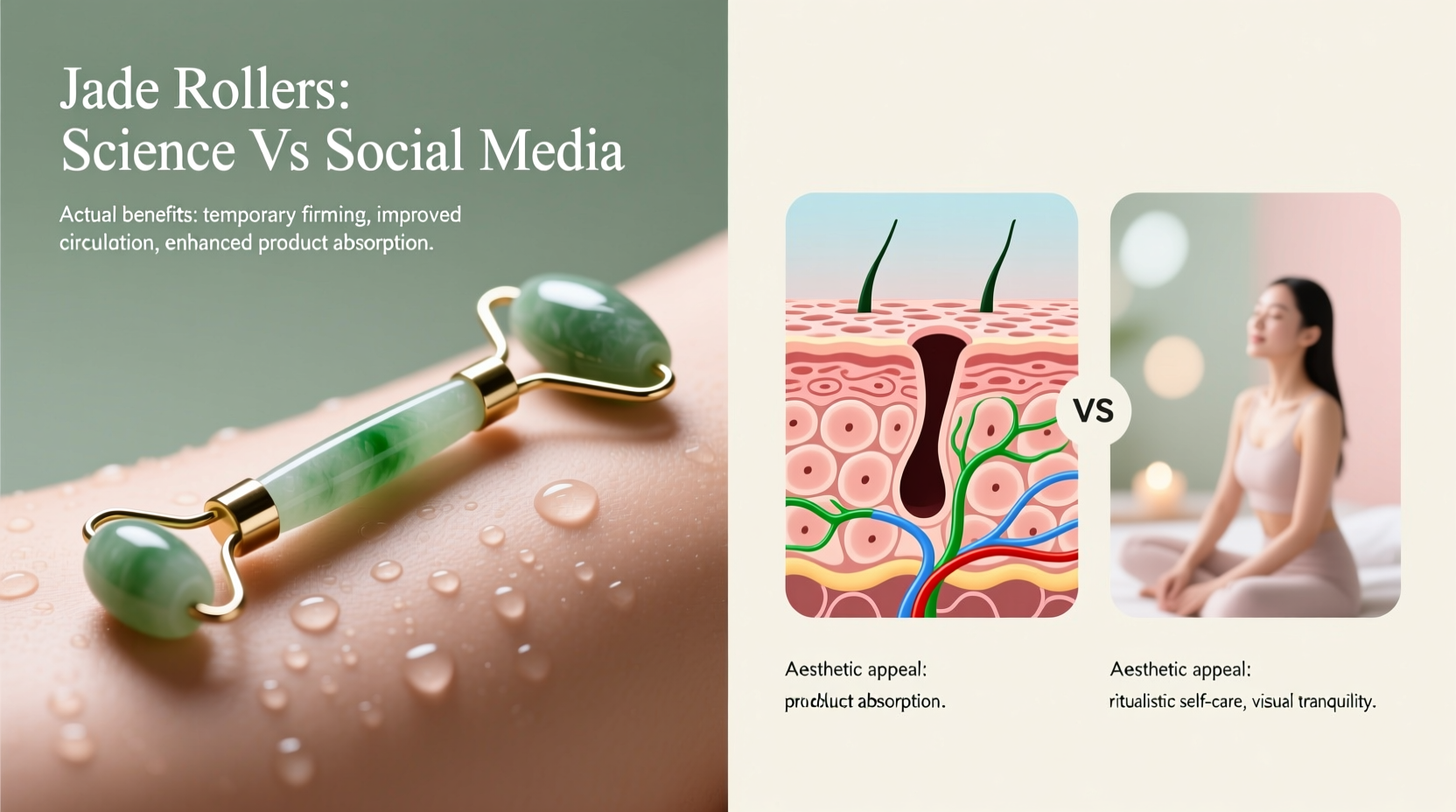
Jade rolling traces its origins to ancient Chinese beauty rituals, where smooth stones were believed to promote energy flow (qi) and support overall wellness. Modern interpretations have adapted this practice into a skincare technique involving gentle facial massage with a handheld tool made of natural stone—typically jade, but also rose quartz or amethyst.
Proponents claim that regular use can:
- Reduce puffiness and under-eye bags
- Improve lymphatic drainage
- Enhance circulation
- Minimize fine lines over time
- Boost product absorption
- Relieve facial tension
These claims sound promising, but how many hold up under scrutiny? Let’s explore the science behind each one.
The Science Behind Facial Rolling: What Really Happens?
To assess whether jade rollers deliver tangible benefits, we need to understand the physiological processes involved in facial massage.
Lymphatic Drainage: The lymphatic system helps remove waste and excess fluid from tissues. When fluid accumulates—especially around the eyes—it causes puffiness. Gentle upward and outward massage motions, like those used with a jade roller, can stimulate lymphatic flow, encouraging fluid to move toward lymph nodes for filtration. Dermatologists acknowledge that manual lymphatic drainage techniques are effective; however, the degree to which a jade roller achieves this compared to professional massage is limited.
Dr. Lindsey Zubritsky, a board-certified dermatologist based in Pittsburgh, explains:
“Facial massage, including with tools like jade rollers, can temporarily reduce puffiness by promoting fluid movement. It’s not magic—it’s mechanics. The pressure and motion help redirect stagnant fluid, much like pressing on a sponge.” — Dr. Lindsey Zubritsky, MD
Blood Circulation: Increased blood flow brings oxygen and nutrients to the skin’s surface, which may result in a temporary glow. Studies show that massage improves microcirculation in the skin, which could enhance complexion and support healing. However, this effect is transient—usually lasting 30 minutes to a few hours post-massage.
Product Absorption: Some users report that rolling serums or oils into the skin improves penetration. While there’s no direct clinical evidence proving jade rollers increase absorption, mechanical pressure can assist in distributing products more evenly across the face, reducing pooling and ensuring better coverage.
That said, these benefits don’t require a $40 jade roller. Any smooth, clean tool—or even fingertips—can produce similar effects.
Tip: For enhanced cooling and depuffing effects, store your jade roller in the refrigerator overnight. The cold temperature constricts blood vessels and further reduces morning puffiness.What Jade Rollers Can’t Do: Debunking Myths
Despite their popularity, jade rollers are often marketed with exaggerated promises. Here are common misconceptions that lack scientific backing:
- They tighten sagging skin permanently. There is no evidence that rolling prevents or reverses skin laxity. Devices like radiofrequency tools or professional treatments such as microneedling have proven efficacy for collagen stimulation—jade rollers do not.
- Jade emits healing energy. While proponents cite the stone’s “energetic properties,” there is no peer-reviewed research supporting bioactive emissions from jade that affect skin health.
- They eliminate wrinkles. Fine lines caused by dehydration may appear softer after rolling due to improved hydration and circulation, but structural wrinkles (like nasolabial folds) won’t be reduced.
- One size fits all technique. Incorrect rolling—such as pressing too hard or using downward strokes—can stretch delicate skin and potentially accelerate aging.
It’s important to manage expectations. A jade roller is best viewed as a complementary tool, not a replacement for clinically proven skincare ingredients like retinoids, vitamin C, or sunscreen.
A Practical Guide to Using a Jade Roller Effectively
If you choose to incorporate a jade roller into your routine, doing so correctly maximizes any potential benefits. Follow this step-by-step guide for optimal results:
- Cleanse your face. Start with a freshly washed face to prevent pushing dirt or oil deeper into pores.
- Apply a serum or facial oil. Use a slippery base to allow the roller to glide smoothly without tugging. Hyaluronic acid serums or facial oils work well.
- Begin with the larger end on cheeks. Starting at the center of your face, roll outward along the cheekbones toward the ears. Repeat 3–5 times per side.
- Move to the jawline. Place the roller under your chin and roll upward along the jaw toward the lymph nodes near your ears. This helps reduce jawline puffiness.
- Use the smaller end around the eyes. Gently roll from the inner corner of the eye outward, avoiding direct pressure on the eyelid.
- Forehead and brow area. Roll upward from the eyebrows to the hairline, following the natural contour of the forehead.
- Neck (optional). Extend the motion down the neck to encourage full lymphatic drainage.
- Clean the roller after use. Wipe with a soft cloth and mild soap weekly to prevent bacterial buildup.
Limit sessions to 3–5 minutes daily, ideally in the morning to combat puffiness or at night to relax facial muscles.
Realistic Results: A Mini Case Study
Sophie, a 32-year-old graphic designer from Portland, began using a jade roller six months ago after seeing it recommended online. She uses it every morning with a vitamin C serum, focusing on her puffy under-eyes and tense jawline.
After two weeks, she noticed her morning puffiness diminished faster than before. Her skin appeared brighter, though she attributes part of this to the serum she started using simultaneously. After three months, she reported feeling less facial tension, especially after long screen days. However, she didn’t observe changes in acne, texture, or wrinkles.
When asked if she’d continue using it, Sophie said: “It’s not changing my skin dramatically, but it feels nice, and it’s become part of my self-care ritual. I wouldn’t buy another if I lost it, unless it was under $15.”
This case reflects a common user experience: modest, temporary improvements in appearance and sensation, with psychological benefits playing a significant role.
Jade vs. Other Tools: A Comparative Overview
Not all facial tools are created equal. Below is a comparison of the jade roller against other popular at-home devices:
| Tool | Primary Benefit | Scientific Support | Cost Range |
|---|---|---|---|
| Jade Roller | Temporary depuffing, relaxation | Low to moderate (mechanical effect) | $10–$50 |
| Gua Sha Stone | Improved circulation, muscle release | Moderate (similar to massage therapy) | $15–$60 |
| Microcurrent Device (e.g., NuFace) | Short-term muscle toning | High (FDA-cleared for facial toning) | $200–$400 |
| LED Light Therapy Mask | Acne reduction, anti-aging | High (multiple clinical studies) | $100–$300 |
| Vacuum Pore Cleaner | Blackhead removal | Moderate (short-term debris removal) | $20–$80 |
While jade rollers rank low in clinical efficacy, they score high in accessibility and ease of use. They serve best as entry-level tools for those exploring facial massage—not as medical-grade solutions.
Expert Tips for Maximizing Value
Tip: Pair your jade roller with a caffeine-based eye serum. Caffeine constricts blood vessels and reduces dark circles, while rolling enhances its delivery—creating a synergistic effect.- Roll consistently, but don’t overdo it. Once or twice daily is sufficient.
- Always roll upward and outward—never drag skin downward, which can weaken elasticity.
- Replace cracked or rough rollers immediately—they can micro-tear skin.
- Combine with mindful breathing or meditation to amplify stress-reducing benefits.
- Don’t expect overnight changes. Any visible results are cumulative and subtle.
Frequently Asked Questions
Can jade rollers cause breakouts?
Poor hygiene can turn any skincare tool into a bacteria carrier. If not cleaned regularly, residue from oils, serums, and dead skin can accumulate on the roller and transfer back to your face, potentially clogging pores. Clean your roller weekly with mild soap and water, and dry thoroughly.
Is real jade better than synthetic alternatives?
Authentic nephrite or jadeite jade is naturally cool and retains temperature longer than glass or plastic imitations. However, most affordable rollers are made from stabilized or lower-grade jade. Synthetic versions (often labeled as \"jade\") perform similarly in terms of glide and cooling. Focus on smoothness and craftsmanship rather than authenticity unless purchasing a high-end piece.
How long before I see results?
Immediate effects—like reduced puffiness and improved glow—can be seen within minutes. Long-term changes, such as firmer-looking skin or reduced tension, may take 4–8 weeks of consistent use. However, these are subjective and vary widely between individuals.
Final Verdict: Worth It or Wellness Theater?
The jade roller occupies a gray area between functional tool and aesthetic accessory. It delivers real, albeit minor, physiological benefits through mechanical massage. Reduced puffiness, enhanced circulation, and improved product application are achievable with proper use. However, these outcomes are not unique to jade—finger massage or other tools can replicate them.
Where the jade roller truly shines is in ritual and intention. In an era of fast-paced living and digital overload, taking five minutes to gently roll your face can be a grounding act of self-care. The sensory experience—the cool stone, the rhythmic motion, the focus on breath—can reduce stress, which indirectly benefits skin health. Chronic stress elevates cortisol, contributing to breakouts, sensitivity, and premature aging. Anything that mitigates stress has value.
So, is the jade roller worth buying? Yes—if you appreciate tactile routines and want a low-cost way to enhance your skincare experience. No—if you’re seeking dramatic anti-aging results or medical-grade treatment.
“The placebo effect is powerful in skincare. If using a jade roller makes someone more consistent with their routine or feel more connected to their body, that’s a win—even if the stone itself isn’t doing much.” — Dr. Nina Lim, Cosmetic Psychodermatology Researcher
Your Next Step
Rather than chasing trends, ask yourself: Does this tool fit my lifestyle? Will I use it consistently? Does it make me feel better—not just look better?
If the answer is yes, then a jade roller might be more than just an Instagram prop. It could become a meaningful part of your wellness journey. Try it mindfully, pair it with proven skincare practices, and judge its value not by hype, but by how it makes you feel.
🚀 Ready to upgrade your routine? Start tonight: cleanse, apply your favorite serum, and spend five minutes massaging your face with intention. Share your experience in the comments—what changes did you notice?








