When preparing for a day on the slopes, few decisions impact comfort as much as hand protection. Cold fingers can ruin even the best ski trip. But with so many options—gloves, mittens, heated models—it’s hard to know what truly works. The core question isn’t just about warmth; it’s about balancing insulation, dexterity, moisture control, and personal preference in extreme conditions. This article breaks down the science and real-world experience behind heated gloves versus traditional mittens, helping you make an informed decision before your next winter adventure.
Understanding Heat Retention: Why Mittens Often Win
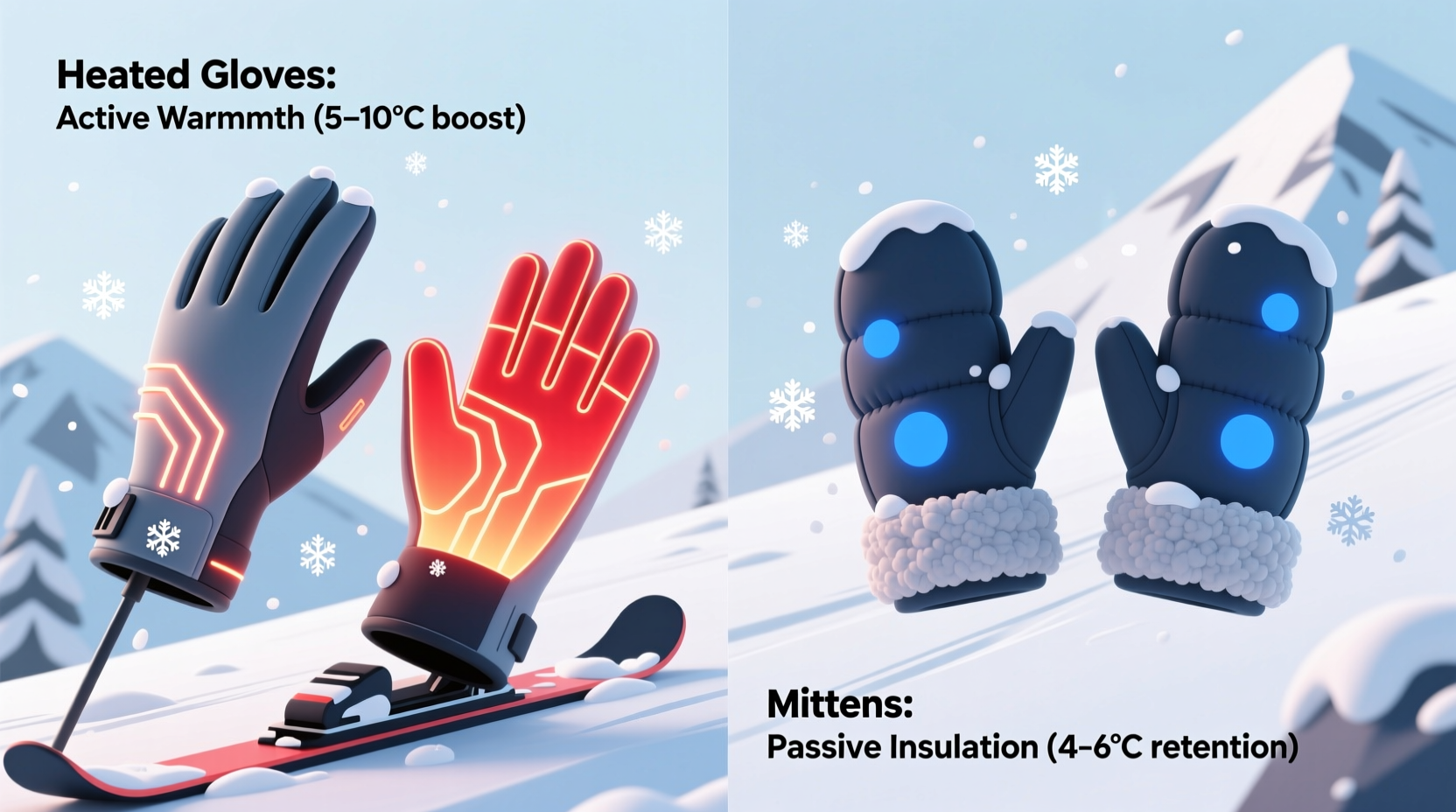
The fundamental principle behind hand warmth is simple: heat is retained more efficiently when less surface area is exposed and when fingers are grouped together. This is where mittens have a natural advantage. Unlike gloves, which separate each finger into its own compartment, mittens keep all fingers (except the thumb) in a shared space. This allows body heat to circulate between fingers, creating a microclimate that resists cold far more effectively.
According to Dr. Lena Peterson, a biomechanics researcher at the University of Innsbruck who studies cold-weather performance:
“Even high-quality gloves lose heat faster than mittens because isolated fingers create multiple small zones of exposure. In sub-zero environments, that difference can mean the difference between functional hands and numb digits within an hour.” — Dr. Lena Peterson, Cold-Weather Biomechanics Researcher
This doesn’t mean gloves are obsolete. But if maximum warmth is the primary goal—especially in temperatures below 20°F (-6°C)—mittens offer a structural edge. That said, not all mittens are created equal. Materials, fit, and layering matter significantly.
Tip: Look for mittens with a removable liner. This allows you to dry the inner layer separately, reducing moisture buildup—a major cause of heat loss.Heated Gloves: Technology vs. Tradition
Heated gloves introduce a different paradigm: active warming instead of passive insulation. Powered by rechargeable lithium-ion batteries, these gloves use thin carbon fiber or metal alloy heating elements woven into the fabric—typically across the back of the hand, fingertips, and sometimes the palm.
Modern models offer adjustable heat settings (usually low, medium, high), USB-C charging, water resistance up to IPX7 standards, and battery life ranging from 2 to 8 hours depending on usage. Brands like OutdoorMaster, Gerbing, and Burton have refined this technology to be lightweight and responsive.
But does adding electricity solve the fundamental insulation problem?
In short: yes, but conditionally. Heated gloves can outperform even premium mittens—if the heat is well-distributed, the battery lasts long enough, and the glove maintains breathability. However, they also introduce new vulnerabilities: dead batteries, bulkier construction, higher cost, and reduced dexterity due to wiring and power packs.
When Heated Gloves Shine
- Extremely cold mornings: On early lifts when temps hover near -10°F (-23°C), pre-heating gloves via smartphone app or manual switch can prevent initial frostbite risk.
- Prolonged static periods: Chairlift rides, photo stops, or après-ski transitions benefit from continuous heat.
- Dexterity needs: Skiers who frequently adjust goggles, zippers, or camera gear appreciate glove-like finger separation without sacrificing warmth.
Where They Fall Short
- Battery dependency: A failed or forgotten charge leaves you worse off than with standard gloves—no backup insulation buffer.
-
Moisture sensitivity: While most are water-resistant, prolonged exposure to snow can degrade electronics over time. - Weight and fit: Some models feel stiff or restrict grip strength, affecting pole control.
Mittens vs. Heated Gloves: A Direct Comparison
| Feature | Mittens (High-End Insulated) | Heated Gloves (Premium Model) |
|---|---|---|
| Heat Retention (Passive) | ★★★★★ | ★★★☆☆ |
| Active Heating Capability | N/A | ★★★★★ |
| Dexterity & Finger Movement | ★★☆☆☆ | ★★★★☆ |
| Battery Life / Reliability | N/A | ★★★☆☆ (varies with temp) |
| Moisture Resistance | ★★★★☆ | ★★★☆☆ |
| Durability (Long-Term Use) | ★★★★★ | ★★★☆☆ |
| Price Range (USD) | $80–$150 | $120–$250 |
Note: Passive heat retention refers to insulation quality without external power. Heated gloves typically rely on both insulation and active warming, but their base thermal performance is often lower than comparable mittens.
Real-World Scenario: A Day at Jackson Hole
Consider Sarah, an intermediate skier visiting Jackson Hole in January. Morning temperatures are -5°F (-21°C) with wind chill dropping to -20°F. She opts for heated gloves, believing technology will keep her warm during long chairlifts.
By mid-morning, one battery dies unexpectedly after being stored in a cold pocket. She swaps it out, but the replacement only lasts 1.5 hours on high. During a fall, snow seeps through a seam near the wrist. By noon, her left hand is numb despite cranking the heat to max.
Meanwhile, her friend Mark wears double-layer leather mittens with wool liners. Though he can’t text as easily, his hands stay warm all day. He attributes this to proper layering and avoiding over-gripping poles, which reduces circulation strain.
Sarah’s experience highlights a critical truth: convenience has trade-offs. Heated gloves performed well initially but faltered under sustained extreme conditions. For resorts with frigid climates, mittens remain a more dependable baseline choice.
Tip: Always carry spare chemical hand warmers in your jacket. They’re lightweight backups for any glove or mitten system.Choosing What’s Right for You: A Step-by-Step Guide
Instead of declaring one option universally superior, consider your specific needs. Follow this decision framework:
- Assess your typical skiing environment: If you ski mostly above treeline, in northern regions, or during early/late season extremes, prioritize warmth. Choose mittens or heated mittens (yes, they exist).
- Evaluate your dexterity requirements: Do you frequently handle smartphones, GoPros, or ski tunes? If yes, heated gloves may justify the compromise.
- Check battery logistics: Can you charge devices nightly? Do you forget chargers? If reliability is a concern, passive insulation wins.
- Test fit and flexibility: Try bending fingers and making a fist. Stiffness increases fatigue and reduces blood flow—key factors in cold hands.
- Layer strategically: Wear thin silk or merino liners under either option. Avoid cotton at all costs—it traps moisture and accelerates cooling.
- Budget accordingly: High-end mittens often cost less than heated gloves but last longer. Factor in replacement frequency and repair options.
Expert Insight: What Guides Real Pros?
Many professional guides and patrollers operate in brutal conditions daily. Their choices reflect practicality over trend.
“I’ve tried every heated glove on the market. For guiding avalanche courses in Colorado, I still default to Black Diamond Mercury Mitts. No wires to fail, no charging, and when I need fine motor skills, I flip up the shell and work with the liner gloves underneath.” — Jake Reynolds, AMGA-Certified Ski Guide
This hybrid approach—removable liners inside a durable outer mitten—is increasingly popular among serious skiers. It offers the warmth of mittens with the occasional dexterity of gloves.
Frequently Asked Questions
Can I wear heated gloves in heavy snow?
Yes, most are water-resistant and designed for ski conditions. However, avoid submerging them or exposing seams to prolonged wetness. Dry thoroughly after each use to protect internal circuits.
Do heated gloves work better than mittens overall?
Not necessarily. They provide active warmth, which can compensate for lower insulation, but they don’t surpass mittens in pure thermal efficiency. In consistently cold environments, mittens generally perform more reliably.
Are there heated mittens available?
Yes—brands like Heat Company and OutdoorMaster offer heated mittens. These combine the warmth advantage of mitten design with electric heating elements. They tend to be heavier and pricier but represent the best of both worlds for extreme cold enthusiasts.
Final Recommendation: Match Gear to Your Priorities
If your top priority is staying warm with minimal fuss, especially in sub-zero environments, **traditional insulated mittens** are still the gold standard. Their simplicity, durability, and superior heat retention make them ideal for most skiers facing real winter conditions.
However, if you value fingertip control, ski in variable but not extreme cold, and are diligent about charging and maintenance, **heated gloves** can enhance comfort and extend your enjoyment on the mountain. Just don’t rely on them as a substitute for sound layering and preparation.
For the best of both worlds, consider investing in **heated mittens** or a **mitten-liner combo system**. These solutions respect the physics of heat conservation while incorporating modern tech where it adds real value.
💬 Have your own experience with heated gloves or mittens on the slopes? Share what worked (or didn’t) in the comments below—your insights could help fellow skiers make smarter choices next season.








