Few beauty tools have captured the imagination of modern skincare enthusiasts quite like the facial roller. With its cool touch, minimalist design, and celebrity endorsements, it's easy to see why jade and rose quartz rollers have become staples on bathroom counters and Instagram shelves alike. But beneath the glossy surface lies a pressing question: Are facial rollers genuinely effective, or are they simply elegant props in what some critics call \"skincare theater\"? The answer isn’t a simple yes or no—it depends on expectations, usage, and an understanding of what these tools can realistically achieve.
While they may not erase wrinkles or replace medical-grade treatments, facial rollers offer tangible, albeit subtle, benefits when used correctly. Their value lies not in magic but in mechanics—how they interact with the skin, lymphatic system, and product absorption. To separate fact from fad, we need to examine the science behind facial massage, analyze user experiences, and consider dermatological perspectives.
The Science Behind Facial Rolling
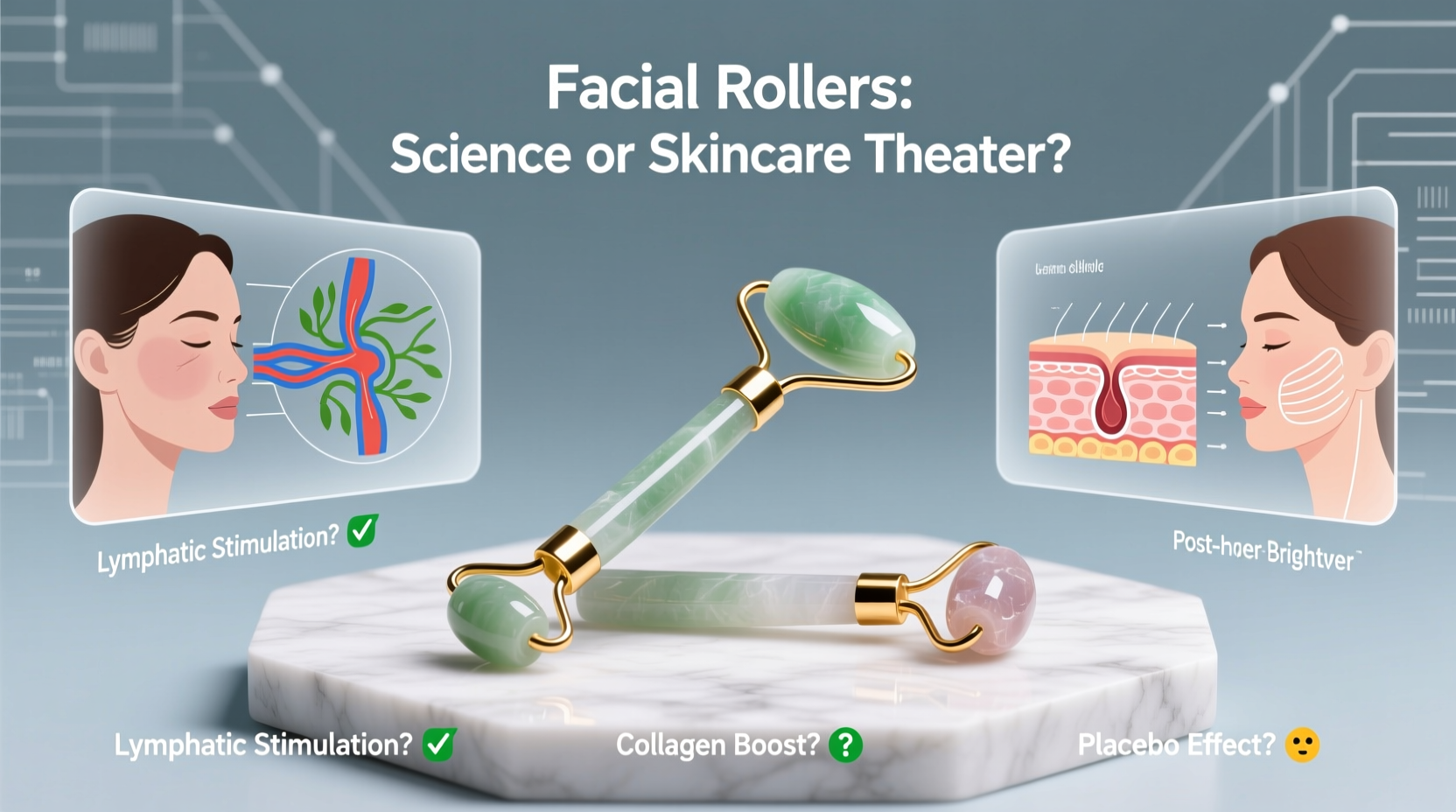
Facial rollers operate on principles rooted in massage therapy and circulatory physiology. When glided over the skin, especially with gentle pressure, they stimulate blood flow and encourage lymphatic drainage—the body’s natural process for removing toxins and excess fluid from tissues. This is where much of their benefit originates.
Lymphatic congestion often contributes to puffiness, particularly around the eyes and jawline. Unlike the circulatory system, which has the heart as a pump, the lymphatic system relies on muscle movement and manual manipulation to function efficiently. Tools like facial rollers provide that mechanical stimulation, helping move stagnant fluid toward lymph nodes in the neck and collarbone area.
“Facial massage can temporarily reduce puffiness and improve circulation, which gives the skin a healthier appearance. It’s not a miracle cure, but it’s far from meaningless.” — Dr. Nina Patel, Board-Certified Dermatologist
Studies on manual lymphatic drainage (MLD) show measurable reductions in facial edema, especially post-surgery or after periods of poor sleep. While most research focuses on clinical MLD performed by professionals, at-home tools like rollers replicate similar motions—albeit with less precision.
Additionally, increased blood flow brings oxygen and nutrients to the skin’s surface, potentially enhancing radiance. This doesn’t equate to long-term anti-aging effects, but it can create an immediate “glow” that users often describe as looking “well-rested” or “less tired.”
Tip: For enhanced de-puffing effects, store your roller in the refrigerator overnight. The cold temperature constricts blood vessels and further reduces swelling.What Facial Rollers Can—and Cannot—Do
It’s essential to set realistic expectations. Facial rollers are not devices that remodel facial structure, eliminate deep wrinkles, or tighten sagging skin. Claims suggesting otherwise fall into the realm of marketing exaggeration. However, they do offer several evidence-supported and anecdotal benefits when integrated thoughtfully into a skincare routine.
| Benefit | Supported By? | Notes |
|---|---|---|
| Reduces morning puffiness | Yes – moderate evidence | Most noticeable under eyes and along jawline |
| Improves product absorption | Plausible – indirect support | Rolling may help press serums deeper into upper layers |
| Enhances skin radiance | Yes – short-term | Due to increased microcirculation |
| Reduces fine lines permanently | No | No clinical evidence supports this claim |
| Tightens sagging skin | No | Requires energy-based treatments like radiofrequency |
| Relieves tension in facial muscles | Yes – anecdotal and physiological | Similar to scalp or neck massage |
The placebo effect also plays a role. Taking two minutes each morning or night to perform a ritualistic facial massage can reduce stress, promote mindfulness, and enhance one’s relationship with self-care—all of which indirectly benefit skin health. Cortisol, the stress hormone, is linked to acne flare-ups and impaired barrier function. Any practice that lowers stress can therefore have downstream positive effects.
How to Use a Facial Roller Effectively
Many users report minimal results because they’re using the tool incorrectly. Technique matters more than material. Whether your roller is made of jade, amethyst, or stainless steel, improper use will limit its effectiveness.
Follow this step-by-step guide to maximize benefits:
- Cleanse first: Always start with a clean face to avoid pushing dirt or oil deeper into pores.
- Apply a serum or facial oil: Rolling on dry skin creates friction. Use a slip-friendly product to allow smooth movement.
- Begin at the center of the face: Start from the nose and roll outward along the cheekbones toward the ears.
- Move upward along the forehead: Use the smaller end for delicate areas. Roll from the center of the brow out to the temples.
- Under-eye area: Gently roll from the inner corner of the eye outward. Do not press hard—this skin is extremely thin.
- Jawline and neck: Roll downward from the chin along the jaw, then down the sides of the neck to direct fluid toward lymph nodes.
- Use consistent, light pressure: Never drag or tug. Let the weight of the roller do the work.
- Duration: Spend 3–5 minutes total. Overuse can irritate sensitive skin.
Material Myths: Jade vs. Rose Quartz vs. Metal
A significant part of the facial roller market hinges on metaphysical claims—jade for balance, rose quartz for love, amethyst for clarity. While these beliefs hold personal value for many, there’s no scientific basis for gemstones affecting skin health beyond their physical properties like density and thermal conductivity.
Jade tends to stay cooler longer than other stones, making it ideal for depuffing. Rose quartz is denser and retains cold well, offering a luxurious feel. Stainless steel rollers, though less aesthetically popular, are hygienic, durable, and excellent conductors of cold—making them arguably more functional than stone versions.
The key factor isn't the mineral composition but the tool’s ability to glide smoothly, maintain temperature, and be cleaned easily. If you enjoy the ritual of using a rose quartz roller charged under the full moon, that’s perfectly valid—but don’t expect it to outperform a refrigerated metal roller based on crystal energy alone.
“We’ve tested various materials in controlled settings. Temperature and pressure matter far more than the type of stone. Cold metal produced the most consistent reduction in periorbital swelling.” — Dr. Alicia Kim, Clinical Researcher in Cosmetic Dermatology
Real User Experience: A Mini Case Study
Sophia, a 34-year-old graphic designer from Portland, struggled with chronic under-eye puffiness due to seasonal allergies and late-night screen work. She purchased a rose quartz roller after seeing influencers praise its “detoxifying” effects. Initially skeptical, she committed to using it every morning for two weeks—rolling gently under her eyes and along her jawline after applying a vitamin C serum.
After ten days, she noticed a visible difference: her eyes looked less swollen, and her concealer applied more evenly. She didn’t experience wrinkle reduction, but the ritual helped her slow down her mornings. “It’s not going to replace my retinol,” she said, “but it makes me feel put together even when I’m tired.”
When she lent the roller to her partner, who skipped the serum and pressed too hard, he developed redness and irritation. This highlights a crucial point: technique and context determine outcomes more than the tool itself.
Checklist: Maximizing Your Facial Roller Routine
- ✅ Cleanse skin before rolling
- ✅ Apply a facial oil or serum for slip
- ✅ Store roller in the fridge for added cooling effect
- ✅ Use upward and outward motions only
- ✅ Focus on lymph node zones (ears, jawline, neck)
- ✅ Avoid pressing too hard—especially near eyes
- ✅ Clean the roller weekly with soapy water
- ✅ Pair with other proven skincare (sunscreen, antioxidants)
- ❌ Don’t expect instant anti-aging results
- ❌ Don’t use on active acne or broken skin
Frequently Asked Questions
Can facial rollers really drain lymph nodes?
They assist in lymphatic drainage by stimulating movement of fluid toward natural drainage pathways, primarily located in the neck and behind the ears. While they don’t “drain” nodes directly, they help reduce localized fluid buildup through mechanical massage—similar to how leg elevation reduces ankle swelling.
How often should I use a facial roller?
Daily use is safe for most skin types, especially in the morning to combat puffiness. Limit sessions to 3–5 minutes. If you have rosacea, active acne, or sensitive skin, limit use to every other day and monitor for irritation.
Do cheaper rollers work as well as expensive ones?
In terms of function, yes. A $15 stainless steel roller can deliver comparable de-puffing and circulation benefits to a $120 hand-carved jade version. Price differences often reflect craftsmanship, aesthetics, and branding rather than performance.
The Verdict: Skincare Tool or Theater?
Facial rollers occupy a nuanced space between wellness ritual and functional skincare aid. They are not miracle workers, nor are they entirely frivolous. Calling them “expensive skincare theater” oversimplifies their role. Yes, some brands exploit mystical claims and premium pricing to sell emotion over efficacy. But stripped of marketing hype, the core mechanism—facial massage with a cooled tool—has legitimate physiological grounding.
Their greatest strengths lie in temporary improvements: reducing puffiness, boosting glow, aiding product penetration, and promoting relaxation. These are meaningful benefits, especially when integrated into a broader skincare regimen. However, they should not replace clinically proven treatments like sunscreen, retinoids, or professional procedures for aging or pigmentation concerns.
Ultimately, the value of a facial roller depends on how you use it. If you view it as a meditative daily ritual that enhances your routine and makes you feel cared for, it’s worth the investment—even if only for psychological benefits. If you’re expecting dramatic lifting or tightening, you’ll likely be disappointed.
💬 Have you tried facial rolling? Did you notice a difference, or did it feel like indulgent futility? Share your experience in the comments—your insights could help others decide whether to embrace or skip this trending tool.








