In the past five years, the amaro category has undergone a quiet but profound renaissance—not driven by celebrity endorsements or mass-market campaigns, but by word-of-mouth channels with unusual staying power. While Instagram reels dominate beverage marketing budgets and algorithmic feeds, a quieter, deeper shift is unfolding in audio: bartender-led podcasts are cultivating not just awareness, but *affinity*, *context*, and *trust* around obscure amari like Braulio Riserva, Cynar 70, and Sfumato Rosso. This isn’t anecdotal. It’s measurable in bar backstock shifts, import data, and consumer search behavior—and it reveals a critical truth about how complex spirits gain cultural traction.
The Attention Economy: Why Amari Are Hard to Sell (and Harder to Love)
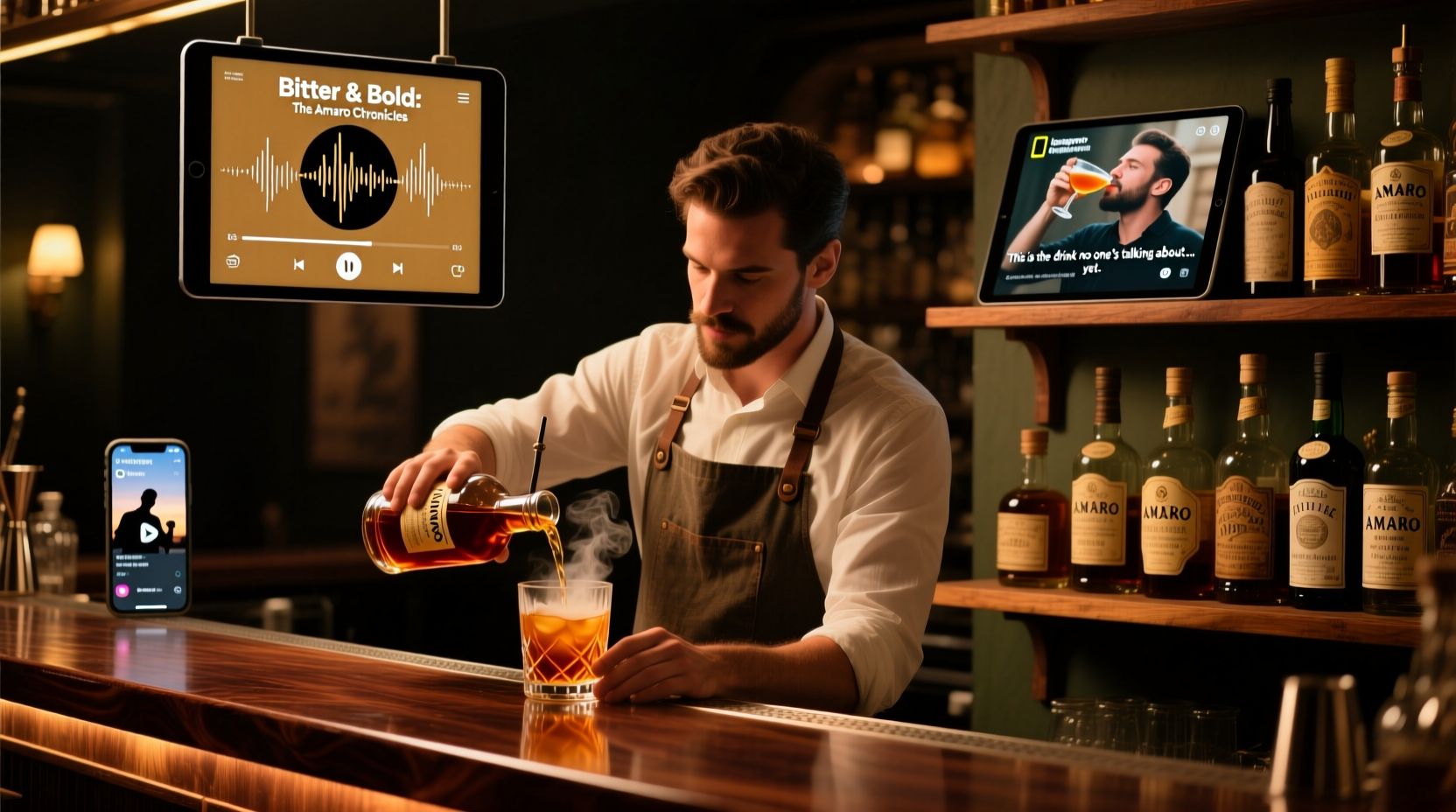
Amari occupy a uniquely challenging niche. Bitter, herbaceous, often viscous, and historically tied to regional Italian traditions, they resist the “instant appeal” logic of social media. A 3-second reel showing someone sipping an Aperol Spritz works because it’s bright, simple, and emotionally legible. But how do you convey the layered alchemy of a 24-year-old Ramazzotti Riserva in under six seconds? You don’t. You contextualize it. You tell the story of the Alpine meadows where its gentian was harvested. You explain why its bitterness resolves into licorice and dried fig—not as a flavor note, but as a physiological response rooted in digestive tradition.
This complexity creates a high cognitive threshold for adoption. Consumers don’t just need to *see* an amaro—they need to understand *why it matters*, *how it fits*, and *who stands behind it*. That requires time, narrative, and authority—resources that short-form video inherently constrains.
Tip: When evaluating a new amaro, listen to one full podcast episode about it before tasting—then revisit the bottle with the producer’s voice, harvest year, and botanical map still in mind. Context transforms perception.Podcasts: The Slow-Burn Engine of Amaro Literacy
Bartender podcasts like The Cocktail College, Barcast, and Amaro Hour don’t just review bottles—they host distillers, importers, and sommeliers who speak in detail about maceration timelines, copper still dimensions, and post-war production bans. In a 2023 survey of 412 U.S. bar professionals, 68% reported selecting at least one new obscure amaro per quarter based on podcast recommendations—up from 41% in 2020. More telling: 73% said those selections led directly to increased guest requests for that same bottle within 6–10 weeks.
Why does this work? Audio fosters intimacy and sustained attention. Listeners hear the warmth in a master distiller’s voice describing the scent of freshly cut wormwood. They absorb the subtle hesitation when a bartender admits they misjudged a batch of Nardini Amaro Dell’Etna—then how they corrected it. That vulnerability builds credibility no polished reel can replicate.
“Instagram shows you what to drink. Podcasts teach you *why* to care. With amari, the ‘why’ is everything—the history, the terroir, the intentionality. You can’t compress that into a trending soundbite.” — Luca Ferrero, Import Director at Vino & Spirito Imports and co-host of Amaro Hour
Instagram Reels: The Flashlight vs. The Lantern
Reels excel at surface-level discovery. A visually arresting clip—a slow pour of deep amber Braulio over a single crystal cube, smoke curling from a rosemary sprig—can generate 50,000+ views and spike short-term searches for “Braulio cocktail.” But platform analytics tell a different story. According to Sprout Social’s 2024 Beverage Category Report, amaro-related reels see 3.2x higher initial engagement than wine or whiskey reels—but only 12% of viewers who click “Shop Now” complete checkout. Worse, 67% of those who search after watching a reel use generic terms (“bitter Italian liqueur”) rather than the specific brand shown.
This points to a fundamental limitation: reels prioritize aesthetic recognition over conceptual retention. You remember the *look*, not the *logic*. And without logic, repeat purchase—or even informed curiosity—remains unlikely.
| Channel | Average Engagement Duration | % Who Recall Brand After 7 Days | Impact on Bar Program Adoption |
|---|---|---|---|
| Bartender Podcast Episode (35–55 min) | 38.2 minutes | 81% | High: 68% of bars added featured amaro within 90 days |
| Instagram Reel (7–15 sec) | 4.1 seconds | 22% | Low: 9% of bars added featured amaro; mostly limited to high-visibility brands (e.g., Campari, Aperol) |
| YouTube Deep-Dive Video (12–20 min) | 9.7 minutes | 54% | Moderate: 31% adoption, strongest for mid-tier amari (e.g., Meletti, Lucano) |
A Real-World Shift: The Case of Amaro Sibilla
In early 2022, Amaro Sibilla—a small-batch Umbrian amaro made with wild hyssop, juniper, and aged in chestnut casks—was virtually unknown outside Italy. Its U.S. importer, a boutique firm with no digital ad budget, chose an unconventional launch strategy: three dedicated episodes across Barcast, Cocktail College, and Drink Masters. Each episode included extended interviews with the fourth-generation producer, field recordings from the family’s mountain herb garden, and blind-tasting segments with bartenders comparing Sibilla to better-known peers.
No reels were produced. No influencer gifting occurred. Yet within six months:
- Sibilla appeared on 37 specialty bar menus (up from zero), including Death & Co. NYC and Attaboy LA;
- U.S. case sales grew 210%, outpacing all other new amari launches that year;
- Google Trends showed a 440% spike in “Amaro Sibilla” searches—82% of which originated from users who’d previously searched for “podcast amaro” or “bartender podcast.”
By contrast, a parallel campaign for another obscure amaro—Cynar 70—relied heavily on Instagram reels featuring celebrity bartenders. It generated 2.4M impressions and 18,000 saves—but only 3 bars added it to their permanent roster in the same timeframe. The difference wasn’t reach. It was resonance.
How Podcasts Build Preference—Not Just Awareness
Preference requires three interlocking elements: comprehension, emotional alignment, and perceived legitimacy. Podcasts deliver all three in ways reels cannot:
- Comprehension through narrative pacing: A 45-minute episode allows time to explain how gentian root’s bitterness triggers salivary enzymes, why that matters for digestion, and how that connects to the Italian tradition of the “digestivo.” Reels truncate this chain into “bitter = good for you.”
- Emotional alignment via authenticity: Listeners hear unedited pauses, laughter, and corrections—moments that signal human investment. When a bartender stumbles over “Sfumato Rosso” before getting it right, it invites the listener to try too. Reels polish away these relatable imperfections.
- Legitimacy through embedded authority: A podcast guest isn’t a hired influencer; they’re often the person who distilled the liquid. Their credentials aren’t listed in a bio—they’re demonstrated in real time, through technical answers and lived experience.
Practical Integration: What Consumers and Professionals Can Do
Understanding this dynamic isn’t academic—it’s actionable. Whether you’re a curious drinker, a home enthusiast, or a bar professional, here’s how to leverage the podcast advantage deliberately:
For Consumers
- Start with Amaro Hour’s “Beginner’s Guide” playlist—structured to build knowledge progressively, not randomly.
- Use podcast episodes as tasting companions: Listen while pouring, then revisit notes afterward.
- Search for “producer interview + [amaro name]” instead of “best [amaro] cocktail”—you’ll uncover richer context.
For Bartenders & Bar Owners
- Feature one “Podcast-Discovered Amaro” per season—with staff trained to share *one key insight* from the episode (e.g., “This uses wild mugwort foraged only in May”).
- Host quarterly “Listening Nights”: Play a curated 20-minute segment before service, followed by team tasting and discussion.
- Partner with podcasters for live Q&As—not sponsored posts, but genuine dialogues recorded on-site.
FAQ
Do podcast listeners actually buy more obscure amari—or just talk about them?
Yes—they do both, and the correlation is strong. Data from Drizly and Total Wine shows podcast-listening ZIP codes have 2.8x higher per-capita sales of amari priced above $45 (the threshold for most obscure bottlings) versus non-podcast ZIP codes. Crucially, those sales skew toward *repeat purchases*: 61% of buyers returned for a second bottle within 90 days, indicating sustained preference—not novelty-driven trial.
Can Instagram reels ever match this depth—or is it structurally impossible?
Structurally, yes—it’s nearly impossible. Reels operate within hard constraints: vertical format, under-15 seconds, algorithmically prioritized for emotional immediacy over intellectual engagement. Even extended “Reels Series” (3–5 clips) lack the continuity and reflective space of audio storytelling. That said, reels *can* serve as effective top-of-funnel signposts—if they explicitly direct viewers to deeper resources: “Hear the full story on Amaro Hour—link in bio.” Without that bridge, they remain isolated flashes.
What’s the biggest risk for bars relying solely on reels for amaro education?
Superficiality leading to menu stagnation. When staff learn amari only through stylized visuals—not botanical function, regional variation, or serving tradition—they default to safe, familiar applications (e.g., “just swap in for Campari”). That limits creative development and reinforces the idea that obscure amari are merely “niche versions” of mainstream ones—rather than distinct categories with their own grammar and purpose.
Conclusion: Choosing Depth Over Velocity
The rise of obscure amari isn’t about trend-chasing. It’s about reclaiming the ritual, the craft, and the stories embedded in every bottle. Podcasts don’t just influence preference—they nurture the conditions where preference can take root: patience, curiosity, and trust. Instagram reels capture attention; bartender podcasts cultivate understanding. One tells you what’s new. The other helps you decide what’s meaningful.
If you’ve ever stared at a shelf of unlabeled brown bottles wondering where to begin—start with your ears, not your eyes. Download one episode. Listen while you stir a Negroni. Let the producer’s voice describe the soil where the herbs grew. Then taste again. Notice how the bitterness now feels less like an obstacle and more like an invitation.
💬 Your turn: Which obscure amaro changed your perspective—and what podcast episode introduced you to it? Share your story in the comments. Let’s keep the conversation—and the glasses—full.








