There’s a quiet ritual that anchors countless Italian evenings — the clink of ice, the splash of ruby or tangerine liquid, the citrus twist curling over the rim. This is the aperitivo: not just a drink, but a pause, a social reset, a deliberate invitation to appetite and connection. At its heart stand two iconic Italian bitters — Aperol and Campari — both born in the same country, both bottled in distinctive orange-hued glass, both served chilled with soda and citrus. Yet they diverge so sharply in character that choosing between them isn’t about preference alone; it’s about intention. One invites curiosity, the other commands attention. One eases you into the evening, the other sharpens your senses for what’s to come. Understanding their differences — in history, composition, flavor architecture, and cultural function — transforms a simple cocktail choice into a meaningful act of hospitality.
The Origins: Two Bitters, Two Eras, Two Philosophies
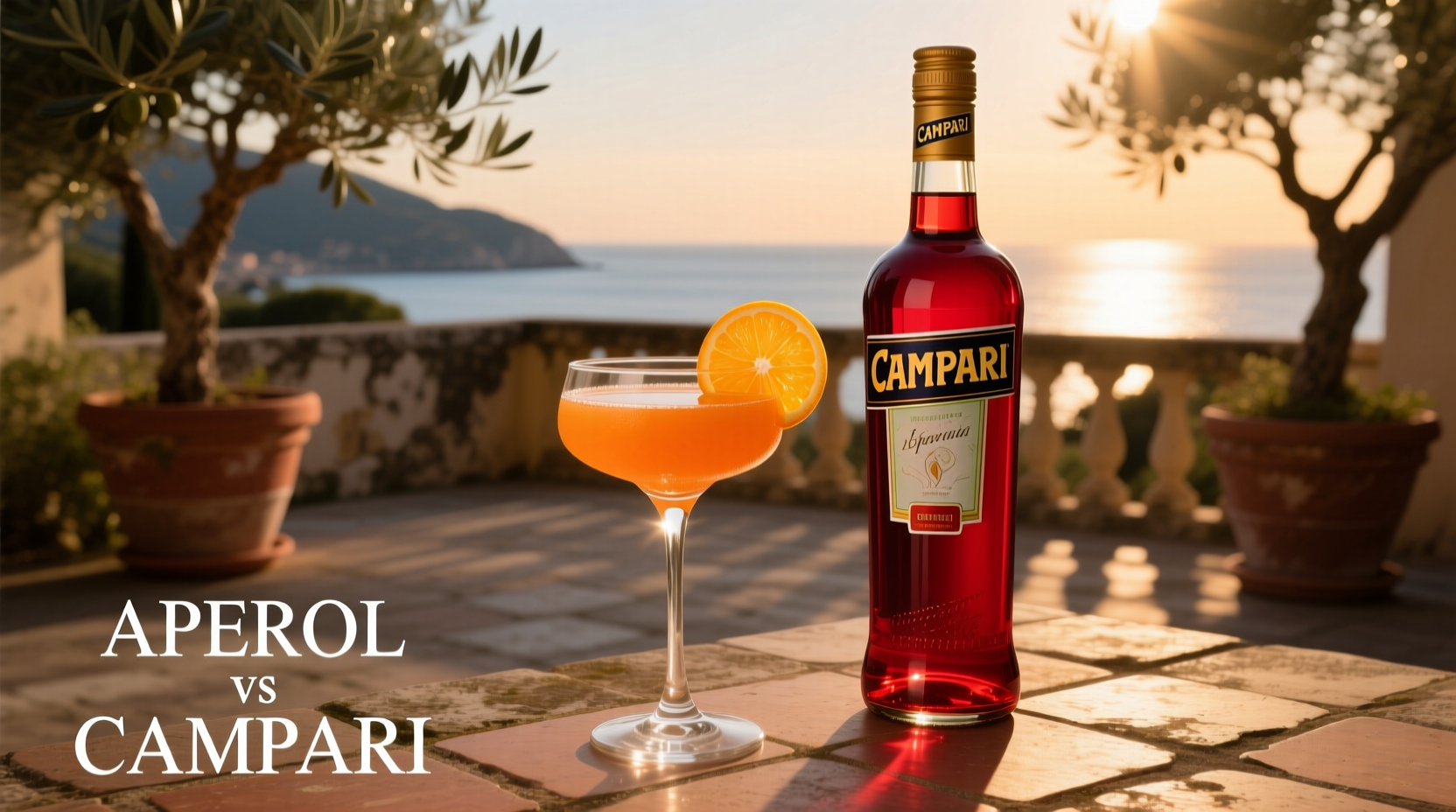
Aperol and Campari share geography but not timeline. Campari was born first — in 1860, in Novara, northern Italy, by Gaspare Campari. His original formula was a closely guarded secret (still largely so today), built around bitter herbs, aromatic roots, citrus peels, and quinine — all macerated in alcohol and sweetened with sugar syrup. From its inception, Campari was assertive: high in alcohol (20.5–28.5% ABV depending on market), intensely bitter, and unapologetically complex. It was medicine turned muse — a digestive aid repurposed as a social catalyst.
Aperol arrived nearly 70 years later, in 1919, created by the Barbieri brothers in Padua. Its timing was no accident: post-war Italy craved accessibility, lightness, and optimism. Aperol was engineered for that mood — lower in alcohol (11% ABV), gentler in bitterness, and layered with bright notes of rhubarb, gentian, cinchona bark, and orange peel. Its name, derived from the French *apéritif*, signaled intent: this was a drink designed to open, not provoke.
This historical divergence explains much of their modern roles. Campari emerged from a tradition of medicinal tonics and apothecary precision; Aperol was conceived as a democratic, sun-drenched companion to la dolce vita. Neither is “better” — but each fulfills a distinct purpose within the aperitivo framework.
Flavor & Structure: A Side-by-Side Sensory Breakdown
Taste is where theory meets tongue. Below is a precise comparison of how these two liqueurs register on the palate — not as abstract descriptors, but as functional truths affecting cocktail balance, food pairing, and drinker experience.
| Characteristic | Aperol | Campari |
|---|---|---|
| Alcohol by Volume (ABV) | 11% | 20.5–28.5% (varies by country) |
| Bitterness Level | Mild to moderate — approachable, rounded, almost fruity | High — pronounced, drying, medicinal, persistent |
| Dominant Notes | Orange zest, rhubarb, gentle gentian, subtle vanilla | Chinotto (bitter orange), quinine, wormwood, clove, dried herbs, burnt sugar |
| Sugar Content | ~120 g/L — perceptibly sweet, softens acidity | ~250 g/L — high sweetness used to counter extreme bitterness |
| Mouthfeel | Light, crisp, effervescent when mixed | Dense, viscous, coating, with lingering astringency |
| Best Served | Chilled, with abundant soda water and orange slice | Chilled, with soda water and orange twist — or in spirit-forward cocktails |
The sugar content distinction is critical. While Campari contains more sugar by volume, its bitterness dominates perception — making it taste drier than it objectively is. Aperol’s lower sugar and milder bitterness allow fruit and citrus to shine through without competition. This is why Aperol Spritz remains the world’s most ordered aperitif cocktail: it delivers refreshment without demanding palate acclimation.
Tip: Never serve Campari at room temperature — its bitterness becomes harsh and cloying. Always chill the bottle and use cold soda water to preserve brightness and effervescence.Cocktail Roles: When to Choose Which Liqueur
Both Aperol and Campari anchor classic aperitifs, but their structural differences dictate where they excel — and where they falter.
The Aperol Spritz (3 parts Prosecco, 2 parts Aperol, 1 part soda water) works because Aperol’s low ABV doesn’t overwhelm the delicate bubbles of Prosecco, while its citrus-forward profile harmonizes with the wine’s green apple and pear notes. Substituting Campari here creates a drink that’s overly bitter, unbalanced, and loses the spritz’s signature lift — unless deliberately re-engineered (e.g., adding extra soda and a squeeze of lemon).
In contrast, Campari’s strength lies in structure. Its higher alcohol and intense bitterness make it ideal for cocktails where backbone matters: the Negroni (equal parts Campari, gin, sweet vermouth) relies on Campari’s assertiveness to hold its own against botanical gin and rich vermouth. An Aperol Negroni exists — but it’s a different drink entirely: lighter, fruitier, less complex, and often perceived as “watered down” by purists. Similarly, the Americano (Campari, sweet vermouth, soda) gains depth and gravitas from Campari’s herbal density — whereas an Aperol Americano reads more like a citrus spritzer than a true aperitif.
Here’s a practical checklist for choosing wisely:
- Choose Aperol when: serving beginners, large groups, or warm-weather gatherings; pairing with light antipasti (prosciutto, melon, marinated olives); aiming for low-ABV refreshment; or seeking broad crowd appeal.
- Choose Campari when: crafting spirit-forward cocktails (Negroni, Boulevardier, Old Pal); serving after a heavy meal to stimulate digestion; pairing with robust flavors (aged cheese, grilled sausage, bitter greens); or catering to experienced drinkers who appreciate complexity and contrast.
- Avoid substituting one for the other in classic recipes unless you’re intentionally adapting — and always adjust ratios and garnishes accordingly.
Food Pairing Logic: How Bitterness Interacts With Flavor
The aperitivo isn’t consumed in isolation. Its purpose is to prime the palate — to cut through fat, heighten salt, and awaken salivary glands before a meal. Bitterness is the key physiological trigger for this effect, but its intensity must match the food’s weight.
Aperol’s mild bitterness pairs elegantly with delicate, fatty, or subtly salty foods. Think: creamy burrata drizzled with olive oil and basil; thin-sliced prosciutto di Parma; lightly fried zucchini flowers; or even fresh oysters with lemon. Its citrus notes echo the acidity in vinaigrettes and raw vegetables, while its low alcohol won’t numb the palate before the first course.
Campari demands bolder company. Its aggressive bitterness cuts cleanly through rich, oily, or fermented elements: aged Parmigiano-Reggiano with crystalline crunch; mortadella studded with pistachios; marinated artichokes packed in oil; or grilled lamb skewers with rosemary. As chef Massimo Bottura observes: “Bitterness is the bridge between the kitchen and the table. Too little, and the palate stays closed. Too much, and it slams shut. Campari opens the door wide — but only if the food has the courage to walk through.”
“Campari is the punctuation mark in the sentence of the meal — sharp, definitive, impossible to ignore. Aperol is the comma: a gentle pause, inviting continuation.” — Luca Pellegrini, Bar Director, Caffè Campari, Milan (2023)
A Real-World Moment: The Roman Trattoria Test
Last spring, I sat at a worn marble bar in Trastevere, watching bartender Sofia prepare drinks for a mix of locals and travelers. A group of four young professionals ordered Aperol Spritzes — she poured precisely, added generous soda, twisted orange over each glass, and placed them beside bowls of salted almonds and cherry tomatoes. Their conversation flowed easily, laughter frequent, shoulders relaxed.
At the next stool, an older couple — regulars, judging by the way Sofia nodded before they spoke — ordered Campari sodas. She measured 60ml Campari into chilled glasses, added 120ml of very cold, highly carbonated water, expressed an orange twist over each, then dropped it in. No garnish beyond that. They sipped slowly, nodding as plates of puntarelle alla romana — chicory shoots dressed in anchovy-garlic dressing — arrived. The bitterness of the Campari didn’t fight the anchovies; it mirrored them, amplified their umami, and cleansed the palate between bites.
Later, Sofia explained her logic: “Aperol is for the beginning of the story — light, friendly, inclusive. Campari is for the turning point — when you shift from talking to tasting, from relaxing to engaging. You don’t choose based on what you like. You choose based on what the moment needs.”
FAQ: Practical Questions Answered
Can I use Aperol or Campari in cooking?
Yes — but with clear distinctions. Aperol works well in light reductions for fruit-based sauces (e.g., poaching pears or glazing carrots), where its citrus notes add brightness without overwhelming. Campari excels in savory applications: deglazing pans after searing duck or beef, enriching tomato-based braises, or infusing simple syrups for grilled vegetable marinades. Its bitterness deepens umami and adds dimension — but use sparingly. Start with ½ tsp per cup of liquid and adjust.
Is one healthier than the other?
Neither qualifies as “healthy,” but Aperol has significantly fewer calories (120 kcal per 100ml vs. Campari’s ~180 kcal) and lower alcohol content — making it a more moderate choice for those monitoring intake. Both contain botanical compounds with traditional digestive benefits (gentian, cinchona), though clinical evidence for efficacy in typical serving sizes remains limited.
How long do they last once opened?
Both are shelf-stable due to high sugar and alcohol content. Store upright in a cool, dark place (no refrigeration needed). Aperol retains peak freshness for 12–18 months after opening; Campari, with its higher ABV and preservative tannins, remains stable for 2–3 years. Discard if color fades significantly or off-odors develop.
Conclusion: Choose With Intention, Not Habit
The aperitivo is never merely about what’s in the glass — it’s about the space it creates. Aperol offers generosity: a low-barrier entry point into ritual, a shared smile over something bright and uncomplicated. Campari offers clarity: a focused jolt of attention, a reminder that pleasure often lives in contrast — between bitter and sweet, sharp and soft, stillness and anticipation. Neither is superior. Each is a tool — and mastery lies not in declaring a favorite, but in recognizing which tool serves the moment, the people, and the meal ahead.
Next time you reach for that orange bottle, pause. Ask yourself: Is this a gathering that calls for warmth and welcome? Or one that thrives on definition and depth? Let the answer guide your pour — not the label, not the trend, but the quiet intention behind the ritual. Then raise your glass, not just to taste, but to presence.
💬 Your turn: Share your go-to aperitivo pairing — Aperol with something surprising, or Campari in an unexpected context. We’ll feature thoughtful responses in our next monthly round-up!








