
The Aperol Spritz is everywhere—on sun-drenched terraces from Venice to Vancouver, in glossy Instagram feeds, and on summer cocktail menus at bistros that don’t even stock vermouth year-round. Its coral hue, effervescence, and approachable sweetness have made it a global ambassador for Italian aperitivo culture. Campari, by contrast, remains more of a connoisseur’s choice: bold, unapologetic, and polarizing. Yet both are bitter aperitifs—and both anchor the spritz family. This isn’t just a question of preference. It’s a lens into how flavor modulation shapes accessibility, authenticity, and even cultural meaning. When we trade Campari’s assertive quinine bite for Aperol’s gentler orange-herbal profile, what do we gain—and what quietly slips away?
The Bitter Core: Chemistry, Tradition, and Cultural Weight
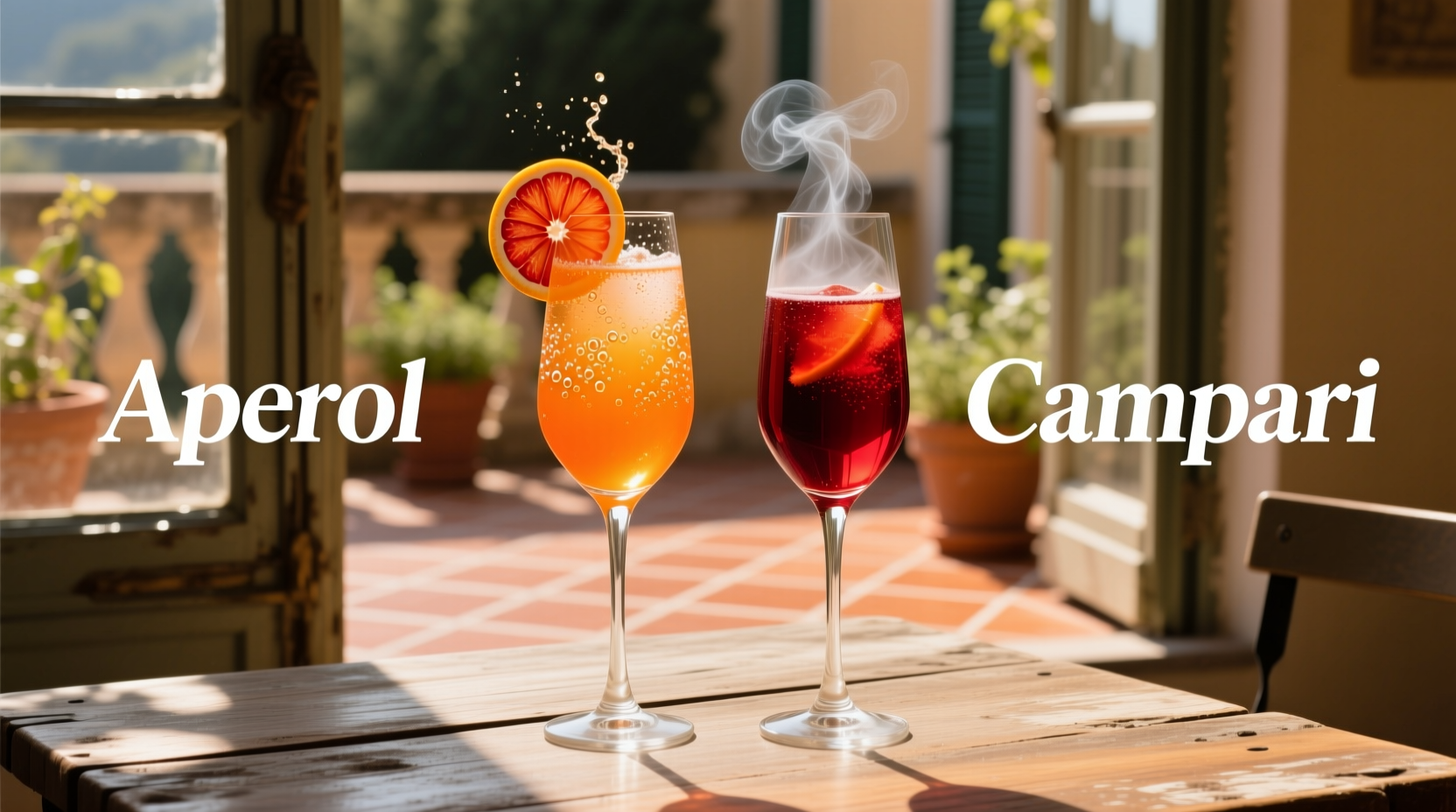
Bitterness isn’t a flaw in aperitifs—it’s the functional heart. Historically, bitter botanicals like gentian root, cinchona bark (source of quinine), and wormwood were used to stimulate digestive secretions before meals. Campari, created in 1860 by Gaspare Campari in Novara, leans hard into this legacy. Its formula remains a closely guarded secret, but known components include chinotto (bitter orange), rhubarb, ginseng, and over 60 herbs and fruits—many macerated in alcohol and aged. The result is an intense, layered bitterness with sharp citrus top notes and a long, drying, almost medicinal finish. Alcohol content sits at 28.5% ABV.
Aperol, launched in 1919 by the Barbieri brothers in Padua, was conceived as a lighter, more accessible alternative. It uses gentian and rhubarb but balances them with sweet orange peel, star anise, and caramel—not to mask bitterness, but to reframe it. At just 11% ABV and significantly higher sugar content (about 12g per 100ml vs Campari’s ~25g, though its lower volume makes the *per-serving* sugar comparable), Aperol delivers bitterness as suggestion rather than statement: a whisper of quinine, not a shout.
This divergence reflects deeper cultural currents. Campari emerged from 19th-century pharmacopeia traditions; Aperol arrived amid Italy’s post-WWI push toward modernity and mass leisure. As food historian Dr. Elena Rossi notes:
“Campari was never meant to be diluted into oblivion. Its power lies in its confrontation—the way it forces your palate to pause and recalibrate. Aperol, from its inception, was engineered for sociability: lower alcohol, brighter color, and bitterness calibrated for sharing, not scrutiny.”
Flavor Science in Action: How Dilution Changes Everything
A classic spritz isn’t just spirit + soda + wine—it’s a precise sensory equation. The standard ratio (3 parts prosecco, 2 parts bitter, 1 part soda water) means the base aperitif contributes only about 33% of the total liquid volume. But its impact on perception is disproportionate. Here’s where chemistry intervenes:
- Bitterness threshold shift: Human bitterness receptors (TAS2Rs) are highly sensitive—but their response is dramatically suppressed by sugar, carbonation, and alcohol dilution. Aperol’s lower starting bitterness + higher sugar means its perceived bitterness in a finished spritz often falls below the detection threshold for many consumers. Campari, even diluted, typically registers clearly—especially on the mid-palate and finish.
- Volatile compound release: Carbonation lifts aromatic esters and terpenes. Aperol’s dominant orange oil volatiles are more readily released than Campari’s heavier, earthier compounds (e.g., sesquiterpenes from gentian). That’s why Aperol Spritz smells bright and fruity—even if it tastes milder—while Campari Spritz smells drier, spicier, and more complex.
- Alcohol’s role as carrier: At 28.5% ABV, Campari delivers its botanicals with more solvent power, extracting and carrying heavier, more phenolic notes. Aperol’s 11% ABV limits this extraction, resulting in a lighter, more volatile-forward profile.
The consequence? Aperol Spritz often reads as “sparkling orange water with a hint of something herbal”—a crowd-pleasing gateway. Campari Spritz reads as “a drink with opinions,” demanding attention and rewarding repeat sipping. Neither is objectively better—but they serve fundamentally different roles in the ritual of aperitivo.
Tip: To taste the true character of either aperitif, try a 1:1 mix with chilled still water—no prosecco, no soda. This strips away effervescence and sugar, revealing the core botanical architecture.Real-World Impact: Bar Trends, Consumer Shifts, and the “Dilution Dilemma”
In 2017, a Milanese bar manager named Luca Bianchi faced a quiet crisis. His historic aperitivo hour—once defined by Campari-based Negronis and Americanos—was shrinking. Younger guests ordered Aperol Spritzes, then left early. Older regulars complained the bar had “lost its edge.” Luca began tracking orders: Aperol accounted for 78% of spritz sales, but Campari orders held steady among customers aged 45+. He experimented—offering a “Campari Spritz Flight”: three variations (classic, with dry vermouth instead of prosecco, and a stirred, spirit-forward version)—and saw Campari spritz sales rise 32% in two months. Crucially, 64% of new Campari drinkers were under 35.
Luca’s insight wasn’t about pushing bitterness—it was about *contextualizing* it. His flight acknowledged Aperol’s role as an entry point while honoring Campari’s complexity on its own terms. He stopped calling his Campari Spritz “the bold option” and started describing it as “the one that remembers why we drink before dinner.” That subtle reframing shifted perception. As he told me over espresso last spring:
“People don’t reject bitterness—they reject confusion. If you serve Campari like it’s a mistake to be corrected with extra soda, you’ve already lost. Serve it like it’s a conversation starter, and suddenly the bitterness becomes the first sentence.”
Comparative Framework: What Each Spritz Delivers (and Sacrifices)
Choosing between Aperol and Campari isn’t binary—it’s about aligning intention with experience. The table below breaks down key dimensions beyond simple “bitter vs. sweet”:
| Dimension | Aperol Spritz | Campari Spritz |
|---|---|---|
| Primary Function | Social lubricant; low-barrier welcome drink | Digestive catalyst; palate-resetting ritual |
| Flavor Trajectory | Front-loaded citrus → gentle herbal fade → clean finish | Bright citrus top → deep bitter mid-palate → long, drying, complex finish |
| Food Pairing Flexibility | Excellent with light antipasti (grilled vegetables, olives, soft cheeses) | Superior with rich, fatty, or umami-heavy foods (cured meats, fried calamari, aged cheeses) |
| Cultural Resonance | Embodies modern, international aperitivo-as-lifestyle | Rooted in pre-war Italian tradition; signals connoisseurship |
| Risk of Flavor Flattening | High—if over-diluted or served too cold, can become indistinct | Low—its structural bitterness resists homogenization |
Notice the last row: “Risk of Flavor Flattening.” This is the crux. Aperol’s accessibility comes with fragility. Serve it at 4°C with extra soda and subpar prosecco, and its delicate balance collapses into generic fruitiness. Campari’s intensity acts as a buffer—its bitterness persists even when execution falters. That resilience isn’t a virtue in itself, but it does mean Campari Spritz retains more of its essential character across variable conditions.
Your Spritz Toolkit: A Practical Guide to Intentional Mixing
Whether you’re a home enthusiast or a bar professional, maximizing each spritz’s potential requires precision—not just ratios, but technique. Follow this sequence to honor both profiles:
- Chill everything: Prosecco, aperitif, soda, and glass. Cold suppresses volatile aromas but stabilizes texture—critical for Aperol’s brightness and Campari’s structure.
- Build in order: Always add aperitif first, then prosecco, then soda. Pouring prosecco over the aperitif aerates gently; adding soda last preserves effervescence.
- Stir once—gently: Use a bar spoon to fold (not stir vigorously) for 3 seconds. Over-mixing disperses aromatic oils and flattens mouthfeel.
- Garnish with purpose: Orange for Aperol (complements its dominant note); grapefruit for Campari (its pith echoes Campari’s bitterness, its juice adds acidity to lift heaviness).
- Serve immediately: Both spritzes peak within 90 seconds of assembly. Carbonation fades, temperature rises, and delicate aromas dissipate.
FAQ: Clarifying Common Misconceptions
Is Aperol “less authentic” than Campari because it’s sweeter?
No. Authenticity isn’t measured in bitterness units. Aperol was crafted with clear intent—to democratize aperitivo during Italy’s industrial expansion. Its recipe, production methods, and cultural role are deeply rooted in Veneto tradition. Calling it “inauthentic” confuses historical function with contemporary preference.
Can I substitute Campari for Aperol in a recipe without changing anything else?
You can—but you shouldn’t. A direct swap creates an unbalanced drink: excessive bitterness overwhelms the prosecco’s fruit and the soda’s lightness. Reduce Campari to 1.5 parts, increase prosecco to 3.5 parts, and use a splash of simple syrup (¼ tsp) only if serving to newcomers. Better yet: treat them as distinct recipes.
Does lower bitterness actually make a drink “healthier”?
Not meaningfully. While Aperol has less alcohol per serving, its sugar content is proportionally higher. Both contain botanicals with traditional digestive benefits—but those compounds are present in trace amounts after dilution. Neither should be framed as functional nutrition. Their value lies in ritual, not biochemistry.
Conclusion: Embracing the Spectrum, Not Just the Sweet Spot
The rise of the Aperol Spritz didn’t diminish Campari—it revealed something vital about how we engage with flavor in shared spaces. Accessibility matters. A drink that invites curiosity without intimidation builds bridges. But flattening complexity to achieve that accessibility risks eroding the very qualities that give a category depth and longevity. The most vibrant aperitivo cultures—from Turin to Tokyo—don’t choose between Aperol and Campari. They serve both, understanding that Aperol opens the door, and Campari holds the room’s attention once you’re inside.
So next time you reach for a bottle, ask yourself: What role does this drink play tonight? Is it background music or the main act? Is it a handshake or a conversation? There’s no hierarchy—only intention. And intention, more than any ratio or garnish, is what transforms a mixed drink into a meaningful ritual.
💬 What’s your spritz story? Did Aperol lead you to Campari—or vice versa? Share your first encounter, your go-to ratio, or the moment you realized bitterness wasn’t a barrier but a bridge. Your experience helps others navigate the spectrum with confidence.








