
Anime has long been a cultural powerhouse, captivating audiences worldwide with its storytelling, animation, and—just as importantly—its music. Among the most iconic elements of any anime series are its opening and ending themes. These short musical sequences set the tone, evoke emotion, and often become standalone hits far beyond the show itself. But when it comes to attention, engagement, and lasting impact, one question consistently arises: do opening songs or ending themes receive more focus? The answer is not as simple as it seems, but data, fan behavior, and industry trends point to a clear pattern—openings dominate.
The disparity in attention between openings and endings isn't just anecdotal; it's rooted in how anime is consumed, marketed, and experienced by fans. While both play essential roles, the opening theme typically garners more views, streams, and social media buzz. To understand why, we need to examine structure, timing, production value, and audience psychology.
The Structural Advantage of Opening Themes
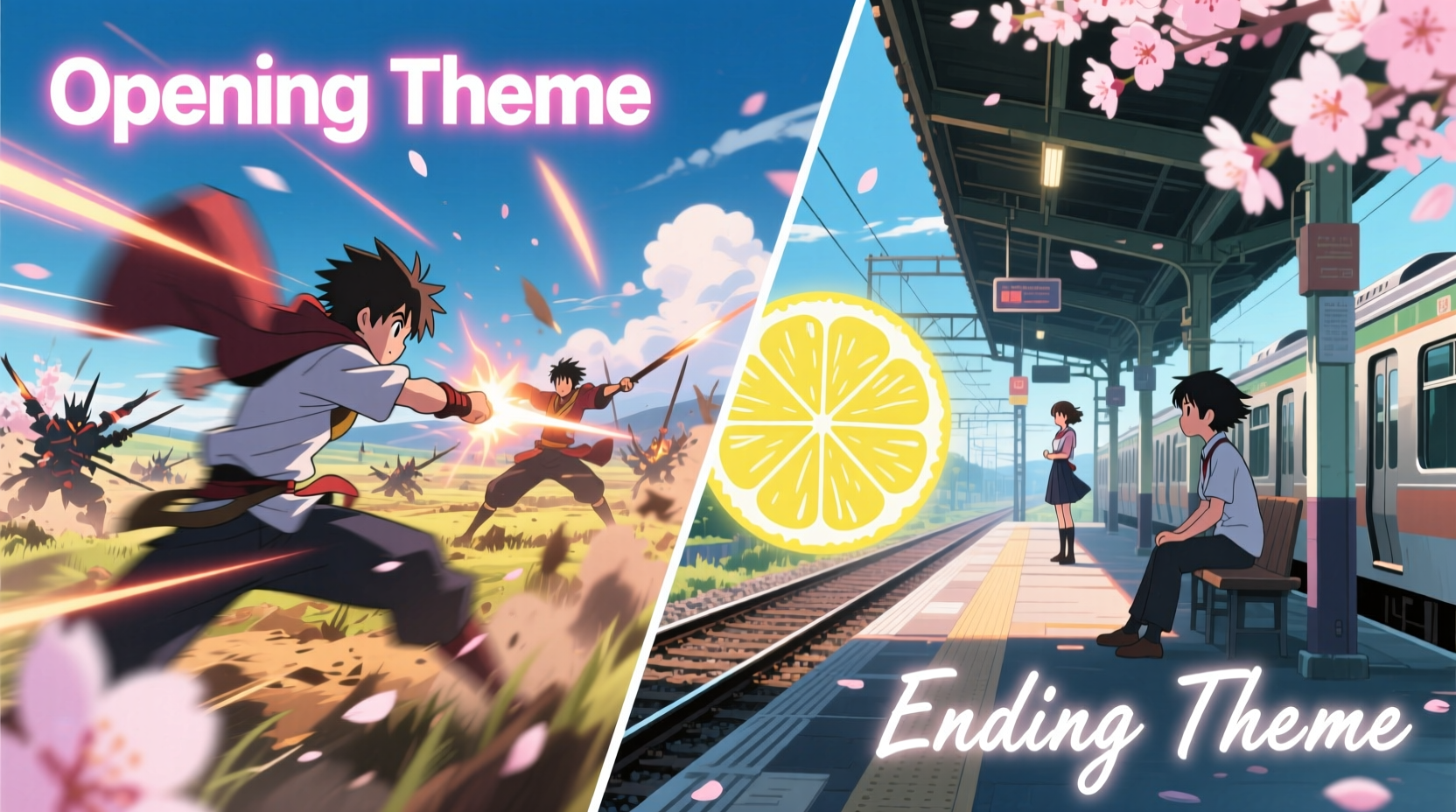
Every anime episode begins with the same sequence: title card, opening animation, followed by the main content. This consistency gives opening themes a structural edge. Viewers see them first, setting the emotional and thematic tone for the entire episode. Psychologically, this primacy effect means the opening is more likely to be remembered.
In contrast, ending themes appear after the episode concludes—often during credits or a post-credits scene. By that point, many viewers have already moved on, especially in the age of streaming where skipping is habitual. Even among dedicated fans, the ending theme is frequently muted, skipped, or watched passively while checking phones or preparing for the next episode.
This behavioral difference is reflected in YouTube analytics. For major anime like My Hero Academia, Jujutsu Kaisen, or Attack on Titan, official opening videos routinely amass hundreds of millions of views. Ending themes, even from the same series, often fall significantly behind—sometimes by tens of millions.
Tip: If you're creating an anime playlist or introducing someone to a series, start with the opening theme—it’s the most representative and engaging musical piece.Production Value and Marketing Focus
Studios and music labels invest heavily in opening themes. They’re treated as promotional tools, designed to hook new viewers and reinforce brand identity. Openings are often animated with higher budgets, featuring dynamic visuals, character montages, and foreshadowing of future plot points. These sequences are crafted to be rewatchable and shareable.
Ending themes, while sometimes artistically profound, usually serve a different purpose: reflection. They tend to feature softer music, slower pacing, and introspective imagery. While emotionally resonant, they lack the high-energy spectacle that makes openings go viral.
Music labels also prioritize openings in marketing campaigns. Artists performing opening themes are frequently highlighted in press releases, social media promotions, and live events. It’s common for an opening song to be released weeks before an anime airs, building anticipation. Endings rarely receive this level of pre-launch attention.
“Openings are the handshake of an anime—they introduce the tone, the energy, and the world. Endings are the farewell wave. One commands your attention; the other lingers in memory.” — Hiroshi Tanaka, Anime Music Producer at Aniplex
Comparative Popularity: A Data Snapshot
To illustrate the gap in attention, consider recent examples from popular anime series. The table below compares YouTube view counts (as of 2024) for selected openings and endings:
| Anime Title | Opening Song | Views (Millions) | Ending Song | Views (Millions) |
|---|---|---|---|---|
| Jujutsu Kaisen S2 | \"SPECIALZ\" by King Gnu | 142 | \"I want to be eaten\" by CRYCHIC | 68 |
| Chainsaw Man | \"KICK BACK\" by Kenshi Yonezu | 230 | \"BLUE LINK\" by Vaundy | 95 |
| Demon Slayer: Mugen Train | \"Gurenge\" by LiSA | 310 | \"Homura\" by LiSA | 180 |
| My Hero Academia S6 | \"Luna\" by Kana-Boon | 45 | \"Sketch\" by Milet | 28 |
| Oshi no Ko | \"Idol\" by YOASOBI | 280 | \"Burning\" by Gemn | 110 |
The trend is consistent: openings attract significantly more views. Notably, \"Idol\" by YOASOBI became a global phenomenon, charting on Billboard and breaking records on Spotify. Meanwhile, \"Burning,\" though well-received, remained largely within anime circles.
Why Openings Resonate More with Audiences
Beyond structure and marketing, several psychological and cultural factors explain the dominance of opening themes:
- First Impressions Matter: The opening is the first full audiovisual experience of an episode. It primes excitement and emotional investment.
- Action-Oriented Imagery: Many openings include fight scenes, transformations, or dramatic reveals—elements that naturally draw attention.
- Repetition and Familiarity: Fans often rewatch openings due to their energetic nature, contributing to higher view counts and earworm status.
- Community Sharing: Clips from openings are more likely to be shared on TikTok, Twitter, and Instagram Reels because they’re visually dynamic and instantly recognizable.
- Song Identity: Openings are frequently used in trailers, AMVs (anime music videos), and fan edits, reinforcing their association with the series as a whole.
In contrast, ending themes are more intimate. They often explore character development, loss, or quiet hope. While powerful, these nuances don’t always translate into mass appeal or virality.
When Endings Steal the Spotlight
There are notable exceptions where ending themes have matched or even surpassed openings in emotional impact and popularity. For instance:
- Death Note's \"Alumina\" by Kotoko—though less flashy—became a cult favorite for its haunting melody and thematic depth.
- Clannad: After Story's ending theme \"Ashita no Kioku / Itsuka no Yakusoku\" by Lia is widely regarded as one of the most moving pieces in anime history.
- Steins;Gate's \"Hacking to the Gate\" started as an ending theme but gained such acclaim that it was later repurposed as an opening in subsequent seasons.
These cases prove that endings can achieve legendary status—but usually through deep emotional resonance rather than broad visibility.
“When an ending theme stays with you for days, that’s artistry. When an opening theme makes you rush back to rewatch it, that’s impact.” — Ayumi Fujimoto, Anime Critic at Otaku Times
The Role of Streaming Platforms in Shaping Attention
Modern viewing habits, shaped by platforms like Crunchyroll, Netflix, and Hulu, further tilt the balance toward openings. Most services allow users to skip the opening after the first few episodes. However, many fans choose *not* to skip it—precisely because it’s enjoyable and familiar.
Conversely, the option to skip endings is less commonly disabled. Since endings rarely contain critical plot information, viewers feel little incentive to watch them. This creates a feedback loop: lower engagement leads to less promotion, which leads to even lower visibility.
Some studios have responded creatively. In Haikyuu!!, certain ending sequences included mini-episodes or bonus skits, encouraging fans to stay until the end. Similarly, One Punch Man used comedic endings that became memes in their own right. These strategies demonstrate that endings *can* capture attention—but only when given narrative weight.
Mini Case Study: “Idol” by YOASOBI and the Power of the Opening
When Oshi no Ko premiered in 2023, expectations were high. The manga had already built a strong following, but it was the opening theme, \"Idol,\" that catapulted the anime into global fame. Within weeks, the song topped Japan’s Oricon charts, entered Spotify’s Global Top 50, and amassed over 20 million YouTube views in its first month.
What made \"Idol\" so effective?
- It combined a catchy J-pop beat with dark lyrical themes mirroring the show’s critique of celebrity culture.
- The animation synced perfectly with the music’s crescendos, creating a hypnotic visual rhythm.
- Its chorus went viral on TikTok, with users lip-syncing the intense final lines.
Meanwhile, the first ending theme, \"Burning,\" while lyrically strong and musically complex, didn’t spark the same level of engagement. It lacked the instant hook and visual flair that made \"Idol\" a cultural moment. This case underscores how openings, when executed well, can transcend the anime itself and become mainstream phenomena.
Tips for Appreciating Both Openings and Endings
While openings may dominate attention, both musical segments enrich the anime experience. Here’s how to engage more deeply with each:
Tip: Try watching the ending theme without distractions. You might discover subtle animations or emotional layers missed during initial viewing.- Listen to both tracks on repeat to appreciate lyrical depth and musical composition.
- Compare how the visuals align with the story arc—some endings foreshadow future episodes.
- Explore cover versions or acoustic renditions to hear the songs in a new light.
- Use endings as a reflective pause—many are designed to help process the episode’s events.
Frequently Asked Questions
Do anime creators care if people skip the ending?
Yes, many directors and composers express disappointment when endings are skipped. Some, like Makoto Shinkai and Naoko Yamada, have publicly urged fans to watch the full credits, noting that endings often contain artistic details or messages not found elsewhere.
Are ending themes becoming less important?
Not necessarily. While they receive less mainstream attention, endings remain vital for tone and closure. Additionally, some artists prefer performing endings because they allow for more creative freedom and emotional expression.
Can an ending theme ever become more popular than the opening?
Rarely, but it’s possible. Songs like \"GreeN\" by Super Beaver (Erased) or \"Renai Circulation\" by Kana Hanazawa (Bakemonogatari) began as endings and eventually gained massive popularity through memes, covers, and fan communities.
How to Support Ending Theme Artists: A Checklist
If you want to help balance the attention between openings and endings, follow this checklist:
- Watch the full ending every time, even if it’s just once per episode.
- Stream the ending theme on Spotify, Apple Music, or YouTube.
- Share the song on social media with context about why you liked it.
- Add it to personal playlists or recommend it to friends.
- Check out the artist’s other work—many ending performers are talented musicians deserving wider recognition.
Conclusion: Why Balance Matters
Opening songs will likely continue to dominate attention due to their strategic placement, high energy, and marketing power. They are the anthems of anime—the tracks fans blast at concerts and use in workout playlists. But endings offer something equally valuable: introspection, beauty, and emotional depth. They are the quiet counterpoint to the opening’s roar.
As fans, we shape what gets noticed. By consciously engaging with both openings and endings, we honor the full artistic vision of the creators. Whether it’s an explosive rock anthem or a gentle piano ballad, each theme contributes to the soul of the series.
🚀 Next time you watch an anime, resist the skip button. Let the ending play. You might just discover your new favorite song.








