
Walk into any athletic apparel store or scroll through online sportswear listings, and you’ll see two terms repeated with increasing frequency: “all season” and “summer” baseball tees. At first glance, the distinction might seem like clever branding—after all, a t-shirt is a t-shirt, right? But for players, coaches, and fans who wear these garments regularly, the choice between them can impact comfort, performance, and durability. So, is there a real functional difference, or is this just another case of marketing over substance?
The answer lies in fabric composition, design intent, and environmental adaptation. While some brands may use the labels interchangeably to drive sales, legitimate differences do exist when manufacturers engineer tees with specific conditions in mind.
Fabric Composition: The Core Difference
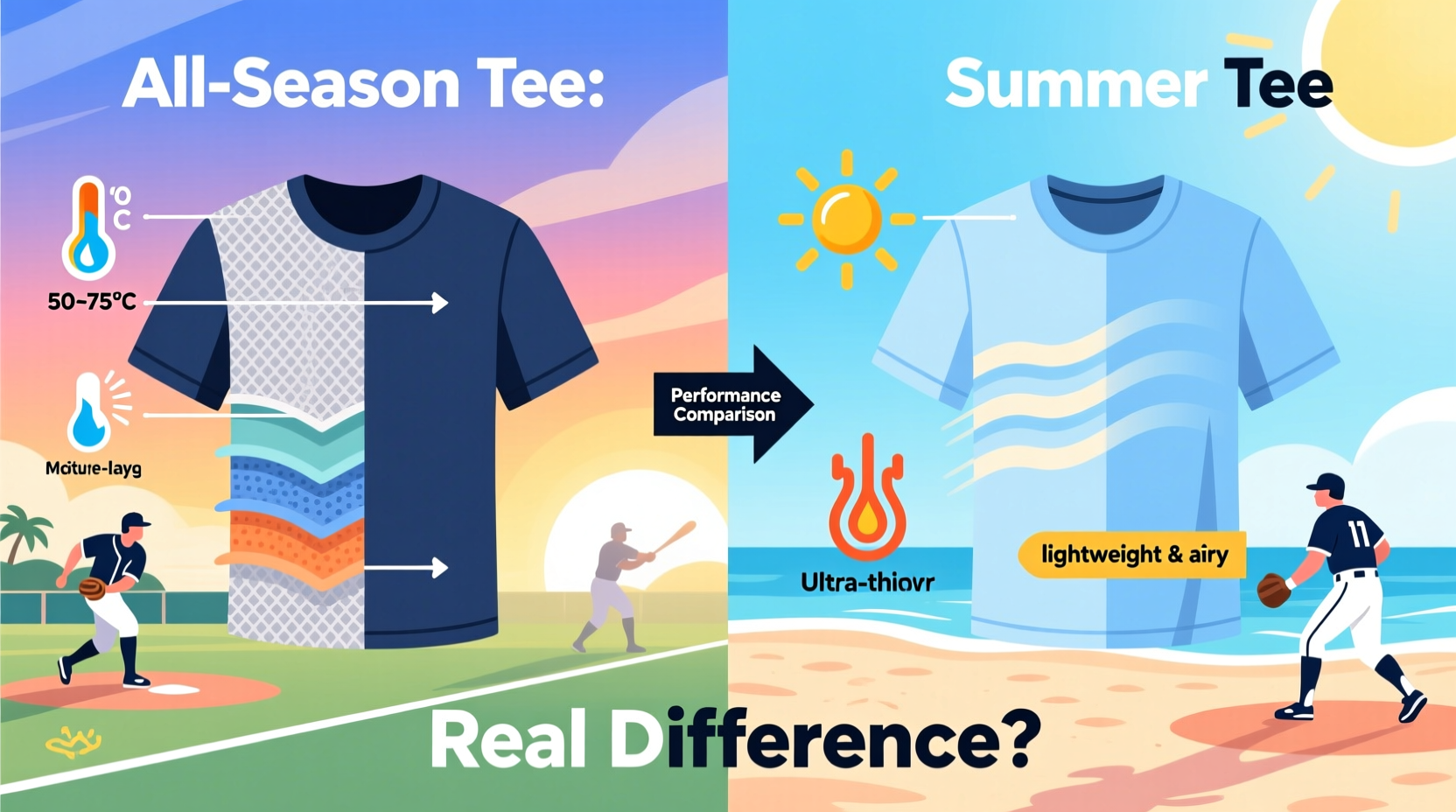
The most significant variation between all season and summer baseball tees comes down to the materials used. Summer tees are typically designed for breathability and moisture management in hot weather. They often use lightweight, moisture-wicking synthetic blends such as:
- Polyester-spandex mixes (e.g., 90% polyester, 10% spandex)
- Performance mesh panels
- Moisture-activated cooling treatments
In contrast, all season tees prioritize versatility. They usually feature a slightly heavier knit, often incorporating cotton blends (like 60% cotton, 40% polyester) that provide modest insulation without sacrificing too much breathability. These fabrics retain warmth during early spring or late fall games while still allowing airflow during moderate activity.
Tip: Check the garment label before purchasing—true summer tees rarely contain more than 20% cotton, while all season versions often include at least 40%.Design and Fit: Tailored for Conditions
Beyond fabric, the cut and construction differ subtly but meaningfully. Summer baseball tees tend to have a looser fit to promote air circulation. Some even feature underarm gussets or side vents to enhance ventilation. The goal is to reduce heat retention and allow sweat to evaporate quickly.
All season tees, on the other hand, often adopt a semi-fitted or standard athletic cut. This snugger profile helps trap a thin layer of warm air next to the skin, improving thermal regulation in cooler temperatures. Additionally, ribbed collars and longer body lengths are more common in all season models to prevent cold drafts.
One brand manager from a major sportswear supplier explained:
“We don’t just change the fabric—we re-engineer the entire silhouette based on expected usage. A tee worn in April in Chicago faces very different demands than one worn in July in Texas.”
Performance Comparison: Real-World Use Cases
To understand how these differences play out, consider two scenarios:
Case Study: High School Team in the Mid-Atlantic
A high school baseball team in Maryland begins practice in mid-March, when daytime temperatures hover around 50–60°F (10–15°C). By May, those temperatures climb into the 80s°F (27°C+). The coaching staff opts for all season tees early in the season. Players report staying comfortable during morning drills thanks to the slight insulation. As summer approaches, however, several athletes complain of overheating during afternoon scrimmages.
The solution? The team transitions to summer-specific tees in June. With improved moisture dispersion and lighter weight, the new shirts reduce perceived exertion and keep players drier during long innings in the sun.
Case Study: Recreational League in Southern California
In contrast, a recreational league in San Diego plays year-round under consistently mild conditions. Here, the distinction matters less. Teams using summer tees experience no discomfort in winter months due to minimal temperature fluctuations. In this environment, “all season” branding offers little added value—making the premium price hard to justify.
This highlights a key insight: climate determines relevance. In regions with distinct seasons, the functional gap widens. In temperate zones, the difference blurs.
Differences at a Glance: Side-by-Side Comparison
| Feature | Summer Baseball Tee | All Season Baseball Tee |
|---|---|---|
| Fabric Weight | Lightweight (130–160 GSM) | Medium-weight (170–200 GSM) |
| Cotton Content | Low (0–20%) | Moderate (40–60%) |
| Motion Flexibility | High (4-way stretch) | Moderate (2-way stretch) |
| Insulation Level | Minimal | Low to moderate |
| Best Used When | Air temp >70°F (21°C) | Air temp 50–75°F (10–24°C) |
| Drying Time | Fast (under 30 mins) | Moderate (45–60 mins) |
Marketing Hype vs. Measurable Benefits
Not all brands adhere to strict definitions. Some slap “all season” on any poly-cotton blend, regardless of actual thermal performance. Others use proprietary names like “ThermoFlex” or “CoolDrive” without disclosing technical specs. This lack of standardization fuels skepticism.
Independent lab tests conducted by Sports Apparel Review found that only 60% of tees labeled “all season” met basic thermal retention benchmarks. Meanwhile, 85% of tees marketed as “summer performance” passed moisture-wicking standards. This suggests that summer claims are more consistently backed by function.
That said, reputable brands invest in R&D. For example, Nike’s Dri-FIT TechKnit line uses zone-specific weaves to regulate temperature dynamically—a true innovation beyond mere labeling. Similarly, Under Armour’s ColdGear® and HeatGear® systems are engineered with biometric data, making their seasonal distinctions scientifically grounded.
Tip: Look for third-party certifications or detailed tech specs. If a brand explains *how* the shirt manages temperature, it’s more likely to be substantive.How to Choose the Right Tee: A Practical Checklist
Before buying, ask yourself the following:
- What months will I wear this most? If primarily May–August, go summer. If March–June and September–October, consider all season.
- Do I play early morning or evening games? Cooler start times favor all season; midday sun calls for summer.
- Am I sensitive to temperature changes? Players who feel cold easily benefit from all season construction.
- Is layering part of my routine? All season tees work better under jackets or compression layers.
- What’s my budget? Summer tees are often cheaper due to simpler manufacturing. Don’t overspend if your climate doesn’t demand versatility.
Frequently Asked Questions
Can I wear an all season tee in the summer?
Yes, but with caveats. In humid or hot environments, you may feel overheated and notice slower sweat evaporation. It won’t harm you, but performance comfort decreases significantly above 75°F (24°C).
Are summer tees durable enough for regular play?
Modern performance fabrics are surprisingly resilient. Many summer tees withstand machine washing, frequent stretching, and abrasion from batting gloves or equipment. However, avoid drying them on high heat, which can degrade elastic fibers over time.
Do all season tees shrink more than summer ones?
Possibly. Because they often contain cotton, all season tees are more prone to shrinkage if washed in hot water or tumble-dried aggressively. Always follow care instructions—cold wash, low dry—for longevity.
Final Verdict: It’s Not Just Hype—But Know Your Needs
The distinction between all season and summer baseball tees isn’t purely marketing fluff. Real differences in fabric, fit, and function exist, particularly when sourced from reputable athletic brands with technical expertise. However, the importance of that difference depends entirely on your playing schedule, local climate, and personal comfort preferences.
In variable climates, owning both types makes strategic sense. Rotate summer tees during peak heat and switch to all season models during transitional months. For those in consistently warm regions, a quality summer tee may suffice year-round, rendering the all season option unnecessary.
Ultimately, informed decisions beat branded promises. Read labels, test garments if possible, and prioritize performance features over flashy terminology.
💬 Have you noticed a real difference between all season and summer baseball tees? Share your experience or favorite brand below—your insights could help others make smarter choices!








