
Tequila dominates global perception of agave spirits—but it represents less than 5% of Mexico’s native agave biodiversity. Over 200 species of agave grow across the country, and at least 14 are legally permitted for distillation under Mexican regulation. Yet only a handful have earned international recognition, often obscured by marketing hype, inconsistent labeling, or regulatory loopholes. The real story lies in regional traditions: families in remote highland valleys fermenting wild tobaziche with wooden mallets; desert harvesters trekking 30 kilometers to collect mature sotol plants; coastal communities using sea-salt–infused clay pots for slow, open-air fermentation. These are not “tequila alternatives.” They’re distinct cultural expressions—each shaped by terroir, ancestral knowledge, and ecological constraint. Understanding them requires moving past cocktail menus and into the fields, stills, and stories where authenticity begins.
The Agave Landscape: Why Tequila Is Just One Chapter
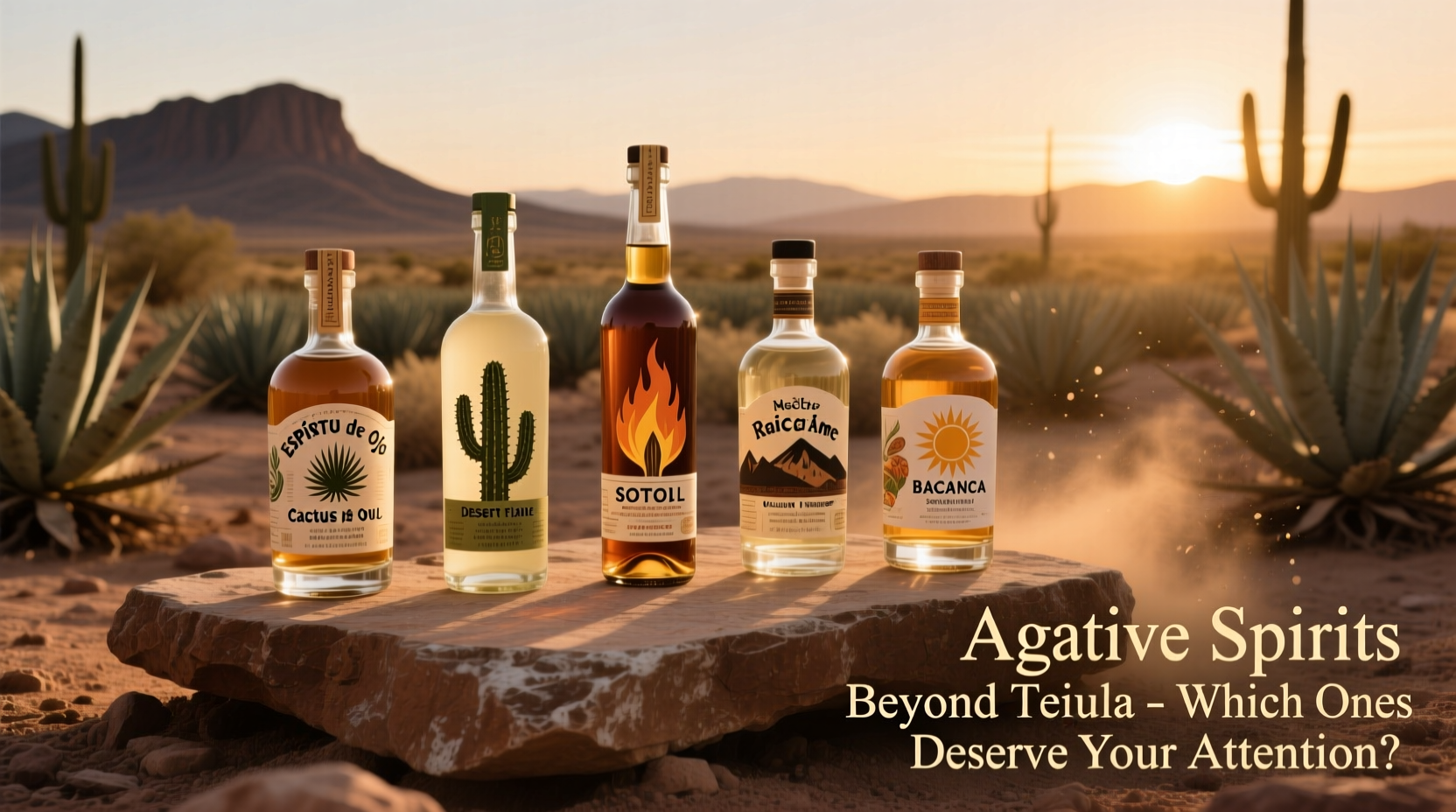
Mexico’s Denomination of Origin (DO) for tequila is tightly defined: only blue Weber agave (Agave tequilana) grown in designated municipalities across five states—and distilled to specific ABV and aging standards—can bear the name. That rigidity ensures consistency but also excludes centuries-old practices that predate modern appellation law. In contrast, mezcal’s DO permits 28 agave species across nine states, yet even that framework overlooks spirits like bacanora (Sonora), sotol (Chihuahua, Coahuila, Durango), and raicilla (Jalisco’s Sierra Occidental), each governed by separate, often newer, denominations—or, in many cases, no formal regulation at all.
This fragmentation reflects deeper realities: terrain, climate, and indigenous language groups shape distillation far more than bureaucratic boundaries. A palomilla agave roasted in a conical pit in Oaxaca yields different volatile compounds than a lechuguilla baked in stone-lined ovens in Chihuahua—even if both are technically “mezcal.” Likewise, sotol isn’t an agave at all—it’s a member of the Dasylirion genus, botanically closer to yucca. Yet its spirit shares the smoky, mineral-driven profile of highland mezcal while delivering bright citrus peel and dried herb notes rarely found elsewhere.
Tip: When exploring non-tequila agave spirits, prioritize bottles that list the specific agave species (e.g., “ Agave rhodacantha” or “ Dasylirion wheeleri”) and the municipality of origin—not just the state. This transparency signals producer integrity and traceability.Five Standout Agave Spirits Worth Your Attention
1. Mezcal: Beyond the Smoke
Mezcal remains the most widely available alternative—but quality varies wildly. Industrial “mixto” mezcals (up to 49% non-agave sugars) dilute the category’s integrity, while artisanal expressions from small-batch producers like El Jolgorio (San Luis Amatlán, Oaxaca) or Real Minero (San Juan del Río, Oaxaca) showcase extraordinary nuance. Their palenques use traditional clay pot stills, wild yeast fermentation, and hand-harvested agaves aged 8–25 years. Tasting notes span roasted pineapple and wet stone to dried chile and forest floor—never one-dimensional smoke.
2. Raicilla: The Hidden Spirit of Jalisco’s Coast
Long banned and driven underground, raicilla re-emerged legally in 2019 after decades of clandestine production in the rugged western mountains of Jalisco. Made primarily from Agave maximiliana and Agave inaequidens, it’s fermented in open-air wooden vats—often exposed to coastal breezes and native yeasts—and distilled in copper or clay stills. The result is lighter and fruitier than most mezcals: think ripe pear, white pepper, and saline minerality. Producers like Los Vecinos and Raíces de México emphasize single-village sourcing and avoid added water post-distillation—a rarity in the category.
3. Bacanora: Sonora’s Desert Treasure
Bacanora holds Denomination of Origin status since 2007 but remains scarce outside Mexico. Produced exclusively from wild-harvested Agave angustifolia (called pacurí locally) in Sonora’s arid foothills, it’s traditionally cooked in underground pits lined with volcanic rock and fermented in cattle-hide bags or oak vats. Distillation occurs in copper alembics over direct fire. Authentic bacanora balances earthy depth with surprising elegance: notes of dried sage, roasted almond, and desert rain. Because harvesting requires permits and sustainable rotation (plants take 12–18 years to mature), true bacanora embodies ecological stewardship—not just craft.
4. Sotol: The Spirit of the Chihuahuan Desert
Sotol’s legal recognition came in 2002, yet its roots stretch back to the Rarámuri (Tarahumara) people, who fermented Dasylirion wheeleri sap into a low-alcohol beverage called sotol wine. Modern sotol uses the plant’s heart (the cabeza), roasted in above-ground brick ovens or earthen pits, then fermented with native yeasts and double-distilled in copper. Unlike agave spirits, sotol expresses intense herbal brightness—lemongrass, juniper berry, and crushed mint—with a clean, almost gin-like finish. Brands like Dos Hombres (co-founded by Aaron Paul and Bryan Cranston) helped raise awareness, but purists seek out family-run operations such as Wild Things or Casa Sotol, which source from specific desert ranchos and bottle unaged (“blanco”) to preserve terroir clarity.
5. Pechuga: The Ritual Distillation (Not a Category—But Essential Context)
While not a standalone spirit, pechuga merits inclusion because it reveals a philosophical core of agave distillation: transformation through ritual. Traditionally made during harvest festivals, pechuga involves a third distillation where a raw chicken or turkey breast is suspended over the still’s vapor path. As the vapors rise, they condense on the meat, absorbing proteins and fats that bind volatile esters and soften harsh alcohols. Fruits, grains, and herbs—often local to the region—are added to the still, infusing the spirit with layered aromatics. A well-made pechuga (like those from Mezcal Vago’s Elote or Del Maguey’s Chichicapa) tastes of poached quince, toasted rice, and wild mountain flowers—proof that technique and intention can elevate spirit-making into ceremony.
How to Navigate Labels, Marketing, and Misinformation
“Artisanal,” ��small-batch,” and “handcrafted” appear on 73% of non-tequila agave labels—but lack legal definitions in Mexico or the U.S. Worse, some brands import neutral spirit, add agave syrup and smoke flavoring, and label it “mezcal.” To avoid disappointment, look for concrete markers of authenticity:
- Batch numbers and harvest dates — Indicates traceability and limited production.
- ABV between 42–52% — Most authentic agave spirits fall in this range; lower ABVs often signal dilution or blending.
- No added coloring or glycerin — Check technical sheets or contact the importer directly.
- Importer transparency — Reputable importers (e.g., Haus Alpenz, Mezcalistas, or Vino Imports) publish producer profiles, photos of palenques, and agave species data.
| Red Flag | What It Likely Means | What to Do Instead |
|---|---|---|
| “100% Agave” without species or origin | Vague sourcing; may be blended across regions or species | Seek bottles naming both agave species and municipality (e.g., “Agave cupreata, San Francisco del Mar, Oaxaca”) |
| Price under $45 USD for “premium” mezcal | High probability of mixto or industrial production | Expect to pay $55–$95 for authentic, single-village, 100% agave expressions |
| “Smoky” as the sole tasting note on the label | Marketing shorthand masking lack of complexity | Read independent reviews (e.g., Mezcalistas blog or VinePair’s deep dives) for nuanced descriptors |
| No importer or NOM number listed | Likely unauthorized import or gray-market bottling | Verify NOM (Norma Oficial Mexicana) number via Mexico’s CRT database or ask your retailer for documentation |
A Real Example: How One Bar Transformed Its Program Through Education
In 2021, The Malady in Portland, Oregon, faced declining interest in its mezcal-heavy cocktail menu. Guests ordered “smoky tequila” drinks but couldn’t distinguish between espadín and tobaziche—or understand why a $120 bottle tasted radically different from a $55 one. Owner Maria Chen partnered with a certified mezcal educator and redesigned staff training around three pillars: agave botany, regional geology, and distillation methodology. Servers learned to describe bacanora not as “Sonoran mezcal” but as “wild-harvested pacurí from volcanic soils near Álamos, cooked in stone ovens, fermented in cowhide.” Within six months, average check size increased 22%, and guest requests for flight tastings rose 300%. More importantly, Chen began sourcing directly from a sotol producer in Janos, Chihuahua—bypassing distributors to ensure fair pricing for the family cooperative. “People don’t buy spirits,” she told Difford’s Guide in 2023. “They buy context. Once you explain why a bottle costs what it does—and what disappears when you cut corners—they taste the difference before the first sip.”
Expert Insight: The Stewardship Imperative
“The greatest threat to these spirits isn’t market saturation—it’s ecological ignorance. Harvesting wild agave without replanting, over-extracting sotol hearts before seed maturity, or clearing native vegetation for monoculture plantings erodes the very terroir these spirits celebrate. Authenticity must include regeneration.” — Dr. Gabriela López, Ethnobotanist & Co-Director, Centro de Estudios Agaveros, Universidad Autónoma de Chapingo
López’s warning underscores a critical truth: every bottle of bacanora, raicilla, or wild mezcal carries an implicit contract with the land. Sustainable producers now embed conservation clauses in their cooperatives—requiring harvesters to replant two juvenile agaves for every mature plant taken, or to leave 30% of flowering stalks intact to support native bat pollinators. When you choose a bottle, you vote for either extraction or reciprocity.
Your Responsible Exploration Checklist
- Start with a flight: Order 3–5 half-ounce pours of different agave types (e.g., espadín mezcal, wild raicilla, sotol blanco) to compare texture, heat, and aromatic layers.
- Read the back label: Note agave species, municipality, distiller name (not just brand), and NOM or CRT registration number.
- Ask about regenerative practice: At bars or retailers, inquire whether the producer supports reforestation, seed banking, or community-led land trusts.
- Store upright, away from light: Agave spirits oxidize faster than whiskey; consume within 12–18 months of opening.
- Respect the serve: Skip the salt-and-lime. Sip neat at room temperature from a copita or tulip glass to perceive evolving aromas.
FAQ
Is all mezcal smoky?
No. Smoke intensity depends entirely on roasting method—not the spirit itself. Some producers use above-ground hornos (brick ovens) or steam autoclaves, yielding floral, citrusy, or vegetal profiles. Even pit-roasted mezcals vary: a shallow, short roast yields subtle ash notes, while deep, prolonged roasting creates heavy phenolic character. Always check the producer’s method, not assumptions.
Why is sotol sometimes called “desert spoon”?
The common name comes from the plant’s rosette shape—its long, slender leaves resemble spoons radiating from a central head. Indigenous groups historically used the leaves for weaving baskets and the fibrous cores for rope. The name honors form and function, not flavor.
Can I substitute raicilla for tequila in cocktails?
You can—but reconsider the purpose. Raicilla’s delicate fruitiness shines in stirred drinks like a Boulevardier or a clarified milk punch, where its nuance won’t vanish beneath citrus or bitters. Avoid high-acid cocktails like Margaritas unless using a robust, higher-proof expression. Better yet: build new drinks around its identity—try raicilla with grilled pineapple shrub and crushed ice for a true coastal interpretation.
Conclusion
Agave spirits beyond tequila are not novelty ingredients or trendy substitutes. They are living archives—of botanical resilience, intergenerational knowledge, and land-based ethics. Each sip of bacanora carries the memory of Sonoran monsoons; every pour of sotol echoes Chihuahuan wind patterns across limestone ridges; each drop of raicilla preserves a coastal ecosystem threatened by development and drought. Choosing them thoughtfully means supporting families who’ve stewarded these plants for centuries—not just buying a bottle, but honoring a covenant. Start small: pick one spirit, learn its origins, taste it slowly, and share what you discover. Then go deeper. Ask questions. Demand transparency. Let curiosity lead you beyond the label—and into the landscape where true distinction begins.
💬 Which agave spirit shifted your perspective? Share your first meaningful experience with raicilla, bacanora, or sotol in the comments—and help others find their next revelation.








