Running is one of the most accessible forms of exercise, but having the right footwear makes all the difference in comfort, injury prevention, and long-term motivation. While premium running shoes often dominate marketing campaigns, many high-performing models are available at a fraction of the cost. The key lies in knowing which features matter most and where to look. Budget doesn’t have to mean compromise—especially when brands release last season’s technology at lower prices or design entry-level versions of proven platforms.
Today’s market offers runners smart alternatives that balance cushioning, support, breathability, and outsole durability—all under $100. Whether you're a beginner logging your first miles or an experienced runner seeking a reliable second pair, affordable options exist that won’t leave your feet sore or your wallet empty.
What Makes a Budget Running Shoe Worth It?
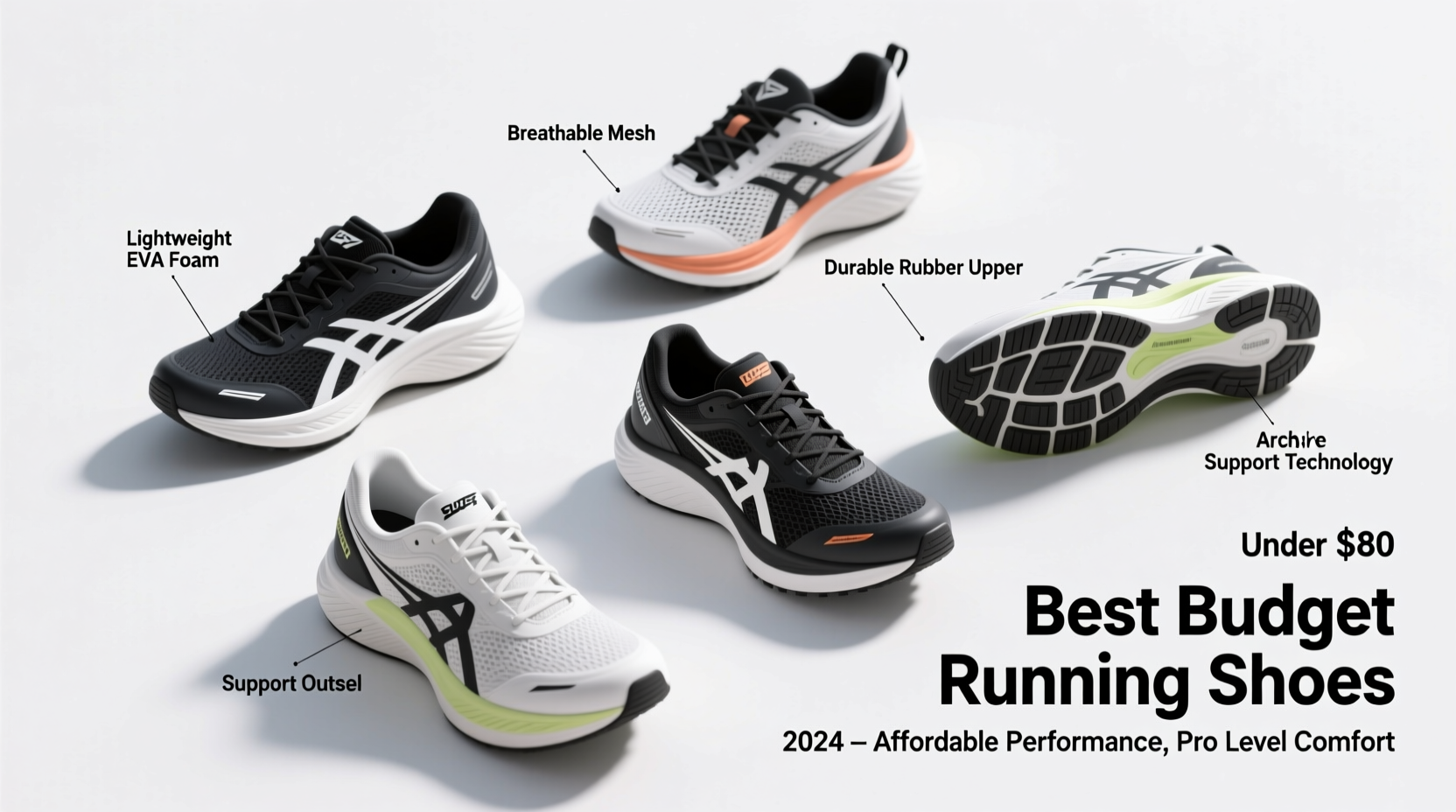
Affordability alone isn’t enough. A good budget running shoe should still meet essential performance criteria: proper arch support based on your gait, durable rubber in high-wear zones, breathable uppers, and adequate midsole cushioning for impact absorption. Many budget models use engineered mesh instead of knit, or slightly less resilient foam—but these trade-offs are often minimal and barely noticeable during regular training.
One major advantage of shopping for budget-friendly shoes? Seasoned runners know that previous-generation models—often de-listed from main collections—are frequently discounted while retaining nearly identical materials and geometry. These “legacy” versions can offer 90% of the performance at 60% of the price.
Tip: Check online retailers for \"previous version\" labels—shoes like the Nike Pegasus 39 or Brooks Ghost 14 often drop below $80 after newer models launch.Top 5 Affordable Running Shoes That Deliver Value
The following models have earned consistent praise across reviews, podiatrist recommendations, and real-world testing. Each delivers strong performance under $100, with some available as low as $60 during sales.
- Saucony Kinvara 13 – At around $90 (often $75 on sale), this lightweight daily trainer uses PWRRUN foam that remains responsive over hundreds of miles. Ideal for neutral runners seeking speed and flexibility.
- Brooks Revel 6 – Priced between $85–$100, it bridges the gap between softness and road feel. Features DNA LOFT cushioning and a breathable upper, making it suitable for longer runs.
- ASICS Gel-Contend 8 – Around $70, this model includes rearfoot GEL technology for shock absorption. A rare budget shoe with genuine impact protection, ideal for heel strikers.
- New Balance 520v8 – Typically priced at $75, this stable daily trainer features a responsive ENCAP midsole and a snug, supportive fit. Great for flat-footed runners needing mild structure.
- Nike Downshifter 12 – One of Nike’s most affordable entries (~$65), it offers a roomy toe box and reliable traction. Best for short to moderate distances and gym use.
Comparison Table: Key Features at a Glance
| Model | Price Range | Cushion Level | Weight (Men's US9) | Best For |
|---|---|---|---|---|
| Saucony Kinvara 13 | $75–$90 | Medium | 9.1 oz | Daily training, tempo runs |
| Brooks Revel 6 | $85–$100 | Soft | 9.8 oz | Longer runs, recovery days |
| ASICS Gel-Contend 8 | $65–$75 | Firm with heel gel | 10.2 oz | Heel strikers, beginners |
| New Balance 520v8 | $70–$75 | Medium-firm | 9.3 oz | Everyday wear, light jogging |
| Nike Downshifter 12 | $60–$65 | Firm | 10.0 oz | Gym sessions, casual runs |
How to Buy Smart: A Step-by-Step Guide
Maximizing value means more than just finding the lowest price. Follow this sequence to ensure you’re getting quality within your budget.
- Determine your foot type and gait. Do you pronate? Have high arches or flat feet? Visit a specialty running store for a gait analysis if possible. This helps narrow down stability needs.
- Set a realistic budget between $60–$100. Below $60, durability often suffers. Above $100 may not be necessary unless you need advanced features.
- Look for last season’s models. Major retailers like Running Warehouse, REI, and Zappos mark down outgoing versions significantly once new ones arrive.
- Check return policies. Some sites allow 30–90 days to test shoes outdoors. Use this window to assess comfort and performance.
- Buy at the right time. Major discounts appear around New Year’s, Memorial Day, Black Friday, and end-of-season clearance events.
Real Example: How Sarah Found Her Perfect Budget Shoe
Sarah, a schoolteacher from Portland, wanted to start running three times a week but didn’t want to spend $140 on shoes she wasn’t sure she’d stick with. She visited a local running shop, where staff analyzed her gait and recommended a stability shoe. Instead of buying the latest model at full price, they suggested the ASICS GT-2000 10, then on clearance for $89—the previous year’s version.
After six months and over 250 miles, Sarah reports no injuries, consistent comfort, and only minor sole wear. “I thought I needed something flashy,” she said, “but this one handles wet pavement, trails, and sidewalks just fine. And I saved $50.”
Expert Insight: What Podiatrists Say About Budget Footwear
“Many patients assume expensive equals better, but I routinely recommend older models of reputable brands. If the midsole integrity is intact and the fit aligns with the runner’s biomechanics, there’s no medical reason to overspend.” — Dr. Alan Torres, DPM, Sports Medicine Specialist
Dr. Torres emphasizes that replacement cycles—every 300 to 500 miles—are more critical than initial cost. Worn-out cushioning leads to strain regardless of original price. He advises inspecting the midsole for creasing and loss of bounce rather than relying solely on appearance.
Essential Checklist Before Buying
- ✅ Know your foot shape and pronation pattern
- ✅ Measure your feet (size can change over time)
- ✅ Prioritize heel lockdown and toe-box space
- ✅ Confirm return policy allows outdoor testing
- ✅ Compare previous-gen specs to current models
- ✅ Watch for seasonal sales and bundle deals
Frequently Asked Questions
Can budget running shoes last 500 miles?
Some can, especially if used on clean pavement and rotated with another pair. However, most affordable models begin losing midsole resilience around 300–400 miles. High-mileage runners should expect to replace them sooner than premium counterparts.
Are cheaper running shoes bad for your knees?
Not inherently. Poor fit or lack of appropriate support—for example, using a neutral shoe with overpronation—is the real risk. A well-chosen budget shoe with proper cushioning and alignment reduces joint stress effectively.
Do any budget shoes work for flat feet?
Yes. The New Balance 520v8 and Brooks Addiction Walker 2 (often priced under $100 on sale) offer structured support ideal for low arches. Look for terms like “motion control” or “stability” in the product description.
Final Thoughts: Run Farther Without Spending More
Finding great running shoes on a budget isn’t about settling—it’s about being strategic. With access to last-gen engineering, improved manufacturing, and competitive pricing, today’s affordable options perform better than ever. The real skill lies in identifying what your body actually needs and avoiding marketing-driven upgrades.
You don’t need the newest colorway or influencer-endorsed model to log strong, pain-free miles. Focus on fit, function, and timing your purchase right. Whether you choose the reliable ASICS Gel-Contend 8 or the nimble Saucony Kinvara 13, confidence comes from knowing you’ve made a smart, informed choice—one that supports your goals without draining your savings.
💬 Found a hidden gem in budget running shoes? Share your favorite model and experience in the comments—your insight could help another runner take their first step the right way.








