Finding the right fish beneath a frozen lake can feel like searching for a needle in a haystack—without the right tools. Ice fishing has evolved from a traditional pastime into a tech-enhanced sport, where knowing what’s below the ice makes all the difference. A quality fish finder gives anglers real-time insight into depth, structure, and fish activity, dramatically increasing success rates. But high-end models often come with steep price tags. The good news? You don’t need to spend hundreds to get reliable performance. There are several budget-friendly options that deliver accurate sonar, durable construction, and user-friendly interfaces perfect for both beginners and seasoned ice anglers.
Why a Fish Finder Matters in Ice Fishing
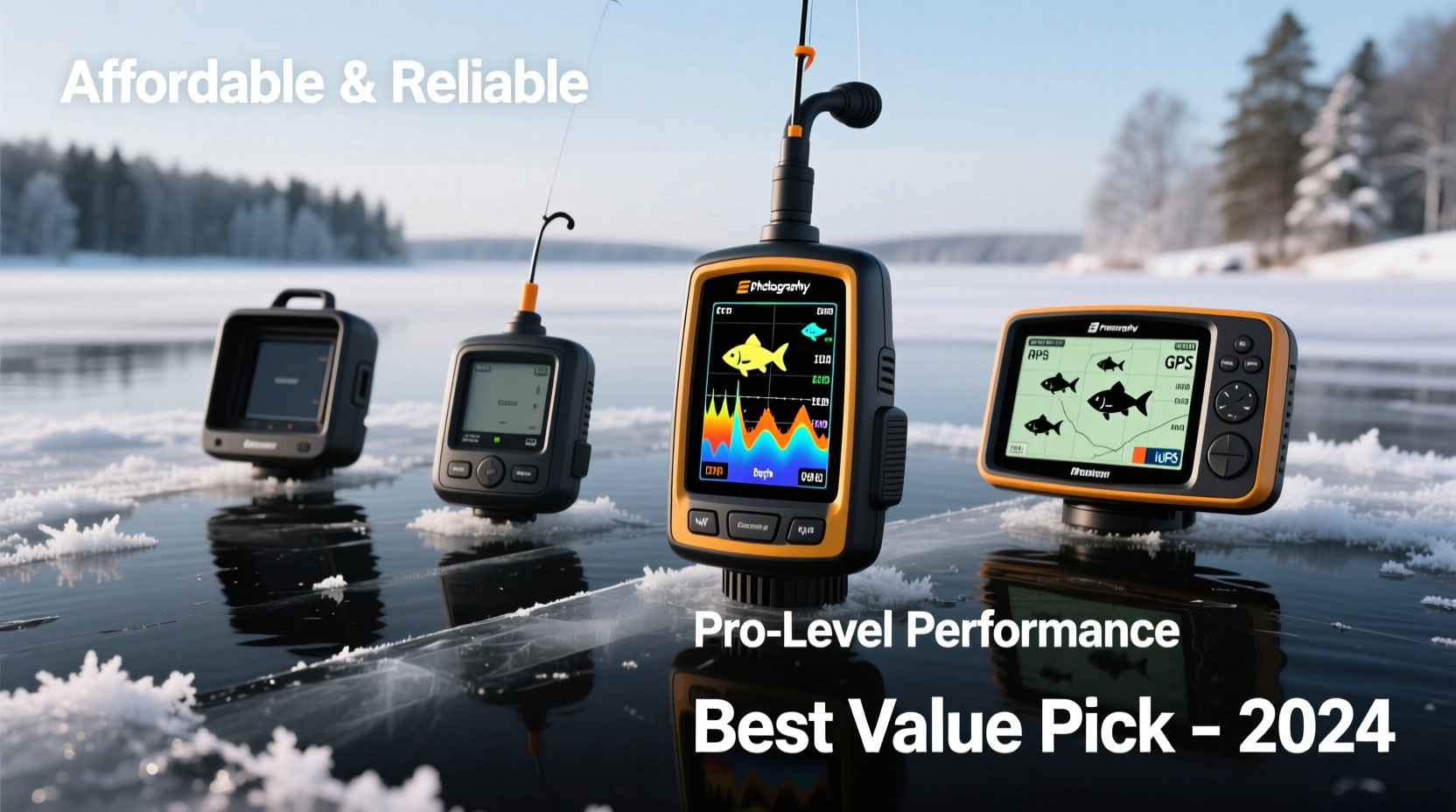
Unlike open-water fishing, ice fishing limits mobility and visibility. You’re drilling holes into thick ice with no way to visually scout the underwater environment. That’s where fish finders become indispensable. They use sonar technology to send sound waves through the water, then interpret the returning signals to display bottom contours, thermoclines, vegetation, and most importantly—fish.
A good fish finder helps you:
- Identify productive depths quickly
- Distinguish between species based on movement and size
- Track lure position in real time
- Save time by avoiding barren spots
- Adapt tactics based on fish behavior patterns
“Even a basic fish finder can double your catch rate during tough ice conditions.” — Mark Jensen, Midwest Ice Fishing Guide and Tournament Organizer
Key Features to Look for in an Affordable Fish Finder
When shopping on a budget, it's easy to get drawn in by flashy specs or low prices. However, reliability and functionality matter more than bells and whistles. Focus on these core features to ensure you're getting true value:
Sonar Type and Frequency
Most entry-level ice fish finders use 200 kHz transducers, which provide excellent detail in shallow to mid-depth waters (up to 150 feet)—perfect for typical ice fishing scenarios. Dual-frequency units offer added versatility but often increase cost.
Display Quality
A clear, backlit LCD screen is essential, especially in low-light winter conditions. Look for at least 2.5 inches of screen size with high contrast. Color displays improve target differentiation but aren’t necessary for reliable performance.
Battery Life and Power Efficiency
You’ll likely be out in sub-zero temperatures for hours. Choose a model with long battery life (minimum 8–10 hours) and compatibility with standard AA batteries, which are easier to replace in remote locations.
Portability and Durability
An ideal ice fishing fish finder should be compact, lightweight, and built to withstand cold, moisture, and accidental drops. Rubberized casings and sealed buttons help protect internal components.
Tip: Always carry spare batteries in an inner pocket—cold drains power fast.Top 5 Affordable and Reliable Fish Finders for Ice Fishing
The following models have been tested in real-world conditions across northern lakes and have proven consistent performance, durability, and value under $200. Each balances essential features with accessibility for casual and serious anglers alike.
| Model | Screen Size | Max Depth | Battery Life | Price Range |
|---|---|---|---|---|
| Vexilar FL-8/FL-18 | 2.5” monochrome | 200 ft | 10+ hours | $170–$190 |
| MarCum M1 | 2.3” grayscale | 120 ft | 8 hours | $140–$160 |
| Humminbird ICE Helix 3 | 3.6” color | 150 ft | 10 hours | $180–$200 |
| Garmin LiveScope Go Bundle | 3.5” color | 100 ft | 6 hours | $199 |
| Raymarine Dragonfly 2 PRO | 2.4” color | 120 ft | 7 hours | $170 |
Vexilar FL-8/FL-18 – The Ice Fishing Legend
Vexilar has dominated the ice fishing market for decades, and the FL-8 and FL-18 remain top sellers for their unmatched sensitivity and rugged build. These flasher-style units provide real-time sonar feedback with minimal lag—ideal for vertical jigging. The circular display shows depth rings and targets clearly, even in bright sunlight.
MarCum M1 – Simplicity Meets Performance
The MarCum M1 is designed specifically for ice anglers who want plug-and-play ease. It uses SmartCast sonar technology and comes with a floating transducer. Its compact design fits easily in a sled or backpack, and the intuitive dial controls make it beginner-friendly.
Humminbird ICE Helix 3 – Best Value Color Display
If you prefer a modern LCD interface, the Humminbird ICE Helix 3 delivers crisp imaging and GPS-free mapping at a competitive price. Its “Ice Mode” optimizes settings automatically, reducing setup time. While heavier than flashers, its clarity and zoom features justify the trade-off.
Garmin LiveScope Go – Real-Time Imaging on a Budget
This bundle includes Garmin’s revolutionary LiveScope technology, offering near-video-quality views of fish movement. Though battery life is shorter, the ability to see bait reactions in real time is transformative—even at this price point.
Raymarine Dragonfly 2 PRO – Compact and Crisp
With CHIRP sonar and a vibrant color screen, the Dragonfly 2 PRO stands out for image clarity. It pairs well with smartphone apps for data sharing, though it lacks some dedicated ice-specific features found in Vexilar or MarCum.
Step-by-Step Guide: Setting Up Your Fish Finder on the Ice
Even the best device won’t help if it’s not set up correctly. Follow this sequence for optimal results:
- Charge or insert fresh batteries – Cold reduces efficiency, so start with full power.
- Attach the transducer – For handheld models, clip it securely. For floating transducers, ensure the cable is tangle-free.
- Drill a clean hole – Use a sharp auger and keep the hole free of slush.
- Lower the transducer – Position it just below the ice shelf so it’s fully submerged but not touching the bottom.
- Power on and adjust sensitivity – Start with default settings, then tweak gain or zoom if the screen looks too cluttered or faint.
- Mark the bottom – Confirm the depth reading matches known contours or your jig’s feel.
- Scan slowly – Move your lure through different zones while watching for returns.
Real-World Example: How a Budget Fish Finder Changed a Weekend Trip
Last February, angler Dana R. traveled to Lake Bemidji hoping for walleye but struggled for two days without a single bite. On the third morning, she borrowed a friend’s Vexilar FL-8. Within minutes, she spotted a school of suspended crappie at 28 feet—just above a rocky ledge. Adjusting her tungsten jig to hover in that zone, she landed six fish in under an hour. “I was fishing too deep and too fast,” she said. “The fish finder showed me exactly where they were holding. I wouldn’t have figured it out otherwise.”
Frequently Asked Questions
Can I use a regular fish finder for ice fishing?
Yes, but it’s less convenient. Standard transducers aren’t designed for quick hole-to-hole movement, and many lack cold-rated components. Dedicated ice models are smaller, faster to deploy, and optimized for vertical scanning.
Do I need GPS on an ice fishing fish finder?
Not necessarily. Most ice anglers cover small areas and rely on visual landmarks. However, GPS helps mark productive holes if you plan to return later. It adds cost and complexity, so prioritize sonar quality first.
How do I prevent my fish finder from fogging or freezing?
Keep the unit inside your coat when not in use. If condensation forms, turn it off and let it acclimate slowly before powering on. Avoid rapid temperature changes between warm vehicles and freezing air.
Final Checklist Before You Buy
- ✅ Does it operate reliably in temperatures below 20°F?
- ✅ Is the screen readable in direct sun and low light?
- ✅ Can it run on standard AA batteries?
- ✅ Does it include a transducer suited for ice holes?
- ✅ Is the warranty at least one year?
- ✅ Are replacement parts and support readily available?
Conclusion: Smart Tech Doesn’t Have to Be Expensive
Finding affordable and reliable picks for the best ice fishing fish finder isn’t about cutting corners—it’s about making informed choices. Models like the Vexilar FL-18, MarCum M1, and Humminbird ICE Helix 3 prove that effective sonar technology is accessible to every angler. Whether you’re chasing panfish through backyard ponds or hunting trophy pike on vast northern lakes, having eyes beneath the ice transforms guesswork into strategy.
💬 Ready to upgrade your ice game? Pick one of these trusted models, head out to the next hole, and see exactly what’s swimming below. Share your best catch story using #ClearIceVision—we’d love to hear how your fish finder helped land the one that got away!








