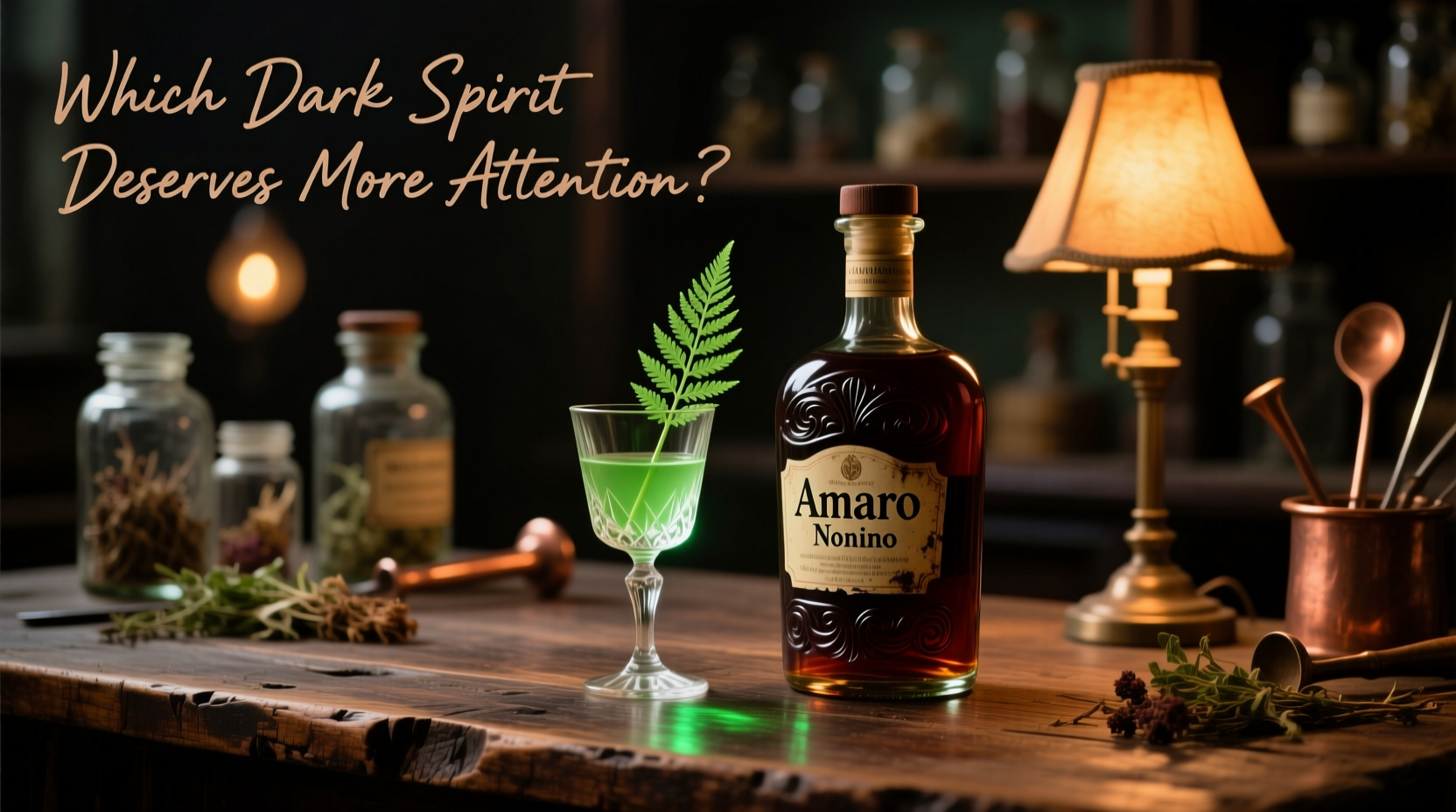
Two spirits stand apart in the modern renaissance of botanical complexity: absinthe and amaro. One is often misunderstood as a hallucinogenic relic; the other dismissed as a medicinal after-dinner sipper. Yet both are masterclasses in herbal alchemy—centuries-old traditions built on precision, terroir, and layered bitterness. Neither is “better” than the other. But one is routinely overlooked—not for lack of merit, but because of misrepresentation. This isn’t about declaring a winner. It’s about restoring context, correcting myths, and revealing how each spirit earns its place at the center of thoughtful drinking culture.
The Historical Divide: Ritual vs Remedy
Absinthe emerged from 18th-century Switzerland as a distilled, anise-forward elixir—initially a military antiseptic, then a Parisian obsession. By the 1870s, it was the unofficial muse of poets and painters: Verlaine called it “the green fairy”; Degas sketched its ritual—the slow drip of ice-cold water over a sugar cube, dissolving into opalescent louche. Its 1915 ban across much of Europe wasn’t rooted in science, but in moral panic, wartime scarcity, and lobbying by the wine industry. Only in the 2000s did EU regulations lift, allowing for legal, thujone-compliant bottlings that honor pre-ban profiles.
Amaro, by contrast, evolved quietly across Italy’s monasteries and apothecaries. “Amaro” means “bitter” in Italian—and its origins lie in herbal tinctures prescribed for digestion, fever, or fatigue. Unlike absinthe’s singular distillation focus, amaro is defined by infusion: roots, barks, citrus peels, and flowers macerated in neutral spirit or aged wine base, then sweetened and aged. There are over 140 documented traditional recipes—from the citrus-tinged Averna to the rhubarb-and-gentian intensity of Braulio—and none follow a single formula. Their regional diversity reflects local flora: Montenegro grows wild gentian in the Apennines; Cynar draws artichoke leaves from Puglia’s sun-baked fields.
This divergence matters. Absinthe is a distilled *event*—a moment of transformation, measured and theatrical. Amaro is a sustained *conversation*—with geography, seasonality, and digestive rhythm. To compare them solely by ABV or bitterness misses their cultural grammar.
Flavor Architecture: How Botanicals Build Meaning
Both spirits rely on bittering agents—but their roles differ structurally.
Absinthe’s core triad is grand wormwood (Artemisia absinthium), green anise, and Florence fennel. Wormwood contributes not just bitterness but a complex, camphoraceous depth and subtle menthol lift. Anise delivers licorice sweetness and aromatic volatility, while fennel adds earthy, rounded warmth. High-quality absinthes—like Vieux Pontarlier or Jade Nouvelle-Orléans—layer in dozens of additional herbs: hyssop, lemon balm, star anise, coriander. These aren’t garnishes; they’re harmonic modifiers that temper wormwood’s austerity and extend the finish.
Amaro’s bitterness is broader, deeper, and more variable. Gentian root dominates many (Amaro Nonino, Ramazzotti); cinchona bark appears in Campari and Select; angelica root grounds Zucca Rabarbaro; dandelion and burdock lend earthiness to Fernet-Branca. Crucially, amaro balances bitterness with sugar—typically 15–35% by volume—plus aging in wood, which imparts vanilla, dried fruit, and tannic structure. The result is a spirit that evolves in the glass: sharp top notes mellow into caramelized spice and umami-like savoriness.
Tip: Taste absinthe neat first—just a small sip—to perceive its true herbal architecture before dilution. With amaro, serve slightly chilled (8–12°C) to heighten aromatic clarity and mute excessive sweetness.Production Realities: Distillation vs Maceration
Absinthe is always distilled—never simply infused. Legally, EU and U.S. standards require distillation of botanicals in a copper pot still, with final bottling between 45–72% ABV. That distillation step is non-negotiable: it captures volatile top notes (anethole, camphor) while leaving behind harsher, less soluble compounds. The resulting spirit is clean, precise, and remarkably stable—even decades-old bottles retain vibrancy if sealed.
Amaro has no such regulatory guardrails. While some premium producers—like Amaro dell’Etna or Meletti—distill select botanicals first, most rely on cold or hot maceration, sometimes followed by brief aging in oak or chestnut casks. Sugar addition occurs post-maceration, and final ABV ranges widely: 16% (Montenegro) to 40% (Fernet-Branca). This flexibility allows for tremendous regional expression—but also invites inconsistency. Mass-market amari often use artificial colorants (caramel E150a) and flavorings, masking underdeveloped botanicals.
| Characteristic | Absinthe | Amaro |
|---|---|---|
| Core Process | Distillation of botanicals | Maceration (often with optional distillation) |
| Required ABV Range | 45–72% (EU/U.S.) | 16–40% (no universal standard) |
| Sugar Content | 0% (unsweetened) | 15–35% (by volume) |
| Key Bitter Agent | Grand wormwood (artemisinin/thujone) | Gentian, cinchona, rhubarb, or artichoke |
| Aging Requirement | None (though some age in neutral vessels) | Common (months to years in wood) |
Modern Cocktail Utility: Beyond the Expected
Absinthe is often relegated to two roles: the rinse (for Sazerac, Corpse Reviver No. 2) or the louche (in the classic preparation). That’s a disservice. Its high proof and volatile oils make it an exceptional modifier—capable of lifting heavy rye or adding levity to smoky mezcal. At ¼ oz, it doesn’t dominate; it clarifies. Try it in a variation of the Last Word: equal parts gin, green chartreuse, lime, and absinthe. The wormwood cuts through chartreuse’s herbaceous density, while anise binds the citrus and botanicals.
Amaro’s versatility is even more underappreciated. Most drinkers reach for it in an Aperol Spritz or Negroni—but its real power lies in low-ABV, high-flavor applications. Consider the Bitter Paloma: tequila reposado, grapefruit juice, a barspoon of Amaro Montenegro, and a pinch of sea salt. The amaro’s orange peel and gentian deepen the grapefruit’s tartness without cloying. Or stir 1 oz Fernet-Branca with 1 oz rye and 2 dashes orange bitters—the result is a Manhattan variant with medicinal gravitas and remarkable length.
“People taste bitterness as a flaw—but it’s the backbone of balance. Absinthe teaches us how bitterness can be luminous. Amaro shows us how it can be comforting. Both are essential grammar in the language of flavor.” — Luca Maffei, Master Distiller, Amaro Lucano & Consultant to La Fée Absinthe
Real-World Context: A Bar Manager’s Shift Change
In late 2023, Sofia Chen took over bar program development at *Haven*, a Brooklyn natural-wine bar known for its hyper-seasonal cocktails. Her first audit revealed a pattern: absinthe sat untouched on the back bar, while amaro bottles were rotated weekly—but almost exclusively in spritzes or stirred classics. She challenged her team: “What if we treated both as primary ingredients—not modifiers or after-dinner props?”
They began experimenting. For absinthe, they developed a clarified milk punch using Vieux Pontarlier, apple brandy, and fermented cider vinegar—served over a single large cube. The distillation’s clarity survived the clarification, while the lactic acid softened its edge. For amaro, they created a savory “Black Olive Amaro Sour”: Amaro Sibilla, olive brine, lemon, and aquafaba. The amaro’s fennel and myrrh played off the brine’s salinity, turning a typically sweet category into something umami-forward and dinner-ready.
Within three months, absinthe sales increased 220%; amaro usage doubled—not in digestifs, but in pre-dinner and food-pairing formats. Sofia’s insight was simple: “We stopped asking ‘what does this spirit do?’ and started asking ‘what does this spirit *say*? Then we gave it a microphone.”
Your Practical Path Forward: A 5-Step Integration Plan
You don’t need a full home bar to explore either spirit meaningfully. Start with intention—not inventory.
- Begin with one benchmark bottle of each: Choose Kübler Absinthe (Swiss, balanced, accessible) and Averna (Sicilian, approachable, widely available). Taste them neat, then diluted (absinthe 3:1 water; amaro over one large ice cube).
- Map their structural roles: Absinthe = aromatic amplifier. Amaro = bitter-sweet binder. Note how each changes the mouthfeel and finish of a base spirit (e.g., add 0.25 oz absinthe to bourbon; stir 0.5 oz amaro with dry vermouth).
- Build two signature serves: A chilled absinthe frappé (absinthe, simple syrup, crushed ice, mint) and an amaro spritz with blood orange soda instead of prosecco. Serve both at 8°C.
- Pair intentionally: Absinthe with salty, fatty foods (cured olives, aged Gouda)—its anise cuts richness. Amaro with roasted vegetables or mushroom risotto—its gentian echoes umami.
- Document and refine: Keep a tasting journal. Note ABV, dominant botanicals, sugar level, and one food or spirit pairing that surprised you. Revisit every 30 days.
Frequently Asked Questions
Is absinthe dangerous—or did it really cause hallucinations?
No. Pre-ban absinthe contained higher thujone levels, but modern toxicology confirms thujone is not psychoactive at concentrations found in legal absinthe (max 10 mg/kg in the EU, 35 mg/kg in the U.S.). The “green fairy” effect was likely due to extreme alcohol consumption (many historical absinthes were 65–72% ABV), adulterants like copper sulfate (used to fake green color), and cultural suggestion—not neurochemistry.
Can I substitute amaro for Campari in a Negroni?
Yes—but expect a different profile. Campari is aggressively bitter and citrus-forward. Amaro Nonino offers honeyed gentian and pear; Aperol brings orange and rhubarb. For closest structural match, try Cappelletti (lighter, brighter) or Select Aperitivo (herbal, slightly saline). Adjust ratios: start with 0.75 oz amaro, 1 oz gin, 0.75 oz sweet vermouth.
Why does some absinthe turn cloudy when water is added—and is that a sign of quality?
The cloudiness—called “louche”—is caused by essential oils (mainly anethole from anise) becoming insoluble in water. It’s expected and desirable. A slow, even louche indicates proper distillation and balanced botanical ratios. If the louche is patchy or fails entirely, the absinthe may be artificially colored or improperly distilled.
Conclusion: Attention Is the First Act of Respect
Absinthe and amaro don’t compete. They converse—across centuries, borders, and brewing philosophies. Absinthe demands presence: the ritual of preparation, the patience of dilution, the attention to volatile aromas that vanish in seconds. Amaro asks for reflection: the quiet sip after a meal, the slow unfurling of roots and barks in wood-aged darkness. To give one more attention than the other isn’t discernment—it’s oversight.
So choose deliberately. Buy a bottle of traditionally distilled absinthe—not for mystique, but for its architectural precision. Seek out a small-batch amaro—not for nostalgia, but for its terroir-driven honesty. Taste them side by side, not as competitors, but as complementary grammars in the expanding syntax of modern drinking. Your palate will grow sharper. Your cocktails will gain dimension. And you’ll begin to hear what both spirits have been saying all along: complexity isn’t noise. It’s nuance, waiting for someone willing to listen.
💬 Which spirit shifted your perspective this year? Share your most surprising absinthe or amaro pairing in the comments—and help others discover depth beyond the label.








