
Red climbing spinach—scientifically known as *Basella alba* 'Rubra' or commonly referred to as Malabar spinach—is not true spinach but a tropical leafy vine prized for its lush foliage, heat tolerance, and striking deep red stems and veins. Unlike common spinach (*Spinacia oleracea*), which bolts quickly in warm weather, red climbing spinach thrives in high temperatures and humidity, making it an essential crop for gardeners in hot climates seeking continuous greens through summer. This guide provides comprehensive, practical knowledge for cultivating red climbing spinach from seed to harvest, including support structures, soil requirements, pest management, and culinary integration.
Definition & Overview
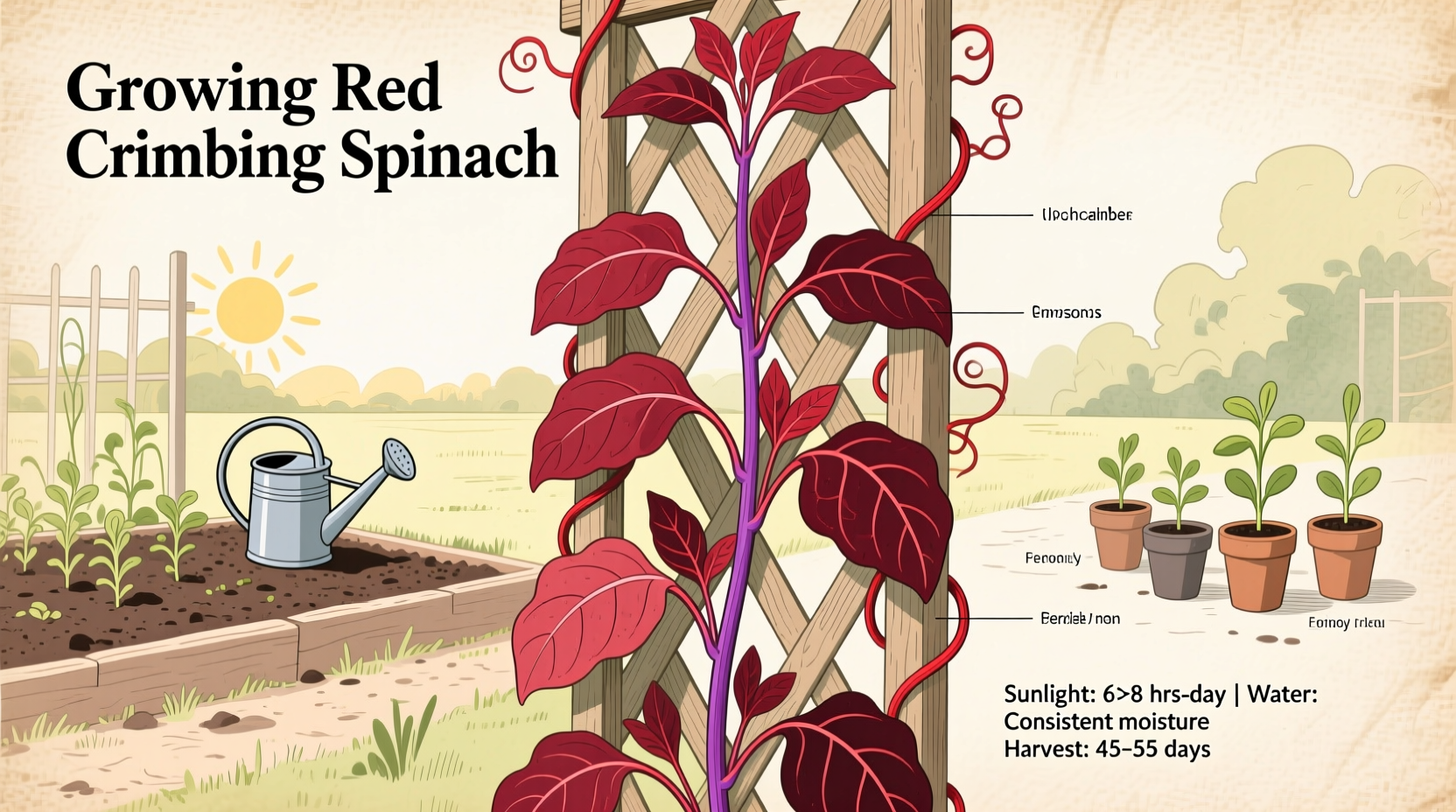
Red climbing spinach is a perennial vine native to South and Southeast Asia, widely cultivated across tropical and subtropical regions. It belongs to the Basellaceae family and grows vigorously in USDA zones 9–11, though it can be grown as an annual in cooler areas. The plant produces fleshy, succulent leaves with a glossy sheen and vivid magenta stems and leaf veins that intensify in full sun. While often mistaken for traditional spinach due to its similar use in cooking, red climbing spinach has a distinct mucilaginous texture when cooked—reminiscent of okra—that adds body to soups and stir-fries.
The flavor profile is mild, slightly peppery when raw, and becomes more subdued when cooked. Its botanical resilience, nutritional density, and ornamental appeal make it a dual-purpose plant for both kitchen gardens and landscape design. Gardeners appreciate its ability to climb trellises rapidly, forming dense green screens while producing edible yields over several months.
Key Characteristics
| Attribute | Description |
|---|---|
| Scientific Name | Basella alba 'Rubra' |
| Common Names | Malabar spinach, Ceylon spinach, Indian spinach, Red vine spinach |
| Plant Type | Tender perennial vine (grown as annual in temperate zones) |
| Height/Spread | 6–30 ft long; climbs vertically with support |
| Leaf Color | Deep green with prominent red-purple veins and stems |
| Flavor Profile | Mild, slightly tangy when raw; earthy and smooth when cooked |
| Texture | Succulent, mucilaginous (slightly slippery) when cooked |
| Heat Tolerance | Excellent—thrives in temperatures above 85°F (29°C) |
| Days to Harvest | 55–70 days from seed |
| Culinary Use | Leaves and tender shoots used raw or cooked |
Practical Usage in the Garden and Kitchen
Growing red climbing spinach begins with proper site selection and structural planning. As a vigorous climber, it requires vertical support such as a trellis, fence, or arbor. Without support, the vine will sprawl across the ground, increasing susceptibility to fungal diseases and reducing air circulation. A north-south oriented trellis maximizes sunlight exposure on both sides of the plant, promoting even growth and higher yields.
Soil Preparation and Planting
Red climbing spinach prefers rich, well-draining soil with a pH between 6.0 and 6.8. Prior to planting, amend the soil with 2–3 inches of compost or aged manure to boost fertility and moisture retention. The seeds have a hard coat and benefit from pre-soaking in warm water for 12–24 hours before sowing to improve germination rates. Sow seeds directly outdoors after all danger of frost has passed and soil temperatures consistently exceed 70°F (21°C). Plant seeds ½ inch deep and space them 6 inches apart along the base of the support structure. Once seedlings reach 4–6 inches tall, thin to 12 inches apart to allow adequate airflow and room for lateral branching.
In cooler climates where the growing season is short, start seeds indoors 4–6 weeks before the last frost date using biodegradable pots to minimize root disturbance during transplanting. Harden off seedlings gradually over 7–10 days before setting them outdoors.
Irrigation and Fertilization
Consistent moisture is critical for optimal growth. Red climbing spinach demands regular watering—about 1 to 1.5 inches per week—especially during dry spells. Drip irrigation or soaker hoses are ideal, delivering water directly to the root zone while minimizing leaf wetness, which reduces disease risk. Mulching around the base with straw or shredded bark helps retain soil moisture, suppress weeds, and regulate temperature.
Fertilize every 3–4 weeks with a balanced organic fertilizer (such as 5-5-5 NPK) or side-dress with compost tea to sustain vigorous vegetative growth. Avoid excessive nitrogen, which may lead to overly lush foliage at the expense of stem strength.
Pro Tip: Pinch back the tips of young vines when they reach 8–10 inches in length. This encourages bushier growth and increases lateral branching, resulting in more harvestable shoots and a fuller canopy.
Pest and Disease Management
While generally robust, red climbing spinach can attract aphids, spider mites, and leaf miners, particularly under drought stress. Inspect plants weekly, focusing on the undersides of leaves. Dislodge small infestations with a strong jet of water. For persistent issues, apply insecticidal soap or neem oil following label instructions. Slugs and snails may feed on young leaves near the ground; use copper tape barriers or diatomaceous earth around the base to deter them.
Diseases such as powdery mildew and fungal leaf spot occur primarily in humid conditions with poor air circulation. Prevent these by spacing plants properly, avoiding overhead watering, and removing infected foliage promptly. Choosing disease-resistant varieties and rotating crops annually also reduce risks.
Variants & Types
There are two primary color variants of Malabar spinach, both derived from *Basella alba* or the closely related *Basella rubra*, depending on taxonomic classification:
- Red Climbing Spinach ('Rubra'): Features dark green leaves with intense purple-red veins, stems, and sometimes petioles. Offers greater visual contrast and slightly higher anthocyanin content, contributing antioxidant properties.
- Green Climbing Spinach ('Alba'): Produces uniformly green stems and veins. Slightly less ornamental but equally productive and flavorful.
Both types share identical growing requirements and culinary applications. Some cultivars exhibit thicker stems or larger leaves, selected for commercial production. Home gardeners often prefer open-pollinated or heirloom seeds to save for future planting, ensuring genetic continuity and adaptation to local conditions.
Comparison with Similar Ingredients
Despite its name, red climbing spinach is botanically unrelated to common spinach. Understanding the differences ensures appropriate cultivation and culinary use.
| Feature | Red Climbing Spinach | Common Spinach | Chard/Silverbeet |
|---|---|---|---|
| Botanical Family | Basellaceae | Amaranthaceae | Amaranthaceae |
| Climate Preference | Hot, humid (tropical/subtropical) | Cool seasons only | Temperate to warm |
| Bolting Resistance | High—does not bolt in heat | Low—bolts rapidly above 75°F | Moderate—bolts in extreme heat |
| Texture When Cooked | Mucilaginous, slightly slippery | Soft, non-viscous | Firm stalks, soft leaves |
| Growth Habit | Vining, climbing | Rosette-forming, non-climbing | Bunching, upright |
| Harvest Period | Summer-long (3+ months) | Spring/fall (6–8 weeks) | Extended (spring to fall) |
| Nutritional Highlights | Rich in vitamins A, C, iron, calcium, antioxidants | High in folate, vitamin K, iron | Excellent source of K, Mg, vitamins A/C/K |
\"In my coastal Florida garden, red climbing spinach outperforms every other leafy green in July and August. While lettuce melts and kale gets bitter, Basella keeps producing tender shoots until first frost.\" — Maria Delgado, Sustainable Gardening Instructor, University of Miami Extension
Practical Tips & FAQs
When is the best time to plant red climbing spinach?
Plant after the last spring frost when soil temperatures are reliably above 70°F. In tropical zones, it can be planted year-round except during heavy monsoon periods that cause waterlogging.
How do I harvest red climbing spinach without damaging the plant?
Use clean scissors or pinch stems just above a leaf node, taking the top 4–6 inches of new growth. This method stimulates branching and extends productivity. Never remove more than one-third of the foliage at once to prevent stress.
Can I grow red climbing spinach in containers?
Yes. Choose a container at least 12 inches deep and 18 inches wide with drainage holes. Use a high-quality potting mix enriched with compost. Provide a trellis or cage for vertical support. Container-grown plants require more frequent watering and feeding due to limited soil volume.
Is red climbing spinach edible raw?
Yes, young leaves and shoots can be eaten raw in salads, though their mucilaginous texture may be off-putting to some. Blanching briefly in boiling water removes excess slime while preserving nutrients. Most culinary traditions cook the leaves lightly to enhance palatability.
What are the nutritional benefits?
Red climbing spinach is exceptionally nutrient-dense. Per 100g raw weight, it provides:
- Over 100% of the daily value of vitamin A (as beta-carotene)
- Approximately 30% of vitamin C
- Significant amounts of iron, calcium, and potassium
- Dietary fiber and antioxidant pigments like betalains and anthocyanins
How should I store harvested leaves?
For immediate use, rinse and pat dry, then store in a perforated plastic bag in the refrigerator crisper drawer. Use within 5–7 days. For longer storage, blanch leaves for 90 seconds, cool in ice water, drain, and freeze in airtight bags for up to 6 months. Alternatively, preserve by fermenting into lacto-fermented greens or drying for powder use in smoothies.
Are there any toxic look-alikes?
No known toxic mimics exist in home gardens, but always verify plant identity before consumption. Misidentification can occur with wild vines like black nightshade (*Solanum nigrum*) if grown near contaminated areas. Purchase seeds from reputable suppliers and label your rows clearly.
Can I save seeds from my plants?
Yes. Allow some vines to flower and set fruit. Mature berries turn dark purple to black. Harvest ripe fruits, mash them in water, and separate viable seeds by fermentation (similar to tomato seeds). Rinse and dry thoroughly before storing in a cool, dark place. Saved seeds remain viable for 2–3 years.
Succession Planting Strategy: To ensure continuous harvests, sow new seeds every 4–6 weeks during the growing season. This staggered approach prevents a single flush of growth followed by decline and maintains steady supply.
Culinary Applications
Red climbing spinach integrates seamlessly into diverse cuisines. In Indian cooking, it’s sautéed with mustard seeds, garlic, and turmeric in a dish called *pasalai keerai*. Filipino recipes incorporate it into *utan*, a coconut milk-based stew with shrimp or tofu. In Nigeria, it features in *editan soup*, valued for its thickening ability. Western chefs use it in place of chard or Swiss chard in gratins, quiches, and pasta fillings.
To reduce sliminess, combine chopped leaves with acidic ingredients like lemon juice, tamarind, or vinegar during cooking. Pair with bold flavors such as ginger, chili, fish sauce, or toasted sesame oil to balance its mildness. Add towards the end of cooking to preserve texture and color.
A simple preparation: Heat olive oil in a skillet, sauté minced garlic and red pepper flakes, add washed spinach in batches, sprinkle with sea salt and a splash of rice vinegar. Cook covered for 3–4 minutes until wilted. Finish with a squeeze of lime and toasted almonds.
Summary & Key Takeaways
Red climbing spinach stands out as a resilient, productive, and nutritious alternative to traditional leafy greens in warm climates. Unlike common spinach, it flourishes in summer heat, offering gardeners a reliable source of edible foliage when most greens fail. With minimal inputs—support structures, consistent moisture, and fertile soil—it delivers abundant harvests over many months.
Key advantages include:
- Exceptional heat and humidity tolerance
- Long harvest window (up to 6 months with proper care)
- High nutritional value with antioxidant-rich pigments
- Versatile culinary uses, both raw and cooked
- Ornamental appeal with vibrant red stems enhancing garden aesthetics
By integrating red climbing spinach into your edible landscape, you gain not only a functional food crop but also a living screen that cools microclimates and supports biodiversity. Whether trained along a backyard fence or grown in a large patio container, this vine exemplifies sustainable urban agriculture—productive, beautiful, and deeply nourishing.
Start your red climbing spinach patch this season and experience the ease and abundance of one of the most underrated supergreens in modern horticulture. Share your harvest successes and recipes with fellow growers to expand community knowledge of heat-tolerant crops in a warming world.









