
For collectors, fans, and investors, a signed baseball is more than a piece of memorabilia—it’s a tangible connection to the game’s legends. But with the rise in forgeries and misrepresentations, ensuring authenticity has never been more critical. Whether you're acquiring a Babe Ruth-signed ball or a modern-day MVP autograph, understanding how to verify legitimacy separates casual enthusiasts from serious collectors.
Authenticating a signed baseball involves more than just trusting a seller's word. It requires knowledge of signatures, materials, provenance, and third-party verification systems. This guide walks through every step professionals use to validate autographs, avoid costly mistakes, and preserve value over time.
Understanding the Value of Authentication
The sports memorabilia market is vast, with high-profile auctions regularly fetching tens of thousands of dollars for authenticated items. A single autograph from a Hall of Famer can be worth hundreds or even millions, depending on condition, rarity, and documentation. However, counterfeit autographs are rampant—some experts estimate that up to 50% of unsigned memorabilia sold online may be fake.
Authentication isn’t just about protecting financial investment; it also preserves historical integrity. An unverified signature might look convincing at first glance but could collapse under scrutiny from appraisers or future buyers.
“Without proper authentication, even the most iconic autograph holds little value in the collector’s market.” — David Seideman, Executive Editor, Sports Collectors Digest
Step-by-Step Guide to Verifying a Signed Baseball
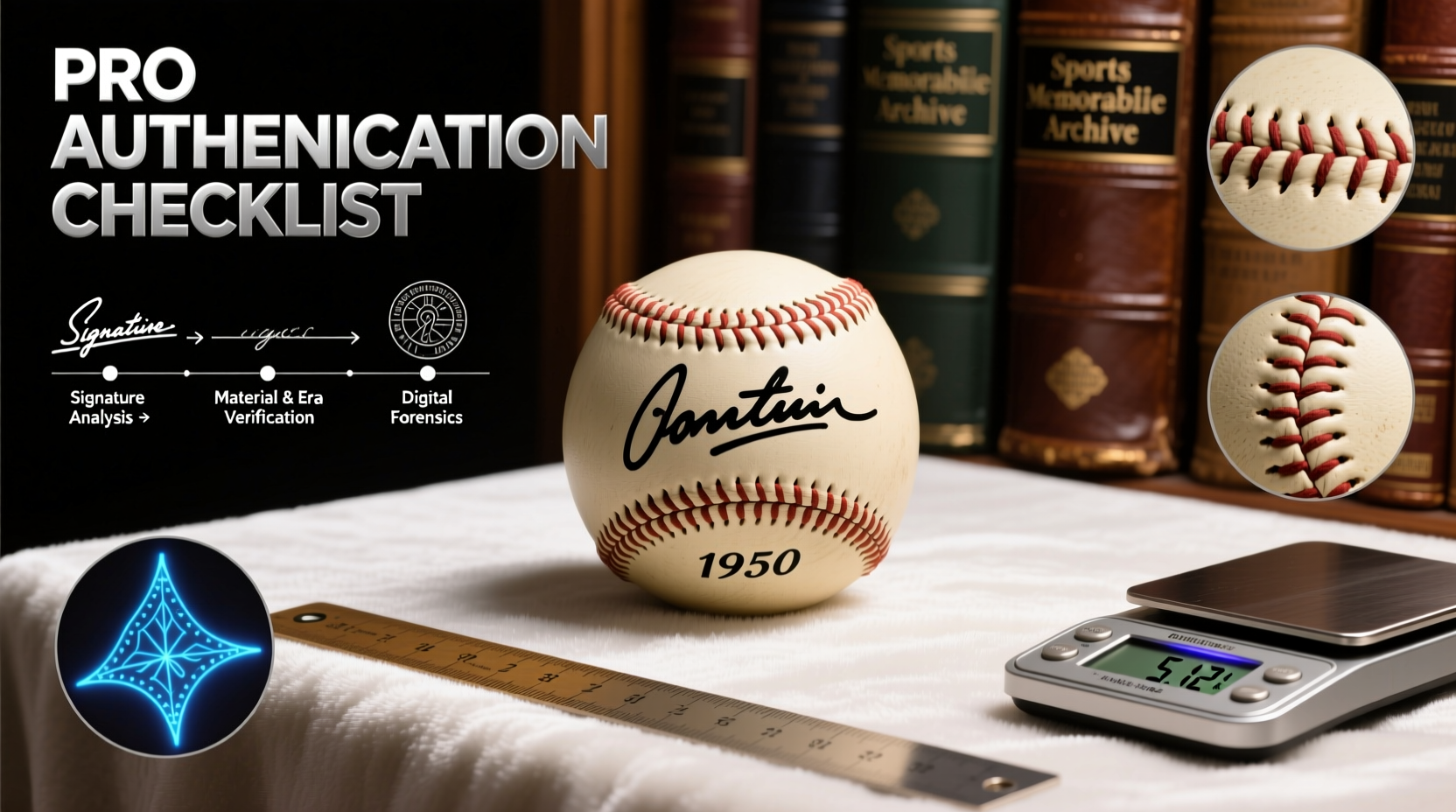
Verifying an autographed baseball follows a structured process. Skipping steps increases the risk of accepting a forgery. Follow this sequence carefully:
- Examine the Ball Itself: Confirm the manufacturer, model number, and era-appropriate specifications. For example, a ball supposedly signed by Mickey Mantle in the 1950s should match Rawlings or Spalding models used during that period.
- Analyze the Ink and Pen Type: Use magnification to assess ink flow, saturation, and bleed. Real signatures often show natural variation in pressure and line width. Uniform strokes suggest a printed reproduction. <3> Compare Signatures: Cross-reference the autograph with verified examples from reputable databases such as PSA/DNA’s library or JSA’s archive. Pay attention to unique quirks—loops, slants, flourishes.
- Check for Tampering: Look for signs of erasure, re-inking, or unnatural smoothing. UV light can reveal hidden alterations or chemical treatments meant to age the ball artificially.
- Assess Provenance: Determine the item’s ownership history. Was it obtained at a public signing event? Does it come with original certificates, photos, or letters of authenticity?
- Submit to a Third-Party Service: For high-value items, professional grading and authentication provide legal-grade verification.
Top Authentication Services Compared
Not all authentication companies offer the same level of rigor. The most respected services employ forensic experts, maintain extensive reference libraries, and use advanced technology to analyze autographs.
| Service | Turnaround Time | Fees (Est.) | Unique Features |
|---|---|---|---|
| PSA/DNA | 6–10 weeks | $50–$200+ | Largest database; hologram tamper-proof labels; widely accepted in auctions |
| JSA (James Spence Authentication) | 4–8 weeks | $40–$175+ | Live event authentication; detailed digital reports; MLB partnership |
| Beckett Authentication Services (BAS) | 8–12 weeks | $35–$150+ | Infrared analysis; serial-numbered stickers; strong presence in card markets |
| REAL Autograph Authentication | 3–6 weeks | $30–$100 | Specializes in vintage signatures; expert panel review system |
Each service issues a certificate of authenticity and often applies a tamper-evident sticker or hologram directly on the ball or its case. These markers are essential when reselling or insuring your collectible.
Red Flags That Indicate a Forgery
Even without formal training, collectors can spot warning signs. Be cautious if you notice any of the following:
- Perfectly uniform lines: Genuine signatures vary slightly each time due to muscle movement and pen pressure.
- Wrong ink color or type: Older signatures typically use blue or black ballpoint; silver or gold ink on vintage balls is suspicious unless documented.
- No chain of custody: If the seller cannot explain how they acquired the ball, skepticism is warranted.
- Too good to be true pricing: A fully authenticated Roger Maris home run ball shouldn’t sell for $200. Research fair market values before purchasing.
- Photocopied or stamped signatures: Run your finger lightly over the ink—if there’s no texture, it’s likely not hand-signed.
Mini Case Study: The Case of the Fake Koufax Ball
In 2018, a private collector purchased a Sandy Koufax-signed baseball through an online auction for $8,500. The listing included a photo of the pitcher and claimed the ball was from his final season (1966). Excited by the find, the buyer submitted it to PSA/DNA for verification.
Forensic analysis revealed inconsistencies: the ball model was introduced in 1974, seven years after Koufax retired. Additionally, infrared imaging showed the signature was traced using a printed template. The ink sat uniformly on top of the leather without natural absorption patterns.
The item was deemed a sophisticated forgery. Thanks to third-party inspection, the buyer avoided a major loss and initiated a dispute with the platform. This case underscores why even experienced collectors must rely on scientific validation—not just visual appeal.
Essential Checklist Before Buying or Selling
Use this checklist whenever evaluating a signed baseball:
- ✅ Verify the baseball model matches the player’s active years
- ✅ Compare the signature against multiple authenticated samples
- ✅ Inspect ink quality and writing instrument consistency
- ✅ Request proof of prior authentication or certification
- ✅ Confirm the seller has a return policy and reputation
- ✅ Submit to a trusted third-party service if uncertain
- ✅ Document everything: photos, receipts, correspondence
Frequently Asked Questions
Can I authenticate a baseball myself without sending it in?
You can perform preliminary checks—like comparing signatures and examining ink—but definitive authentication requires expert tools and databases. Self-evaluation reduces risk but doesn’t replace professional verification.
Does framing affect authentication?
Framing before authentication is risky. Reputable services require direct access to the ball. If already framed, some will authenticate in-person or via disassembly (for an extra fee), but damage risks increase.
Are holograms enough to prove authenticity?
Holograms from PSA, JSA, or BAS are strong indicators, but counterfeiters have replicated them. Always verify the hologram number on the company’s official website and ensure it matches their records.
Preserving Your Investment After Authentication
Once verified, proper storage ensures longevity. Keep signed baseballs away from direct sunlight, humidity, and temperature fluctuations. Display cases with UV-protective glass help prevent fading. Avoid touching the autograph surface, and never attempt to clean it with solvents.
If storing long-term, place the ball in an acid-free container with silica gel packs to control moisture. Rotate displayed items every few months to minimize environmental exposure.
Conclusion: Take Control of Your Collection’s Integrity
Authenticating a signed baseball isn’t optional—it’s foundational to collecting with confidence. From learning signature nuances to leveraging expert services, every step you take strengthens the credibility and value of your memorabilia.
💬 Have a baseball you’re unsure about? Start by comparing it to verified examples, then consider professional authentication. Share your experiences or questions below—let’s build a smarter, more informed community of collectors together.








